



One of the most important tasks of the core is to maintain stability when forces act on it. That means staying stable, upright and in a good position even when pushed, pulled, prodded and prodded from all angles. When most people want to build core strength, they think of sit-ups, crunches, leg lifts, and cycling, but one of the most effective exercises for building a stronger core is standard plank.
But the plank gets boring. Sometimes the basic plank doesn’t provide the right amount of stimulation in the right spots for your goals. This is when we use plank variations that make the exercise more interesting, target different tissues, and force different adaptations.
Here are 10 of the best variations of the standard plank.

This exercise helps strengthen your core and improves stability and posture without being too strenuous like a standard plank. If you’ve never done a plank before and are worried about your ability to do one, this is probably the best place to start. To perform this, place your elbows directly under your shoulders and lift your body off the ground, supporting your weight on your forearms and knees. Your body should be in a straight line from head to knees. Try to stay in this position for as long as possible.
Muscle Strike: Engages the transversus abdominis, rectus abdominis, and obliques along with the glutes and shoulders. The kneeling position causes most of the quadriceps muscles to be out.
This variation is essentially the top of the push-up position. It targets your core, but also affects your shoulders, chest, and quadriceps. Start in a push-up position with your palms on the ground, your hands shoulder-width apart and your arms straight. Your body should be in a straight line from head to heels.
Muscle Stimulation: The high plank targets all of the same muscles as the standard plank, with a greater focus on the upper body, including the shoulders and triceps.
This variation targets the obliques, the muscles on the side of your torso. Start sideways with your feet together and one forearm directly under your shoulder. Lift your hips until your body is in a straight line from head to feet. Maintain this position without letting your hips fall. Repeat on the other side.
Muscle Hits: Side planks are great for targeting your obliques.
Adding shoulder taps to a high plank increases the intensity of the exercise and allows you to engage your upper body more actively. From a high plank position, lift one hand off the ground and tap your opposite shoulder. Keep your core strong and keep your hips steady.
Muscle Strike: The shoulder tap puts some engagement on the deltoids, but most of it is due to forcing the core musculature to support the movement and lack of support from the arms.
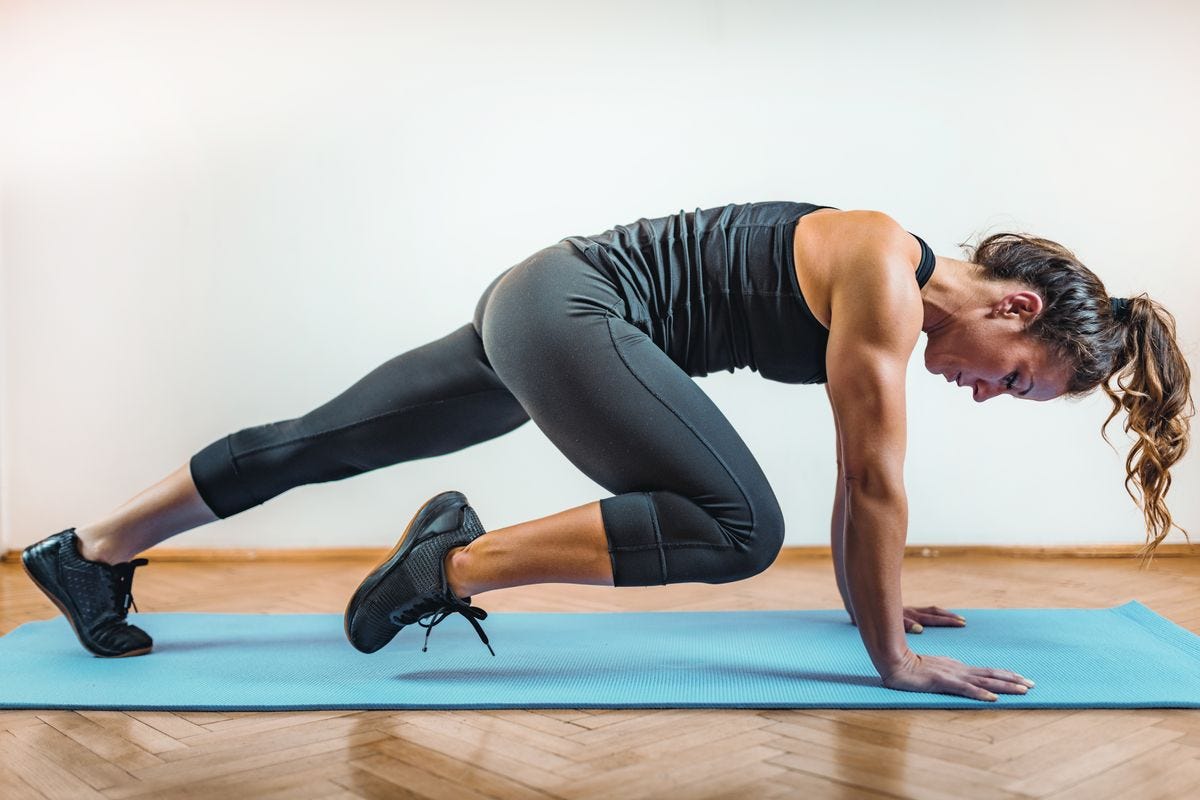
This plank variation not only strengthens your core but also works your lower body. From a high plank position, bring one knee toward your opposite elbow. Return to starting position and repeat with the other leg.
Muscle Strike: This is a real abs crusher.
Imagine Spider-Man crawling along a skyscraper. You will get a feel for these changes. This can help improve hip mobility and core strength, especially the serratus and transverse abdominis muscles. From a high plank position, bring one knee to the side and touch your elbow. Return to starting position and repeat on the other side.
Muscle Stimulation: While the obliques and hip flexors take the biggest hit, the transverse abdominis and rectus abdominis (which can be difficult to train directly) are also strongly activated.
This plank variation targets the posterior chain muscles, including the glutes, hamstrings, lower back, and triceps. Sit on the floor with your legs stretched out in front of you. Place your palms on the floor behind you and your fingers facing your feet. Push through your palms and lift your hips and torso toward the ceiling.
Muscle Stimulation: Perhaps the most unique variation, the reverse plank not only targets the posterior chain, including the glutes, hamstrings, lower back, and triceps, but also works the anterior deltoids and chest muscles. There is less “direct” activation of core musculature.
This plank variation challenges your balance and engages your core even more. From a high plank position, lift one foot off the ground and hold that position. Keep your body stable and your hips level. Switch to lifting one hand off the ground and keeping both feet down.
You can also try a two-point plank, where you alternately lift your left elbow/right foot and your right elbow/left foot.
Muscle Hits: In addition to the core muscles being hit at unique angles and biases, the gluteus medius and minimus muscles on the side of the lifted leg are also activated to support the leg.
This is a dynamic plank variation that combines cardiovascular and strength training. From a high plank position, spread your feet wide like a jumping jack and then bring them back together.
If it’s too easy, reach for it.
Muscle Strike: The transversus abdominis, rectus abdominis, and obliques are all connected along with the gluteal and hip abductors. The tibialis anterior (tibia) muscle also helps absorb shock.
This plank variation provides a full-body workout that especially engages your shoulders and core. Start in a high plank position. Place one elbow on the ground and lower the other elbow into a forearm plank position. Then place one hand on the ground and push the other hand up to a high plank.
Muscle Stimulation: The dynamic movement between the high plank position and the forearm plank position engages the triceps, pecs, deltoids, and small stabilizing muscles of the shoulder girdle in addition to the normal core muscles that the plank targets.
I hope you enjoy these transformations. Let me know what you do in the comments section!
Thanks for reading!
Mark’s Daily Apple is still in production. My team and I are actively working to republish the archive. Check back regularly to find new posts and revisit old favorites. Looking for a specific post? Let us know here.
Please spread the word like this so more people can find us:
And make sure you’re subscribed!

* This blog reflects my personal views and opinions and is not intended as medical advice, but I hope it will be informative and inspiring in your pursuit of a healthy and fulfilling life.


