



The picturesque towns of Amalfi and Positano are famed for being two must-see places on the Amalfi Coast of Italy. However, they are not the only villages to captivate those traveling to this region of outstanding beauty in Southern Italy.
This 30-mile stretch of coastline, the entire Amalfi Coast is a UNESCO World Heritage Site that comprises over a dozen towns and villages, alongside an additional scattering of hamlets adorning the surrounding mountains and hills.
While some towns are perfect bases from which to explore the entire region, some of the must-see places on the Amalfi Coast are very, very tiny, with little to see to justify a visit unless you have ample time on your hands.
This article is a curated selection of the best places to visit on the Amalfi Coast, featuring towns that offer incredible architecture, culture, and outdoor pursuits that deserve consideration for your Southern Italy itinerary.
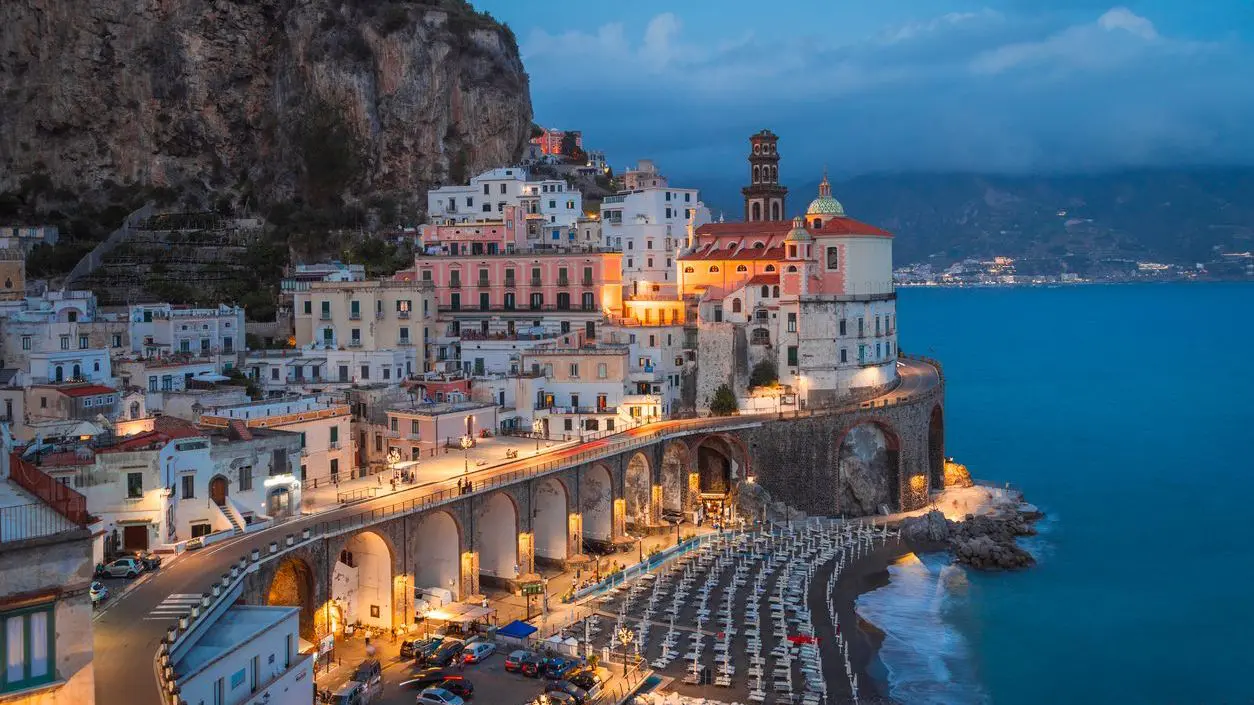
Where Is The Amalfi Coast in Italy?
The Amalfi Coast is located in the Campania region of Italy on the southern Sorrentine Peninsula, overlooking the Tyrrhenian Sea and the Gulf of Salerno.
The region has become a popular vacation destination due to its dramatic cliffs and a rugged shoreline dotted with tiny inlets and pastel-hued fishing villages. These towns preserve traditional heritage while also drawing in modern conveniences and charms.
Sorrento and Salerno, both accessible via train from Naples, mark the western and eastern entry points of the Amalfi Coast, respectively.
The coastal road between these Amalfi Coast towns isn’t for the faint of heart, which is why we advise leaving it to a local driver to handle the logistics. This way, you sit back and drink up the scenery of terraced vineyards, cliffside lemon groves, and glittering sea views.
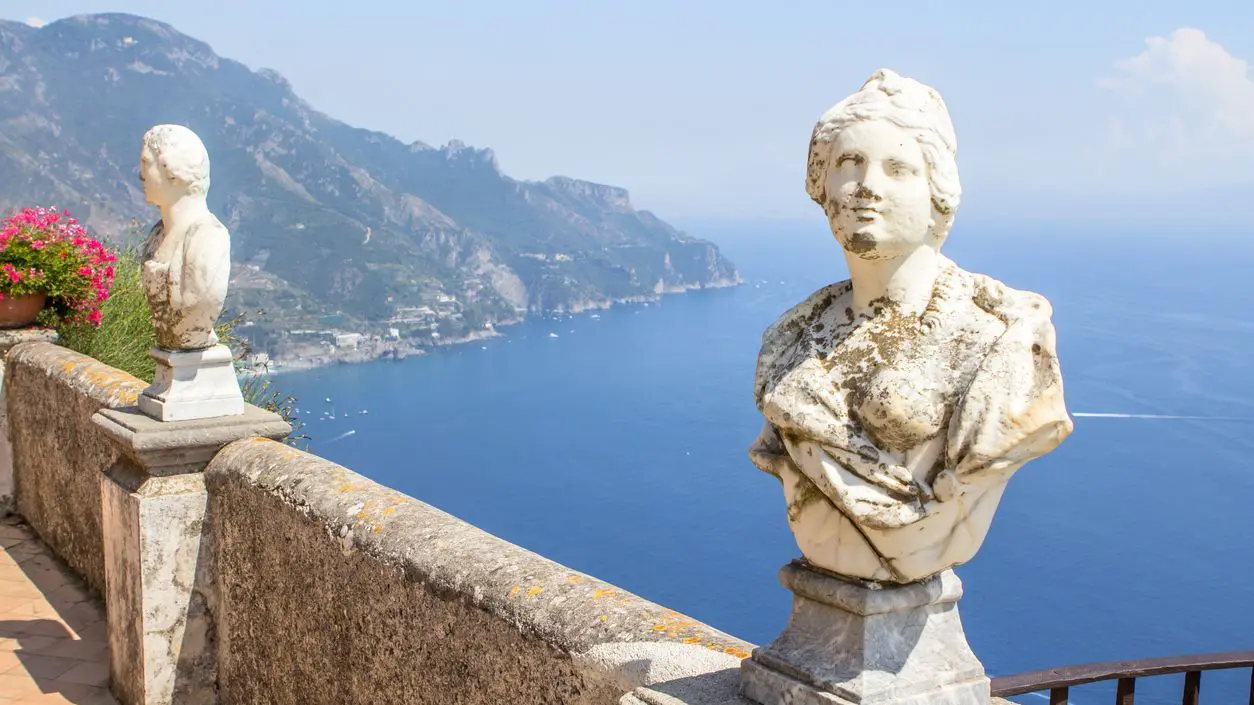
11 Must-See Places on The Amalfi Coast, Italy
1. Positano
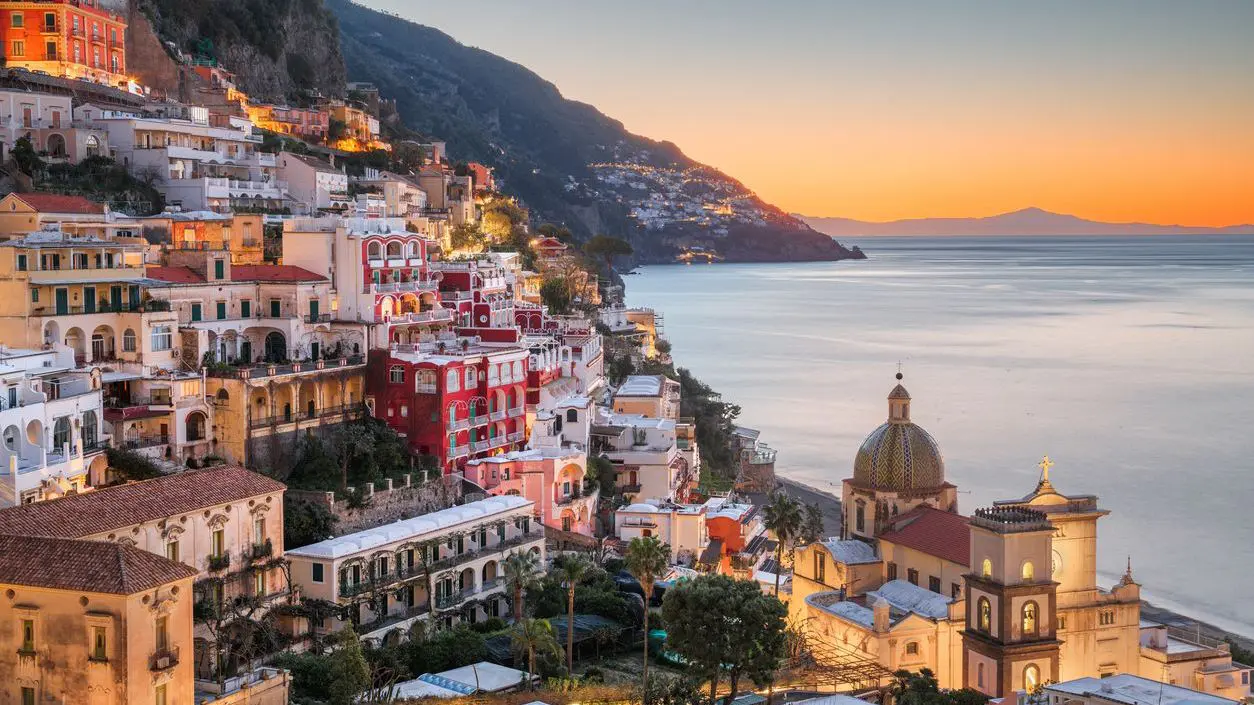
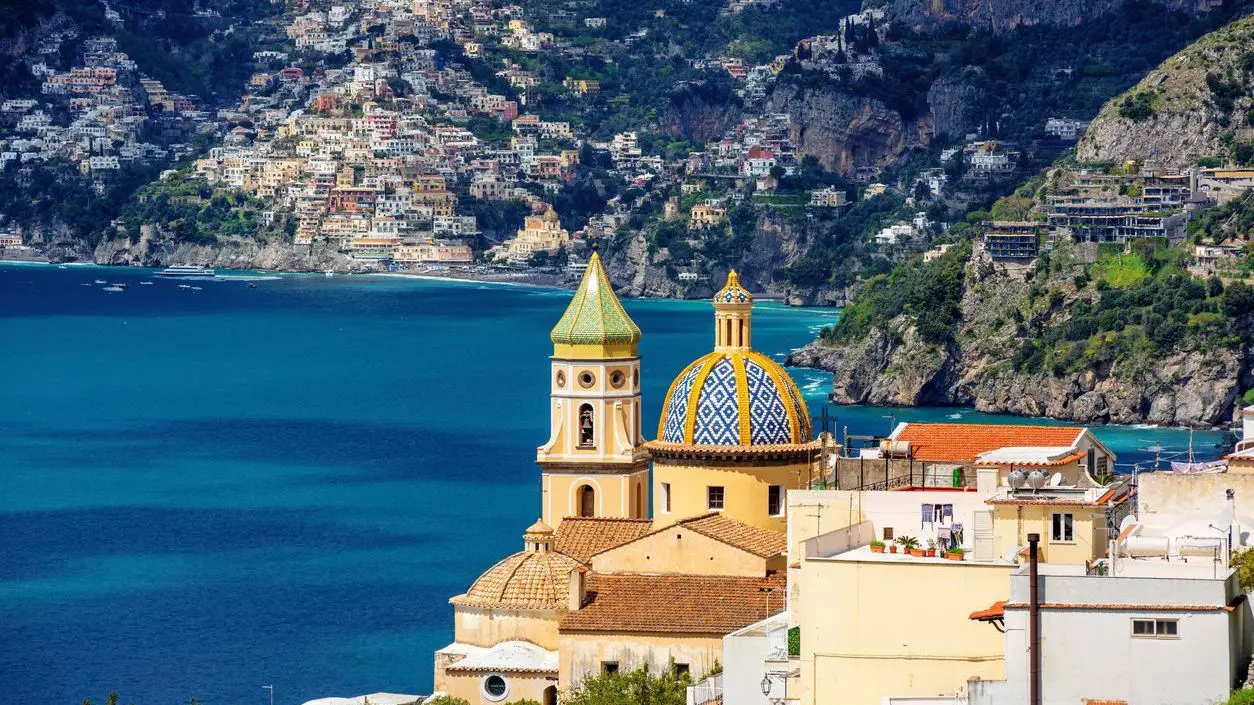
Positano, the jewel of the region, is widely considered the number one must-visit place on the Amalfi Coast. This cliffside village is like stepping into a postcard, with its cascade of pastel houses tumbling down to meet the aquamarine Tyrrhenian Sea.
Positano’s winding lanes, draped with wisteria, jostle with designer boutiques, artisan stores, and quaint cafés. The Church of Santa Maria Assunta (Chiesa di Santa Maria Assunta), famous for its Byzantine-style Madonna icon, is the headliner historic attraction in Positano.
Spiaggia Positano, the town’s main beach (also known as Spiaggia Grande), sits beside the marina and is a prime spot for sunbathing and people-watching. During the summer, the sand is lined with loungers and rental kayaks.
Lying to the west of the marine, Fornillo Beach offers a quieter escape as peak season sees the central beach swell with vacationers.
Evenings bring a special atmosphere to the village, exclusive to those who opt to spend a night in Positano.
Once the sun sets and daytrippers disembark, you’ll dine on seafood pastas drizzled with fresh lemons alongside local wine and limoncello. Many restaurants have sea-view terraces, and there is a decent supply of hotels in town.
Positano blends glamour and nature in a unique way that has captivated artists and dreamers for generations. Those seeking a deeper connection with the landscape can hike the Path of the Gods (Sentiero degli Dei) between Positano and Agerola.
Alternatively, you could hike the Le Tese di Positano hike to Chiesa Santa Maria del Castello. This is a shorter hike, but extremely steep, and you’ll need to depart as early as possible to avoid the midday sun.
2. Agerola
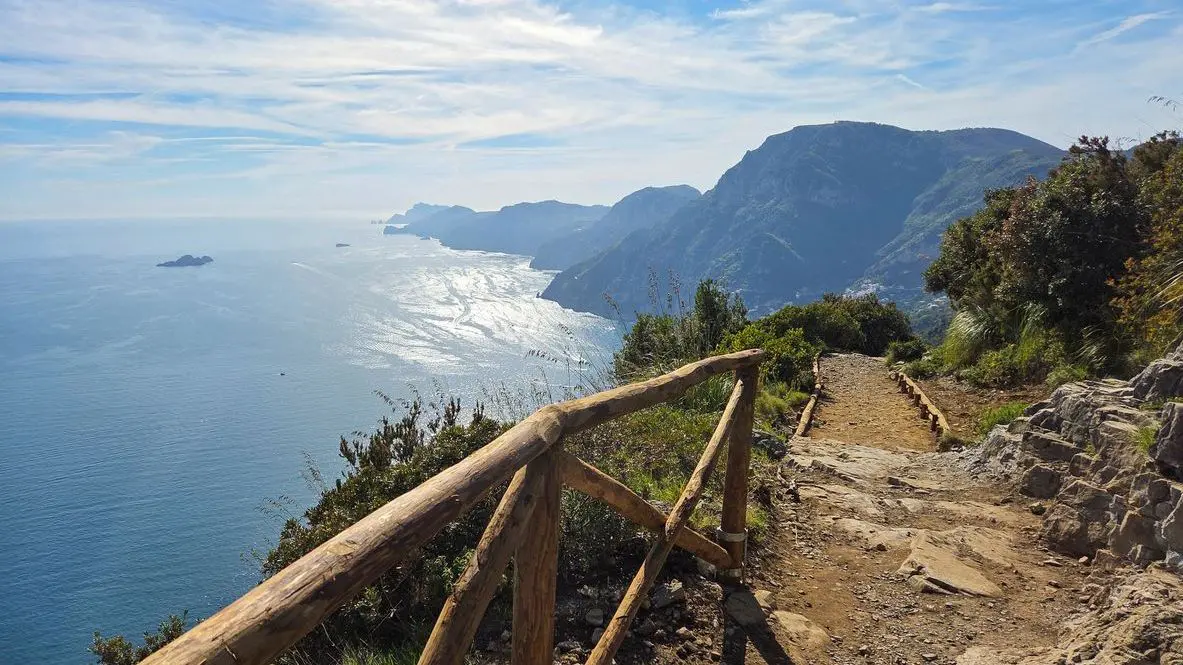
High above the Amalfi Coast, Agerola marks the start of the Path of the Gods. Despite that, this mountain village is little-known, usually only appearing on the radar of hikers.
The village itself, founded by the Romans in the third century BC, offers pure air and rustic mountain-meets-sea cuisine served in family-run trattorias.
In fact, Agerola’s cultural heritage is deeply tied to agriculture; its Provolone del Monaco cheese, mozzarella, and honey are Amalfi Coast specialties.
Travelers can visit Agerola in conjunction with hamlets like Bomerano (where you’ll find the Path of the Gods trailhead) and San Lazzaro alongside small farms and dairies to learn about the local cattle breed, Agerolese.
The Path of the Gods is a five-mile hiking trail that takes around four hours to complete from Bomerano. The route is not especially strenuous, but it requires a moderate level of fitness and a head for heights.
It’s possible to hike the trail independently or enlist a local guide who can shed light on the regional flora, fauna, and geology. The Grotta del Biscotto rock formation is a highlight, and the breathtaking views throughout are priceless.
Agerola’s chestnut forests and terraced fields provide a peaceful escape from the busier coastal towns of Positano and Amalfi.
Apart from hiking the Path of the Gods, Agerola is a hub for outdoor activities, such as canyoning or cycling. This village and its surrounding hamlets stand out for their authenticity and respect for the traditional, agrarian lifestyle.

3. Amalfi
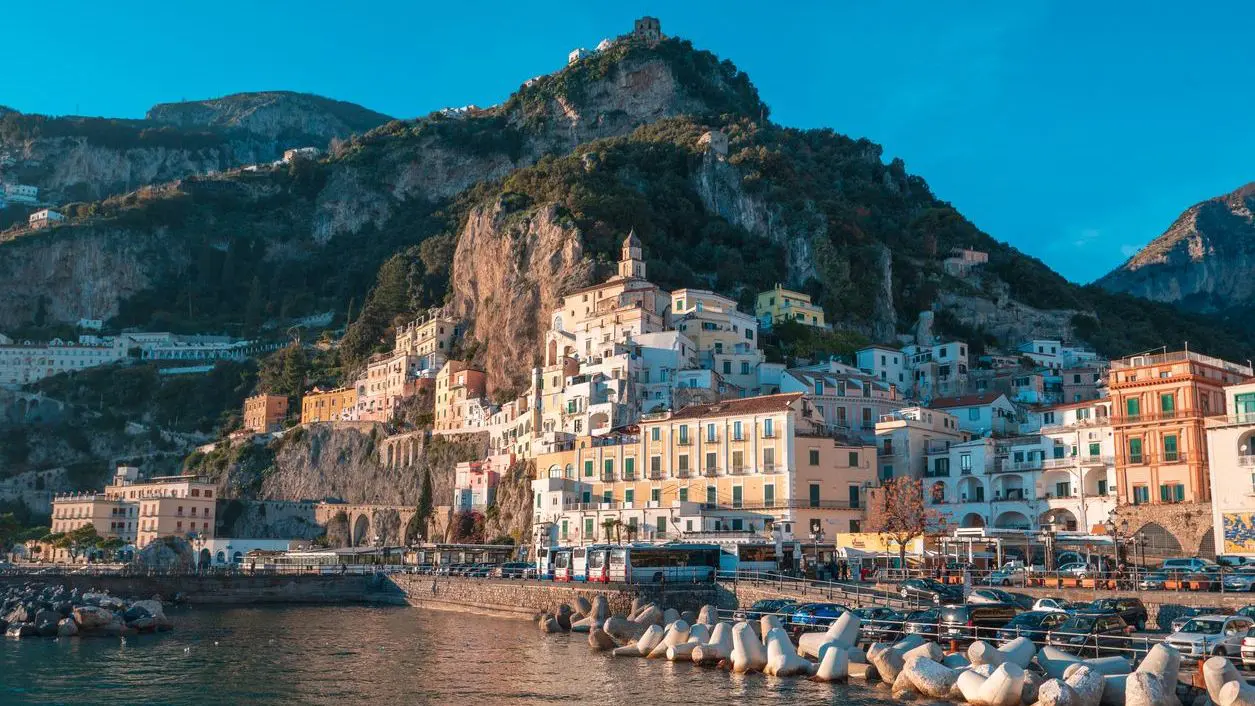
Once a powerful maritime republic, the Amalfi Coast’s namesake town blends naval history with coastal allure. At first glance, Amalfi looks fairly similar to Positano with its colorful buildings and bustling marina. However, closer inspection reveals architectural treasures that justify a visit.
The Amalfi Cathedral (Duomo di Amalfi) dominates the town’s main square with its striking Arab-Norman architecture and mosaics.
An ornate fountain dedicated to Sant’Andrea (Saint Andrew) stands across the square, while the Paradise Cloister (Chiostro del Paradiso) is tucked away at the other side of the cathedral. The 120 columns and gardens of this Moorish-style cloister offer a peaceful moment even during the peak season.
There’s also a supply of unique museums in Amalfi. The Paper Museum (Museo della Carta), housed in a medieval mill, showcases the town’s ancient paper production heritage.
Meanwhile, the Ancient Arsenal of the Republic of Amalfi (Antico Arsenale della Repubblica di Amalfi) takes you on a journey through the town’s maritime history.
Amalfi’s waterfront is lined with a small pebble beach where you can rent an umbrella and go for a refreshing dip in the water. As the town fills up during July and August, there are quieter options nearby, such as Il Duoglio Spiaggia.
For those looking to stretch their legs, you’ll find a network of gentle and moderate hiking trails in the waterfall-studded Valle delle Ferriere, or the gorges and lemon groves of the Valle dei Mulini.
Amalfi’s harbor has ferry connections with Positano, Capri, and Salerno, making this town an ideal base for day trips. You can also take a short boat tour to the Emerald Grotto (Grotta dello Smeraldo), a sea cave filled with stalactites and stalagmites lapped by water the color of precious gemstones.
Travelers short on time are often faced with deciding between Positano and Amalfi. The former is the most popular Amalfi Coast town, famed for its natural beauty, fine dining, and sophisticated glamour.
Amalfi has the benefit of being somewhat quieter yet offering slightly more in terms of culture and activities; it’s also flatter in terrain, which makes it more desirable to travelers with mobility issues or families with strollers.

4. Sorrento
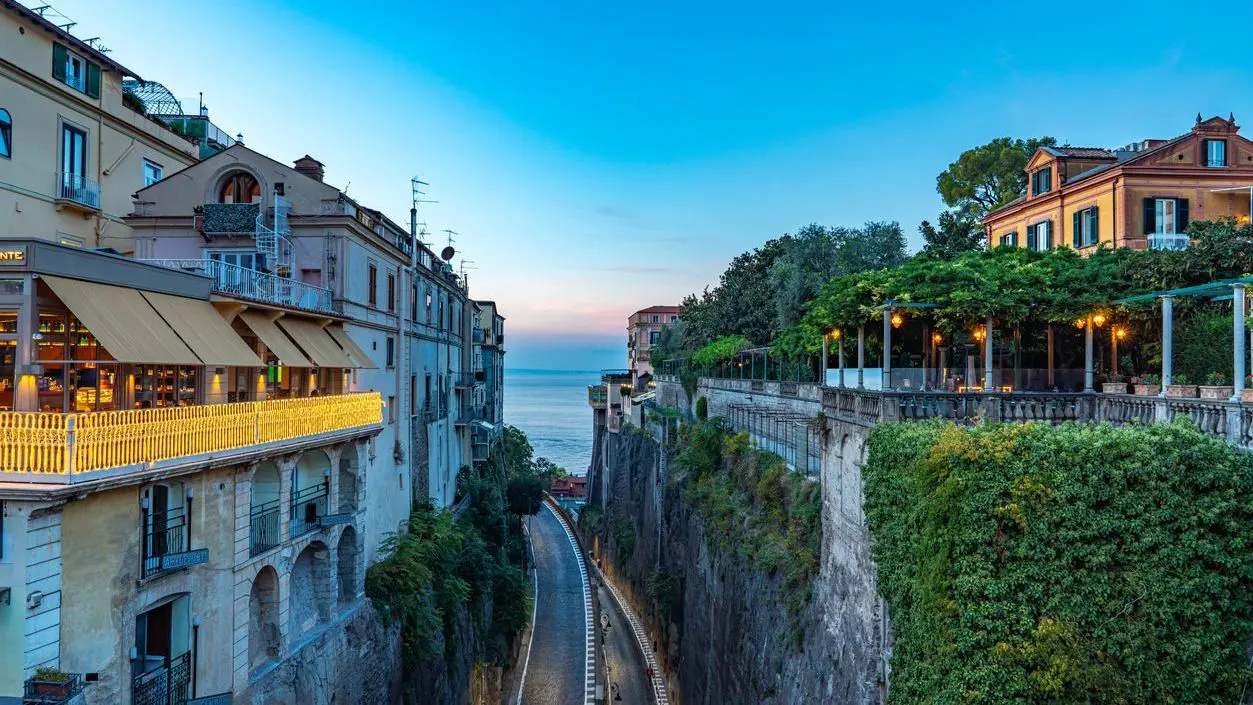
Perched on a cliff overlooking the Bay of Naples and Mount Vesuvius, Sorrento is the official gateway to the Amalfi Coast. This resort city has a small-town charm and excellent amenities to serve as a base during your time in this part of Italy.
Of several notable squares, Piazza Tasso marks the touristic and commercial heart of Sorrento. This square is flanked by hotels, restaurants, and cafés, with side streets leading to artisanal boutiques and souvenir stores.
Handmade leather sandals and novelty bottles of limoncello from local groves are the typical choice of memento from Sorrento. Staying nearby puts you within walking distance of the shoreline.
The Villa Comunale di Sorrento and Marina Grande line the city’s seafront, offering beautiful views of the bay and islands. Visit the beautiful gardens for an early morning stroll or to partake in Italy’s dusktime tradition of la passeggiata, a pre-dinner walk with family and friends to recap on the day.
The San Francesco Monastery (Chiostro di San Francesco) is a lovely spot for photography and finding respite from the intense summer sun.
The Marina Grande fishing quarter comprises pastel-hued houses and seaside trattorias serving Spaghetti alle Vongole and Gnocchi alla Sorrentina. There are several beach clubs on either side of the marina, where loungers offer much-needed protection from Sorrento’s pebbled coves.
Slightly farther afield, Bagni Regina Giovanna offers a wilder swimming experience with rocky sea cliffs providing spots to lay down a towel.
Besides being the jumping-off point for the towns and small villages of the Amalfi Coast, Sorrento is convenient for planning day trips to Naples, Pompeii, Herculaneum, and Capri.

5. Ravello
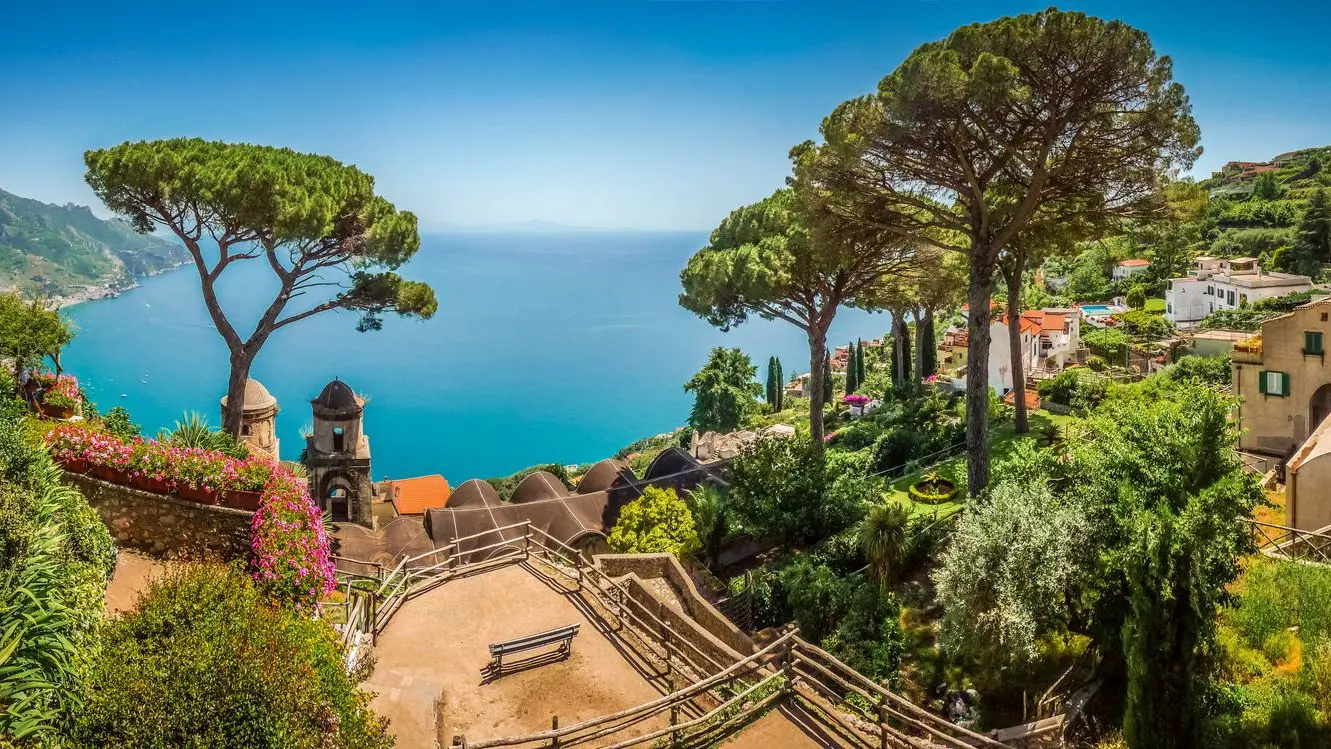
Suspended high above the Amalfi Coast, Ravello is a serene little town with unparalleled views of the Tyrrhenian Sea.
The Moorish-inspired Villa Rufolo is the star attraction, with its fragrant gardens and ornate terraces tumbling down the cliffs. This is one of the must-see places on the Amalfi Coast for photography and summer activities like open-air concerts.
Ravello also has a fine collection of churches to explore, such as the Duomo di Ravello with its mosaic pulpits.
Next door to the chapel, visit the Coral Museum (Museo del Corallo) to admire jewelry and sculptures crafted from coral, as well as the tools used by these artisans. The museum’s workshop remains in use and is open to guests to swing by and see the makers at work.
This medieval village is a fraction of the size of Positano and Amalfi, yet it harbors charming ceramic boutiques and cafés where you can while away a relaxed afternoon enjoying the simple pleasures of the Amalfi Coast.

6. Vietri Sul Mare
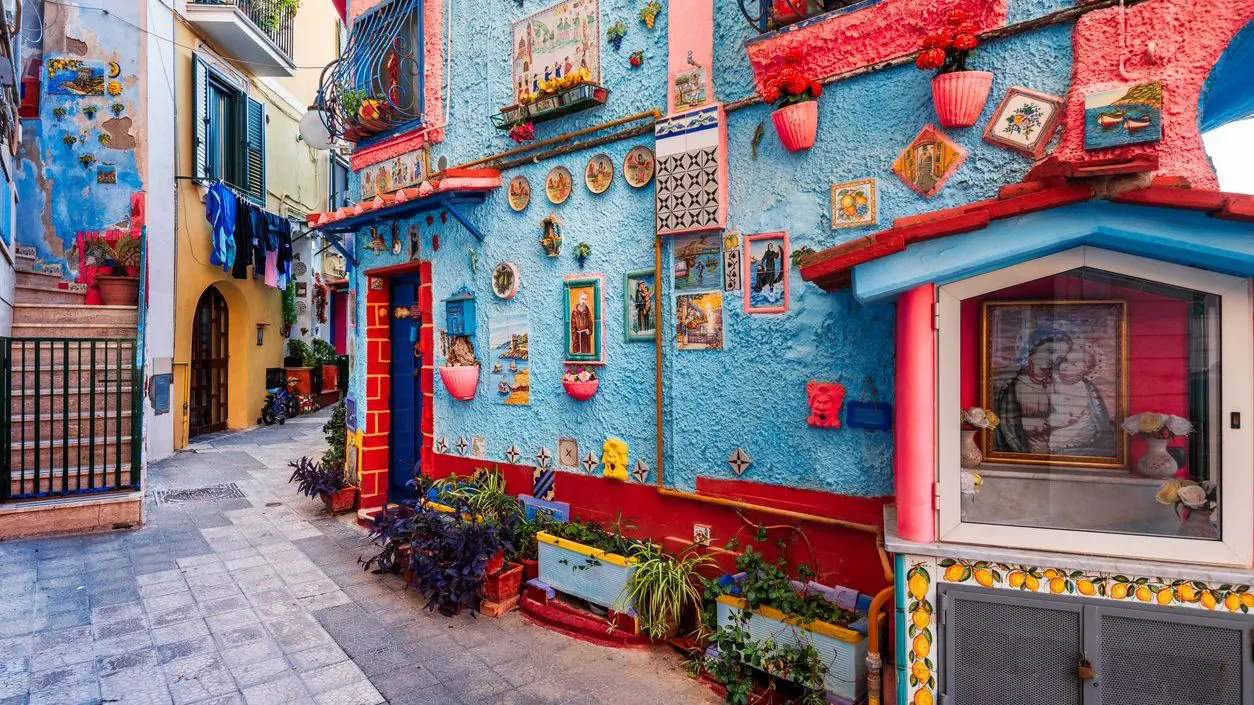
Vietri sul Mare sits at the eastern end of the Amalfi Coast, less than three miles from the port city of Salerno. This small town preserves a centuries-old ceramics tradition, captured through its colorful tile facades and artisanal workshops, which are open to the public.
In fact, the main reason to visit this Amalfi Coast town is simply to stroll the streets at leisure, admiring the buildings. Every inch is decorated with ceramics or paintwork inspired by the local area and its traditional customs, such as fishing and wine making.
It’s a photographer’s dream, made all the more enjoyable by the caress of the Mediterranean sunshine. Extend the walk by calling into Villa Comunale Vietri sul Mare, a seaside park likened to Barcelona’s Parc Güell.
For a deeper understanding of Vietri sul Mare’s ceramics craft and its heritage, visit the Vietri sul Mare Ceramics Museum (Museo della Ceramica Vietrense).
Vietri sul Mare’s main church, dedicated to San Giovanni Battista, dazzles with a majolica-tiled dome that glints in the sunshine.
Next to the marina, you’ll find a surprisingly wide beach with rental loungers and umbrellas. This beach is a mixture of sand and pebbles, set against a stunning backdrop of green hills that you’ll admire from the calm waters.
It’s far less crowded than the beaches of Positano, Amalfi, and Sorrento, with the option to venture to even quieter outlying beaches such as Spiaggia Crestarella.
This Amalfi Coast town can be explored in tandem with nearby hamlets like Raito and Albori, both among Southern Italy’s most beautiful villages.
7. Praiano
The vastly underrated Praiano is one of the must-see places on the Amalfi Coast for experiencing the region’s beauty without the crowds.
The whitewashed homes and ceramic-tiled steps of this peaceful fishing village nestle between the livelier Positano and Amalfi.
Like its neighbors, Praiano is defined by its cascade of pastel-hued residences carved into the cliffs. It offers a slow pace and some of the best sunsets in the area.
The town’s main beaches, Marina di Praia and Spiaggia della Gavitella, are small, scenic coves backed by dramatic cliffs. The latter faces west, making it one of the only spots on the Amalfi Coast where you can watch the sun drop directly into the sea at sundown.
The centrally-located Marina di Praia is a pebbled inlet lined with family-run restaurants serving catch of the day and local wine.
Days in Praiano orbit around simple pleasures: a slow afternoon on the beach, a paddle in the shallows, a sunset aperitif, and a home-cooked supper at an intimate restaurant with family and friends.
8. Capri
Although the island of Capri is not officially part of the Amalfi Coast, it falls under the same region and is an easy addition to any Amalfi Coast itinerary, either as a day trip or for an overnight stay.
Capri’s dramatic cliffs and turquoise coves have dazzled visitors since Roman times, as made clear by the ancient sites dotted around the island. These days, Capri is as much revered for its glitz and glamour as for its natural beauty.
The island’s defining attraction is the Blue Grotto (Grotta Azzurra), a sea cave that glows with ethereal blue light at certain times of day. Boat trips operate from the island’s harbor, although advance purchase of tickets is advisable during the peak summer months.
If the cave is closed due to inclement weather or tidal surges, it is still possible to take a scenic cruise around the island to appreciate the rugged coastline.
In the main town of Capri, luxury boutiques and elegant cafés line the Piazzetta. This is a popular spot for afternoon cocktails and people-watching, with famous faces not an uncommon sighting.
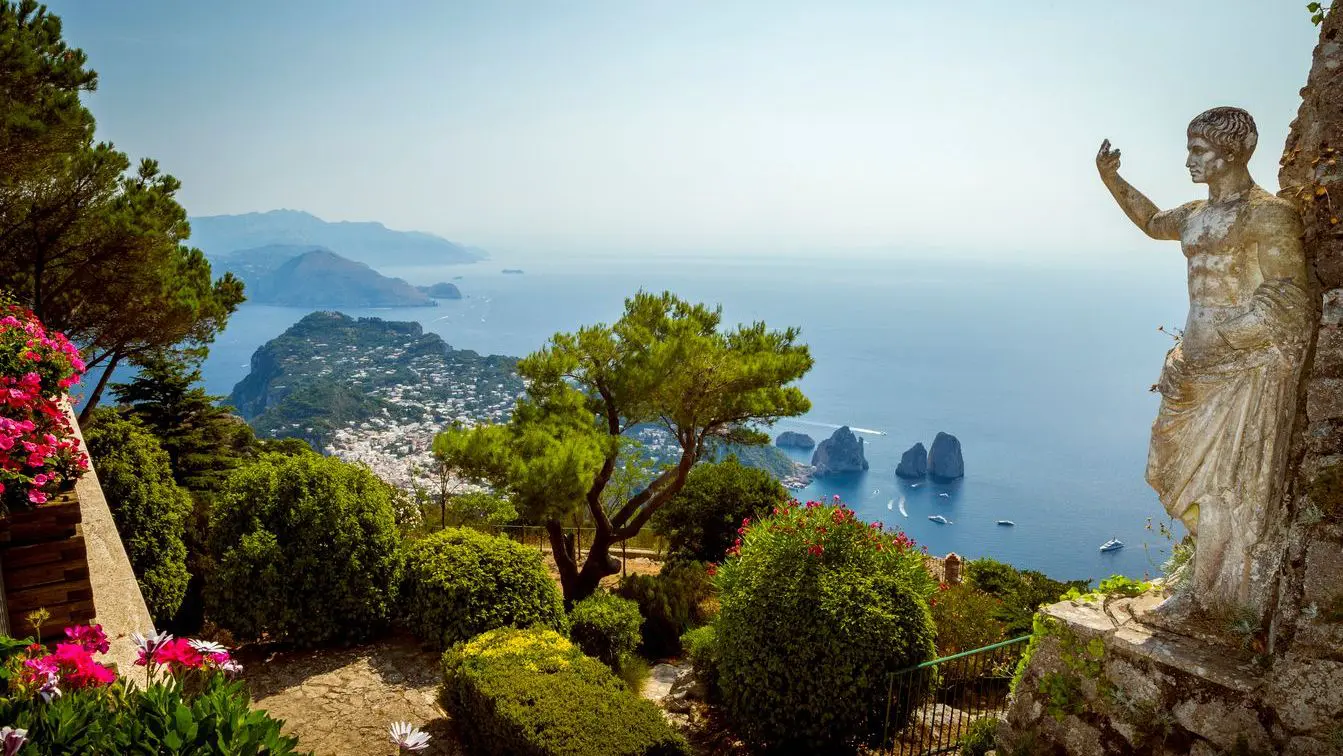
The Gardens of Augustus (Giardini di Augusto) are within walking distance of town, with panoramic views overlooking the Faraglioni Rocks. This is also the start of the Via Krupp walking path that zigzags down to meet the sea.
On the northeastern corner of Capri stand the ruins of a Roman palace built for the Emperor Tiberius. Little remains, but it’s easy to imagine how the complex would have appeared in its heyday.
The western town of Anacapri is quieter, usually visited by those spending more than one day in Capri. This is the location for the chairlift, which journeys to the summit of Monte Solaro, the island’s highest peak.
Villa San Michele stands between Anacapri and Marina Grande, offering staggering panoramic views and treasures from the ancient world.

9. Ischia
Capri’s larger cousin floats at the northern end of the Bay of Naples. Ischia is another destination often visited in conjunction with the Amalfi Coast. However, this island isn’t officially part of the region either.
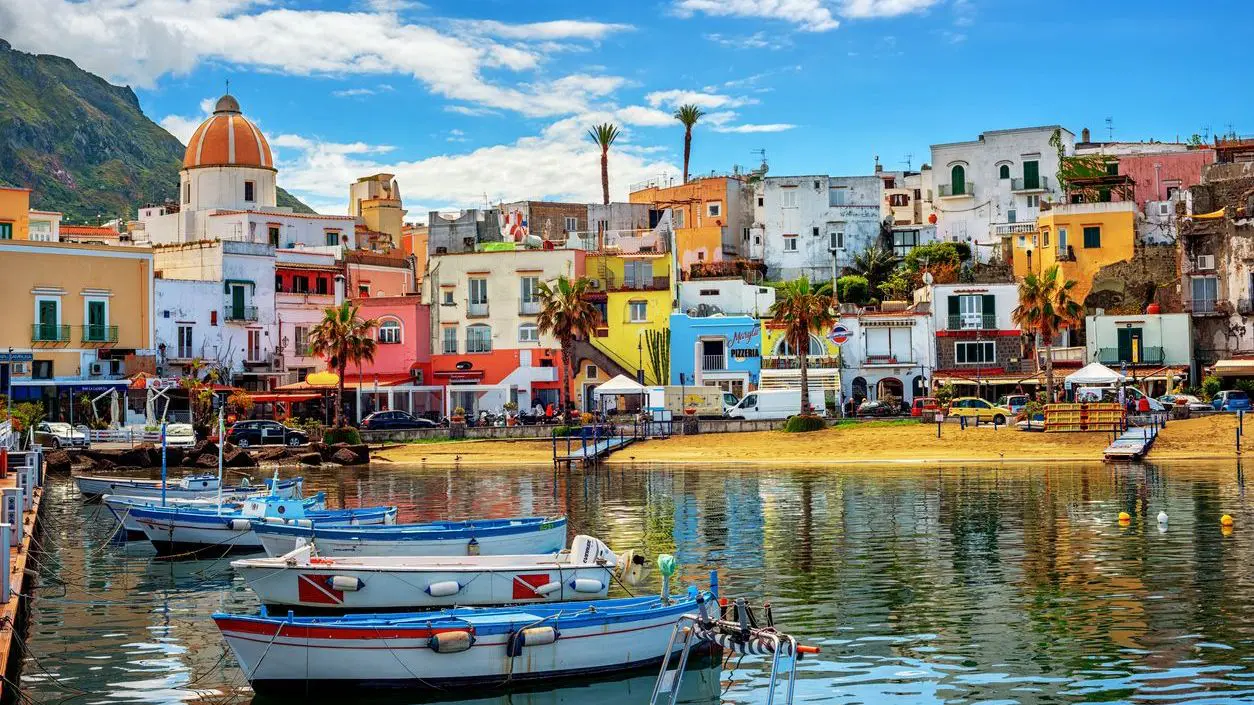
Ischia stuns with its volcanic and verdant terrain, best enjoyed at its beautiful beaches with crystal-clear waters, thermal spas, and gardens. The main town, also called Ischia, is situated on the eastern coast.
It’s dominated by the Aragonese Castle, which rises from the sea on a rocky isle. Tickets include access to the tunnels beneath the fortress and admission to the archaeological museum.
Sant’Angelo is a car-free fishing town with pastel houses, chic cafés, and an unhurried pace of life.
Besides connecting with the island’s history, most travelers visit Ischia for a dose of relaxation. There is a scattering of spa hotels and bathing complexes dotted around the island perimeter with pools fed by volcanic springs, many of which offer sea views.
This volcanic environment is also the reason why Ischia’s beaches are so diverse, as evidenced by the golden sands of Spiaggia dei Maronti and the thermal sea pools of Sorgeto Bay (Baia di Sorgeto).
Travelers looking for outdoor adventure can hike to the summit of Mount Epomeo for panoramic island vistas or charter a yacht for a day of sightseeing and swimming.
Ischia may be visited as part of a day trip from Naples before or after venturing to the Amalfi Coast. However, due to the island’s size, it is recommended to stay for a couple of nights to make the most of its many charms.
10. Tramonti
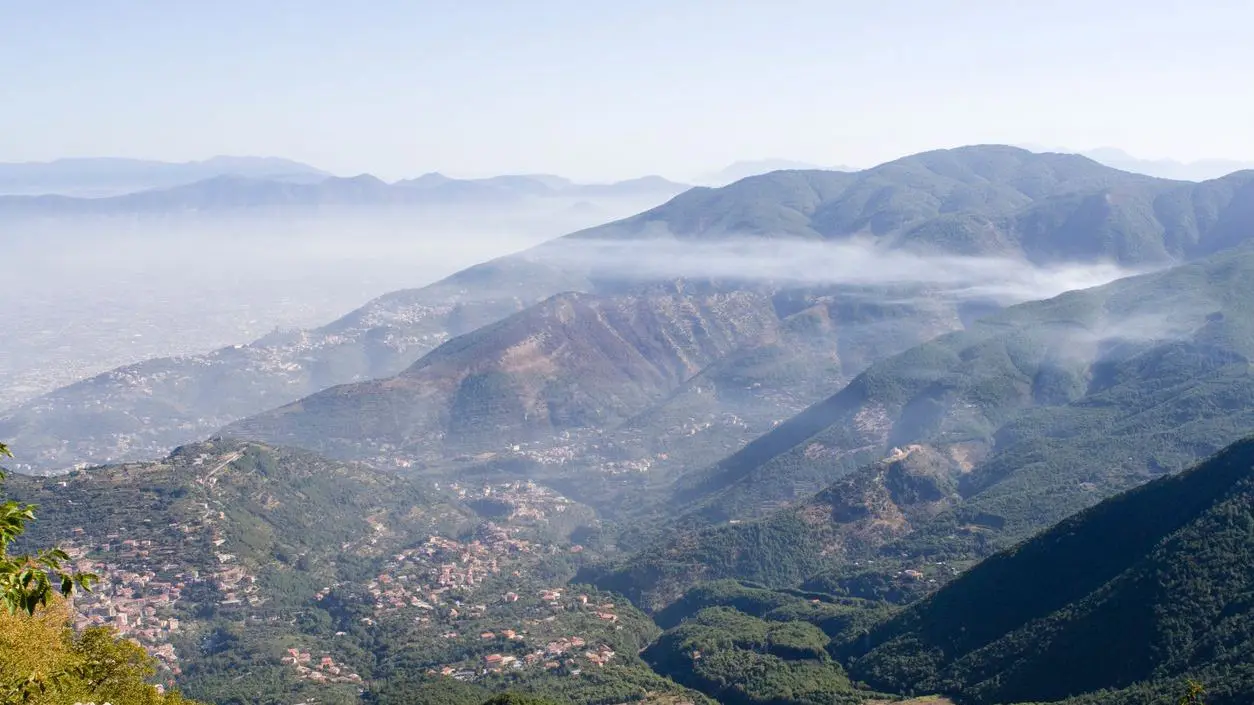
One of the most beautiful places to visit on the Amalfi Coast, Tramonti is a cluster of thirteen ancient hamlets dotting the lush valleys of the mighty Lattari Mountains.
The name originates from tra i monti, which means among the mountains in Italian. In its singular form, tramonto means sunset, which you’ll see is also appropriate for this spot if you’re fortunate to stick around for golden hour.
These hamlets are nestled amid chestnut forests, olive and lemon groves, and terraced vineyards. Linked by hiking trails, Tramonti is a popular destination for outdoor enthusiasts as well as wine aficionados.
The focus lies on tastings of Aglianico and Tintore di Tramonti at family-owned estates. There is speculation that pizza originated in these hills and was later adopted by Naples.
Pucara is particularly notable for its churches and for being the birthplace of Concerto, a spiced liqueur crafted by nuns. Polvica’s star attraction is a Franciscan convent dating back to the late 15th century.
Campinola’s Church of Saint John the Baptist exhibits a remarkable altar-piece and one of the region’s oldest functioning organs.
11. Salerno
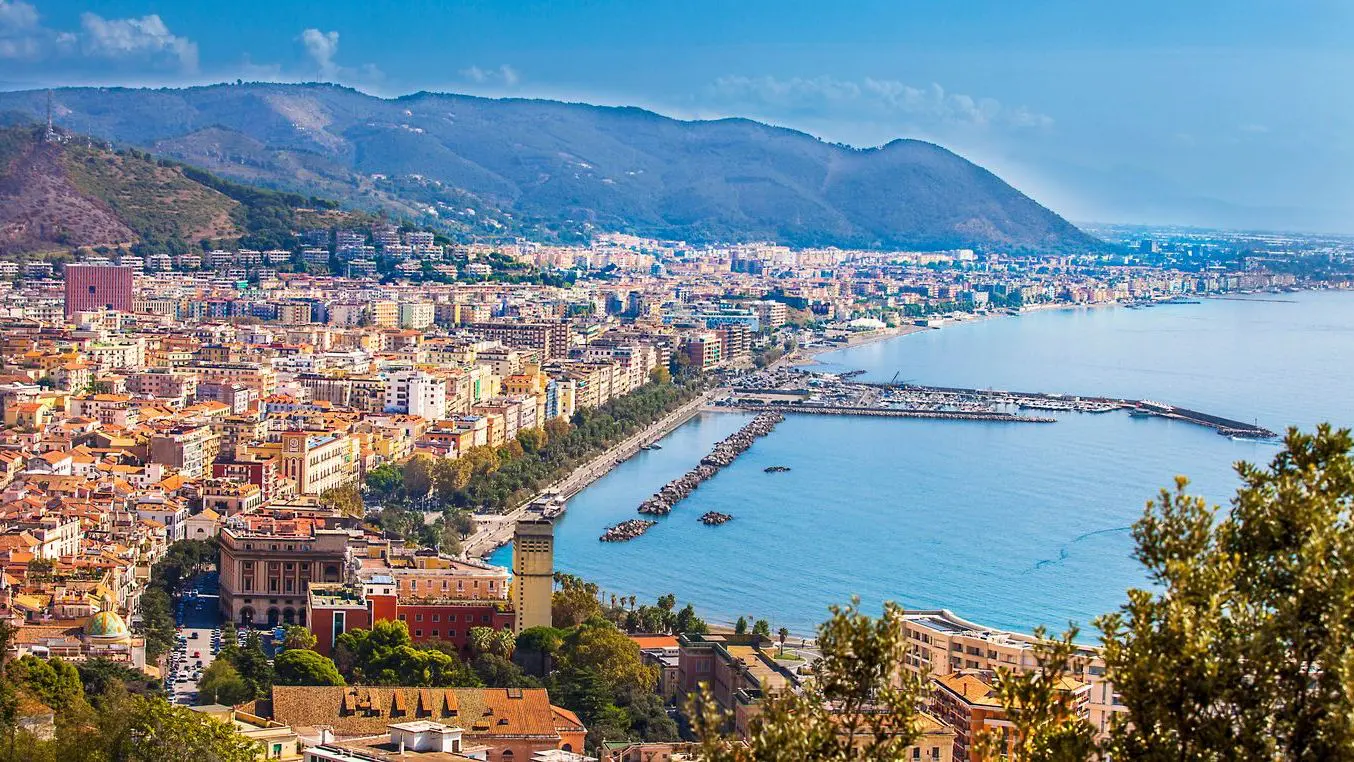
This vibrant yet much-overlooked port city marks the southern gateway to the Amalfi Coast. Being less developed as a tourist destination, Salerno offers an authentic representation of southern Italian life.
Once a flourishing center for medicine students, Salerno preserves a historical moment alongside its glorious architecture.
Medieval alleys wind their way through the historic center, bringing you to the magnificent Salerno Cathedral (Duomo di Salerno). This Romanesque church, dedicated to Saint Matthew the Apostle, draws on Arab architecture and is an unsung treasure in Italy.
Not far from the Duomo stand the remains of a medieval aqueduct and an archaeological museum containing ancient and classical relics from the city and the surrounding area.
Arechi Castle (Castello di Arechi) rises on the hills overlooking the port. The historical exhibits could benefit from some attention; however, the castle is worth visiting for a chance to wander the ruins and appreciate the coastal scenery.
The Lungomare Trieste, a palm-lined promenade, comes to life during the evening as locals honor the custom of la passeggiata, and there is a wide variety of restaurants dishing up the freshest fish.
Salerno can bookend an Amalfi Coast itinerary or serve as a quieter home base for day trips. Ferries depart for Amalfi and Capri, while Naples is less than an hour away by train.
The archaeological site of Paestum is just an hour south of Salerno by train, exhibiting temples dedicated to the Ancient Greek deities Hera, Athena, and Poseidon.

Explore The Amalfi Coast With JayWay
The Amalfi Coast is a true masterpiece of dramatic cliffs, stunning views, and rich history, the perfect place to make memories to last a lifetime. To achieve this, you should start by experiencing this Italian paradise in complete comfort. This is where JayWay Travel comes in.
We design immersive tours, tailor-made to your needs and travel preferences, to elevate your unique journey and turn your personal travel dreams into a seamless, lifelong memory. We take care of every detail from start to finish so that you can focus entirely on enjoying the beauty around you.
Furthermore, our custom tours offer a premium, relaxed travel experience. If you’ve always wondered what a road trip feels like in this exciting part of Europe, but are skeptical about driving, the easiest way is to jump in a car with a local driver to travel in private, air-conditioned comfort across the coastline.
The professional drivers we work with know every coastal route perfectly, ensuring you arrive safely and smoothly at every destination. You can simply relax, chat, and admire the sparkling Mediterranean views, as your private schedule dictates exactly when and where to go.
Moreover, at JayWay, we connect you directly to the true spirit of Italy. Our guides are passionate local experts who love sharing their deep knowledge, passion, and love for their country, helping you to avoid tourist traps and crowds.
They know the absolute best time to explore Positano and the quiet, scenic pathways in Ravello, and they will introduce you to charming, family-run trattorias in Amalfi where you can taste authentic regional dishes and meet welcoming locals for an exclusive insider perspective.
At JayWay Travel, we know that every traveler has a unique dream for their Italian holiday. You may want to hike scenic mountain trails. Or prefer to relax on sunny terraces in Capri.
No matter what brings you to the Amalfi Coast, we build flexible itineraries that match your personal pace. We balance guided discovery with plenty of free time. You can shop for local ceramics or explore historic ruins at your leisure, having total control over every single stop.
Your time on the Amalfi Coast is highly precious. Let us create a flawless, inspiring vacation designed exclusively for you.
Contact our expert trip advisors, and get ready for all the beauty that awaits at the must-see places on the Amalfi Coast. All you have to do is let us know your favorite destinations and travel style. We’ll take care of everything else.


Born and raised in Athens, Maria’s passionate about travel and storytelling, a combination that makes her ideal for her role as our content manager.


