



Photos from Santorini usually tell only one story. White houses stacked on the caldera and crowds waiting for the sunset. When you enter the island’s traditional medieval village, you will find narrow alleys, fortress-like hills, and a quiet area where island life blends in.
Pyrgos, Megalochori and Emporio are the best places to get a feel for this character of Santorini, while Finikia and Vothonas offer even more depth if you have time. This is a town where you can slowly wander around, follow your curiosity, and reveal every nook and cranny of the island.
Here is an overview of the best medieval Santorini villages to visit.
Why medieval Santorini villages have a different feel
Santorini’s medieval and old villages are not designed for sunset photos. They were built to withstand pirate raids, high winds, and hot summers. Houses are tightly packed together, alleys are intertwined, and churches appear in places that seem to be hidden on purpose.
This can be seen especially in the fortified “Castellia” cores of Pyrgos and Emporio, where the settlements themselves became defensive walls. Thick white-painted walls keep the interior cool, narrow passageways allow for a breeze, and small squares tell centuries of stories within just a few meters. Instead of the noise of restaurants and traffic, you are more likely to hear footsteps on stones, church bells, and low voices coming from the courtyard.
Explore the medieval villages of Santorini with a local driver
Want to see Pyrgos, Megalochori and Emporio without having to worry about driving or parking?
Find a flexible private tour or transfer service to connect you. Traditional villages in Santorini Stop at Prophet Elias Monastery, the highest observation deck on the island.
Common options are 4-6 hour island tour This includes walking through the alleys of the villages of Pyrgos, Megalochori and the medieval Castelli of Emporio. your speed and interest.
if you prefer go deeperYou can also add quieter neighborhoods, such as the villages of Finikia and Vothonas, or find an itinerary that combines villages with traditional winery stops for tastings.
Book here
Pyrgos: a labyrinth on a hill with long views
How does it feel?
Pyrgos is built in the form of an amphitheater on a hill and once served as the capital of Santorini, which explains its tiered, almost castle-like layout. As you go up, the alleys curve around and the houses are so tightly packed back that the village feels like a protective maze.
Please walk slowly here. Instead of racing to the top, Pyrgos rewards you for pausing in the shade and looking around.
You are likely to find:
- Sun-bleached blue doors and weathered shutters reflect the harsh light and wind of the island.
- There are small chapels nestled between the houses, sometimes with icons just up a few steps.
- Patios filled with pots of bougainvillea and basil or geraniums are often just steps from the main road.
Near the ruins of the Venetian castle at the top, you’ll find expansive views of Santorini, including vineyards, inland villages and, on clear days, the edge of the caldera in the distance.
Practical tips on Pyrgos
- timing: Especially in summer, aim for early morning or late afternoon to avoid the steep heat of the cobblestone streets.
- footwear: Wear comfortable shoes with good grip. Some pebbles are shiny and slippery from years of use.
- speed: This is not a place for checklists. Allow at least an hour to wander up and down, and allow additional time if you enjoy taking photos or cafes.
Related reading: Why you should visit Santorini during shoulder season
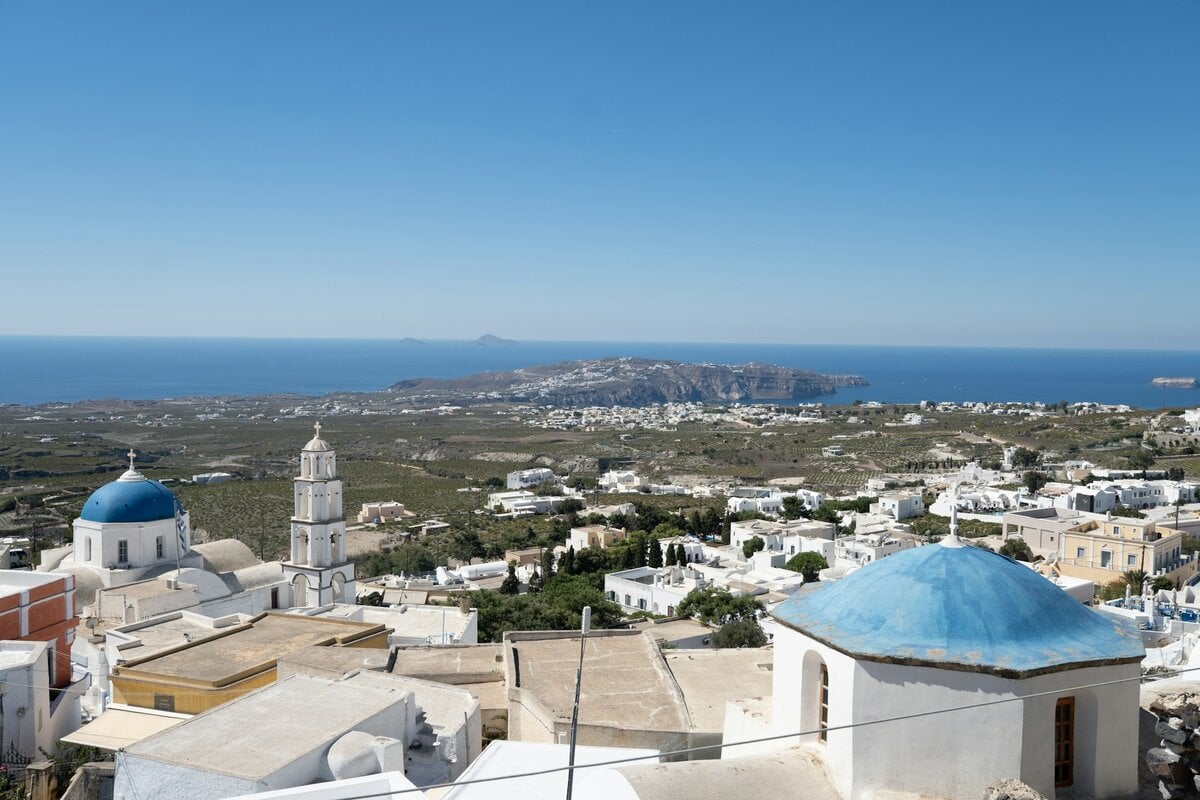
Prophet Elias: Santorini from the highest point
Not far from Pyrgos is Elias the Prophet, the highest point on the island and an open balance with the narrow streets below. From here, Santorini stretches out in every direction: vineyards, volcanic ridges, villages, and long lines of sea and sky.
Many travelers find this lookout a quieter alternative to the sunset spots clustered along the caldera, especially outside of peak hours. You’ll have space to breathe, watch the light move across the island, and understand how the various villages fit together on the map.
monastery etiquette
Prophet Elias Monastery dates back to the 17th century and remains an active religious site.
Once inside:
- Please dress respectfully (shoulders and knees should be covered).
- Keep your voice low and avoid taking distracting photos. This is especially true when it comes to worship or private moments.
- See your space as a living place of worship, not just a perspective.
Megalochori: Shaded squares and smooth rhythm.
A town made for wandering
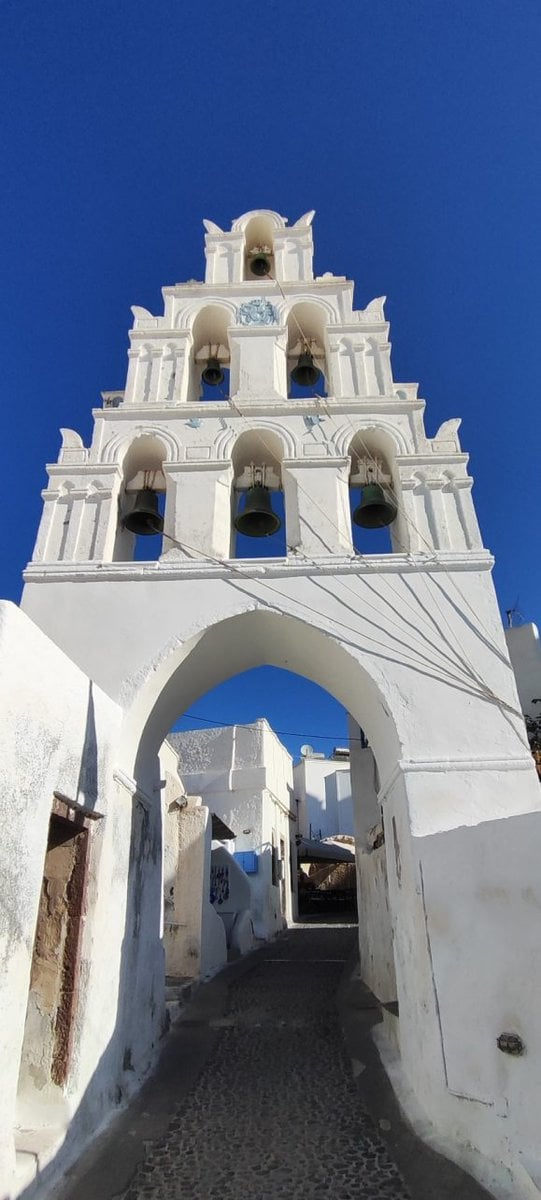
Megalochori has a softer, more intimate feel than Pyrgos. Instead of a small fortress on a hill, you’ll find a village with elegant mansions, traditional cave houses and an elegant bell tower all arranged around a central square.
The best way to experience Megalochori is to start or end at the main square.
From there:
- Follow the alley that looks most attractive. Most lead to archways, small chapels or quiet cul-de-sacs overlooking vineyards.
- Look up and spot the bell towers that decorate the narrow streets or rise abruptly from the rooftops.
- Pay attention to everyday details. Locals chatting outside cafes, children playing, cats lying in any shade they can find.
This is a town that encourages you to slow down and not think about anything.
Practical tips for Megalochori
- Respect your privacy: Many of the houses and courtyards here are still inhabited. Take photos from a distance and avoid entering spaces that are not clearly public.
- Time needed: Plan to wander around for at least an hour, or extra if you want to sit in the square, have a drink, and take in the town atmosphere.
- light: In the late afternoon and early evening, the light is softer and shadows are longer, making buildings more photogenic.
Emporio: A fortified village off the main road.
Why Emporio belongs on your list
Emporio is located in southern Santorini and is often described as one of the island’s most historically important and largest villages. At its center is the medieval Castelli, a small fortress with houses and alleys intertwined into a complex defensive structure.
In Castelli:
- The alleyways feel like tunnels, and overhead arches and sudden turns make the town feel like a stone maze.
- The houses share walls and sometimes roofs, reinforcing the feeling that you are walking inside a single, organic structure rather than a separate building.
- Small churches appear unexpectedly, recessed between houses or set on small terraces.
On the edge of Castelli stand square towers (often called Goulas) that historically served as a lookout and refuge during raids. Nearby, old windmills dot the surrounding hills, adding to the feeling that Emporio is at the crossroads of defence, trade and rural life.
Practical tips for Emporio
- voyage: Offline maps can be helpful, but part of their appeal is allowing for a little confusion. Castelli is built to feel like a maze.
- footwear: Narrow, uneven steps and polished stones require sturdy, closed shoes.
- honor: This is still a living neighborhood. Keep your voice low, move aside for residents, and pay special attention to doors and windows when taking photos.
Related reading: Santorini Ecotourism Guide
Learn more: Finikia and Vothonas
If you fall in love with the quiet of Santorini and have time to explore further, two other traditional villages are worth considering.
- Finnish: It is close to Oia, often described as a tranquil settlement with colorful houses, old winery buildings and narrow alleyways away from the crowds just up the road.
- Botona: The village is famous for its rock-hewn cave houses and winding roads, highlighting a unique aspect of the island’s traditional architecture.
Neither is primarily promoted as a medieval fortress in the same way as Pyrgos or Emporio, but both can add texture to our understanding of how people adapted to the landscape over time.
How to combine these villages in one day
Classic Half Day: Pyrgus and the Prophet Elias
If you’re short on time but want to get a taste of medieval Santorini:
- Pyrgos’ morning: Have a coffee in the village and stroll along the alleyways to the castle ruins. If you don’t want to rush, wait 1.5-2 hours.
- Prophet Elias’ noon or late afternoon: Drive or drive up to the monastery and lookout point for a wide-angle view of the island.
Since Pyrgos is fairly centrally located, this combo works well if you stay anywhere on the island.
Slow Village Afternoon: Megalochori
Dedicate a relaxing afternoon to Megalochori:
- Start at the square for a drink or light snack.
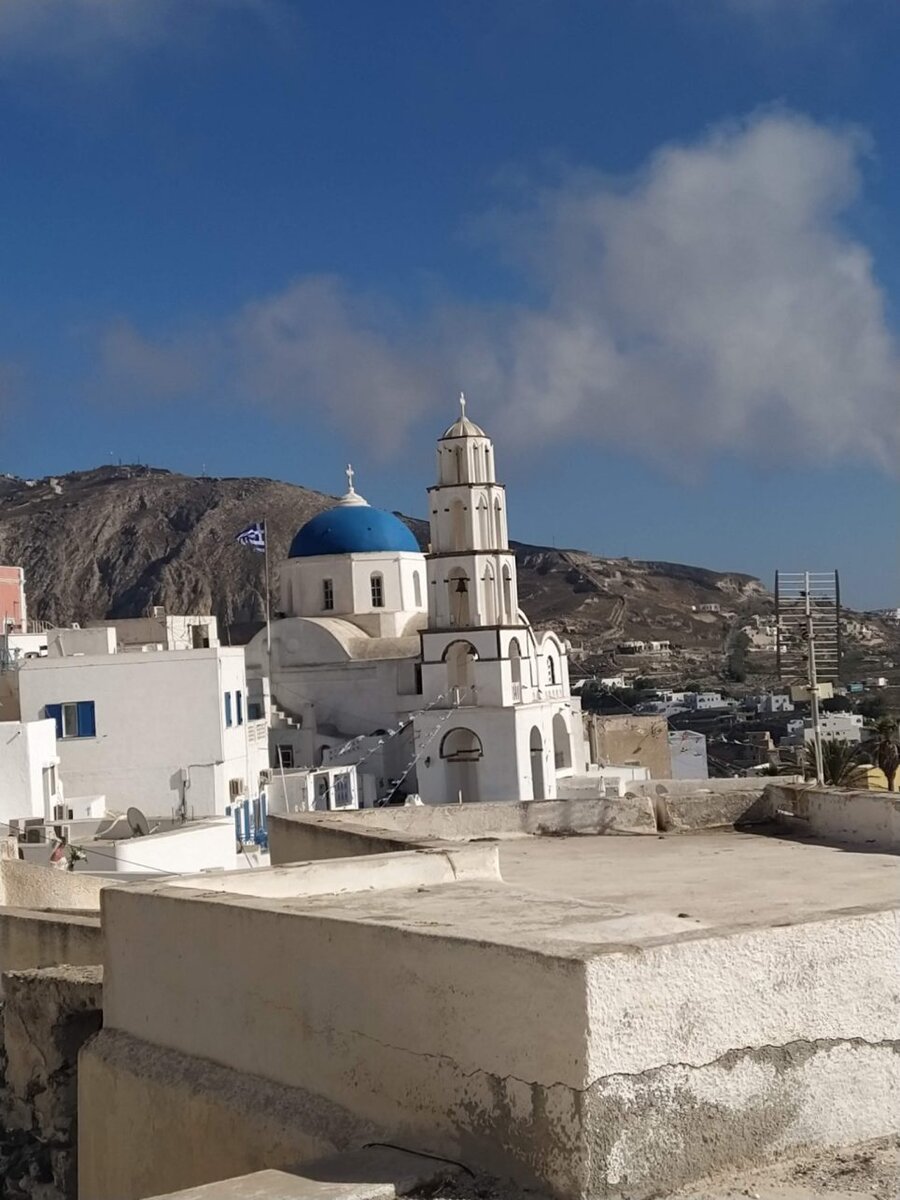
- Use the bell tower as a reference point and drift through alleys with no fixed path.
- When the town feels particularly atmospheric, turn back towards the square as the light softens.
Full day village focus: Pyrgos, Emporio and Megalochori
If your goal is to see the fortified and traditional side of Santorini:
- Start with pyrgos Beat the heat on the hill and enjoy the quiet morning alley.
- head south Emporio Spend some time exploring the Castelli and windmills and learning about their defensive layout.
- complete Megalochori Take a more leisurely evening and relax in the square.
Travelers who don’t want to drive themselves often look for small group or private village tours that combine these stops with visits to lookouts or wineries, but it’s a good idea to check how much time you’ll actually spend walking and on the road in each village, and what the group size is.
When to visit the medieval villages of Santorini
spring (approximately April to June) and autumn (September-October) is generally the most comfortable season to explore this alley. Temperatures are milder, the light is softer for photography, and the roads are less crowded than in mid-summer.
July and August:
- Plan your visit to the village early in the morning or close to sunset.
- Bring water, a hat, and sunscreen. Even in inland villages, the midday sun can be strong.
- More visitors are expected than in peak season, but generally fewer than in the caldera hotspot.
Winter brings a different atmosphere. Although some businesses are closed, the town has a more local and atmospheric feel, with a focus on everyday life rather than tourism. If you’re curious about broader Cycladic architecture and history, explore resources from the official Greek Tourism Board (www.visitgreece.gr) for background before or after your trip.
Related reading: Why you should visit Santorini during shoulder season
Why this alley stays with you
Pyrgos, Megalochori, Emporio, and quiet corners of Finikia and Vothonas preserve layers of Santorini that don’t fit the typical sunset photo. Their fortresses, cave houses, bell towers and small chapels reflect centuries of adaptation to raids, eruptions, trade and tourism.
For many travelers, the lasting memories are not in the most photographed places, but in quieter places. An alley where the only sounds are the sound of the wind hitting the white-painted walls, the echo of a single bell, and low conversations coming from a shaded square.
Spend a few leisurely hours in the villages of Santorini and you’ll feel like you’ve finally reached the island behind the postcards.





