



According to the U.S. Centers for Disease Control and Prevention, food allergies are a growing health problem that affects approximately 6 percent of American adults and children.One Peanuts are a major food allergen that poses a serious threat, putting an estimated 1.5 million Americans under the age of 18 at risk for life-threatening reactions such as anaphylaxis.2
The American Academy of Pediatrics previously recommended that parents wait to introduce peanuts to their children until they were 3 years old. However, they stopped this advice in 2008 and updated their guidelines in 2019 to acknowledge that avoidance may not help prevent food allergies. In fact, there is growing evidence to support the idea that early exposure to peanuts may help prevent allergies later in life.three
Study May 20244 Evidence published in the journal NEJM further strengthens that argument. “This is the first study to establish long-term oral tolerance as a protective strategy against peanut allergy,” Gideon Lack, professor of paediatric allergy at King’s College London and one of the study’s authors, told Fox News.5 But as promising as this approach may seem, is it really the right choice for your child?
A series of studies show potential benefits of early peanut exposure.
This featured study, known as the Learning Early About Peanut Allergy (LEAP)-Trio trial, is based on the results of the original LEAP clinical trial and its follow-up, the LEAP-On study. The initial LEAP trial6 A 2015 study involved more than 600 infants aged 4 to 11 months who were considered at high risk for developing peanut allergy due to a preexisting egg allergy or severe eczema. According to a news release from the National Institutes of Health:7
“During the LEAP trial, half of the participants regularly consumed peanut products from infancy through age 5, while the other half avoided peanuts during that time. The researchers found that introducing peanut products early reduced the risk of peanut allergy by 81 percent at age 5.
Afterwards, the LEAP children who participated in LEAP-On were asked to abstain from peanut products until they were 5 or 6 years old. The investigators found that most of the children in the original peanut group were protected from peanut allergy at age 6.”
“Peanut allergies occur very early in life, most often between 6 and 12 months of age in children. If we want to prevent the disease, we need to prevent it before it occurs,” Lack told CNN. He explained that this phenomenon, known as oral tolerance induction, shows that early exposure to an allergen can train the immune system to resist allergies later in life.8
To follow up on these results, the LEAP-Trio study will be conducted in 2024.9 We wanted to see if the protective effects of early peanut introduction continued into adolescence. The researchers followed up with 508 participants from the original LEAP study, now about 12 years old. They found that peanut allergy remained “significantly more common” in the peanut avoidance group, with 15.4% of them having an allergy.
In comparison, only 4.4% of those who ate peanuts early in life had an allergy. The study found that eating peanuts early in life could reduce the risk of peanut allergy in adolescents by up to 71%.10
“The main finding of this study is that early introduction of peanuts in the first year of life provides long-term protection against peanut allergy into adolescence, even if peanut consumption does not continue past age 5.” Fox News Digital elaborated further:11
A small amount of peanut butter can be beneficial, but here's the problem.
Dr. Jeanne Marrazzo, director of the National Institute of Allergy and Infectious Diseases (NIAID), said in a press release:12 The LEAP-Trio study results “should strengthen the confidence of parents and caregivers that introducing peanut products to their children from infancy, following established guidelines, can provide ongoing protection against peanut allergy,” the study said.
“If this safe and simple strategy were implemented widely, it could prevent tens of thousands of cases of peanut allergy among the 3.6 million children born in the United States each year.” Marazzo added.
Lack emphasizes that when introducing peanuts into an infant’s diet, it is ideal to puree them with soft peanut butter to avoid choking hazards. The sooner a child is exposed to food allergies, the better. However, they must be developmentally and neurologically ready to handle solid foods, meaning they can chew and swallow without choking hazards. He does not recommend introducing solid foods to infants before 3 months.13
Dr. Purvi Parikh, an allergist and immunologist at NYU Langone in New York and a spokesperson for the Allergy & Asthma Network, gave a similar recommendation to CNN. She advised that introducing peanut to children at low risk for allergies can begin as early as 4 to 6 months under the guidance of a pediatrician. However, children with severe eczema and egg allergies should see an allergist before introducing peanut.14
“Since the baby cannot eat solid food yet, it is recommended to feed it mixed with breast milk or formula milk in a thin consistency similar to that of breast milk. To avoid choking, start with a small amount and slowly increase the amount every 3-4 days as much as the baby can tolerate.” Parikh added.15
But while introducing peanuts early may help prevent allergies, there is an important caveat: peanut butter is high in polyunsaturated fatty acids (PUFAs).16 So while consuming small amounts may help lower your child's risk of peanut allergy, it's ideal to minimize overall PUFA intake for optimal health.
Excessive PUFA intake can harm your child’s health
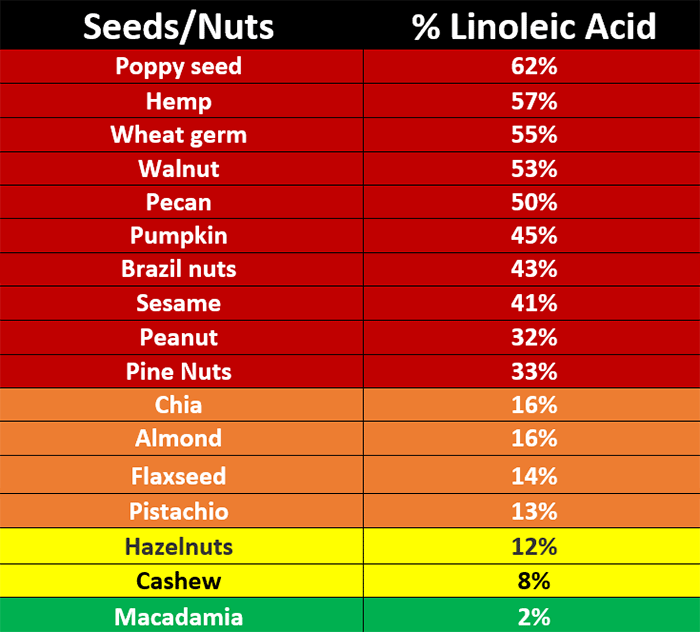
PUFAs, especially the omega-6 fat linoleic acid (LA), are abundant in oils, seeds, and nuts used in cooking, as shown in the table below. Peanuts in particular are 32% linoleic acid.
To be clear, LA is only toxic when consumed in excessive amounts. Unfortunately, most people today consume far more LA than is ideal, damaging cellular and mitochondrial function.
Even children and adolescents are at risk of consuming excessive LA through foods containing vegetable oils and highly processed foods.17 A study18 Studies have shown that children's PUFA intake increases with age, with infants consuming an average of 2.5–7.9 g per day, while adolescents consume 5.4–17.9 g per day.
That is, the average toddler is already consuming more LA than the recommended 2 to 5 grams per day. By the time they are teenagers, they may be consuming more than three times the upper limit.
One of the reasons PUFAs are problematic is because they are easily damaged by oxygen species produced during cellular energy production. This damage leads to the formation of advanced lipid oxidation end products (ALEs), which produce dangerous free radicals that can damage cell membranes, mitochondria, proteins, and DNA. Lipid oxidation is also implicated as a major reason why peanut butter has a shortened shelf life.19
What is even more concerning is that PUFAs can become incorporated into cell membranes and remain there for 5-7 years. PUFAs are also susceptible to oxidation because they are missing one or more pairs of hydrogen atoms, which causes the fat to break down into harmful metabolites such as OXLAM (oxidized LA metabolites).
These ALEs and OXLAMs cause mitochondrial dysfunction, which is a hallmark of most chronic diseases. For this reason, I recommend limiting LA intake to less than 5 grams per day, or better yet, less than 2 grams. To learn more about the potential health consequences of excessive linoleic acid intake for you or your children, check out my article “Linoleic Acid – The Most Destructive Component in Your Diet.”
Limit your child's peanut butter intake
To reiterate, if you are thinking about introducing peanuts to your child early in life to reduce the risk of peanut allergy, it is best to introduce them in very small amounts so as not to increase their PUFA intake too much. According to the USDA:20 100 grams of peanut butter contains 9.73 grams of LA, meaning that one tablespoon of peanut butter contains about 1.6 grams of LA.
While this may seem like a small amount, remember that linoleic acid is widely distributed in our diet. Even the small amounts of LA found in nuts and nut butters can push your child’s daily LA intake beyond the ideal limit and contribute to potential health problems.
The Food and Agriculture Organization (FAO) and the World Health Organization (WHO) recommend that LA should provide at least 3% of total energy intake for children aged 1 to 2 years, and at least 2% for children aged 2 years and older.21 My recommendation is to keep your LA intake to less than 5 grams per day. Once you reach 5 grams per day, the fragile double bonds in LA begin to oxidize, creating dangerous free radicals.
Nourish your children with the right foods
Early introduction of peanuts appears to have a protective effect that continues into adolescence, even if peanut products are not consumed after age 5.22 You don’t have to constantly pack high-PUFA peanut butter sandwiches for your kids’ school lunches. Instead, focus on nourishing your family with healthy foods like those listed in the table below.
But before you add healthy carbs to your child’s diet, you need to make sure your child’s gut is in optimal health. If your gut is compromised, eating high-fiber fruits and starches will only feed the pathogenic bacteria in your gut. So if your child’s gut is not in optimal health, eliminate LA from their diet as much as possible and slowly introduce healthy carbs, starting with fruit juice.
healthy carbohydrates | |
Fresh fruit juices such as sweet organic orange juice (non-bitter) | Fruits ripened according to season |
Maple syrup or honey | Well-cooked vegetables (for micronutrients and fiber) |
Well-cooked roots and tubers | White rice |
Harina time | Yeast Bread |
Well-cooked beans (occasionally) | |
province | |
butter, oil, fat | Those PUFA eggs |
Raw milk and cheese | Organic Chocolate |
Coconut oil | |
protein | |
bone broth | Minced beef or buffalo meat |
Gelatinous meats such as beef hind legs, tails, pork hind legs, or chicken gizzards | Chicken wings, legs and thighs from properly fed chickens |






