



Grand Slam champions Naomi Osaka, Caroline Wozniacki and Angelique Kerber are part of a growing trend of mothers joining the WTA Tour.
Osaka and Kerber both had children in 2023 and returned to top-level competition after an 18-month hiatus, while Wozniacki had her second child in late 2022 and returned to tennis in August the following year.
According to the WTA, there are about 20 moms on tour. But what’s driving this change?
“There are definitely a lot more moms on tour, but in the past, having a child would have been a career-ending thing or people would have said that,” Osaka said. Sky Sports Earlier this year.
“I think it's a beautiful thing to have a family and I think we all should do our best to support our families.”
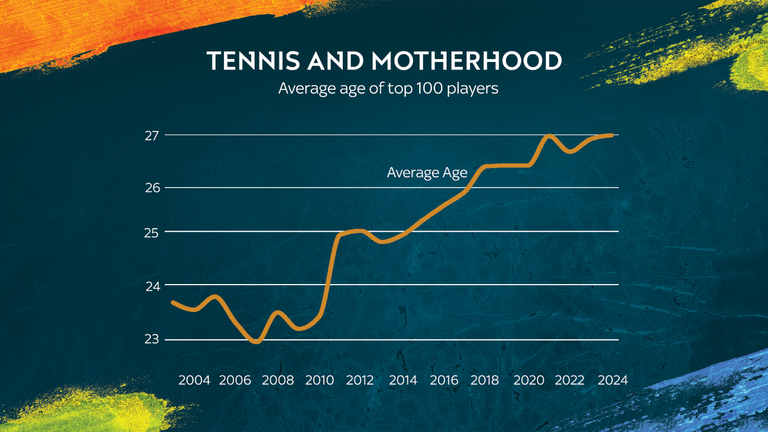
Twenty years ago, the average age of the top 100 players was under 24. Now it’s almost 27, giving players more time to start families and return to the sport.
“I think the way the game is played has improved and the things around the game in terms of fitness and nutrition have helped players extend their careers,” said former England No. 1 Johanna Konta.
“Women are realizing that they can physically overcome and cope with the postpartum recovery process.”
'Tennis is expensive, whether you have kids or not'
Prize money is another factor that helps tennis players choose motherhood over their career.
This year, Wimbledon paid out a record £50 million, with the two singles champions taking home £2.7 million each. The prize money is double the £25 million it was in 2014 and five times what it was 20 years ago.
For many players, feeling financially secure is another reason they feel comfortable stepping away from the tour.
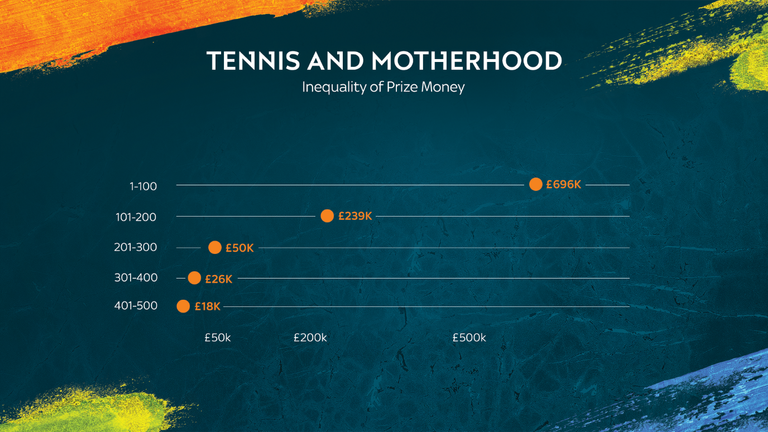
Most of the prize money in WTA tournaments goes to players ranked in the top 200 in the world.
“There’s not a lot of support in tennis. When you play at the WTA level, you get paid for a hotel room,” Naomi Brody said.
“At ITF level, you have to pay for the hotel. Whether you have kids or not, this sport is very expensive.
“I need to earn enough money to cover the extra expenses of children, hotels, and travel.”
While your mother is away, you will see the rankings fall apart.
Serena Williams won the Australian Open final in 2017 while eight weeks pregnant, without dropping a single set on her way to lifting the trophy.
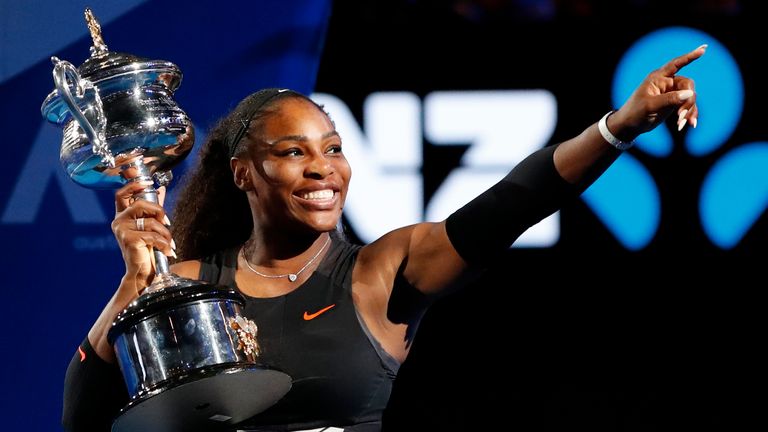
Serena Williams defeated her sister Venus in the 2017 Australian Open women's singles final while eight weeks pregnant.
Williams is not the first elite athlete to compete while pregnant.
In 2014, American Alicia Montano ran the 800 meters at the U.S. Track and Field Championships despite being 34 weeks pregnant.
Recently, AC Milan became the first club in Europe to implement a maternity policy that guarantees contract renewal for female players and staff during pregnancy.
Changes are being implemented to help sports adapt to the demands of motherhood, and tennis is no exception.
Williams was ranked 453rd in the world before making her return to the Grand Slam at the 2018 French Open.
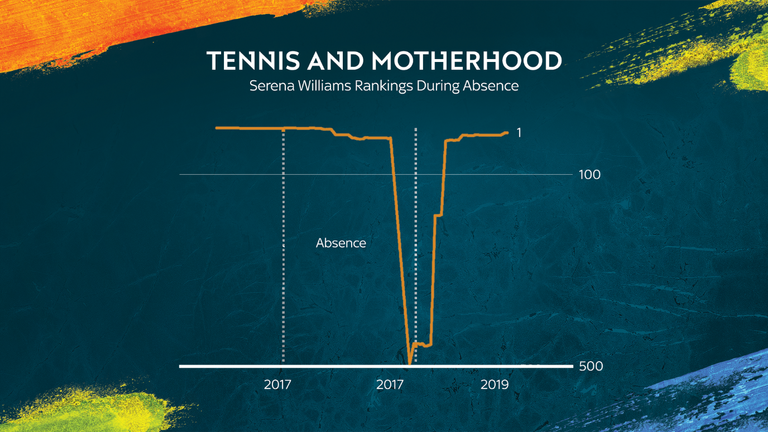
Serena Williams was ranked 453rd in the world before she returned to the Grand Slam at the 2018 French Open.
Lower rankings mean tougher draws and fewer opportunities to enter prestigious tournaments, and the WTA has since upgraded its rules to protect the rankings of returning mothers.
“They didn't have any specific maternity rules. It was pretty much like an injury timeout,” Broady said.
“So I was given two years to return to the sport, after which my ranking was frozen and I could use it for eight tournaments after my return.
“But from 2019, the maternity rules now allow you to return three years after the birth of your child, and compete in 12 events with a protected ranking from the time you paused.”
The issue of maternity leave still remains
There are more moms on the WTA Tour than ever before.
Most of the prize money goes to the top 200 players in the world.
Players who fall outside this range typically earn less than £50,000 and, as independent contractors, tennis players are not entitled to maternity pay, creating significant hardship for many.
“Simply put, if you don’t have money to invest in your career, it’s going to be very difficult to come back,” Conta added.
“What I mean is, if you reach a certain level in the game, there are certain opportunities, like wild cards or big events, that allow you to get back in quickly.
“But without that benefit, it can be tricky to come back.”
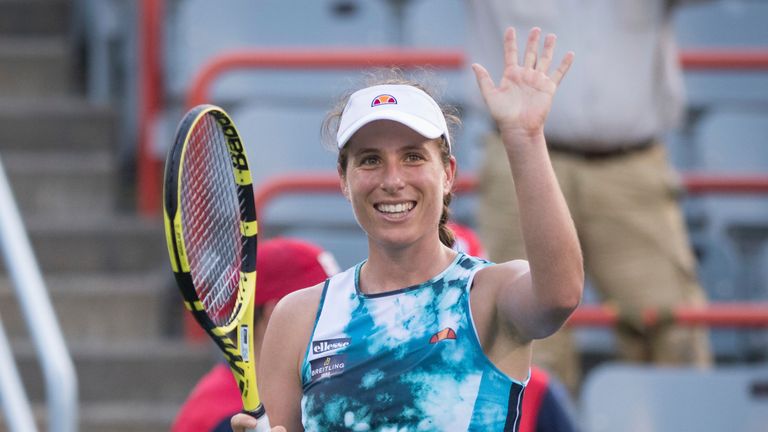
Johanna Konta announces retirement in 2021 at age 30
Two-time Grand Slam champion Victoria Azarenka wants to see unprecedented change in a sport that is pushing for equality.
“The next step we’re going to take is to create a maternity fund scheme, which I think has never been done before,” Azarenka told Sky Sports’ Karthi Nyanasegaram in March.
“There is also the benefit of disability insurance. It is a very physical sport. You never know what might happen, you dedicate your life to it, and things can happen that could leave you stranded for a period of time without any financial income.
“So I think it’s really important that we figure out how to develop those programs and pension plans, but birth planning is my top priority.”
Stream Sky Sports Tennis and more with a NOW Sports Month membership. Cancel anytime, no contract required.






