




 AFP
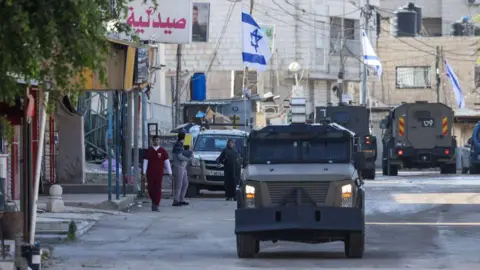
AFPThe Palestinian Health Ministry said eight Palestinians were killed and 35 wounded during a large-scale Israeli military operation in Jenin, West Bank.
Palestinian media reported a series of airstrikes as large troops moved into cities and refugee camps, supported by drones, helicopters and armored bulldozers.
Israel’s prime minister said he had launched a “wide-ranging and significant” operation to “repel terrorism” in Jenin, long considered a stronghold of Palestinian militant groups.
The incident, which comes three days after a ceasefire began in the Gaza Strip, highlights the threat of further violence, with overnight rampages in the West Bank also fueled by suspected Israeli settlers.
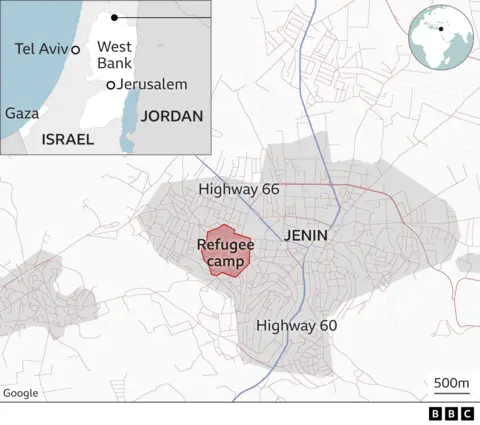
“What is happening is an invasion of the camp,” Jenin Governor Kamal Abu Alub told AFP, adding, “Apache (helicopter) was flying in the sky and Israeli military vehicles were everywhere.”
Citing local sources, the official Palestinian news agency Wafa said Israeli forces were “completely surrounding” the Jenin camp and that armored bulldozers had dug up several streets.
It also quoted Wissam Bakr, director of the Jenin Government Hospital, as saying that three doctors and two nurses were among those injured in Israeli gunfire.
Palestinian security personnel reportedly withdrew from some positions around the Jenin refugee camp before Israeli forces entered.
Palestinian security forces spokesman Brigadier General Anwar Rajab told AFP that Israeli forces “opened fire on civilians and security forces, resulting in numerous injuries.”
Israeli Prime Minister Benjamin Netanyahu said in a statement that the Jenin operation, dubbed “Iron Wall,” was a further step toward achieving “the goal we have set, namely strengthening security” in the West Bank.
“We have been and remain active in every corner of the Iranian axis, including in Gaza, Lebanon, Syria, Yemen and the West Bank, systematically and decisively.”
Israel has accused Iran of smuggling weapons and funds to Hamas, Palestinian Islamic Jihad and other militant groups in the West Bank to foment unrest.
Israeli media, citing military sources, said the goal of the operation was to preserve “freedom of action” in the West Bank, dismantle the militant group’s infrastructure and eliminate imminent threats. The source also said the operation would continue “as long as necessary.”
Mohamed Mustafa, Prime Minister of the West Bank-based Palestinian Authority, condemned the raid as the latest in a series of aggressive Israeli actions against Palestinians in the West Bank, Wafa reported.
Hamas and Palestinian Islamic Jihad have called on Palestinians in the West Bank to escalate attacks against Israel in response to Operation Jenin.
There have been several previous Israeli military operations in Jenin.
And in recent days, the PA’s security forces have carried out weeks of controversial operations against armed groups there, including Hamas and PIJ, in a bid to reassert control.
October 7, 2023 Violence has surged in the West Bank since Hamas’ attack on Israel and the subsequent war in Gaza.
Hundreds of Palestinians have been killed as Israeli forces step up airstrikes, saying they are trying to stop deadly Palestinian attacks on the West Bank and Israel.
 AFP
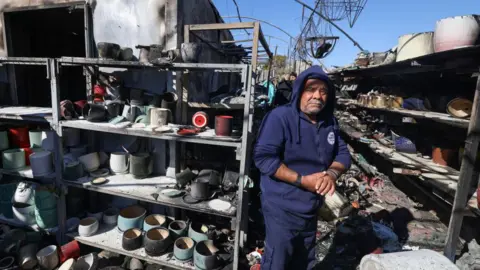
AFPIn another incident in the West Bank overnight, dozens of masked Israeli extremists attacked Palestinians in Jinsaput and Al-Funduk, two villages east of Qalqilia, setting fire to Palestinian houses and cars and destroying property.
The Palestinian Red Crescent said at least 21 Palestinians were injured. Two Israelis were also shot, apparently by Israeli police responding to the violence.
The Israeli military said it was investigating the incident and said Israeli civilians had incited the riots, set fire to property and caused damage. They also said they threw stones and attacked Israeli security forces.
This comes shortly after new US President Donald Trump announced he would lift sanctions on Israeli settlers accused of carrying out attacks in the West Bank.
The Biden administration’s withdrawal of sanctions targeting radical Israelis could signal a direction in which the new White House is expected to be more lenient on Jewish settlement expansion.
Israel’s far-right Finance Minister Bezalel Smotrich welcomed the US move. In a post to X, he praised Trump’s “unwavering and uncompromising support for the state of Israel.”
Meanwhile, Palestinian officials condemned the policy change. “Lifting sanctions against extremist settlers encourages them to commit more crimes against our people,” the Palestinian Foreign Ministry said in a statement.
Luay Tayyam, mayor of al-Funduq, told the BBC: “It’s almost like a green light to the settlers to say, ‘Just go, do what you want, you won’t be persecuted.’”
“So they’re delighted with this news. And I think it was a big push for them last night. They’re encouraged by that.”
The attack in al-Funduk occurred in the same area where three Israelis were shot dead earlier this month. It was the latest in a series of attacks on settlers that have accelerated significantly since the start of the war in Gaza.
By 2024, settlers had established 59 new outposts without approval from the Israeli government, according to Peace Now, an Israeli anti-settlement group. This was more than double the previous year and was also a record year for settlement establishment.
Since Israel occupied the West Bank in the 1967 Middle East war, it has built about 160 settlements home to about 700,000 Jews. Israel, like the previous Trump administration, contests the agreement, but the agreement is considered illegal under international law.







