




 Reuters
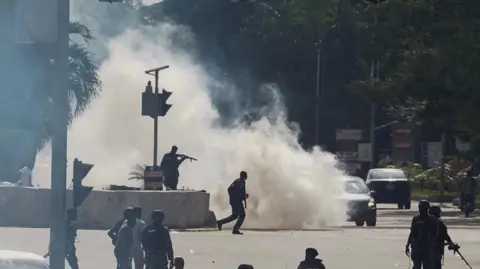
Nigerian police have fired tear gas to disperse protesters gathered in the capital, Abuja, over the continued detention of separatist leader Nnamdi Kanu.
The protesters, led by Omoyele Sowore, an activist and publisher of the Sahara Reporters news site, want the immediate release of Kanu, who is on trial on terrorism charges and is the head of the outlawed Indigenous People of Biafra (Ipob).
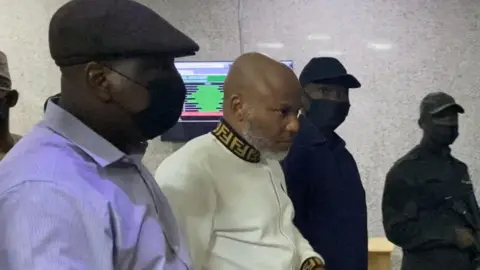
Kanu, who has been detained since 2021, denied the charges. He also holds British nationality.
Ipob is seeking independence for what he calls the Biafran nation in southeastern Nigeria.
Witnesses said police fired several rounds of tear gas at people who began gathering at 07:00 (06:00 GMT).
Police also blocked major roads in the capital, causing severe congestion and chaos in several parts of the city.
Sowore wrote to X that security operatives arrested several individuals, including Kanu’s family members and legal team.
Police would not comment on the reported arrests.
Despite his many battles with the Nigerian government, Kanu remains a cult hero to his many followers, especially in southeastern Nigeria.
 getty images
Ipob was banned as a terrorist organization in 2017. Ipob’s armed group, the Eastern Security Network, has been accused of murders and other acts of violence in recent years.
Kanu was first arrested on terrorism charges in October 2015, but left the country on bail after the military raided his home in 2017. The court later revoked bail and ordered re-arrest in March 2019.
Two years later, the Nigerian government announced his re-arrest. His lawyers said he had been detained in Kenya, but Kenya would not comment on whether that played a role in his deportation to Nigeria.
In 2022, an appeals court ordered the charges against him be dismissed, but the Supreme Court overturned it the following year.
His lawyers are scheduled to begin arguments on Thursday after the court rejected their argument that he did not have a case to answer.
Find out more about Nigeria on the BBC:
 Getty Images/BBC







