




 EPA/Shutterstock
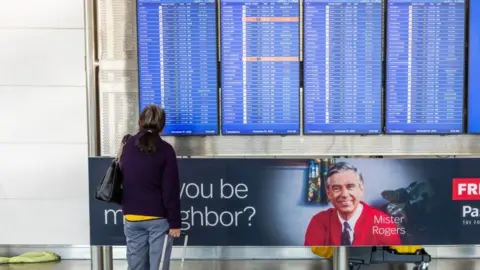
Flight delays and cancellations continue to disrupt U.S. air travel for a third day, with Transportation Secretary Sean Duffy warning that air traffic will “decline” if the U.S. government shutdown continues.
About 1,400 flights to and from the U.S. were canceled Sunday morning and 2,700 were delayed, according to flight tracking company FlightAware. The longest delays were reported in Newark, New Jersey, averaging more than two hours.
There are hopeful signs that lawmakers are exploring compromise on government funding and a possible deal to end the shutdown, according to U.S. media reports.
The Senate was scheduled to convene for a rare weekend session on Sunday.
Duffy warned that if the deadlock was not resolved soon, the impact on air travel would be even greater.
“Air travel will be reduced to a very small number,” he told CNN on Sunday. He added that travelers trying to fly home for the Thanksgiving holiday later this month may not be able to get there.
“If this doesn’t reopen, a lot of them won’t be able to get on a plane because there won’t be as many flights flying,” he said.
The Federal Aviation Administration (FAA) announced last week that it would reduce air travel capacity at 40 of the nation’s busiest airports by up to 6% by the end of this week and by 10% by the end of next week. The cuts do not apply to international flights, but some airlines may decide to cancel some of those flights, the FAA said.
It has been reported that air traffic controllers who are not paid during the closure period are not showing up to work due to fatigue, resulting in their air traffic allowances being cut.
Duffy said Defense Secretary Pete Hegseth offered to hire military air traffic controllers to help, but they declined because they are not certified to direct air traffic at civilian airports.
Overall, hundreds of thousands of federal employees have gone without pay since the government ran out of money on Oct. 1. Food assistance for low-income Americans also reached a dead end when the administration agreed to pay only half of monthly benefits.
Sunday marked the 40th day of the longest shutdown in history, as Republicans and Democrats have yet to agree on a funding resolution to reopen the government.
Republicans and Democrats have blamed each other for creating the impasse and disrupting travel.
Democrats have refused to support the Republican spending plan unless it includes health insurance subsidies, while Republicans want to provide the money without anything else attached.
President Donald Trump suggested over the weekend that money should be sent directly to Americans to help them get health insurance, rather than to insurance companies.
Republican senators are preparing a compromise that could end the deadlock with a vote on Sunday to pass the bill.








