



My family eats a lot of salads in the spring and summer. It’s a great way to use up random garden vegetables and get more nutrition into them. If you’re tired of regular vinaigrettes and ranch dressings, try this sesame ginger dressing on your next salad.
You can often find this version in Japanese restaurants. The Japanese ginger dressing has basically the same ingredients as my recipe, but I added soy sauce or miso.
Carrot Ginger Salad Dressing
I ate a lot of carrots to I’ve had salads before, but actually putting them in salad dressing wasn’t something I’d tried until recently. It adds thickness and flavor in a unique way. This dressing has a fresh, bright flavor thanks to the carrot and lime juice. Fresh ginger adds a little spice, vinegar adds tang, oil smoothes everything out, and honey adds a little sweetness.
Some recipes call for just olive oil or vegetable oil, but I decided to add toasted sesame oil here. It has a more pronounced, rich, nutty flavor that pairs well with other Asian flavors in the dressing.
More than delicious toppings
This ginger salad dressing is more than just a great way to eat a salad. Here are some health benefits you can get from the ingredients:
- carrots – Rich in beta-carotene, a precursor to vitamin A, fiber, potassium, and antioxidants. It also helps excrete excess estrogen for hormonal balance and can even balance candida overgrowth.
- ginger – Reduces inflammation, relieves nausea, improves digestion, and more. Adding ginger not only adds flavor, but also helps your body better absorb other dressing and salad nutrients.
- lime juice – Fresh and tangy lime juice contains vitamin C and small amounts of other minerals such as potassium and magnesium.
- olive oil – Real olive oil is thick, rich and flavorful. Add healthy fats for hormonal support and boosting a healthy brain.
- sesame oil – Rich in antioxidants and anti-inflammatory compounds. It contains some omega-6 oils to balance out the omega-3 fatty acids in olive oil.
- rice vinegar – I usually use apple cider vinegar in my recipes, but rice vinegar has a different flavor profile that goes well with ginger dressing. It is naturally fermented and can help with immunity, blood pressure control, and detoxification.
How to Use Carrot Ginger Salad Dressing
It can be used in any salad, but is usually served over shredded iceberg lettuce and carrots. It also tastes surprisingly good on meat and fish. Serve with grilled vegetables or use as a dipping sauce for spring rolls. It’s also really delicious on a salad with soybean paste marinated eggs!
Here are some salad recipes you can use with the new ginger dressing:
Tips for making ginger dressing
This dressing is very forgiving. If you want more flavor, add more ginger, or if you want it sweeter, add more honey. If your blender isn’t very good, chop the carrots and ginger into smaller pieces to make them smoother. After mixing, taste and usually add a little more salt depending on taste.
If you have any leftovers, store them in an airtight container in the refrigerator for up to a week. Some people recommend up to 4 days, but we’ve always eaten it pretty quickly.
Here’s how to make it!
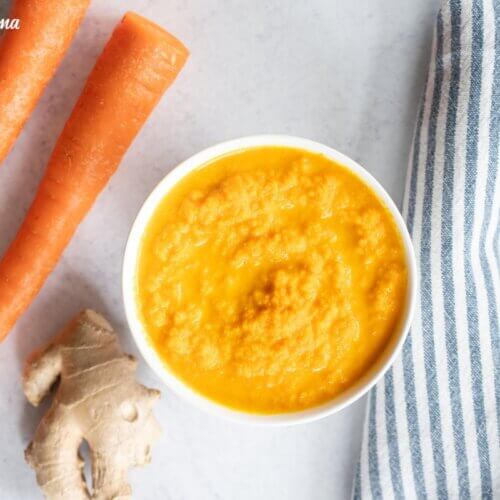
Carrot Ginger Salad Dressing
This is a delicious and fresh dressing recipe found in Japanese restaurants. You can eat it with various salads or dip it into spring rolls.
Place all dressing ingredients in a high-speed blender and blend on high until smooth and creamy. Carrots must be completely decomposed.
Add more salt if necessary. If it tastes too tangy, add a little more honey to balance it out.
Store in a glass jar in the refrigerator for up to a week.
Nutrition Facts
Carrot Ginger Salad Dressing
Serving Size (2 TBSP)
calorie 105
calories from fat 90
% Daily Value*
province 10g15%
1g saturated fat6%
1g polyunsaturated fat
7g monounsaturated fat
sodium 81 mg4%
potassium 48mg1%
carbohydrate 5g2%
0.4 g fiber2%
3g sugar3%
protein 0.2g0%
Vitamin A 1784 IU36%
Vitamin C 2mg2%
calcium 5 mg1%
steel 0.1 mg1%
*Percent Daily Values are based on a 2000 calorie diet.
Serve with fresh vegetables and your favorite toppings, or use as a dip or marinade.
Other Salad Dressing Recipes
Here are more salad dressing recipes to add to your rotation. I like to keep a few jars of homemade dressing in the fridge as I need them throughout the week. Easy to whip up and full of whole food nutrition!
What is your favorite ingredient to use in salads? Let us know by leaving a comment!






