



Three U.S. Navy F-14D Tomcats are scheduled to be transferred to the National Space and Rocket Center Commission in Huntsville, Alabama, and one may become flyable again, subject to “Maverick Act” approval.
The U.S. Congress is voting on new legislation that would allow the F-14D Tomcat to return to the skies 20 years after it was retired. In particular, this bill, called the “Maverick Act,” was introduced by Senator Tim Sheehy, co-sponsored by Senator Mark Kelly, on March 23, 2026.
maverick act
The bill passed the Senate unanimously on April 28, 2026, and is now scheduled for a vote in the House of Representatives with an update on May 4. If the bill also passes the House, it would authorize the Secretary of the Navy to transfer three F-14D Tomcats to the National Space and Rocket Center Commission in Huntsville, Alabama.
https://t.co/ud4jZg86m5
The bill still needs to pass the House of Representatives.
— OSINTtechnical (@Osinttechnical) May 7, 2026
The board oversees the American Space and Rocket Center, a museum dedicated to space established by the Alabama government in 1970 and sometimes called “Earth’s largest space museum.” According to the text of the bill, the three aircraft in question appear to have already been identified with station numbers 164341, 164602, and 159437.
The document states that the aircraft “does not have the ability to be used as a platform for launching or ejecting munitions or other combat capabilities for which it was originally intended.” It then lists a set of conditions that require the Secretary of the Navy to not repair or alter the condition of the aircraft before passing ownership, but provides maintenance and operations manuals and excess spare parts.
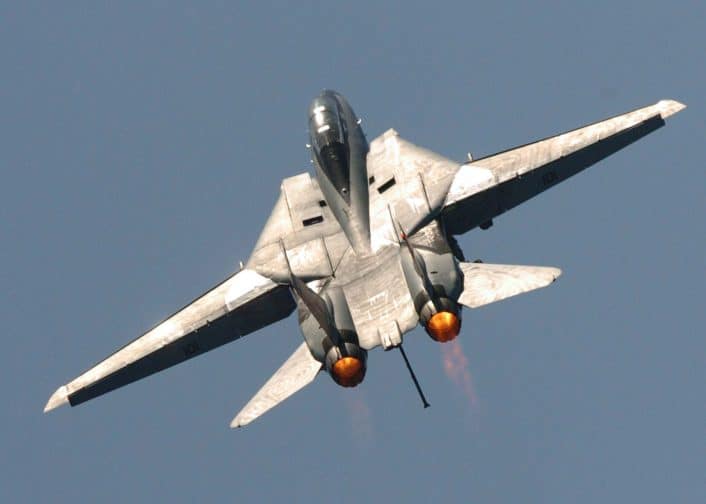
The latter is where things get interesting, with the first mention of Tomcat’s possible return to the skies.
“The Secretary shall provide extra spare parts to enable one of the F-14D aircraft to be airworthy or complete a static display, provided that all parts transferred are from existing Navy inventories and no items are procured on behalf of the committee.”
However, the activities necessary to make this happen are the sole responsibility of the Committee.
“The Secretary shall not be responsible for transferring additional parts or providing additional support during or after transportation of an aircraft beyond that specified in this section.”
The committee could seek qualified support from outside the Department of the Navy in a similar manner as the Collings Foundation did for the F-4D Phantom, the only flying example in the United States.
“The Secretary may authorize the Commission to enter into agreements with qualified non-profit organizations for the purpose of restoring and operating aircraft transferred pursuant to the subsection for public displays, air shows, and commemorative events to preserve the naval aviation heritage.”
The document also states that the transfer will be made free of charge to the government. “All costs associated with such transportation, the costs of determining compliance with the terms of transportation, and the costs of operating and maintaining the aircraft transported shall be borne by the board,” the bill states.
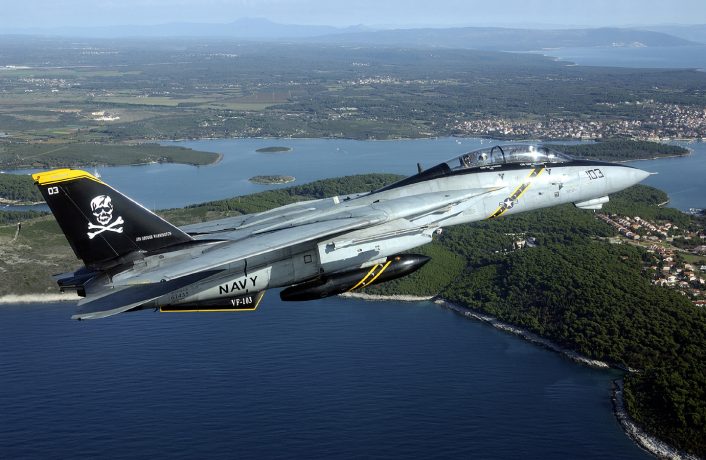
Can run
The United States has historically severely restricted access to retired F-14 aircraft. In fact, after the U.S. Navy retired the Tomcat in 2006, access to spare parts was tightly controlled to avoid possible smuggling to Iran, which was the only operator of the type.
Many parts were also damaged, making it difficult to procure the parts needed to make the aircraft flyable again. It is important to note that after decommissioning, many parts were removed from the aircraft before it was parked in the desert.
The F-14D requires an in-depth inspection of both airframe structure and systems before returning to flight. After that, work is done to bring the aircraft into compliance with the Federal Aviation Administration’s certification requirements.
The process is expected to be expensive due to supply chain shortages and work after the aircraft has been in the desert for 20 years. The Tomcat was also known for its high operating costs, making continuous air show operations impossible.
However, limited flight demonstrations and cultural heritage events are more likely to take place. The timeline is another unknown aspect and a possible return to flight could be years away from being realized.







