



A Romanian F-16 deployed as part of the Baltic Air Police shot down a rogue drone believed to be of Ukrainian origin that entered Estonian airspace from Russia.
The Estonian Defense Forces announced that a Romanian F-16 Fighting Falcon shot down a drone that entered Estonian airspace. Estonia said the drones that arrived in Russian airspace were “likely to originate from Ukraine” and that “Russia has reported a large-scale electronic warfare situation, including GPS spoofing and jamming.”
Romanian F-16s are currently deployed to Lithuania as part of the NATO Baltic air security mission. According to the statement, the aircraft was already flying on a routine training sortie when it was reassigned for the intercept.
An F-16, a Romanian Air Force fighter jet based in Lithuania, was conducting a routine training flight under the Baltic Air Force security mission when it intercepted the drone south of the village of Põltsamaa. The jet shot down the drone by firing a single missile to neutralize the threat…
— Estonian National Defense Force | Estonian National Defense Force (@Kaitsevagi) May 19, 2026
The drone was detected entering “Estonian airspace heading northeast from Russian airspace in the southeastern corner of Estonia” at 12pm local time. Fighter jets intercepted the drone “south of the village of Põltsamaa.”
According to the statement, air surveillance units were monitoring drones approaching Estonian airspace. After visual identification, “the jet fired a single missile to neutralize the threat, bringing down the unmanned aircraft system at 12:14 PM local time.”
🇷🇴 Romania replaces MiG-21s with F-16Cs – NATO air security strengthens in Câmpia Turzii ✈️
This is in addition to Feteşti’s 53rd Fighter Squadron and Mihail Kogălniceanu’s 🇩🇪 Luftwaffe Eurofighter Detachment.
🔗 https://t.co/7PHKganyKp pic.twitter.com/OUQ8a53tTz
— NATO Air Command (@NATO_AIRCOM) October 28, 2025
No details were provided about the weapons used in the fight. Romanian F-16s deployed for Baltic air security typically fly with two AIM-120C AMRAAM missiles and two AIM-9X Sidewinder missiles.
The Estonian Defense Force added that this interception operation was led by the Latvian Control and Reporting Center (CRC). The Estonian Internal Security Service has now opened a criminal investigation under the provisions of the Attacks on Air Traffic Safety provision, the statement said.
It is unclear what type of drone entered Estonian airspace, as authorities have not released any photos of the incident. As the Estonian Defense Forces noted, this was likely a Ukrainian drone that lost control and went off course due to jamming during an attack on Russia.
baltic air security
The Romanian Air Force has deployed a number of F-16s (four, like last year’s deployment) at Šiauliai Air Base, Lithuania. These aircraft replace the Spanish Air Force detachment previously in the Baltic region.
The F-16 is deployed with Rafale units from the French Air Force and Space Force, which operate from the same base. Both detachments are integrated within NATO’s command and control structure to maintain rapid response alert and protect Allied airspace.
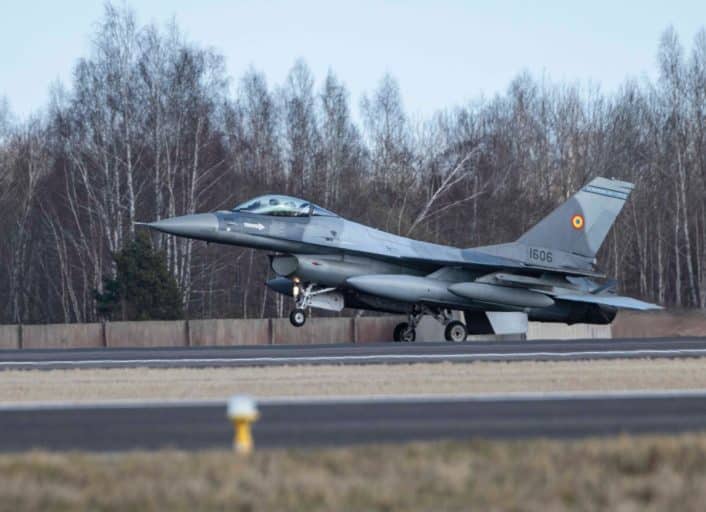
The Romanian deployment marks the fourth time the Romanian Air Force has contributed to NATO’s Baltic air security mission in Lithuania, NATO Allied Air Command said in a statement on March 30, 2026. During its last deployment, the Carpathian Vipers detachment of the Romanian Air Force operated in the Baltic Sea region from April to July 2025.
Previously, Romania first deployed for Baltic air security missions using MiG-21 LanceRs in 2007 and returned to the Baltic region in 2023 aboard F-16s. The F-16 replaced the MiG-21, which was retired by the Romanian Air Force in 2023.
precedent
This incident occurred last year when F-16s and F-35s intercepted and shot down a Russian drone that violated Polish airspace during a large-scale airstrike against Ukraine. The incident occurred on the night of September 9-10, 2025.
According to then-Polish Prime Minister Donald Tusk, “a huge number” of Russian drones crossed into Polish skies during the attack. He added that the drones that posed an immediate threat were neutralized by fighter jets and no casualties were reported.
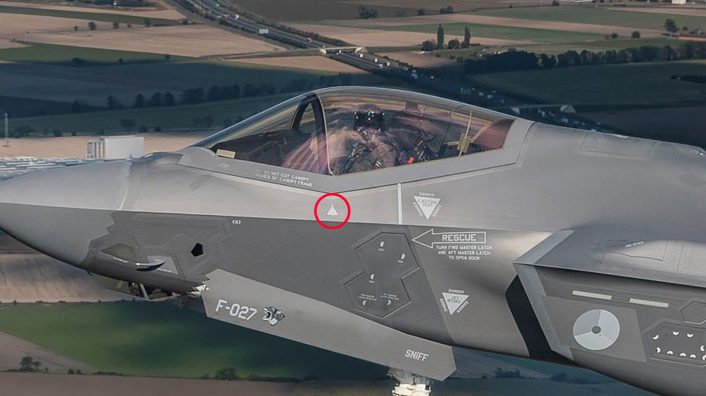
Polish and Allied fighter jets scrambled while ground air defense and radar systems were deployed at the highest level of readiness. The operation involved both German Patriot units deployed in Poland and NATO assets, including Polish aircraft and Dutch F-35s deployed to Poznań Krześny Air Base for NATO’s air security mission at the time.
In particular, a Polish Saab 340 Airborne Early Warning and Control (AEW&C) aircraft was seen flying for nine hours in support of defence. A NATO MMF A-330 MRTT was also circling the area.
After the attack, the Ukrainian Air Force reported that Russia had launched its largest aerial attack in months, deploying 415 drones, 42 cruise missiles and one ballistic missile. Ukraine also added that at least eight Shahed-type drones crossed in the direction of Poland, with some penetrating Polish airspace.







