



British forces, leading NATO’s Rapid Reaction Force, have converted the former Jubilee line platform at Charing Cross station, 86ft below central London, into an operational nerve center manned by 500 personnel.
Exercise Arrcade Strike, the latest in a series of exercises testing the readiness of the Allied Rapid Reaction Corps (ARRC), NATO’s highest deployed corps headquarters, is in full swing in the City of London this week. The ARRC is led by the British Army, headquartered at Imjin Barracks in Gloucestershire, and its staff comes from 21 NATO member states.
Previous exercises have seen the ARRC establish command centers stationed at various sites across the UK, including RAF St Mawgan in Cornwall and further afield across Europe.
2,200 people deployed to St Mawgan in preparation for ARRC NATO exercise, largest in southwest England since World War II: http://t.co/bgwT5uXht1 pic.twitter.com/xalwOjsVxs
— Royal Air Force (@RoyalAirForce) November 15, 2013
Described as ‘one of the most ambitious military exercises in a generation’, Arrcade Strike eschews the traditional use of dispersed military bases in favor of the heart of one of the world’s busiest capitals. Using London’s existing network of underground infrastructure, the command center is protected from all but the most devastating aerial attacks and remains completely hidden from aerial surveillance.
The ARRC tested its ability to plan and command large-scale military operations involving more than 100,000 personnel on land, over, under the sea, in the air and in space across NATO, from deep underground. A hypothetical scenario was created for the exercise set in 2030. Planners believe this is when the Russian military threat may be at its strongest.
We’ve been doing major things. @NATO We were training in London this week and no one on the ground suspected anything.
Hundreds of soldiers have been testing how to run a key NATO command post hidden deep inside one of the busiest cities on Earth.
Read more ⬇️… pic.twitter.com/SL3HdTXQxI
— British Army 🇬🇧 (@BritishArmy) May 22, 2026
“Arcade strikes are not a conceptual exercise. It is a rehearsal of the plans we already have and a demonstration of our combat capabilities and deterrence,” a senior commander said.
“We went from operating in tents and open environments to commercial buildings, aircraft hangars and now underground locations,” explained another commander during the training. “Operating underground significantly reduces our signal, makes us harder to find, and increases our chances of surviving an attack.”
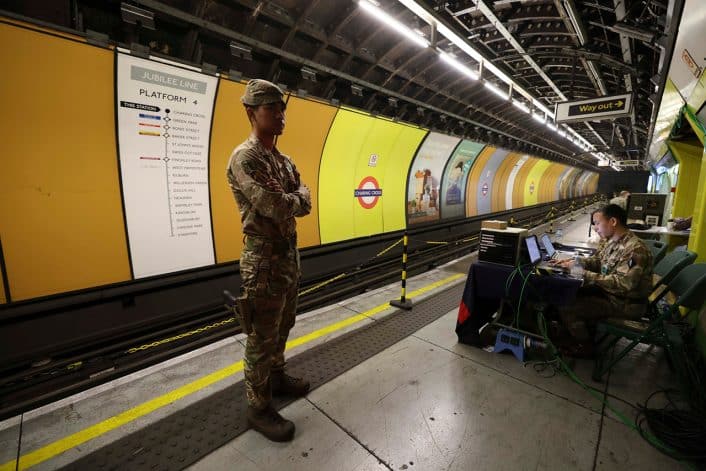
Charing Cross is a national rail and London Underground (also known as ‘Tube’) station located a stone’s throw from Trafalgar Square. Every year, 19 million passengers pass through National Railway stations, and 16 million use the Northern Line and Bakerloo Line underground connections.
Nelson’s Column – Charing Cross
Nelson’s Column can be seen behind the underground circle at the underground entrance to Charing Cross station in Trafalgar Square.
📸 https://t.co/TBKiAODjeJ#London #photography pic.twitter.com/5jkCChGBtg
— Tubemapper – Luke Agbaimoni (@tubemapper) September 9, 2021
Just below Trafalgar Square are two disused but previously fully functional London Underground platforms, which previously linked the station to the Jubilee Line. The platform closed to the public in 1999 when the Jubilee line was extended, with the new line bypassing Charing Cross and stopping at Westminster.
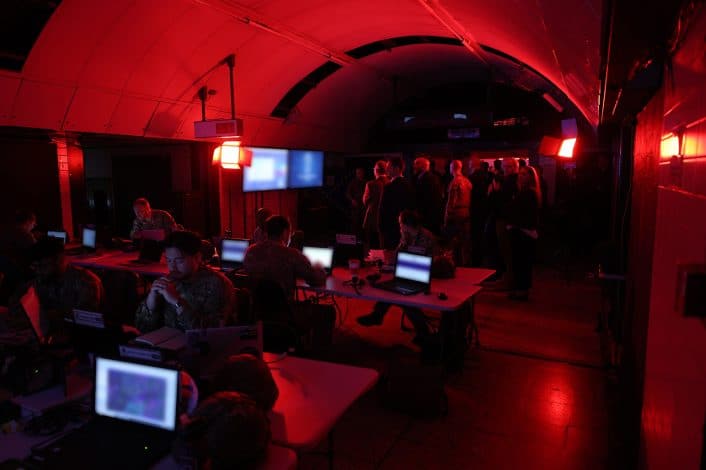
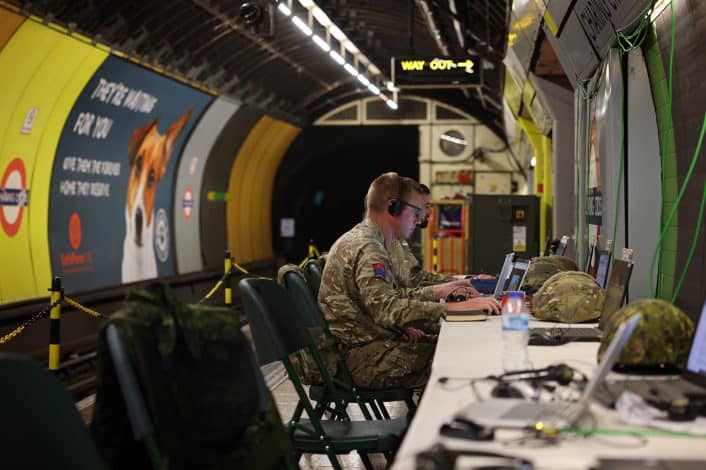
These platforms were previously used to film James Bond films. heavy rainThis is where the ARRC command center was established. Five hundred employees worked out of a closed door and just a few hallways away from the station’s crowds and operated a conglomerate of computers that processed more than 10 terabytes of data each day.
🙌 ❌ Who knew that the sights and secrets of Charing Cross lie further than meets the eye?
The Hidden London tour, which takes place from Charing Cross tube station, reveals real secret hideouts as seen in Bond, Killing Eve and Thor. https://t.co/OWrthPFB9s pic.twitter.com/M18G5vNcQN
— London Transport Museum (@ltmuseum) September 30, 2023
“We will be receiving terabytes of data and using data analytics and AI to collect, fuse and visualize that data so my staff and I can make the right decisions at the right pace,” the corps commander said.
One of the AI systems the commander mentioned is the Digital Targeting Web, known as ASGARD, which was first deployed as a prototype capability in Estonia in the first half of 2025. Chief of Staff Roland Walker, the British Army’s Professional Chief of Staff, previously commented: “The Asgard Project proves that we can do things differently. This is not just a guide for change, but a change in the way we search, finance and fight through cutting-edge capabilities.”
“Asgard doubles our lethality and exponentially reduces the time to see, decide and attack. What used to take hours now takes minutes. Today, the UK has a Recce-Strike system similar to the one used by Ukraine to attack Russian forces in Donbas. This system now sits at the heart of Estonia’s forward ground forces.”
go underground
The platform at Charing Cross is at least above ground, just a few minutes’ walk from the War Room where Prime Minister Winston Churchill commanded much of World War II. “Winston Churchill was hiding underground in London during World War II, so this is nothing new. It worked for him!” said Corporal Ismaila Ceesay, an information management specialist and London-born person who was one of those taking part in the exercise.
Personnel traveling to and from the ARRC field headquarters had to act as if they were participating in a live mission, and they could not risk the possibility of the location of the underground command center being discovered. “I have London roots and adopted a London style to fit in like a local, so no one but my commuters would suspect I was there,” said Ceesay. “I put on a hoodie, change my walk, and try to blend in.”
Just below Whitehall is the Ministry of Defense headquarters building, and across the street is 10 Downing Street, the home of the British Prime Minister. They too have underground complexes, the most notable of which is known as the Defense Crisis Management Center or ‘Pindar’. This nuclear-hardened bunker was declared operational in 1992 and is connected to Downing Street and the Cabinet Office by an underground passage.
There is also the Admiralty Citadel, a concrete fortress on Horse Guards Parade with 20-foot-thick ceilings currently used as communications equipment with the Ministry of Defense but originally constructed as a last bastion for military commanders during World War II, and Q-Whitehall, a communications tunnel that provides some connection to almost every government building in the area, including the Ministry of Defense.
Admiralty Citadel – Horse Guards, Whitehall, London pic.twitter.com/2cNvoZUHMK
— Clive Holden (@cliveinkent) July 14, 2024
Long-standing claims have it that this secret network of tunnels is connected to Charing Cross at its northern end. Perhaps the choice of this training location was not coincidental?

“The London Underground has proven to be a really good facility. It provides great protection and is very adaptable, allowing it to be delivered to the front line from a variety of locations. “It doesn’t matter where we are based to achieve effectiveness,” said Major Jess Wood, director of the Joint Air Ground Integration Center (JAGIC). “The device behind a nondescript gray door in a subway corridor is very impressive. “Yesterday someone stopped me on my way to work and asked how to get to Heathrow!”

Establishment of headquarters
To maintain secrecy, the command center’s equipment was transported to Ruislip, North London, in the early morning using unmarked civilian vans. There it was loaded onto an engineering train operated by Transport for London, which is normally used to transport equipment for repairs, maintenance and upgrades of the tube network. It took a week to build the headquarters at Charing Cross, and the 22nd Signal Regiment provided expertise in advanced communications equipment.
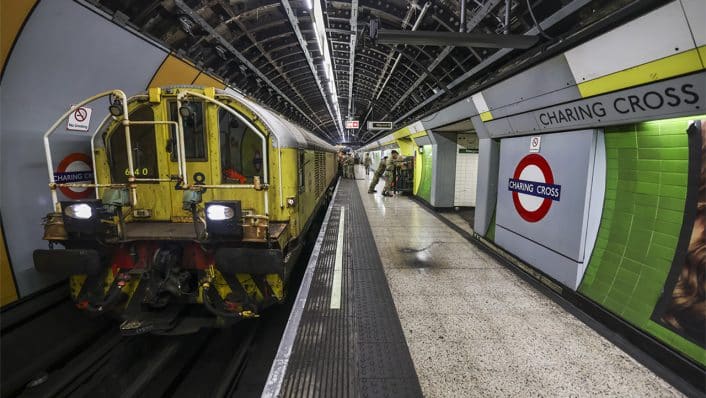
“The difference between being here and being in the old depot, which was our usual location, is that the depot is a wide open rectangular space. It’s a limited layout made up of tunnels and train platforms,” said Major Joe Harris, the officer commanding the 14th Battalion, Royal Logistics Corps. “We need to move away from the Afghan mentality of moving in and creating space from scratch. Now we need to find safe spaces that have already been created and prepare accordingly.”
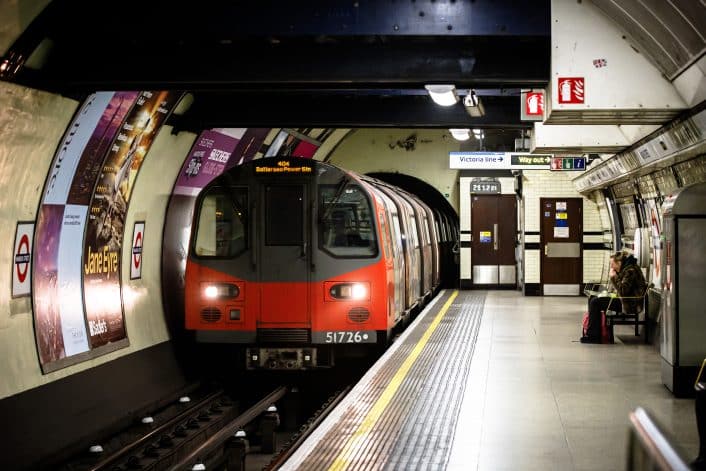
A bar code system was developed to keep tabs on which staff were underground at any given time, and just a few minutes away a fully functioning tube station was kept running with trains full of passengers up to every 90 seconds.
constant suppression
The British Army’s official press release made it clear that this was not a one-off exercise. The ‘Underground Model’ will continue to be exercised and developed in the UK and Europe over the next two years, working towards the goal of creating a mission-capable strategic reserve force by 2030.
“As the message of the exercise demonstrates, deterrence is not passive. It must be demonstrated, practiced and believed by allies and adversaries alike,” the press release said. “Somewhere down the streets of London there are hundreds of soldiers making sure it’s there. When they get back on the ground after their mission, no one will know they were there, but the message they sent will be heard.”







