



A new outbreak of Salmonella infections is being investigated and eggs have been identified as the likely source of the pathogen.
As of the evening of July 24, there were 98 cases across 17 states. Of the patients for whom complete information was available, 26 were hospitalized. None of the patients died.
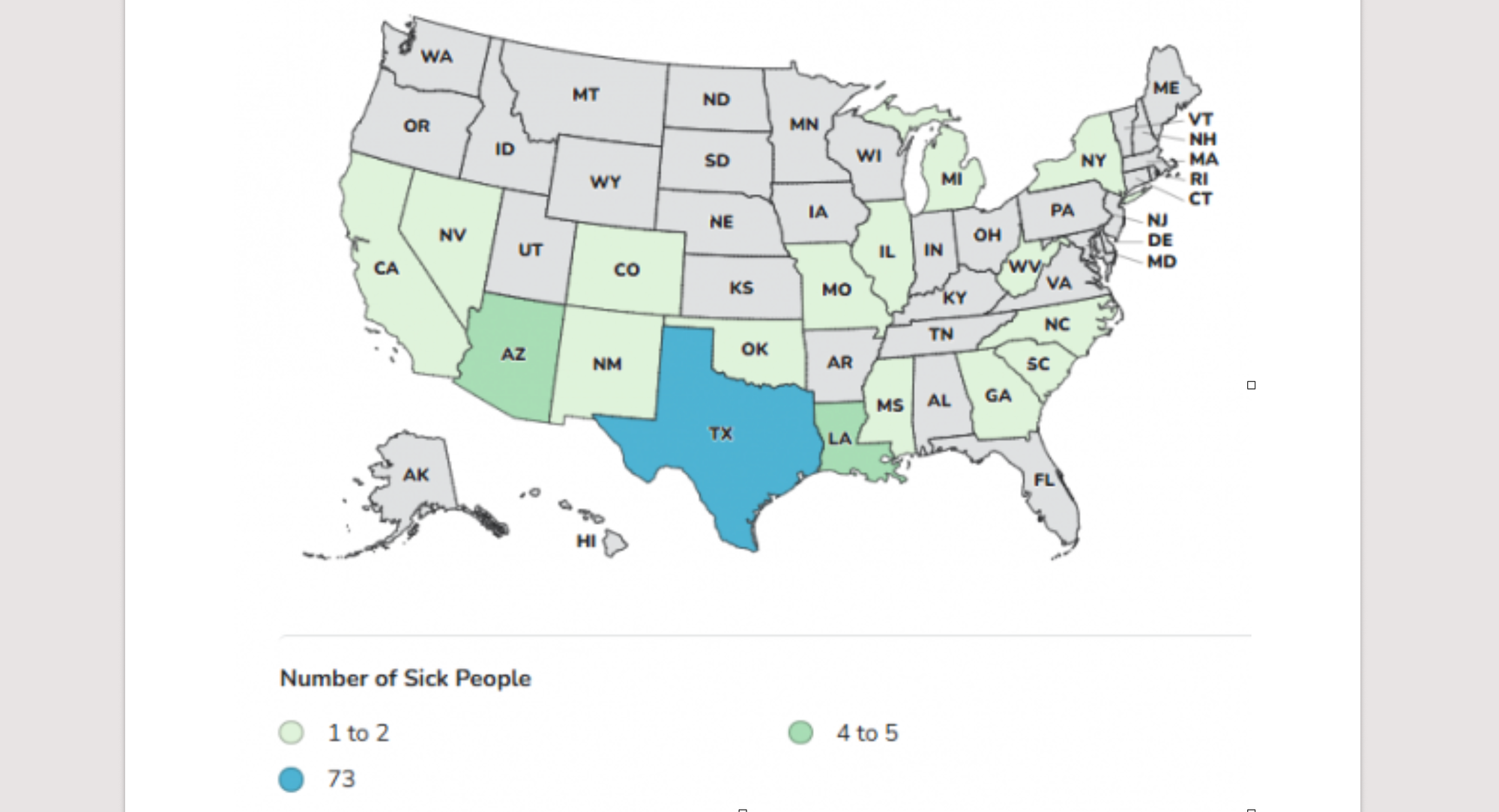
Midwest Poultry Services LP was identified as the producer of the eggs involved. On July 21, the company recall White-shelled eggs and brown cage-free eggs produced and distributed on Texas farms between June 6 and July 3 have a sell-by date or expiration date between July 20 and August 17.
The recalled eggs were sold under a variety of brand names and were available at several retailers, including Kroger stores. The recalled eggs have an identification code number printed on the left or right side of the carton in date ink only. Only codes P-1950 or 0840962 with a Julian calendar date between 157 and 184 printed on the side of the box are being recalled. To see photos of some of the recalled boxes of eggs: Click here.
The eggs were distributed in Arkansas, Louisiana, Mississippi, New Mexico, Oklahoma, and Texas. Distribution of the recalled product has been confirmed in the states listed, but the eggs may have been distributed to additional states for further distribution.
Illness began between November 21, 2025 and June 30, 2026. Of the 44 affected patients for whom information was available, 40 reported eating eggs before becoming ill.
Consumers, restaurants and retailers who purchased or received recalled eggs must discard or return the eggs to the place of purchase for a refund and disinfect any areas that may have come into contact with the recalled eggs.
Eggs recalled by Midwest Poultry Services LP were identified as the likely source of illness in this outbreak, according to laboratory, epidemiological and traceback data.
As part of this investigation, the FDA conducted a traceback search based on the locations where sick individuals reported purchasing or eating eggs during the period of interest, and Midwest Poultry Services LP was identified as a common source of eggs. However, this producer does not account for all of the illnesses in this outbreak. Further investigations are ongoing to determine if there are other causes of the illness.
Midwest Poultry Services LP collected samples from farms in Texas. Certain samples collected by the company tested positive for salmonella. Whole genome sequencing Results from the company’s third-party lab showed that some samples were consistent with salmonella. In this outbreak.
Consumers, restaurants, and retailers who purchased or received recalled eggs must dispose of them, return them to their original location or receive a refund for their purchase, and disinfect any areas that may have come into contact with the recalled eggs.
About salmonella infection
Food contaminated with salmonella typically does not look, smell or taste spoiled. Anyone can get sick from a salmonella infection. Infants, young children, the elderly, and people with weakened immune systems are at higher risk for serious illness because their immune systems are weaker.
Anyone who develops symptoms of salmonella infection after eating eggs should seek medical attention. Diagnosing salmonellosis requires special testing, so sick people should tell their doctor about possible exposure to salmonella. Salmonella infection symptoms can be similar to other illnesses and often lead to misdiagnosis.
Symptoms of salmonella infection may include diarrhea, abdominal cramps, and fever within 12 to 72 hours after eating contaminated food. Otherwise healthy adults usually become sick for 4 to 7 days. However, in some cases, diarrhea may be so severe that hospitalization may be necessary.
People with weakened immune systems, such as older adults, children, pregnant women, and cancer patients, are more likely to develop serious and sometimes life-threatening conditions.
Some people become infected without feeling sick or showing any symptoms. However, they can still spread the infection to other people.






