


If you’ve been paying attention to mainstream nutrition commentary lately, you’ve probably encountered a curious narrative: that concerns about seed oils are overblown, that the science doesn’t support the alarm, and that worrying about the vegetable oils in your food is — as one popular talking point puts it — “stepping over $100 bills to pick up pennies.”
This dismissive attitude has been spreading through podcasts, social media, and health influencer circles. And I have to be direct with you: it represents either a profound misunderstanding of basic biochemistry or something more troubling. When you see a parade of influential voices all singing from the same hymn sheet — one that conveniently aligns with the interests of a multi-billion-dollar vegetable oil industry — you have to at least consider who benefits from this message.
Consider this: your great-grandparents consumed virtually no soybean oil. By 1999, the average American consumed over 1,000 times more. This isn’t a dietary tweak. It’s a complete metabolic overhaul that our bodies were never designed to handle.
The mainstream logic is simple: Seed oils lower LDL cholesterol. Lower LDL means less heart disease. Therefore, seed oils are good for you. Case closed — or so they’d have you believe.
But this syllogism has a fatal flaw that anyone familiar with mitochondrial biology would immediately recognize. It assumes that the only pathway through which seed oils could cause harm is through LDL cholesterol. This assumption isn’t merely wrong — it reveals a fundamental ignorance of lipid biochemistry and mitochondrial physiology.
The Arguments Being Made — And Why They Fall Apart
The mainstream argument has some valid points, which makes it all the more important to understand where it goes fatally wrong. The mainstream health influencers making these claims aren’t entirely wrong about everything:
• Trans fats are problematic — Early studies substituting polyunsaturated fats for saturated fats were confounded by trans fats in margarines, which contained 25% to 40% trans fatty acids. This is a legitimate criticism of studies like the Minnesota Coronary Experiment and Sydney Diet Heart Study.
• LDL cholesterol is a risk factor for cardiovascular disease — The Mendelian randomization data they cite is robust — lifelong exposure to elevated LDL is associated with increased CVD risk.
• Saturated fat does raise LDL cholesterol — This is not in dispute.
These points are valid. They are also almost completely irrelevant to the question of whether seed oils are contributing to the modern epidemic of metabolic disease. The conventional nutrition establishment has built its entire case on a foundation that misses the actual mechanisms of harm.
The Fatal Flaw: LDL Tunnel Vision
The entire analytical framework being promoted can be summarized simply:
1. Seed oils lower LDL cholesterol
2. Lower LDL cholesterol reduces CVD risk
3. Therefore, seed oils are beneficial (or at least neutral)
This argument assumes that the only pathway through which seed oils could cause harm is through LDL cholesterol. This is the equivalent of analyzing the health effects of cigarette smoking while focusing exclusively on cardiovascular disease and ignoring lung cancer.
The defenders of seed oils are asking the wrong question. They ask, “Do seed oils cause heart disease?” The correct question is: “Do seed oils cause the systemic inflammation and mitochondrial dysfunction that underlies heart disease AND diabetes AND neurodegeneration AND cancer AND liver disease AND virtually every other chronic disease of modern civilization?”
The answer to that question may be yes, as the evidence suggests. And the conventional nutrition establishment never even asks it.
Heart Disease Is Not Just About LDL
The mainstream narrative frames heart disease as an LDL story: Particles penetrate the arterial wall, get oxidized, macrophages engulf them, foam cells form, plaques develop. Reduce LDL, reduce plaques, reduce heart attacks. Simple.
But this is a cartoon version of cardiovascular pathophysiology. The actual drivers of atherosclerosis include:
• Systemic inflammation — Elevated IL-6, TNF-α, and CRP all accelerate plaque formation and destabilization
• Endothelial dysfunction — The inability of blood vessels to dilate properly, which precedes plaque formation
• Oxidative stress — Which damages the arterial wall and promotes LDL oxidation
• Insulin resistance — Which is independently associated with CVD risk even controlling for LDL
• Mitochondrial dysfunction — Which impairs energy production in heart cells and vascular smooth muscle
Every single one of these factors may be made worse by linoleic acid (LA) through mechanisms that have nothing to do with LDL particle count. The seed oil defenders focus on the sparks while ignoring the gasoline, the kindling, and the fact that the entire forest is already smoldering.
The Inflammation Nobody Wants to Talk About
So, if LDL isn’t the whole story, what is? The answer lies in a word the seed oil defenders rarely mention: inflammation. This is stunning, because LA is the precursor to arachidonic acid, which is the substrate for prostaglandins, thromboxanes, and leukotrienes — all potent inflammatory signaling molecules.
But even more importantly, when LA oxidizes, it generates a family of toxic breakdown products collectively called OXLAMs. These compounds — particularly two named 9-HODE and 13-HODE — have been associated with chronic disease.1 They may switch on inflammatory signaling pathways, boost liver production of inflammatory chemicals, and activate immune cells in ways that promote chronic disease.
My 2025 review published in the World Journal of Clinical Oncology describes how excess LA may create oxidative lipid peroxidation, the chain reaction that occurs when fats are damaged by oxygen, mitochondrial dysfunction, hormonal-inflammatory amplification, and gut dysbiosis that together create what the review calls a “pro-cancer terrain.”

The figure above shows how too much LA from seed oils clogs your cell’s energy system.2 But this isn’t just about cancer. This is about the systemic physiological dysfunction that may manifest differently in different tissues: in the arteries it becomes atherosclerosis, in the brain it becomes neurodegeneration, in the liver it becomes fatty liver disease, in the pancreas it becomes diabetes.
The conventional position defends seed oils by claiming they don’t cause heart disease. This completely ignores that they may contribute to the underlying pathophysiology that drives heart disease AND other chronic diseases.
The Missing Chapter: Mitochondrial Dysfunction
The mainstream nutrition establishment devotes virtually no discussion to mitochondrial function when defending seed oils. This omission is inexcusable because it’s where the most important damage may occur. Let me explain this in accessible terms, because this is the science that seed oil defenders apparently don’t know exists.
Your mitochondria are tiny power plants inside every cell — and they produce roughly 95% of all the energy that keeps you alive. When they fail, everything fails. Without functional mitochondria, your cells can’t work properly. This is as fundamental as biology gets.
Inside each mitochondrion is a structure called the inner mitochondrial membrane.3 This membrane houses the electron transport chain — the actual machinery that produces your cellular energy. And here’s the critical point: This membrane contains a special fat called cardiolipin.4,5 Cardiolipin is like the lubricant that keeps your energy machinery running smoothly — it has a unique four-tailed structure found almost nowhere else in your body.
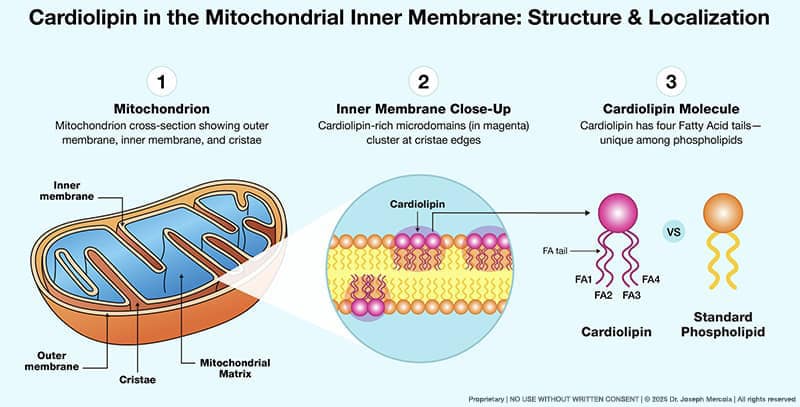
The figure above shows where cardiolipin lives inside your mitochondria and why it matters for energy production.6 Cardiolipin requires LA to function properly.7 This is actually essential — there’s a rare genetic disease called Barth syndrome where people cannot properly incorporate LA into their cardiolipin.8 They can develop heart failure and may die prematurely. So LA in the right place, in the right amount, is necessary for life.
But here’s what the conventional narrative completely misses: Cardiolipin makes up only about 20% of the inner mitochondrial membrane. The other 80% consists of other phospholipids that are NOT supposed to be loaded with LA.
When you consume excessive dietary LA — as virtually all Americans now do — that excess doesn’t just go into cardiolipin where it belongs. It accumulates in that other 80% of the membrane where it can create serious problems.
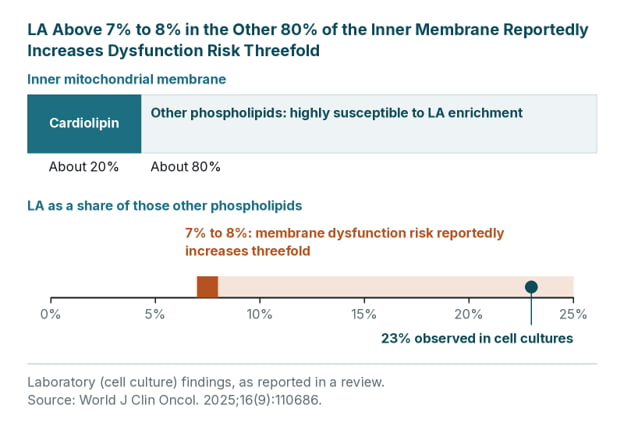
Figure 1. Linoleic acid above 7% to 8% in the non-cardiolipin 80% of the inner mitochondrial membrane reportedly increases dysfunction risk threefold.
My 2025 review states explicitly: “The remaining 80% of the IMM comprises non-cardiolipin phospholipids, including phosphatidylcholine and phosphatidylethanolamine, which are highly susceptible to LA enrichment. When LA in these phospholipids exceeds 7% to 8%, with levels like 23% observed in cell cultures, membrane dysfunction risk reportedly increases threefold.”9 The figure below shows how eating too much LA can set off a chain reaction that damages your mitochondria and drains your energy.10
The Mechanism of Damage
LA has a chemical structure that makes it highly vulnerable to oxidation. Imagine a chain with fragile links that break easily when exposed to oxygen — LA has two of these weak spots, making it far more prone to damage than saturated fats or even most other unsaturated fats.11
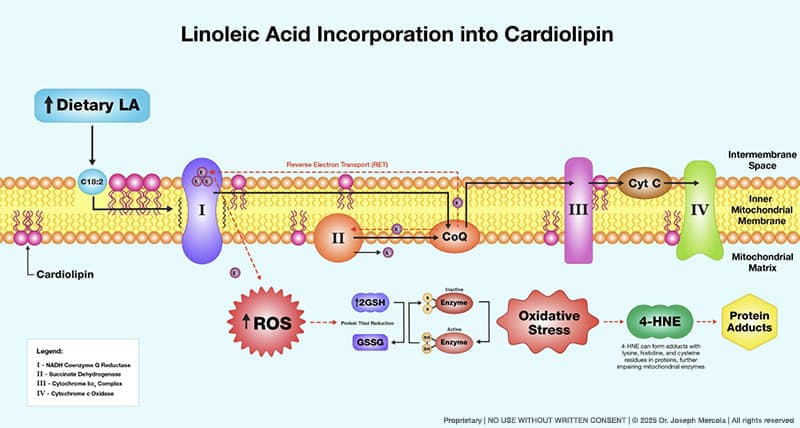
The electron transport chain (ETC) constantly generates small amounts of reactive oxygen species (ROS) as a byproduct of normal energy production. When those ROS encounter LA-enriched membranes, they trigger a peroxidation cascade that generates highly toxic compounds, particularly 4-hydroxynonenal (4-HNE).12
4-HNE is, according to published research, the most studied lipid peroxidation product with pleiotropic capabilities.13 It doesn’t just float away harmlessly. It can form permanent chemical bonds with the proteins of the electron transport chain itself.
A 2024 paper in Nutrients states explicitly: “Excessive consumption of vegetable oils such as soybean and canola oils containing ω-6 polyunsaturated fatty acids is considered one of the most important epidemiological factors leading to the progression of lifestyle-related diseases.”14 This can create a vicious cycle:
1. Excess dietary LA incorporates into mitochondrial membranes
2. Normal energy production generates ROS
3. ROS oxidize the excess LA
4. Oxidation generates 4-HNE
5. 4-HNE damages electron transport chain proteins
6. Damaged proteins leak more electrons, generating more ROS
7. More ROS oxidize more LA
8. More 4-HNE is generated
9. Mitochondrial function progressively deteriorates
10. ATP production — your cells’ energy currency — declines
11. Cells dysfunction or die
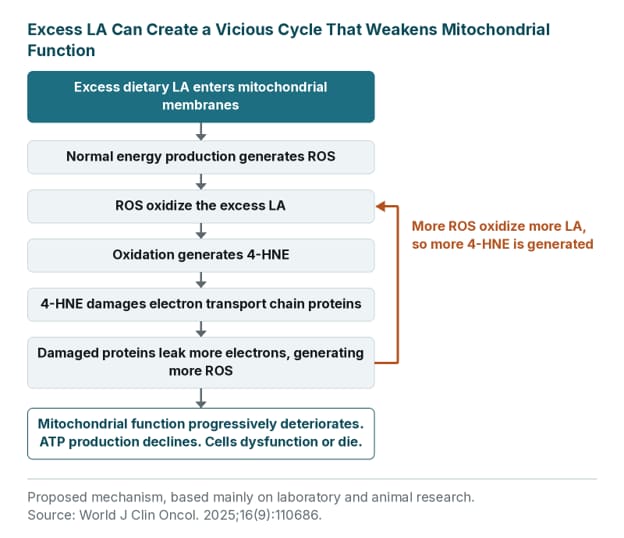
Figure 2. Excess LA can create a vicious cycle of oxidation and damage in mitochondria.
This is built on biochemistry published in journals including Cell Death & Differentiation,15 Nature,16 and my review published in Free Radical Biology and Medicine.17 The conventional nutrition establishment discusses none of it. They talk about LDL particles while this metabolic damage may unfold in the mitochondria of cells throughout your body.
Reductive Stress: The Concept the Mainstream Doesn’t Know

The figure above shows how your mitochondria make energy by moving electrons through a series of steps, which also creates a flow of protons that powers ATP production.18 The conventional nutrition establishment mentions oxidative stress when discussing seed oils. They never mention reductive stress. This omission reveals another fundamental gap in understanding.
For decades, the free radical theory of aging focused exclusively on oxidative stress — the idea that excess reactive oxygen species overwhelm antioxidant defenses and damage cells. But emerging research has identified an equally important phenomenon: reductive stress.

The figure above shows how having too many electron-carrying molecules (like NADH) overloads your mitochondria and triggers a harmful chain reaction.19 Reductive stress occurs when the supply of electron donors exceeds the capacity of the mitochondrial electron transport chain to process them.20 When you have too many electrons coming in and not enough capacity to handle them, electrons accumulate where they shouldn’t be and start reacting with oxygen prematurely.
Here’s the critical insight: reductive stress can cause oxidative stress.21 An excess of reducing equivalents (electron-carrying molecules like NADH that deliver electrons to the mitochondria) leads to electron leakage, which generates the very ROS that cause oxidative damage.
A landmark 2020 paper in Nature reported that elevated hepatic NADH/NAD+ ratio — reductive stress — mediates the effects of a common gene variant on metabolic traits, including glucose tolerance.22 This wasn’t correlation; using genetic tools to directly lower the ratio affected those traits in mice.
LA may contribute to reductive stress through two converging mechanisms. First, high dietary fat intake increases fatty acid oxidation, flooding the system with electrons. Second, 4-HNE damage to electron transport chain proteins impairs their ability to process those electrons.
The potential result: more electrons coming in, less capacity to process them. Severe reductive stress. Massive oxidative damage. Progressive metabolic dysfunction.
The mainstream argument is that calories are the main driver of obesity and metabolic disease. This is a half-truth that obscures the mechanism. LA-induced mitochondrial dysfunction and reductive stress may be drivers of metabolic inflexibility, which then may promote the caloric imbalance that leads to obesity.23,24 The seed oils may be upstream. The figure below shows how long-term high blood sugar and excess nutrients damage your cells in two phases.25

The Historical Evidence Being Dismissed
Seed oil defenders dismiss concerns about the unprecedented increase in LA consumption as a “naturalistic fallacy.” This is vastly oversimplified.
The data published in the American Journal of Clinical Nutrition are stark: estimated per capita consumption of soybean oil increased more than 1,000-fold from 1909 to 1999.26 The availability of LA increased from 2.79% to 7.21% of total energy intake.
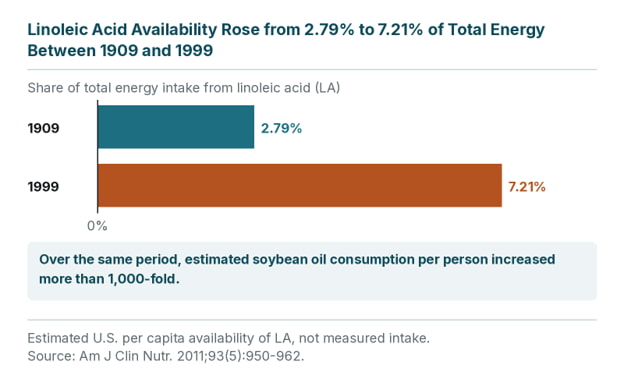
Figure 3. Estimated U.S. availability of linoleic acid rose from 2.79% to 7.21% of total energy between 1909 and 1999.
This is not a minor dietary shift. This is a substantial change in a fundamental substrate for human metabolism, occurring over a single century — a blink of an eye in evolutionary terms.
And this dietary change has been accompanied by a massive shift in human body composition. A systematic review published in Advances in Nutrition analyzed studies measuring subcutaneous adipose tissue LA concentration in U.S. cohorts from 1959 to 2008.27 The finding: Adipose tissue LA increased by 136%.
The correlation between dietary LA intake and adipose tissue concentration was extremely strong (R² = 0.81). This is not theoretical concern — we have fundamentally altered the fatty acid composition of human body fat.
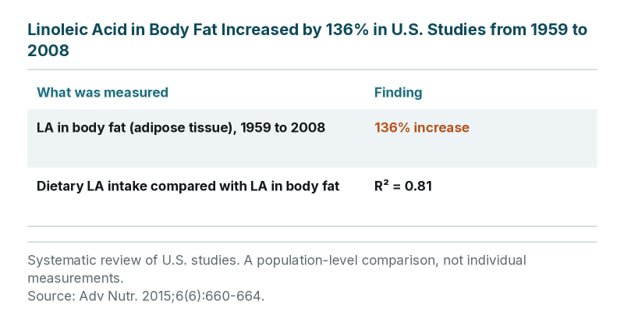
Figure 4. Linoleic acid in body fat increased by 136% in U.S. studies from 1959 to 2008.
Why does this matter? Because adipose tissue is not merely an inert storage depot. It’s an endocrine organ that produces inflammatory cytokines. When humans lose weight, they mobilize fatty acids from adipose tissue into the bloodstream. If that tissue is 136% more enriched with highly oxidizable LA than it was two generations ago, the metabolic consequences may be profoundly different.
LA has a half-life of about two years in your fat tissue. This means a 50-year-old carries in their body a chemical record of many of the seed oil-laden meals they’ve eaten for decades. Your body remembers, even when you don’t.
This time-delayed burden may help explain why regulatory bodies have been slow to act — even as new science continues to highlight risk. Frances Sladek, Ph.D., a professor of cell biology at the University of California, Riverside, who has extensively studied soybean oil’s metabolic effects, offered a stark warning:28
“It took 100 years from the first observed link between chewing tobacco and cancer to get warning labels on cigarettes. We hope it won’t take that long for society to recognize the link between excessive soybean oil consumption and negative health effects.”
Her group’s research has shown that soybean oil consumption can promote obesity in mice, underscoring the biological effects of this industrial oil.
This connection between seed oils and chronic disease is further explored in my published research in Cureus, “Seed Oils as a Hypothesized Contributor to Heart Disease: A Narrative Synthesis,” which synthesizes over 200 references suggesting that the rapid adoption of LA-rich industrial seed oils in the early 1900s preceded the surge in coronary heart disease deaths by 10 to 20 years — the approximate timeframe needed for atherosclerotic plaques to develop — and that LA oxidation generates the same inflammatory aldehydes like 4-HNE now being implicated in obesity.
The Hadza, a modern hunter-gatherer population that represents our best approximation of ancestral dietary patterns, have LDL cholesterol levels of 50 to 70 mg/dL, very low rates of cardiovascular disease, and low rates of metabolic disease. They consume virtually no industrial seed oils.
While the Hadza differ from modern populations in many ways beyond seed oil consumption, they demonstrate that the metabolic dysfunction we consider “normal” is not inevitable for humans. This is not a naturalistic fallacy. This is a control population that suggests what human metabolism looks like in the absence of a 1,000-fold increase in soybean oil consumption.
The Gut Connection
The mitochondrial damage we’ve been discussing doesn’t stay contained in isolated cells — it can ripple out to affect your entire gut ecosystem. Here’s how. Your colon is lined with specialized cells called colonocytes. Unlike most cells in your body, colonocytes don’t rely primarily on glucose for fuel. Instead, they get most of their energy from short-chain fatty acids — compounds like butyrate that your beneficial gut bacteria produce when they ferment fiber.
This arrangement isn’t accidental. When colonocytes burn these short-chain fatty acids, they consume oxygen in the process. This keeps oxygen levels in the gut extremely low — exactly what your beneficial bacteria need to thrive. Most of these helpful microbes are anaerobic, meaning oxygen is actually toxic to them.
Now consider what may happen when LA damages colonocyte mitochondria. Damaged mitochondria can’t burn fuel efficiently, so they consume less oxygen. Oxygen levels in the gut rise. Your beneficial anaerobic bacteria begin to die off, while harmful oxygen-tolerant species flourish. This imbalance is called dysbiosis.
The consequences cascade from there. Harmful bacteria produce a compound called lipopolysaccharide (LPS) — essentially a bacterial toxin that leaks into your bloodstream. Your immune system recognizes LPS as a threat and mounts an inflammatory response, releasing chemicals like TNF-α, IL-1β, and IL-6. The result can be chronic, low-grade inflammation throughout your body — the same inflammation that drives insulin resistance, weight gain, and metabolic dysfunction.
In other words, the seed oils damaging your mitochondria aren’t just an energy problem. They may be reshaping the microbial ecosystem in your gut and fueling whole-body inflammation through a pathway most nutrition experts don’t consider. The mainstream nutrition establishment never mentions any of this interconnected pathophysiology.
What You Should Actually Do

The figure above shows how everyday habits and exposures quietly overwhelm your mitochondria.29 Reducing your LA intake may be one of the most important steps you can take to protect your health. Here’s how:
• Eliminate industrial seed oils — This includes soybean, corn, cottonseed, canola, sunflower, safflower, and grapeseed oils. Check ingredient labels — these oils are in virtually all processed foods.
• Don’t be fooled by “healthy” packaged foods — Some of the worst seed oil offenders hide behind health halos. Organic granola bars, plant-based meat alternatives, veggie chips, “heart-healthy” crackers, non-dairy creamers, salad dressings marketed as natural — nearly all contain soybean, canola, or sunflower oil.
The word “organic” on the label doesn’t help you if the product is made with organic canola oil. Read ingredient lists, not marketing claims. If any seed oil appears, especially in the first five ingredients, put it back on the shelf.
• Avoid restaurant meals — Nearly all restaurants cook with seed oils because they’re cheap. Even “healthy” restaurants typically use canola or soybean oil.
• Don’t replace seed oils with excessive saturated fat — The solution isn’t to swing from one extreme to another. Use grass fed butter, ghee, tallow, and coconut oil for cooking — all of which have low LA content.
• Be cautious with olive oil and avocado oil — A study of 22 avocado oils30 sold in American stores found that most were oxidized before their expiration date and some were adulterated with cheaper seed oils. Unless you can verify purity, you may be consuming the very oils you’re trying to avoid.
• Reduce chicken and pork consumption — Animals with single stomachs (unlike ruminants like cattle) accumulate LA from their feed. Conventional chicken and pork contain high levels of LA, and chicken fat can exceed 20%. Prioritize beef, lamb, bison, and other ruminant meats.
• Understand this is a long-term project — LA has a half-life of approximately two years in adipose tissue. Reducing your tissue levels requires sustained dietary changes over years, not weeks. But improvements in mitochondrial function can occur much faster — dietary changes can improve cardiolipin composition in a matter of weeks or even days.
• Use our soon to launch app to track your intake — Laboratory research suggests problems begin when LA exceeds 7% to 8% of membrane phospholipids — levels that may be reached on modern Western diets providing 15 to 25 grams of LA daily, compared to the estimated 2 to 4 grams consumed by pre-industrial populations.
The Bottom Line
The conventional nutrition establishment has reduced an extraordinarily complex metabolic question to a simple LDL story and declared victory. They’ve focused on one variable while the actual mechanisms of harm — mitochondrial damage, toxic aldehydes, reductive stress, gut dysbiosis, systemic inflammation — may operate through entirely different pathways.
But here’s what matters: you don’t have to wait for the mainstream to catch up. The evidence is growing, and the solution is within your control. Every meal is an opportunity to protect your mitochondria rather than poison them. Every seed oil you eliminate is one less source of 4-HNE damaging your cellular machinery. Every month of lower LA intake may shift your body composition back toward what your ancestors carried for millennia.
This isn’t about perfection. It’s about direction. Your mitochondria can begin recovering in weeks, even as your adipose tissue takes years to fully turn over. Your body wants to heal — you simply have to stop interfering with the process.
The 1,000-fold increase in soybean oil consumption happened over a century. You can begin reversing your personal exposure today. Clean out your pantry. Read your labels. Choose restaurants carefully. Prioritize ruminant meats. Give your mitochondria the environment they need to produce the energy that powers everything you do.
Your great-grandparents didn’t need a scientific review to avoid seed oils — they simply didn’t exist. You have it harder: these oils are everywhere, hidden in foods marketed as healthy, defended by voices that should know better. But you also have something they didn’t: the knowledge of why these oils may be harmful and what to do about it.
FAQs About LA and Your Mitochondria
Q: Why is focusing only on LDL cholesterol an incomplete way to judge seed oil safety?
A: LDL cholesterol is just one variable. Seed oils may affect mitochondrial membranes, inflammatory signaling, oxidative damage, insulin resistance and cellular energy production through mechanisms that operate independently of LDL levels.
Q: What role does LA play in mitochondrial damage?
A: Excess LA accumulates in mitochondrial membranes outside cardiolipin, where it is highly prone to oxidation. This may promote lipid peroxidation, disrupt membrane integrity and interfere with the electron transport chain that produces cellular energy.
Q: What is 4-HNE, and why does it matter?
A: 4-HNE is a toxic aldehyde generated when LA-rich membranes are oxidized. It can form stable adducts with mitochondrial proteins, impairing energy production and driving a self-reinforcing cycle of oxidative and reductive stress.
Q: How is reductive stress different from oxidative stress?
A: Reductive stress occurs when excess electron donors, such as NADH, overwhelm mitochondrial processing capacity. This leads to electron leakage that generates reactive oxygen species, meaning reductive stress can cause oxidative stress.
Q: Why does reducing dietary LA require long-term commitment?
A: LA accumulates in adipose tissue with an estimated half-life of about two years. While mitochondrial function can improve relatively quickly, lowering total body LA burden requires sustained dietary changes over extended periods.
For scientists, researchers, and students who want to understand the complete molecular biology underlying these mechanisms — including detailed pathways of cardiolipin peroxidation, 4-HNE protein adduct formation, reverse electron transport, and the NADH/NAD+ ratio in metabolic disease — I have written a comprehensive scientific review with full mechanistic explanations and extensive citations.31
This article is for informational purposes only and does not constitute medical advice. Consult a qualified healthcare provider before making changes to your health regimen.