



The 357th Fighter Squadron graduated its last A-10C Thunderbolt II student pilots at Davis-Monthan Air Force Base, ending an era as the only formal training unit for A-10 pilots.
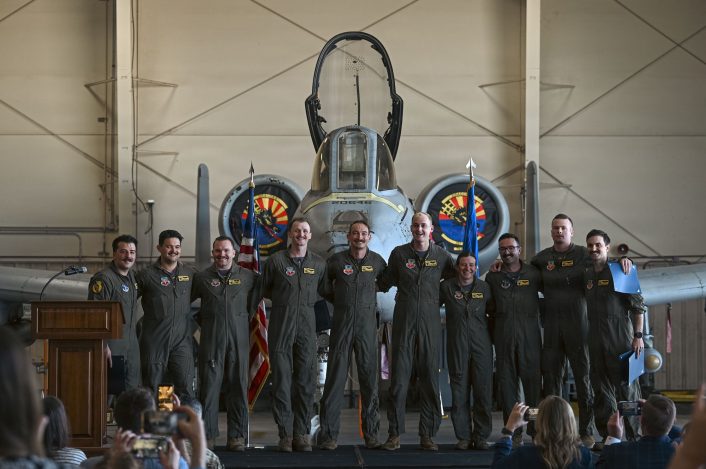
The U.S. Air Force has now ended training pilots for the new A-10C Thunderbolt II in another step toward retirement of the aircraft. In fact, on April 3, 2026, the 357th Fighter Wing completed its last class of A-10 student pilots at Davis-Monthan Air Force Base in Arizona.
The students completed mission qualification training in mid-March, according to images released by the service via the DVIDS network on March 20. The photo explains that close air support training was the culminating event of the course.
Among the commencement’s guest speakers was retired U.S. Air Force Col. Kim “KC” Campbell, who is credited with receiving the Distinguished Flying Cross for rescuing a crippled A-10 after sustaining anti-aircraft fire damage during Operation Iraqi Freedom in 2003. She is known to be one of the few A-10 pilots to successfully land an A-10 using the emergency mode of the Manual Return Flight Control System (MRFCS). Old-fashioned cables and pulleys to fly the jet after losing its hydraulics.
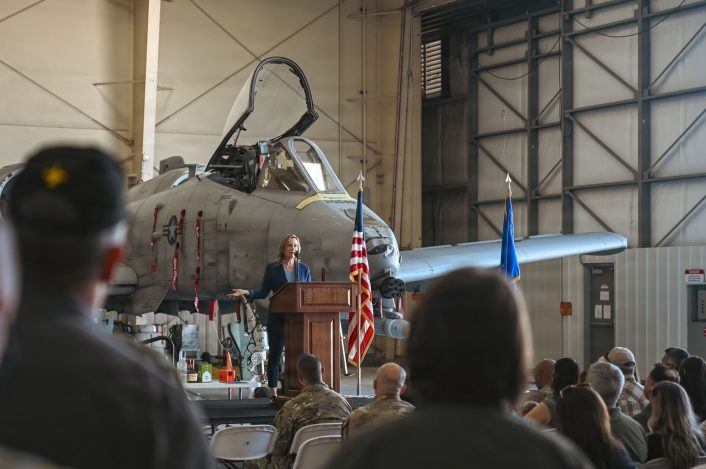
In a graduation photo caption, the Air Force said the ceremony marked a historic moment and the end of the A-10 training era. These new pilots will now move to their assigned units to continue their certification training.
New pilot training has now concluded with this final class, but the A-10 is still expected to fly for several more years. In fact, the Warthog (the aircraft’s nickname in the fighter pilot community) is still heavily used and has played an important role in operations in Iran.
The importance of the platform was also demonstrated in recent testing of a new probe refueling adapter developed in response to urgent warfighter command requirements. This now allows the A-10 to be refueled by probes and drogue aerial refueling tankers. In particular, the Air Force deactivated the 1st Detachment of the 40th Flight Test Squadron, which was responsible for testing the A-10, in December 2025, and thus tested the new probe at the Air National Guard Reserve Command Test Center (AATC).
357th Fighter Squadron
The 357th Fighter Squadron, also known as the ‘Dragons,’ is the Air Force’s only formal training unit for A-10 pilots. The agency’s role is to train pilots on how to plan, coordinate, execute and control close air support day and night, as well as battlefield surveillance and reconnaissance, the Army said.
The six-month course graduates about 70 full-force pilots each year, and Air National Guard pilots also train here alongside active-duty pilots. Students complete approximately 40 flights, along with flight simulator sorties and academic classes, to qualify as combat-ready pilots and move on to their assigned units.
The course begins with the basics of how to fly the A-10C and continues with an air-to-air phase that teaches students how to fight and defend themselves against enemy aircraft. This is followed by surface strikes, starting with the basics such as unguided munitions and the GAU-8 30 mm gun and moving to more advanced weapons and tactics in more complex close air support scenarios.
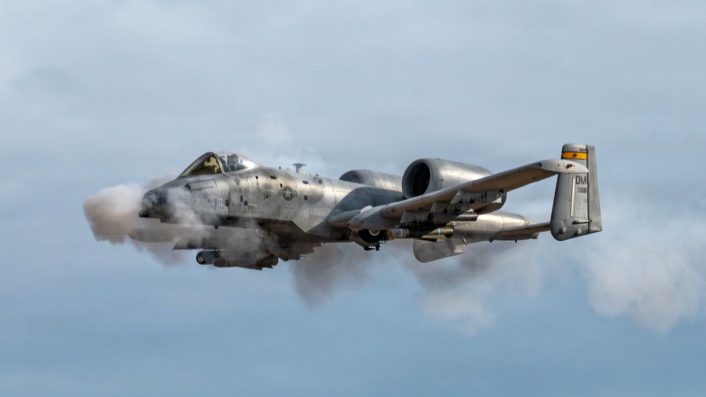
In addition to new A-10 pilots, the squadron trains new instructor pilots and recertifies A-10 pilots who have spent time in non-flying positions.
Sale of A-10
The sale of the A-10 has been controversial as the Air Force has been trying to get rid of the A-10 for years and Congress has intervened to avoid the loss of critical CAS capabilities. The controversy stems from the fact that the A-10 is considered unviable in modern competitive environments with Anti-Access/Area Denial (A2/AD) networks, while still maintaining excellent performance in permissive scenarios.
The retirement date has seen several changes over the years, with the Navy aiming to retire all 162 A-10s still in inventory in FY2026, rather than phasing them out by 2029 as originally planned. However, the 2025 National Defense Authorization Act rejects the Air Force’s plan and allows only 59 A-10s to be retired.
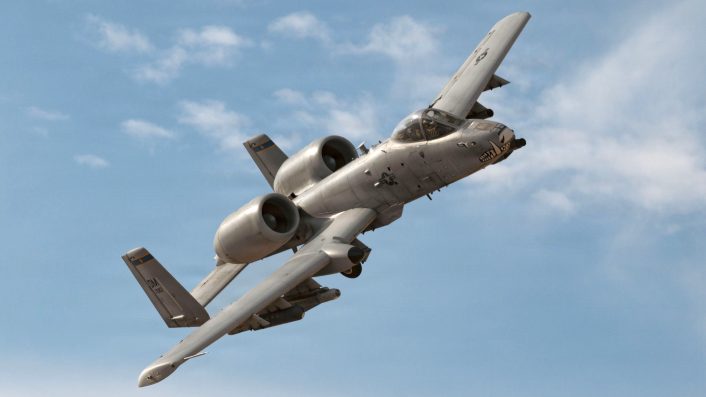
A downside to Congress’ A-10 structure is that the service did not include funding for fleet maintenance in its FY2026 budget. The Air Force estimated it would require $423 million to do this, and planned to redirect it to other programs upon the Warthog’s retirement.
Meanwhile, the A-10 remains the U.S. Air Force’s primary platform and is at the forefront of operations over Iran. The versatile Warthog has also been used against One Way Attack (OWA) drones and to hunt Iranian fast attack vessels in the Strait of Hormuz.







