



Festivals in Suriname reflect the country’s layered history, ethnic diversity, and strong community ties. Throughout the year, cities and villages host cultural events that bring together indigenous African, Asian, and European traditions in public celebrations. The best festivals in Suriname showcase the country’s cultural diversity through national holidays, religious observances, music gatherings, and community parades.
Celebrations often highlight defining moments in the country’s history. Examples include Emancipation Day, religious celebrations like Holi and Eid, and Lunar New Year festivities in Paramaribo. Seasonal and signature events also spotlight food, art, and local talent, giving insight into daily life as well as national identity.
Each festival reveals a different layer of Surinamese culture – from large public gatherings in the capital to community-based ceremonies in the interior. Understanding these celebrations can help travelers plan meaningful visits and approach each cultural event with awareness and respect.
Essential Festivals That Define Surinamese Culture
Several Suriname festivals directly reflect the country’s history of slavery, indentured labor, and resistance. These cultural festivals combine remembrance, ritual, music, and food in ways that shape national identity and public life.
Keti Koti: Emancipation Day Celebrations
Keti Koti, meaning “the breaking of chains,” takes place every year on July 1. It marks the abolition of slavery in Suriname in 1863 and remains one of the most significant national observances.
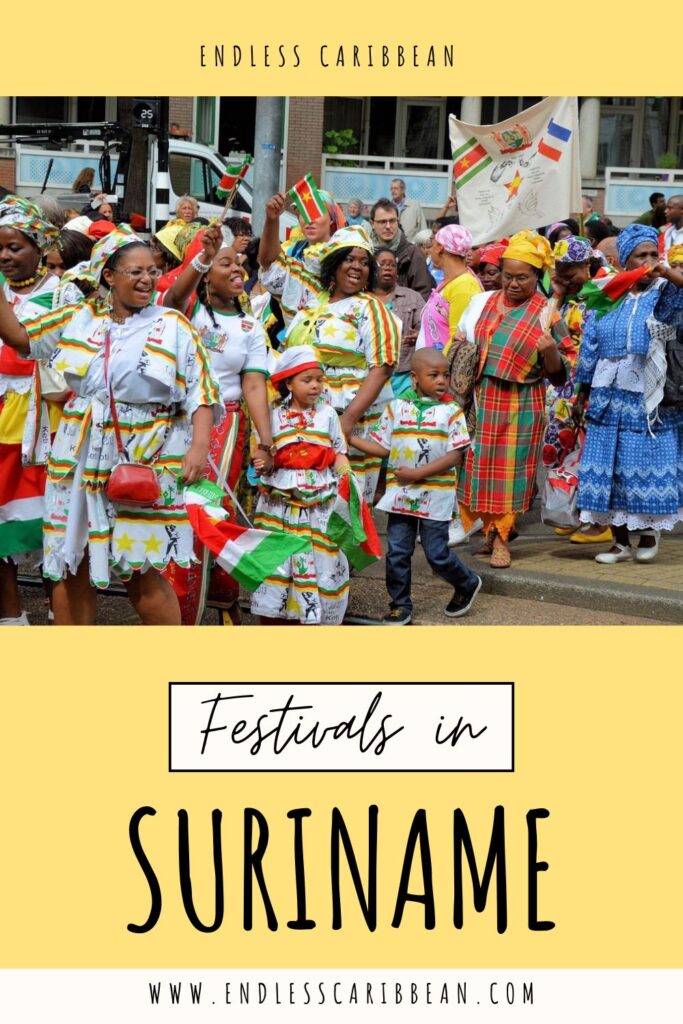
Ceremonies begin with wreath‑laying and speeches at monuments in Paramaribo. Participants often wear traditional Afro‑Surinamese clothing, including the kotomisi dress and headscarves with symbolic folds.
Food plays a central role. Many families prepare heri heri, a dish made with cassava, sweet potato, plantain, salted fish, and egg. The meal reflects ingredients once available to enslaved people and now serves as a symbol of resilience.
Public events include music, storytelling, and historical reenactments. Detailed guides to this commemoration appear in resources such as 7 Traditional Festivals That Define Cultural Experiences in Suriname, which outline its continued role in shaping national dialogue.
Holi Phagwa: The Festival of Colors
Holi Phagwa stands out as one of the most visible cultural festivals in Suriname. The Indo‑Surinamese community introduced it in the 19th century, and it now draws broad participation across ethnic lines.
The celebration usually occurs in March to mark the arrival of spring and the triumph of good over evil. In Paramaribo, crowds gather in public squares dressed in white clothing.
Participants throw colored powder and spray water while live bands play Bollywood‑inspired and local music. Streets close to traffic to allow safe movement and organized performances.
Travel planners often list it among the country’s major annual events. Visitors typically protect cameras and phones from powder and wear simple clothing that can stain.
Maroon Day: Honoring African Heritage
Maroon Day honors the descendants of enslaved Africans who escaped plantations and formed independent communities in Suriname’s interior. The day highlights autonomy, treaty rights, and cultural continuity.
Celebrations take place in both interior villages and parts of Paramaribo. Leaders recognize historic peace treaties signed between Maroon groups and Dutch colonial authorities. Music defines the day – drumming, call‑and‑response singing, and traditional dances accompany communal meals and storytelling.
Cultural programs often emphasize heritage preservation and youth education. Maroon Day strengthens awareness of African roots within the wider landscape of Suriname.
Seasonal and Signature Events in Suriname
Year-end celebrations are also popular in the country. There are firecracker rituals, open-air street parties, and organized holiday programs to celebrate the transition from Christmas to the New Year.
Pagara Estafette: New Year’s Firecracker Tradition
The pagara estafette marks one of the most recognizable New Year traditions in Suriname. Businesses and families hang long strings of red firecrackers, sometimes stretching several meters, across storefronts and streets.
They ignite these firecrackers in sequence, often during the final days of December and especially on December 31. The loud bursts serve a symbolic purpose: people believe the noise drives away negative energy and clears the way for prosperity in the coming year.
In Paramaribo, companies organize scheduled pagara estafette events during business hours. Large crowds gather along commercial streets to watch the coordinated displays.
Key features include:
- Long chains of interconnected firecrackers
- Midday or afternoon ignition
- Public gatherings in shopping districts
The event blends tradition with commerce, as businesses often pair the display with music, food, and promotional activities.
Owru Yari: New Year Street Parties
Owru Yari, which means “Old Year,” refers to the December 31 celebrations that fill Paramaribo’s streets. This is one of the most anticipated festivals in Suriname.
By late morning, traffic slows in the city center as people move between shops, bars, and outdoor stalls. Music plays continuously, and many residents wear bright clothing to match the festive atmosphere.
Owru Yari connects closely to Christmas in Suriname. Families celebrate Christmas on December 25, then extend the holiday season through the final week of December.
Typical elements of Owru Yari include:
- Street food vendors selling local dishes
- Live DJs and bands
- Fireworks at midnight
At midnight, fireworks light the sky across neighborhoods, signaling the official start of the New Year.
Surifesta: Year-End Festivities
Surifesta functions as an organized series of year-end activities rather than a single event. It often runs in the period between Christmas and New Year’s Day.
Event planners schedule concerts, cultural showcases, and themed parties at venues across Paramaribo. Some programs align with broader tourism promotions such as the Suriname Tourism Festival, which highlights cultural and entertainment events in the capital.
Surifesta attracts both residents and visitors. Organizers focus on music, dance, and community gatherings that reflect Suriname’s multicultural society.
Visitors can expect:
- Evening concerts and dance events
- Family-friendly holiday activities
- Coordinated countdown celebrations
Surifesta reinforces the rhythm of the holiday season and anchors the transition from Christmas in Suriname to the high-energy celebrations of Owru Yari and the pagara estafette.
Cultural Diversity Through Religious and Community Festivals
Religious and community celebrations shape daily life in Suriname. They reflect migration history, shared public space, and the way different faiths express identity through food, prayer, music, and family gatherings.
Javanese New Year: Satu Suro
Javanese New Year, known as Satu Suro, follows the Javanese lunar calendar and holds spiritual meaning for Suriname’s Javanese community. Families mark the evening with quiet reflection, prayer, and visits to elders rather than loud public parties.
Many participants observe tirakatan, a night vigil focused on self-discipline and gratitude. Community centers and cultural groups may organize small gatherings with traditional dress and gamelan music, but the tone remains restrained.
Food also plays a symbolic role. Dishes such as tumpeng (cone-shaped rice) represent gratitude and continuity.
Travelers seeking respectful cultural experiences in Suriname can observe how Javanese heritage remains visible generations after migration. Public overviews of national celebrations often list this period among key annual events in guides to Suriname festivals and holidays.
Chinese New Year in Paramaribo
The Chinese New Year brings visible energy to Paramaribo’s commercial districts. Lion and dragon dances move through streets lined with red lanterns, while businesses host blessings for prosperity and good fortune.
Families gather for reunion dinners that feature roast pork, noodles, dumplings, and other symbolic foods. Firecrackers mark the transition to the new lunar year and draw large public crowds.
The celebration stands out as a major cultural event that highlights Suriname’s long-established Chinese community. Visitors can expect performances, temple visits, and community banquets that reflect both tradition and local adaptation, as described in guides to the best festivals in Suriname.
Eid-ul-Fitr & Eid-al-Adha
Muslim communities in Suriname, including many of Hindustani and Javanese descent, observe both Eid-ul-Fitr and Eid-al-Adha as national public holidays. Mosques in Paramaribo and other towns host large congregational prayers early in the morning.
Eid-ul-Fitr follows the month of Ramadan and emphasizes charity, family visits, and shared meals. Tables are often laden with biryani, sweet vermicelli, and savory pastries prepared at home.
Eid-al-Adha centers on sacrifice, remembrance of faith, and distribution of meat to relatives and those in need. These observances demonstrate how religion shapes public life and reinforces community responsibility.
Travelers who attend open mosque events or community gatherings can gain direct insight into everyday religious practice rather than staged performances.
Indigenous Festivals and Powamu
Indigenous communities such as the Arawak and Carib maintain ceremonies tied to land and seasonal cycles. Powamu, also known as the Arawak New Year, takes place around the start of the rainy season and celebrates renewal.
Villages host dance performances, cassava-based meals, and storytelling that pass down oral history. Leaders emphasize respect for nature, river systems, and ancestral knowledge.
These gatherings often occur in coastal or riverine communities, not in major urban centers. Visitors who arrange guided trips through reputable operators can observe how traditional dress, music, and communal decision-making remain active parts of daily life.
National travel platforms that explore cultural experiences in Suriname frequently highlight Indigenous celebrations as central to understanding the country’s cultural landscape.
Celebrations of Music, Art, and Movement
Suriname’s cultural calendar features large public gatherings that center on live music, street participation, and visual arts. These events attract residents and visitors who want direct access to the country’s creative life.
Suriname Jazz Festival
The Suriname Jazz Festival brings international and regional musicians to the country for several days of live performances. Organizers stage concerts in major venues and open-air settings, giving audiences structured evening shows rather than informal street parties.
Artists perform jazz standards, Latin jazz, funk, and fusion. Local bands share the stage with invited performers, which gives Surinamese musicians national visibility.
The event operates as a ticketed cultural festival. Attendees should check dates and venue details in advance through updates such as the Suriname Festivals 2026 events guide.
For visitors, the key points are clear:
- Location: Primarily Paramaribo
- Format: Scheduled concerts
- Audience: Music-focused, mixed local and international
It delivers focused programming rather than a broad street fair atmosphere.
Avondvierdaagse Walking Event
The Avondvierdaagse is a four‑evening walking event held annually in Paramaribo. Participants walk set routes through the city, often organized by schools, companies, and community groups.
Marching bands and small music groups accompany many walkers. Spectators line the streets, turning the final evening into a high‑energy public celebration.
Unlike a concert festival, Avondvierdaagse emphasizes movement and participation. Families register in advance, and groups often coordinate matching shirts or banners.
Key characteristics include:
- Duration: Four consecutive evenings
- Focus: Walking routes with music support
- Participants: Large school and youth involvement
Travelers who want to join or observe should review local event calendars such as Top Festivals and Seasonal Events in Suriname You Can’t Miss. The final parade night draws the largest crowds.
National Art Exhibition
The National Art Exhibition highlights contemporary and traditional visual art from Surinamese artists. Galleries and public venues display painting, sculpture, photography, and mixed media works.
Organizers typically curate submissions to reflect current artistic themes. Many pieces address identity, heritage, and daily life in Suriname.
This exhibition differs from street-based festivals. It provides structured viewing hours, guided tours, and formal openings.
Visitors can expect:
- Indoor gallery settings
- Works by emerging and established artists
- Opportunities to meet creators during openings
Cultural listings such as Suriname Holidays and Festivals often note exhibition periods. Travelers interested in art should confirm exact dates and locations before planning a visit.
Tourism Festivals and Local Cultural Showcases
Tourism-focused festivals in Suriname present the country’s cultural diversity, food traditions, and travel experiences in one setting. These events combine structured programming with direct interaction between visitors, tour operators, chefs, and artists.
Suriname Tourism Festival at Roeli’s Event Venue
The annual Suriname Tourism Festival plays a defined role in the national tourism calendar. Organizers launched it in 2023 to promote Suriname tourism locally and internationally through a structured, multi-day event.
The festival takes place at Roeli’s Event Venue in Paramaribo, where exhibitors present travel services, eco-lodges, river tours, and cultural experiences. The official event platform describes it as a large-scale tourism gathering that highlights the country’s diversity through performances, exhibitions, and interactive activities at the Suriname Tourism Festival at Roeli’s Event Venue.
Visitors move between booths hosted by tour operators, hospitality providers, and regional representatives. Cultural performances and culinary presentations run on stage throughout the day.
The event also appears in the national calendar, including listings such as the Suriname Tourism & Food Festival event dates, which provide confirmed locations and scheduling details.
Food, Crafts, and Culinary Festivals
Culinary events form a central part of tourism festivals across the country. They showcase Surinamese cuisine, which reflects Indigenous, African, Indian, Javanese, Chinese, and Dutch influences.
Food stalls typically serve roti, pom, saoto soup, grilled meats, and fresh juices. Live cooking demonstrations allow chefs to explain preparation methods and ingredients without turning the event into a formal workshop.
Many tourism events combine food with craft markets and music. Visitors often experience this mix at large public celebrations featured among the best festivals in Suriname, where organizers integrate street performances, local art, and regional dishes.
These festivals function as practical entry points into Surinamese culture. They allow travelers to taste traditional dishes, purchase handmade crafts, and speak directly with local producers in one location.
Experiencing Festivals in Suriname: Travel Tips and Cultural Insights
Travelers who plan carefully gain better access to major celebrations and avoid common logistical problems. They also show respect for local customs, which shapes the quality of their cultural experiences in Suriname.
Best Times to Visit for Festivals
Suriname hosts cultural events year‑round, but peak festival activity often falls between June and October, when national celebrations and community events increase. Travelers can review updated dates through guides such as Suriname Festivals 2026: Top Events, Dates, Traditions & Visa Guide.
Major events include Keti Koti (July 1) in Paramaribo, which commemorates the abolition of slavery, and Independence Day (November 25). Religious festivals such as Holi Phagwa, Diwali, Eid al-Fitr, and Christmas also draw large crowds and reflect the country’s multi-ethnic identity.
During peak periods, hotels in Paramaribo fill quickly. Suriname tourism infrastructure remains concentrated in the capital, so early booking is essential.
Practical planning tips:
- Book accommodations at least 4–8 weeks in advance for national holidays
- Confirm transportation if visiting river villages
- Carry cash for food stalls and small vendors
- Check local event schedules close to travel dates
- Respecting Local Traditions and Etiquette
Festivals in Suriname combine Indigenous, African, Indian, Javanese, Chinese, and European influences. Visitors who understand this diversity engage more meaningfully with cultural experiences in Suriname.
Dress modestly when attending religious or village ceremonies. In Maroon and Indigenous communities, always ask before photographing rituals or individuals. Some spiritual practices, including Winti ceremonies, may limit public access.
A general rule to note is that simple gestures improve interactions:
- Greet elders first
- Accept food or drink with the right hand when possible
- Follow the lead of community hosts during dances or processions
Public celebrations in Paramaribo feel lively, but they still operate within cultural norms. Resources such as Suriname: Top Festivals to Check Out When Visiting highlight how festivals reflect national identity rather than staged performances.
Respect, punctuality, and attentive behavior strengthen trust and allow visitors to experience Suriname’s festivals in an informed and appropriate way.
Image: Public Domain Pictures via Unsplash
Related Posts







