



Most visitors to Reykjavik spend their days chasing waterfalls and the Northern Lights. Then, depending on the season, the sun either sets or it doesn’t. And they are left wondering where to go from Laugavegur. The city’s nightlife has its own unique culture, history and humor. Walking there with a local who knows the story behind every bar changes the experience quite a bit.
Here’s our guide on how to spend a night out in Reykjavik like a local.
A night out in Reykjavik: what to expect?
The capital, Reykjavik, operates on a surprisingly human scale. The entire entertainment district is a short walk away, centered around Laugavegur and the streets that branch off from it. There are no neighborhoods to research, no taxi rides between places. The bar scene is small enough that the night unfolds on foot.
Culture is not rushed. Icelanders tend to start late, and Laugavegur’s energy peaks only after midnight, especially on weekends. This means you can choose your seat if you arrive at 9pm. Showing up at 1 a.m. means you’re not. Both are not wrong. It depends on what kind of evening you are having.
What you won’t find here is much to do with velvet ropes, dress code or attitude. The bar is small, the room gets loud, and the default mode is conversation. Icelanders are direct and aloof, and strangers in bars tend to strike up conversations. Especially if it gets known that you are visiting.
Beer is the common currency. Iceland’s craft beer brewing industry has grown steadily since Prohibition was repealed in 1989, and most bars now serve a mix of local and Scandinavian beers along with international beers. If you’re looking for something more specifically Icelandic, Brnnivín, a caraway-flavored schnapps also known as “black death,” is widely available and worth trying at least once. If you’re feeling thorough, you’ll probably inevitably pair it with fermented shark.
The midnight sun of summer is what it is. Leaving a bar at midnight and walking into broad daylight is disorienting in a way that’s hard to prepare for. In winter, darkness comes earlier and the bar feels warmer. There is no off season for Reykjavik nightlife. The calendar doesn’t change its appeal as much as the light does.
Related reading: Staying in downtown Reykjavik, Iceland
What does Pöbbarölt actually mean?
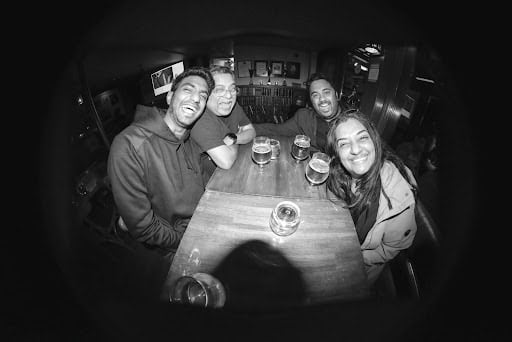
Icelanders call it pöbbarölt (bar crawl). That word alone tells you something. There is a casualness to it, a sense of community rather than a mission to get drunk. Reykjavik’s bar scene isn’t about VIP lists or velvet ropes. A small room, a cold beer, and conversation with the person next to you.
What most travelers don’t realize is that beer was completely banned in Iceland until 1989. Beer was illegal here for decades after spirits and wine were legalized. The stories from that era are strange and funny, and shape how Icelanders relate to their drinking culture today. This context gives your first pint in the city a different weight.
Reykjavik After Dark: Vörvarøndt Bar Crawl
We walked Laugavegur for 3.5 hours with a local guide who knew the story behind every stop.
➡ 3 carefully selected bars, each with a different character – craft beer, Icelandic spirits and late-night energy.
➡ Your guide moves between history, humor and insider knowledge throughout the evening.
➡ We are a small group of 6 people so you can chat without getting confused all night long.
➡ Beverages included in all areas
➡ No prior knowledge of beer, Iceland or bar crawling required.
From $160 per person
The Tour, Bar By Bar
Reykjavik is a small city and the nightlife reflects this. The bars are close together, the rooms are small, and the evenings tend to proceed at your own pace. The conversation is unhurried, there is no particular agenda beyond the next round, and it doesn’t matter who you end up talking to.
Here, bar crawling is not a checklist exercise. It’s closer to how locals actually spend their Friday nights. You’ll wander between a few places you know well, with plenty of time to settle in at each. Going with a guide who can explain what you’re drinking, why Prohibition lasted so long, and what the runic symbols above the bar mean will turn a fun night into something a little more meaningful.
Remy: Where the Night Begins
The evening will take place at Lemmy, a rock bar dedicated to Motörhead’s Lemmy Kilmister. Step inside and you’ll find 50 beers on tap, walls that make no apologies for celebrating, and a soundtrack that swings between rock and folk without warning. This is a room where noisy people live.
This is also where you learn how to pour a draft properly. Your guide, Stefán, will guide you through angles, holding, and finishing, and you will be provided with four glasses to practice on. It may sound trivial until you realize that you’ve probably been drinking heavily poured beer for years. Stefan also covers the history of Icelandic beer here, including the Prohibition period and answers to questions many people wonder about but don’t always want to ask. Did Vikings Drink Beer? No, as it turns out. They drank mead and a fermented potato spirit called Brennivín, which is quite accurately translated as “black death.”
Ægir 101: Stop Crafting
From Lemmy, the group moves to Ægir 101, a format-changing session craft bar. You can try smaller beers and a variety of styles, from raspberry sours to caramel stouts. Reykjavík’s craft beer industry has grown significantly since the end of Prohibition, and Ægir 101 is a great place to get a cross-section of how local brewers have been putting their beer to work. The right stop is to start distinguishing between what you actually like and what you have always ordered out of habit.
Conversations tend to start here. People who didn’t know each other at the beginning of the evening are usually talking freely until their plane arrives. That said, it’s all about small pours and shared tasting note formats that loosen things up.
Ölstofan: Where the Night Ends
The last stop is Ölstofan, it has the feel of a place that hasn’t tried to update itself for tourists, and that’s why it works. Stefán brings us one of his best stories here, with a beer he calls the most awarded beer in the world.
But the real ending isn’t the beer. Stefán concludes every tour with an explanation of rune symbols and their meanings. It consistently lands in a way that surprises people with quieter notes after a fun night of music and laughter. The guests who had been joking for three hours became quiet for a moment. The description may make it sound like something you’d roll your eyes at, but it doesn’t feel that way in the room.
Guide: Stefan
Stefán is an engineer, actor, musician, and storyteller. That combination sounds like a resume, but you can feel it all throughout the evening. The precision of a careful explainer, the performance instinct to keep a room engaged, and a musical ear for when the mood changes. He’s been coaching long enough to know which jokes reach which groups and is curious enough that the conversation never gets stale.
What this tour actually contains
Iceland values its scenery, and the scenery conveys this. But most people who spend real time here say the same thing. In other words, it’s the people and the culture that stay with them. The humor is dry and self-aware. History is stranger than you think. The sense of community felt in this city of 130,000 people located on an island in the North Atlantic has a special texture.
A bar crawl done this way is a faster route to that texture than almost anything else. You are not looking at the culture from the outside. You’re sitting in it, drinking a beer, listening to a story, and eventually chatting with someone sitting at the same table.
practical information
When to go
Tours run all year round. A night out in Reykjavik doesn’t follow seasonal rules like outdoor activities do. The sun rarely sets in the summer, making it a surreal place to spend the night. In the winter, if you go out early in the dark, the bar will feel correspondingly warm. Both versions work.
weather
Iceland’s weather is famously unpredictable. Wear layers of clothing and assume conditions may change between bars. A light waterproof layer is always reasonable.
Who is it for?
Couples, solo travelers, and anyone interested in culture and local history will find this format a natural fit. No knowledge of beer is required. No beer knowledge is required on the tour, learning as you go is part of the point. Solo travelers tend to do particularly well here because they travel in groups and are never really alone.
Meeting point and period
The tour begins at the designated meeting point in Reykjavik. For exact location and times, check Reykjavik Wayfinder for current details.
Frequently Asked Questions
Did Vikings really drink beer?
you’re right. Beer as we know it was never part of the Nordic diet. They drank mead, a fermented honey drink, and brenivin, a potato spirit sometimes called “the Black Death.” Iceland’s relationship with alcohol has always been complicated. The United States did not lift its beer ban until 1989, long after spirits and wine were legalized again.
What is Brnnivín and can you try it in Reykjavik?
Brnnivín is Iceland’s signature distilled spirit. Roughly translated as caraway-flavored schnapps, it is ‘black death.’ It is widely sold in Reykjavik bars and is considered the closest thing to Iceland’s national drink. Most bars in Laugavegur sell it and, perhaps inevitably, pair it with fermented shark.
What is the bar scene in Laugavegur really like?
Laugavegur is Reykjavik’s main street and nightlife hub. Bars tend to be small, unpretentious, and mixed in with restaurants and shops. There are no actual VIP areas or gate policies. The culture is informal and it is common to travel between multiple locations in one evening. Weekends get busy after midnight.
What types of beer can you find in Reykjavik?
Icelandic craft beer brewing has expanded significantly since the late 1980s. Local styles range from clean lagers to more experimental options. Raspberry sours, caramel stouts, and seasonal beers are common. Most bars have a mix of Icelandic and Scandinavian options along with international taps.
Is Reykjavik’s nightlife seasonal?
Not particularly. Unlike most outdoor activities in Iceland, bars are open all year round without much change. In summer, the midnight sun comes and makes late nights dizzy. It’s 2 am and it’s still bright outside. Winter nights are long and dark, so the bars feel warm accordingly. Both have their charm.







