



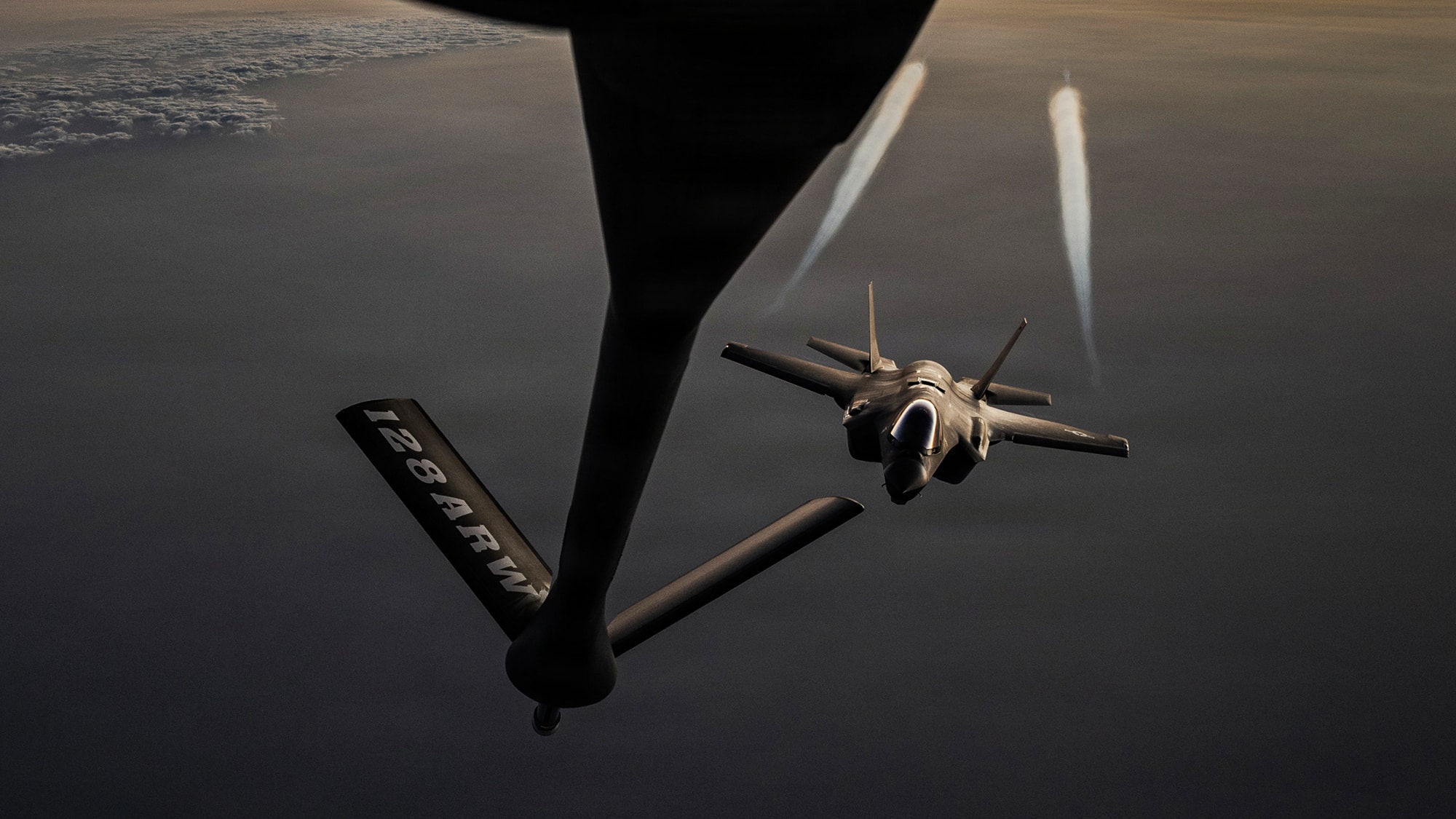
The Congressional Research Service (CRS) has attempted to collate reports on U.S. aircraft losses during the Iran war, but there are some glaring omissions.
The independent report, prepared for the U.S. Congress, which is independent of the Department of Defense (DoD) and does not have access to information beyond what is publicly available, attempted to catalog all known instances of U.S. military aircraft damaged or destroyed as a result of Operation Epic Fury. This includes aircraft lost due to enemy action as well as other accidents.
CRS has a total of 42 aircraft listed as lost or damaged, all previously known. These include 24 MQ-9 Reapers, 7 KC-135 Stratotankers, 4 F-15E Strike Eagles, and 2 MC-130J Commando IIs, including one incident each involving an E-3 Sentry, F-35A Lightning II, A-10 Thunderbolt II, HH-60W Jolly Green II, and MQ-4C Triton.
However, there are some aspects of this report that seem to be missing some known details. Most notably, only one E-3 Sentry was listed as ‘damaged’. In fact, there are reports that more than one E-3 Sentry suffered damage on the ground due to Iranian missile and drone attacks on U.S. forward bases in the Middle East, but it is also known that more than one E-3 was actually completely destroyed.
“Compromised” AWACS… https://t.co/tCGHjpaDcO pic.twitter.com/fGusI20H9p
— (Really) IntelFrog (@TheIntelFrogbu) May 19, 2026
The report also omits the alleged intentional destruction of four MH-6 Little Bird helicopters belonging to the 160th Special Operations Aviation Regiment (SOAR) during the same combat search and rescue (CSAR) operation. During this battle, two MC-130J Commando IIs were deliberately destroyed after being confined to a tight airfield.
Apparently, two U.S. Special Operations Command MH-6 Little Bird helicopters were destroyed during CSAR operations in Iran. https://t.co/TRUIoqAJKg pic.twitter.com/odSMFqpmcJ
— Intel Observer in Egypt (@EGYOSINT) April 5, 2026
With the destruction of these special operations transports deep inside Iranian territory, the MH-6 had no other way to escape Iran, and its charred remains were found next to the wreckage of the MC-130.
Because the loss of this helicopter was well reported, including by mainstream outlets such as ABC News – It is unclear whether these aircraft were omitted from the list due to oversight or were intentionally overlooked. In theory, there should be no reason to intentionally omit publicly reported losses like this one, as an independent report compiled without input from the Department of Defense with the pure intention of simply providing lawmakers with an objective, concise overview.
The list of single damaged HH-60Ws is also lower than many reports mention, but the lack of hard evidence makes it much more difficult to be certain about this. Some claim that two UH-60 Black Hawks were damaged during the CSAR mission, but this is more likely to have been two HH-60Ws based on the UH-60.
WATCH: Iranian police opened fire on two U.S. HH-60W Jolly Green II helicopters today while searching for a downed F-15E crewed jet. pic.twitter.com/mMdrRAlUIN
— Clash Report (@clashreport) April 3, 2026
The lead helicopter on the mission carrying the rescued pilot was said to have been the target of small arms fire by Gen. Dan Caine, Chairman of the Joint Chiefs of Staff, but a second HH-60W that followed was specifically cited as being shot to the point where the crew inside suffered “minor injuries.”
Both of these helicopters may have been physically damaged, but while damage to the lead aircraft was limited to superficial scarring, injuries to the crew of the trailing aircraft may indicate that it had taken more hits.
📹 Video shows a U.S. Air Force C-130 mid-air refueling two helicopters as the search continues for the crew of a U.S. fighter jet reported to have been shot down in Iran ⤵️ pic.twitter.com/fUY91A0NwD
— Anadolu English (@anadoluagency) April 3, 2026
The full picture of aircraft loss and damage during Operation Epic Fury is still far from being completely clear, and in the absence of a public account from the Department of Defense, tracking may only be possible through analysis of aircraft serial numbers when they eventually return to bases in the United States or abroad.
Of course, there is a high possibility that we will have no knowledge of any potential loss or damage to the theater’s confidential assets. The ‘RQ-180’ as we know it operated during the war, although we don’t know exactly in what capacity and where it operated, it was almost certainly just one of many secret platforms in service.








