



Boeing has completed initial testing of RVS 2.0 on the KC-46, validating the performance of its HD rugged cameras and control hardware ahead of a service-wide retrofit planned for 2027.
In a major milestone for the troubled KC-46A Pegasus aerial refueling tanker program, Boeing announced on June 3, 2026 that it had completed the first phase of flight testing of its troubled Remote Vision System 2.0. The camera-assisted RVS used to visualize the telescopic boom suffered from a series of video feed quality issues and unusual light sensitivity, making refueling operations hazardous.
This first phase of testing will precede the 2027 service-wide revamp planned by the Air Force and Boeing for RVS 2.0, possibly shortly after certification. Footage released by Boeing shows the centerline refueling boom of a modified KC-46A test aircraft connecting with a variety of aircraft, including simulated refueling of another KC-46A, an RC-135 riveted joint, a C-17 Globemaster III and a T-38 Talon.
In a press release, Boeing praised the maturity of RVS 2.0, which validates the “breakthrough optical performance” of the rugged cameras and control and processing hardware. The company also said, “RVS 2.0 features a 4K Ultra HD 3D immersive visual display designed to operate in a wide range of operational environments. This allows Airmen to have a more realistic view of their surroundings while performing mission-critical aerial refueling operations.”
Clear mid-air refueling.
The first phase of flight testing for the KC-46’s Remote Vision System 2.0 upgrade is complete, validating the system and confirming the performance of the upgraded camera, control and processing hardware aboard the KC-46 under realistic refueling conditions. pic.twitter.com/GSM0GYgY7Z
— Boeing Defense (@BoeingDefense) June 4, 2026
Prior to initial flight testing, RVS 2.0 has completed full-scale laboratory development and required modifications to the test aircraft. Additionally, a next-generation aerial refueling operating station was also built.
Working with RVS 2.0 so far
On the sidelines of last year’s Dubai Airshow, Boeing Defense Secretary Steven Parker said the company had already begun flight testing with the improved RVS 2.0 at its Seattle facility. Edwards Air Force Base (AFB), California, reported on January 24, 2026 that crews from the 418th Flight Test Squadron (418 FLTS) supported Boeing during RVS testing of the KC-46, particularly “during rapidly changing lighting conditions throughout the Muguhae Proving Ground.”
The U.S. Air Force, Boeing, and the KC-46A Joint Program Office (JPO) are exploring service-wide modifications to install RVS 2.0 in 2027 following certification. The KC-46A will gradually replace the approximately 370 KC-135 Stratotanker aircraft currently in service with the Air Force and will remain the mainstay of the aerial refueling fleet.
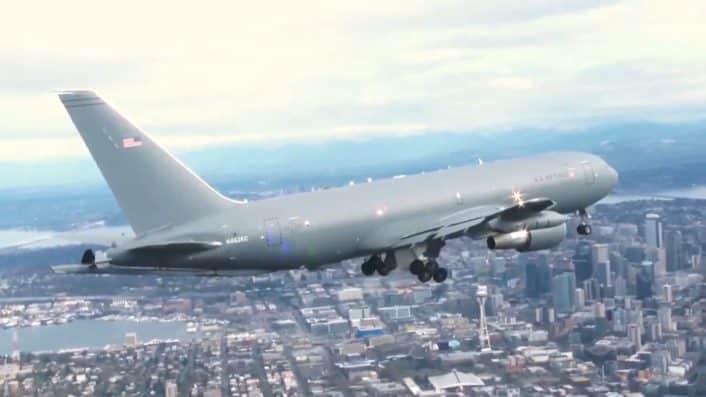
In mid-May, the Air Force and Boeing began a comprehensive effort to salvage the troubled KC-46A Pegasus program. Efforts aimed at implementing interim performance-based logistics deployments focused on schedule certification and modification of RVS 2.0, repurposing early-production aircraft for immediate fleet support, aerial refueling subsystems, and other key readiness drivers.
KC-46A RVS and other issues
Boeing said it has delivered a total of 103 Pegasus aircraft to the U.S. Air Force as of February 14, 2026. Meanwhile, the company has been working to resolve technical issues with the Pegasus, with the remote vision system (RVS) on the refueling boom becoming a major problem, in addition to other Category 1 deficiencies across the entire airframe.
Some deliver flowers. We deliver tankers. 💌✈️
Today’s #KC46 delivery marks the 23rd delivery for @Travis60AMW and a total of 103 Pegasus aircraft, ensuring mission fueled and ready for the @USAirForce. pic.twitter.com/w7CplELfnm
— Boeing Defense (@BoeingDefense) February 13, 2026
The RVS was experiencing visibility and depth perception issues due to the new camera-assisted visual processing configuration used to operate the telescopic boom. This system replaces the existing rear window used by boom operators on existing tankers to view the boom during refueling operations.
However, the camera assistance system did not adapt well to certain low-light conditions at night and bright light conditions during the day, resulting in image fading and distortion. Combined with the depth perception gained from the camera feed on the boom operator console, there was an increased risk that the operator would strike the aircraft during refueling.
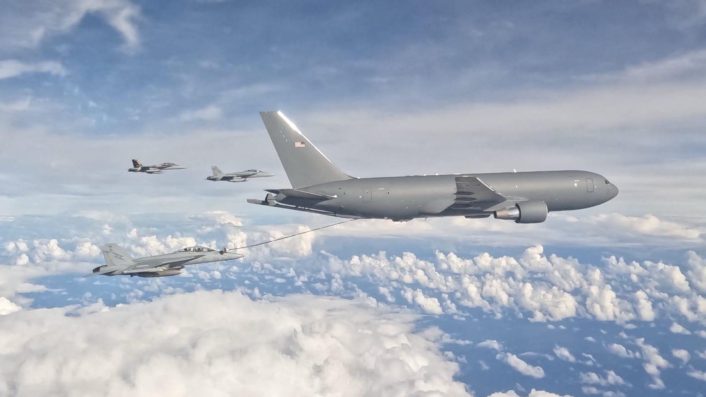
The interim measure was to provide the Pegasus airframe with slightly improved RVS 1.5 systems, as the US Air Force designated them. RVS 2.0 includes two new longwave infrared cameras, two visible spectrum cameras, and a pair of visible spectrum cameras, for a total of six lenses.
RVS 2.0 was also locked in a series of technical and critical design reviews and certifications against commercial off-the-shelf camera hardware. The KC-46A’s refueling boom itself faced a series of problems, starting with the rigidity of the telescopic actuator and its inability to connect with the receptacle on aircraft such as the A-10 Warthog.
Flight Test #Engineer’s Mantra.. #Come for the data… Watch the view. USAF aircrew from the 418th FLTS recently supported the @BoeingDefense team with KC-46 remote vision system testing in rapidly changing lighting conditions throughout the Mugu Sea Proving Ground. @HQ_AFMC pic.twitter.com/M3kkZi1Jv9
— Edwards Air Force Base (@EdwardsAFB) January 24, 2026
Nozzle binding has been another recurring problem, with the nozzle on the boom becoming stuck during contact, and so far three such incidents are said to have occurred. war zoneIt caused tens of millions of dollars in damage to the Air Force. Problems also arose with the KC-46A airframe itself, with deliveries halted in February 2025 after cracks were discovered in the primary and secondary structures of both aircraft.







