



The new deep-precision strike missile is designed to hit distances between 300 and 2,000 km, taking inspiration from Ukraine’s extremely long-range attacks far behind Russian lines.
Britain announced at the NATO summit in Ankara on July 8, 2026 that it would lead a $50 billion (£37 billion) European initiative to develop long-range precision strike missiles. This capability, to be developed over 10 years, strengthens coalition deterrence by meeting the need to hit precise targets at distances between 300 km and 2,000 km.
The press release cites examples from the war between Ukraine and Russia, where the former demonstrated that “effective use of long-range systems can have a game-changing impact on the battlefield.”
It should also be noted that the UK is collaborating with Germany on another Precision Strike (DPS) under the Trinity House agreement to develop stealth and hypersonic weapons with ranges exceeding 2,000 km. The UK is also prepared to participate in the Precision Strike Missile (PrSM) program with the US and Australia.
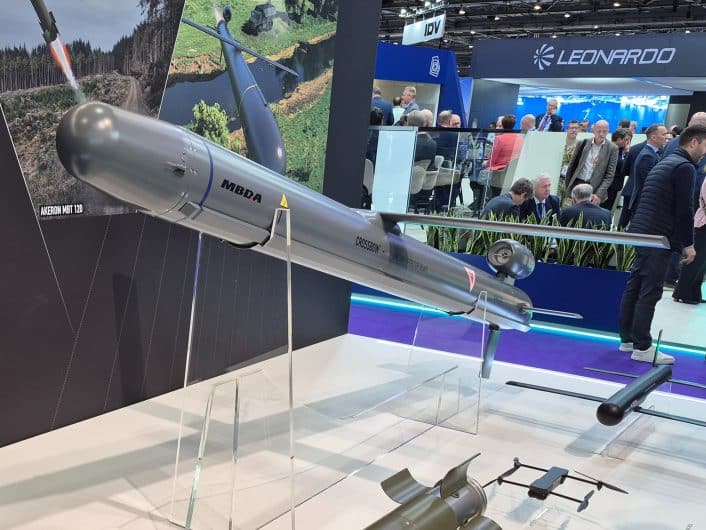
The UK Ministry of Defense has released a short concept video of MBDA Stratus, the future replacement for the British-French Storm Shadow/SCALP-EG currently in development. The British government also quoted Prime Minister Keir Starmer mentioning these three programs in a press release.
Stratus is a three-party program led by the UK with France and Italy to develop a successor to Storm Shadow, one of the most combat-proven missiles.
The UK plans to invest £1.4 billion into Stratus over the next four years. This project will sustain more than 1,300 UK jobs at @MBDA_UK. pic.twitter.com/sSZrDl04I9
— Department of Defense 🇬🇧 (@DefenceHQ) July 8, 2026
Three Deep Precision Strike Efforts
It is currently unclear whether there are different types of DPS missile projects with the same name. report BBC It talks about DPS missiles under the Trinity House agreement receiving this investment.
However, a closer reading of Prime Minister Keir Starmer’s statement shows that the broader NATO-wide defense investment in DPS includes all three programmes: the original Trinity House 2,000 km range DPS missile, Stratus and the US PrSM. As mentioned earlier, all three programs are mentioned in his remarks.
As we reported in our coverage of the UK’s new Defense Investment Plan (DIP), Stratus is the future replacement for the British-French-Italian Storm Shadow/SCALP-EG. In particular, the Storm Shadow is currently being produced new to replenish stocks after being donated to Ukraine.
The new weapons will be complemented by cheaper alternatives such as Project Brakestop. The British Ministry of Defense announced that it will invest 1.4 billion pounds over the next four years in the development of Stratus missiles.
DIP is investing £3 billion by 2030 in the UK’s domestic deep strike capabilities. Domestic and international cooperative weapons programs are being promoted with a focus on job support, and the defense industry base is driving economic revival.
“This initiative will fundamentally enhance NATO’s defense and deterrence capabilities. The new initiative will enable European allies to rapidly advance NATO capabilities by sharing expertise and technological advancements and deepening industrial cooperation,” the release said.
Prime Minister Keir Starmer’s statement
The statement quoted Prime Minister Keir Starmer urging European NATO allies to combine their industrial and technological resources to deter Russia. He then cited Ukraine’s military achievements in long-range missile strikes.
“The Ukrainian military has demonstrated that the effective use of long-range systems can have a game-changing impact on the battlefield, enabling the army to weaken enemy forces far behind the front lines,” Starmer said. “Long-range attacks by Ukraine, such as attacks on key logistics hubs, have had a significant impact on Russia’s ability to sustain its offensive.”
🔴Britain’s decision to invest in a new missile program
🔹The UK Ministry of Defense announced that it would no longer invest in the modernization of long-range missiles such as Storm Shadow and Meteor.
🔹Instead, the UK used Stratus… pic.twitter.com/eTlnnVKDxH
— M5 Magazine (@M5Dergi) July 3, 2026
He also noted that Trinity House has a deal with Germany to develop both stealth and hypersonic systems that can travel beyond 2,000 km. The weapon, expected to be deployed in the 2030s, will initially be ground-launched, but will also have “air and naval capabilities” in the future.
The UK plans to invest £770 million in joint capabilities over the next four years. “It is expected to enter service in the 2030s and will be one of the most advanced systems ever designed in the UK,” the statement added.
Stratus, the “next-generation successor” to the Storm Shadow trio of Britain, France and Italy, will have both high-speed and stealth variants to “kill high-value targets, destroy enemy ships and suppress enemy air defenses.” The Stratus program is already supporting more than 1,300 UK jobs at MBDA facilities in Stevenage and Bolton.
NEW: Ministry of Defense confirms UK will invest £190M to acquire new precision strike missiles 🚀
This is the first ground-launched hypersonic ballistic missile used by the United States in its fight against Iran.
It can hit stationary targets up to 500km away. each… pic.twitter.com/4XIw7x0OgR
— Dominic Hauschild (@domhauschild) July 7, 2026
Finally, Starmer noted that the UK would join the US and Australia in a precision strike missile program that would arm the British military with “supersonic ballistic missiles capable of hitting targets up to 500km away.” He said: “These programs will provide the UK with a long-range strike capability that can operate from land, sea and air to deter adversaries, defeat threats and strengthen UK and NATO security.”
A message to Russia and Putin
The statement cited frequent intercepts of Russian aircraft and provocative overflights around NATO assets. “During the summit, the Prime Minister will also highlight the very real threat Russia poses to the UK and NATO,” the statement said.
“Over the past two years, NATO has flown fighter jets more than 700 times to intercept Russian aircraft approaching Allied airspace, and Russian military activity around UK waters has surged by 30 per cent,” he added. Details of the most recent encounter can be found here.
Ukraine’s Fire Point has assembled the first 10 test samples of its own turbojet engine for the FP-5 Flamingo cruise missile. Chief engineer Denys Shtylerman said the company had developed the engine and would gradually transition from the currently used Soviet AI-25. pic.twitter.com/TJQV83u98y
— NOELREPORTS 🇪🇺 🇺🇦 (@NOELreports) July 8, 2026
Defense Secretary Dan Jarvis said: “With billions of pounds of support, and working with our closest European allies, we are building the weapons of the future to keep the UK and NATO safe for decades to come.” Foreign Secretary Yvette Cooper noted the strategic impact of striking “high-value military targets and the logistics engines that power our forces,” with the new plan “sending a clear message to President Putin.”







