



Mexico City, Mexico — Cuban artist and prominent opposition leader Luis Manuel Otero Alcántara was released Saturday after five years of imprisonment by the Cuban government and sought asylum in the United States.
The dissident completed his sentence on July 9 but remained in political police custody until U.S. authorities approved his request for humanitarian parole. After that he flew to Miami.
The artist arrived at Miami International Airport and was greeted by many friends, fellow activists and admirers while singing the national anthem.
In his first statement to the press, he said, “Everyone who can help us, please do your part to help keep Cuba free. Every minute of effort is one minute less dictatorship.”
Before arriving, he announced plans to perform at Ermita de la Caridad del Cobre, a sacred site for the Cuban community in South Florida.
The performance consisted of reassembling a statue of the Virgin of Charity, the patron saint of Cuba and a powerful symbol of unity for the island’s residents.
“There was a line of people waiting to get to him and a table with the Virgin. There were 100 to 200 people from every generation. It was a space where he could meet friends, media and people who didn’t know him but would meet him and hug him and talk to him,” said Salomé García, a Cuban activist who has been pressing for Otero’s release for years. Latin America Report.
Otero Alcantara was arrested on July 11, 2021, amid the largest nationwide protests since 1959.
He was sentenced to five years in prison on charges of public order, desecration of national symbols and insults. The ruling came after a long period of arrests and police harassment due to his political activities.

The activist was initially scheduled to be released on July 9, but after that date, activists and opposition media began denouncing his imprisonment as an enforced disappearance.
Garcia said Otero Alcántara was released from prison two days before the end of his sentence and transferred to one of the many state security offices outside Havana.
According to the activist, he skipped plane security and went straight from his home to the airport and was not given a chance to say goodbye to his family.
Lazones de Cuba, a media outlet used by Cuban authorities to attack opposition figures and expose U.S. destabilization plans, claimed that Otero Alcantara was not a “political opponent or human rights defender” but an “ordinary criminal sentenced by the Cuban judiciary.”
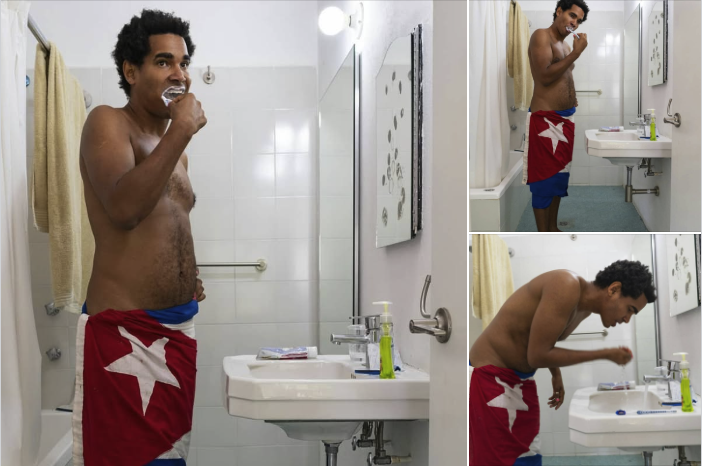
His activities mainly consisted of artistic performances denouncing and criticizing the Cuban government and its political oppression.
One of the most controversial pieces involved the use of the Cuban flag in everyday contexts, such as clothing or bath towels.
Featured Image: Luis Manuel Otero Alcántara via Facebook.


