



Madrid, Spain — A journalist on the Caribbean island said Cuba’s streets were filled with soldiers amid fears of an uprising as the United States threatened to take over the communist country.
Cuba’s leader said Tuesday that the United States would face “relentless resistance” if it tried to take control of the poor island nation as communist authorities struggled to resolve a nationwide blackout.
Cuba’s government has come under increasing pressure as the United States has said publicly that it wants to impose an oil blockade and end Washington’s nearly 70-year standoff with the one-party communist country.
U.S. President Donald Trump, who has been pressuring the Cuban government, said Monday that he would “accommodate” Cuba, adding: “We will be doing something with Cuba very soon.”
Cuban President Miguel Diaz-Canel rebelled against American threats.
“Faced with a worst-case scenario, Cuba has only one guarantee: any external attacker will meet unbreakable resistance,” he wrote in a statement to X.
Independent journalist Carlos Michael Morales Rodriguez, 48, said troops were deployed to most of the city’s streets in Cuba.
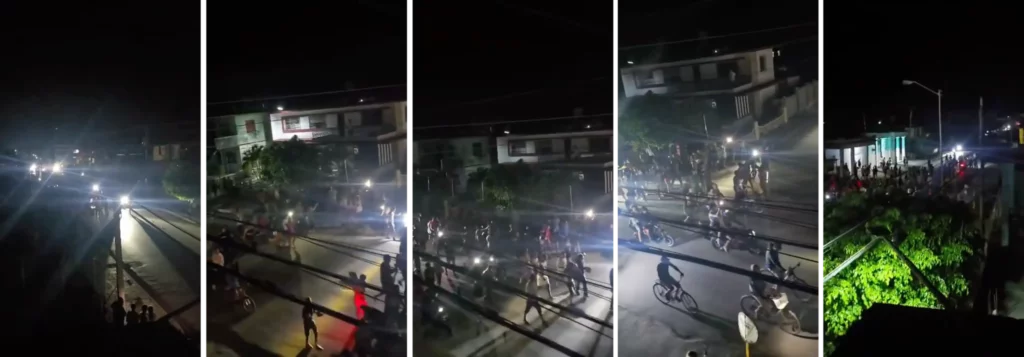
“For 11 days, protests took place in the streets, mainly in Havana. After large protests broke out in Moron, the regime decided to militarize the island’s main city,” he said. Latin America Report He is under house arrest at his home in Cuba.
Rodriguez, who works for Martinoticias, CiberCuba and CubaNet Noticias, was found guilty of counterrevolutionary acts in 2021 for posting “posts criticizing the leaders of our country” on Facebook.
He served 2 years and 10 months in prison, but was placed under house arrest upon his release in 2024.
“The Communist Party offices are guarded by party members and political police, and parks and squares are also guarded,” Rodriguez said.
“Where I live, we ask youth for identification. People without identification are asked to leave public places.”
He added that private bars and restaurants have a curfew and must close at 12am.
“Due to a power outage in Villa Clara, the city where I live, my phone barely has any internet connection, so it’s difficult to write to me right now,” he said.
Cuba is willing to hold broad talks with the United States and allow more investment but will not discuss changing its political system, a special envoy told AFP on Tuesday.
As of Tuesday morning, power had been restored to two-thirds of the country, including 45% of the capital Havana, which has a population of 1.7 million.
Cuba’s aging power generation system is in disarray. Some areas of the island experience power outages of up to 20 hours each day, resulting in a shortage of fuel for power generation.
No oil has been imported into Cuba since January 9, hurting the power sector and forcing airlines to cut flights to the island, hitting its all-important tourism sector.
Featured image: March 14 protests in Cuba.
Image source: Cuban Observatory for Human Rights





