



Bogota, Colombia – Colombia’s President-elect Abelardo de la Espriella wants to break with 140 years of tradition and assume the presidency from a military garrison on the outskirts of the capital.
De la Espriella, who has set an inauguration date of August 7, plans to hold events far from Bogota, in the southwestern province of Cauca, to send a strong message about his security and decentralization agenda.
The Senate approved a proposal Wednesday to temporarily move parliament to Cauca for de la Espriella’s inauguration, and the lower house is scheduled to vote on the matter on July 28.
De la Espriella said he wanted to keep it at a military base in Cauca, a rebel stronghold and one of the areas most affected by the country’s internal armed conflict, although the desired location has not yet been decided.
“I am taking office at the Southern Garrison to pay solemn tribute to our nation’s heroes and the soldiers who protect democracy, freedom, and our institutions,” President-elect Lee said earlier this month.
Since Colombia became a republic in 1886, all 35 presidents have ruled in the capital, including military dictator Gustavo Rojas Pinilla.
The constitution stipulates that the president must take office in front of the National Assembly, where the National Assembly building in Bogotá is located.
However, the Constitution states that “Parliament may move its seats to another location upon agreement.” The Senate approved the transfer by a vote of 55 to 32.
Yann Basset, professor of politics at Universidad del Rosario, said: bogotá post There are “many symbolic aspects” to the decision, he said.
In part, his desire to move the inauguration to an area near the Ecuadorian border could be seen as symbolic of his willingness to transfer power from Bogotá.
During his presidency, Gustavo Petro pursued a policy of decentralization that would see regions assume more responsibilities of government and receive a larger share of the national budget. De la Espriella is expected to continue and deepen his policy of decentralization, including designating the Caribbean city of Barranquilla, Colombia’s fourth-largest city, as the official alternate capital.
Cauca is also a symbolic venue for the administration’s ambitious security agenda. In April this year, a terrorist attack carried out by FARC dissidents occurred in the region, killing 21 people. De la Espriella was elected on a promise to turn around the worsening security situation.
Nonetheless, the logistical complexities and costs of moving parliament to Cauca have drawn criticism from opposition politicians, who have claimed it could cost more than US$1.8 million.
The Senate proposal also makes no mention of the Republican nature of the inauguration and de la Espriella’s desire to hold the event at a military facility, which has been criticized as threatening the independence of the military.
Prime Minister Bassett said, “The act of giving priority to the military at the inauguration ceremony, which was elected by referendum rather than the will of the military, is symbolically (…) highly undemocratic.”
The attempt to hold the inauguration ceremony at a military garrison drew sharp criticism from politicians and legal scholars across the political spectrum.
Rodrigo Uprimy, a prominent Colombian legal scholar, argued in the journal: righteousness Holding the inauguration in the barracks would be “a symbolic expression of the desire to militarize executive power, contrary to the best Republican traditions.”
Meanwhile, Senator Rafael Nieto of the right-wing Democratic Center Party said, “We must preserve democratic institutions and their symbolic value.”
De la Espriella’s attempt to hold the ceremony behind closed doors marks a shift from outgoing President Gustavo Petro, who allowed the public to attend an inauguration ceremony for the first time in modern history.
Petro insists that Senator Iván Cepeda, who narrowly lost to de la Espriella, is the legitimate president-elect, and promises to thwart any attempts to stage events at military facilities.
Cepeda also claimed that he would not attend the inauguration ceremony, regardless of its location.
Basset warns that “we may still see some pantomime” as Petro continues to lead the military until the inauguration.
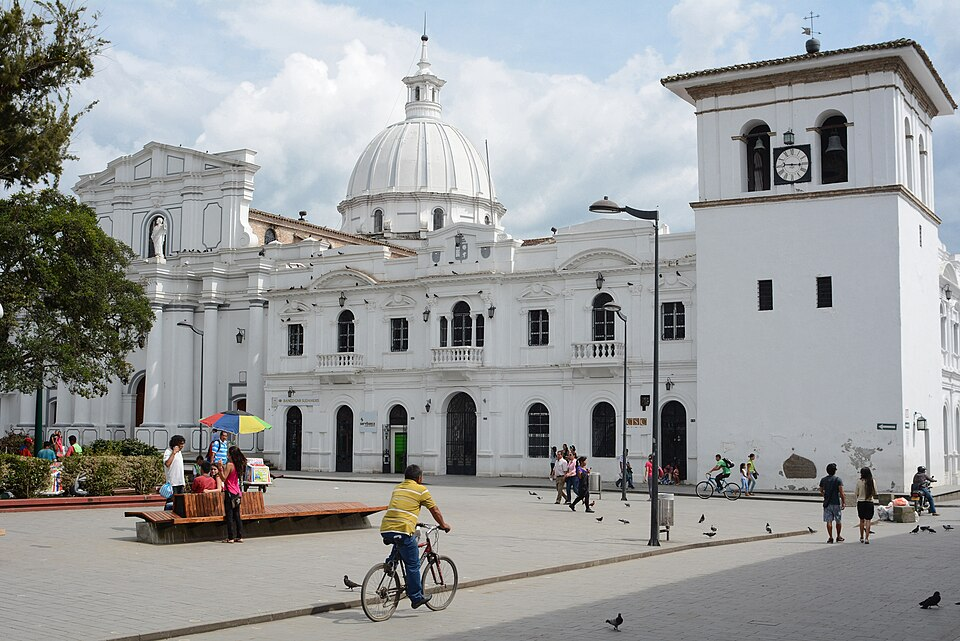
Popayan, Cauca. Image source: MM, 2014.
This article originally appeared on: bogotá post And reprinted with permission.







