



According to the Financial Times, talks are underway between the United States and its NATO allies, particularly Poland and the Baltic states, on strengthening the U.S. Air Force’s existing nuclear weapons capabilities in Europe.
Officials familiar with the contents of the meeting said: Financial Times The United States is currently open to an expansion of an existing agreement under NATO’s nuclear sharing program that would see six European countries accept U.S.-owned B61 nuclear bombs.
U.S. officials have signaled openness to talks that would potentially allow more countries to receive dual-capable aircraft capable of launching nuclear strikes. https://t.co/c2x40rAqrE pic.twitter.com/ZMIDaJbzkv
— Financial Times (@FT) June 2, 2026
Belgium, Germany, Italy, the Netherlands, Turkey and the United Kingdom are the group of countries that currently possess such weapons, which will be delivered under the broader NATO war plan via U.S. Air Force aircraft or, in some cases, specially certified host country units. Britain was the latest country to rejoin the club, and after previously leaving in 2008, nuclear weapons are now almost certainly stored at RAF Lakenheath once again.
Now, with Russia’s war on Ukraine intensifying and countries bordering NATO countries living in constant fear of ‘wayward’ munitions or even direct threats from Vladimir Putin, Poland and the Baltic states of Latvia, Lithuania and Estonia are claimed to be interested in joining the list. In particular, Poland, as an operator of the F-16 and F-35, may have room to join the ranks of NATO countries authorized to deliver U.S.-owned weapons.
Great catch from @Task_Force23 showing a German tornado with a B61-12 nuclear bomb trainer under its belly at Edwards AFB last week. https://t.co/W4UZiTZwy9 pic.twitter.com/QrB2HMoQR5
— Hans Kristensen (also on Bluesky) (@nukestrat) September 3, 2024
For both of these countries, their participation in the nuclear sharing initiative would mark the first time that U.S. nuclear weapons have been deployed in a former Warsaw Pact country. Since the B61 family has been in service since the 1960s, it is actually possible that the B61 will be deployed in a location where the same bomb was previously intended to be destroyed.
In March, President Karol Nabrocki, the country’s top foreign policy adviser, said it should be a “priority” for Poland to negotiate with the United States about joining NATO’s nuclear sharing program.
The Polish government also held discussions with France https://t.co/HNKMsYe9Sg
— Notes from Poland 🇵🇱 (@notesfrompoland) June 2, 2026
However, it is important to note that even if these talks produce an agreement to expand nuclear sharing programs, it will likely be years before any such deployment of nuclear weapons is achieved. Even for RAF Lakenheath, which already had special Weapons Storage and Security System (WS3) vaults to store bombs, several years passed between initial discussions about returning the capability and the first apparent delivery of a nuclear weapon.

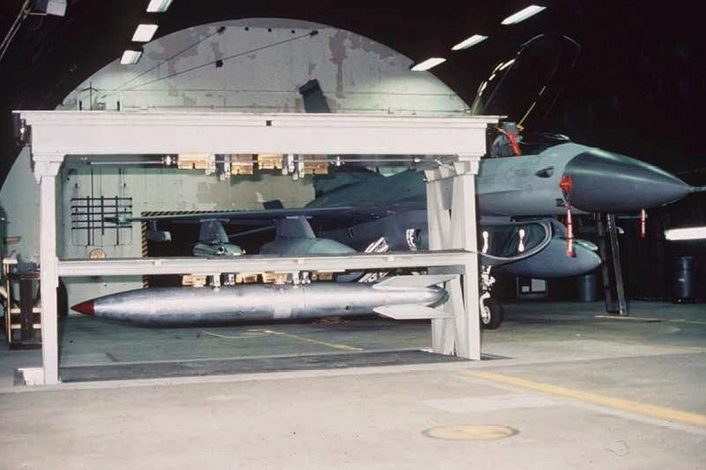
For countries bordering Russia, these vaults, which are not only hardened against traditional attacks but also feature a series of highly classified security measures to counter attempts at sabotage or theft, are particularly important and must be built before live ammunition is delivered.
Poland, along with other NATO countries, including current nuclear sharing partners, has already signed a French proposal to expand its nuclear forces, which could see nuclear-armed Rafale jets deployed to other countries in the future. These countries will also be invited to participate in France’s regular nuclear exercises.
♥️♣️ POKER 2026-02 is now live ︎♣️
The Strategic Air Force has just received sorties for a new mock nuclear attack expected to occur overnight over French territory.
This could be a particularly difficult version due to the weather… pic.twitter.com/XGBeSSa9G8
— Etienne Marcus (@Etienne_Marcuz) June 2, 2026
balance method
Under the current Trump administration, the United States has signaled its intention to withdraw troops from Europe, but deploying additional nuclear weapons may be seen as a way to balance the elimination of conventional forces. Forward-deployed nuclear weapons require a relatively small footprint in terms of manpower compared to some types of conventional force deployments, which would allow the Department of Defense to restructure while maintaining the European state.
The U.S. troop withdrawal plan is expected to be submitted to NATO allies in June. Previous announcements included the possibility of reducing U.S. troops in Germany by up to 5,000 troops, a seventh of the number of troops already stationed there.
The planned sending of 4,000 American personnel to Poland was also suddenly withdrawn, raising concerns among Polish officials and criticism from members of the U.S. Congress. This decision was later overturned with a new deployment of 5,000 troops announced by President Trump himself. But concerns about the unpredictability of U.S. policy remain strong.
The U.S. military has converted Bulgaria’s Sofia International Airport into a major staging area for aerial refueling tankers to support future attacks on Iran.
Here you can see six KC-135s parked on the ramp last evening. pic.twitter.com/TsemqkK879
— OSINTtechnical (@Osinttechnical) February 19, 2026
The consequences of this sudden policy change are already being revealed, and they are likely to impact U.S. plans outside of Europe. After the U.S. government ignored its approval of a visa waiver program for Bulgarian citizens, Prime Minister Rumen Radev declared that U.S. troops deployed to Bulgaria, including aircraft supporting Operation Epic Fury at Sofia International Airport, could be ordered to leave by the end of June.
Europe is an important staging post for these Middle East operations, hosting troops, aircraft, and ships as they transit through the region, so its reluctance to accommodate such visits could be detrimental to the U.S. military’s force projection strategy. We’ve already seen the U.S. Air Force’s massive airborne fleet expand as it supports a massive military buildup in an incredibly short period of time. The sudden loss of so many places for stopover and refueling support leaves little room for maneuver.


