Even with a nutrient-dense real food diet, it's difficult to get the magnesium you need from food alone. Magnesium is one of the few supplements I take daily and I often use a magnesium oil spray topically on my skin.
Why is magnesium important for overall health? Many people do not get enough of this essential mineral, which the body uses for hundreds of reactions. Every cell in the body needs magnesium in some way! It is essential for bone, teeth, muscle, nerve and joint health, as well as optimal sleep and stress reduction.
Would you like to sleep more and be less stressed? Please register!
Why are we lacking magnesium?
Magnesium deficiency is widespread because many of us have lifestyle factors that actively deplete our magnesium levels. These include lack of sleep, excessive stress, or alcohol/caffeine/sugar consumption. In addition, many natural sources of magnesium have been depleted. Our soils are low in magnesium due to over-farming and high pesticide use. Water filtration systems also remove much of the magnesium that naturally occurs in water.
The ocean is still a great source of pure magnesium and trace minerals, but not all of us have access to the beach every day. Transdermal magnesium oil is an easy and effective way to increase your magnesium levels.
Benefits of Magnesium Oil
Thousands of studies have included magnesium therapy in some form. These studies evaluate the effects of this essential mineral on everything from skin health to diabetes and high blood pressure.
One easy way to boost my levels is to use this magnesium oil transdermally (or through the skin). Just spray it on after a shower or bath, let it soak in, and you’re done! It’s quick and easy, and it absorbs without going through the digestive system.
There are also magnesium supplements that can be taken internally. I like magnesium drink mixes like Natural Calm or Jigsaw Health. Recently, I also liked a product from BiOptimizers, which contains a blend of seven highly absorbable types of magnesium.
However, some people have difficulty absorbing magnesium internally. If you have difficulty increasing your magnesium intake with oral supplements, topical use may help. In my experience, cycling through both methods definitely helps with absorption.
Here's why I regularly incorporate magnesium oil into my daily routine:
1. Improved magnesium levels
Obviously, the purpose of using magnesium oil is to increase magnesium levels. A 2010 study conducted by the Herbal Research Centre showed that cellular magnesium levels increased by more than 25%. Study participants used magnesium on their skin for 12 weeks. Transdermal magnesium therapy includes magnesium immersion (similar to foot soaking) and magnesium spray.
Since it is very difficult to get magnesium from food and water, I think of this as a form of basic nutritional insurance.
2. Smoother skin
I like to use magnesium oil in combination with dry brushing for healthy skin. I dry my brushes in the morning and use magnesium spray often. This routine helps keep my skin smooth and blemish-free. Those with sensitive skin should start with diluted magnesium oil and increase as their skin tolerates.
3. Reduce muscle pain
Many athletes swear by using magnesium for post-workout recovery and muscle soreness. Even people who are not high-level athletes can benefit from using magnesium after exercise. Studies have shown that magnesium sprays may help reduce muscle pain and replenish magnesium levels lost through sweat. We've also found that it's effective against leg cramps and muscle cramps that can keep children (and adults!) up at night.
4. Reduce headaches and migraines
There is a lot of research showing the importance of magnesium in relieving headaches and migraines. Studies have shown that people with good magnesium levels have fewer headaches and migraines. If I feel like I'm getting headaches or migraines, I sometimes drink water and take magnesium and they go away. This is great news for those who don't want the side effects that come with traditional painkillers!
5. Balanced blood sugar
There are also quite a few studies on magnesium and balanced blood sugar. This could be due to several reasons. If you consume too much sugar, your magnesium levels will be depleted. If your blood sugar and insulin levels are imbalanced, your magnesium levels can be depleted. This ultimately makes it more difficult to balance your blood sugar and insulin.
Magnesium does not treat diabetes or blood sugar imbalances. However, magnesium can be an important part of a holistic approach to blood sugar management.
6. Reduces blood pressure and risk of high blood pressure
In hospitals, IV magnesium is routinely used as an acute treatment for high blood pressure. But most of us don’t administer IV magnesium at home. And until recently, there wasn’t much well-documented information about magnesium supplements and blood pressure.
A 2016 meta-analysis found that magnesium may help significantly lower blood pressure. The analysis found benefits at doses greater than 370 mg daily, so some people may need to supplement internally or transdermally to get the benefits.
7. More restful sleep
There is a good reason why Epsom salt baths are often used for relaxation. Magnesium can have a beneficial effect on the GABA receptors in the brain. This allows us to relax more easily and fall asleep more deeply. Magnesium also helps treat restless legs at night, helping you sleep better.
It is important to remember that a small number of people experience the opposite effect of taking magnesium and seem to wake up feeling restless. Of course, these people should not take magnesium at night.
How to Use Magnesium Oil
Spray daily on arms, legs, and stomach. I use 10-20 sprays most days. It usually feels tingly the first few times you use it, but this is normal. It will go away after a few uses, but if it bothers you, you can dilute it with more water.
After application, leave it on your skin or wash it off after 20-30 minutes. I usually apply it after showering and use moisturizer or lotion bar after about 5 minutes. If you are concerned about the sticky feeling on your skin, try using it after washing it off before going to bed or showering when you don't feel anything.
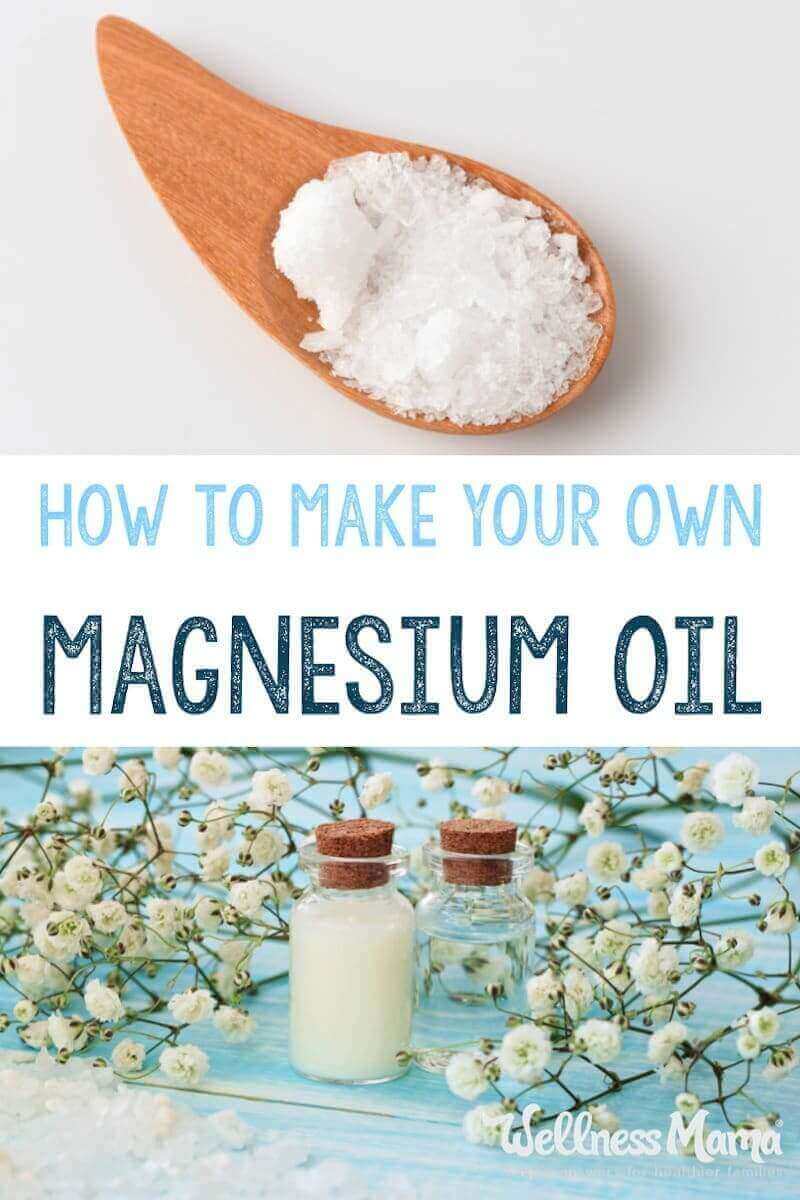
This is my favorite magnesium oil formulation. If you're the DIY type, you can even make your own from magnesium flakes! I've been known to make it when I don't have magnesium oil on hand! Try this easy recipe.
DIY Magnesium Oil
This is a very simple way to obtain magnesium oil topically. Great for kids too!
Produce: 6 oz.
Bring distilled water to a boil.
Place the magnesium chloride pieces in a glass measuring cup or bowl and pour in the boiling water.
Stir well for about 1 minute until completely dissolved.
Let cool completely and store in a spray bottle.
- I like to use magnesium oil after my shower and often add 10 drops of lavender essential oil to help with the scent and relaxation. It's a great way to do a little self-care!
- It can be stored at room temperature for several months.
Other Natural Ways to Get Magnesium
Magnesium has many well-documented benefits, but it only represents a small fraction of the many nutrients we need. Magnesium supplements are great, but they should be added to a real food diet, just as nature intended!
Some foods contain magnesium, but their amounts are decreasing due to poor soil quality and over-farming. Foods that contain magnesium include:

Magnesium Oil FAQs
The post generated hundreds of comments and questions. I've tried to answer the most common ones here.
Why do we call it oil when there is no oil?
That's a good question. In fact, it is a highly saturated mineral solution of magnesium. When applied to the skin it feels like an oil and for this reason it is given the name “magnesium oil”. Confused? A little… but I couldn't come up with the name. Even commercial magnesium oil brands use that term.
What type of magnesium is best?
According to the research I found, magnesium chloride seems to be the most absorbable and least irritating form. It’s also easy to find in store (this is the brand I use).
Does Epsom salt work?
I love Epsom salt baths, although I find Epsom salt spray too drying. The difference is that Epsom salts are magnesium sulfate, which makes them drier and not easily absorbed into the skin.
Can I use oral magnesium supplement powder to make transdermal magnesium?
No! The foam inside is irritating to the skin. It also leaves a white film and makes a big mess. Not recommended.
Is it a good idea to add calcium to the spray as well?
I won't do it. Theoretically it could, and it would dissolve quite well, but it would leave a white film on your skin. And calcium is not easily absorbed through the skin. Since many people consume a lot of calcium but not enough magnesium, this is potentially not very beneficial.
Can I put this in a plastic bottle?
In theory, yes, it should work. If possible, I prefer glass, especially since glass bottles are so easy to find these days. You can find glass spray bottles here.
Can it be used on babies/children/pets?
Check with your healthcare provider/veterinarian before using this product on your children or pets. That said, I use this magnesium spray at night to help my kids sleep more soundly.
Can I take magnesium while pregnant/breastfeeding?
Supplements like magnesium are generally considered beneficial during pregnancy and breastfeeding, but if you have concerns, talk to your midwife or doctor. I have used it during several pregnancies with good results.
This is supposed to improve sleep, so why can't I fall asleep?
There are a small number of people who have adverse reactions to magnesium. Although it promotes restful sleep for many people, some have trouble sleeping for several hours after taking magnesium. After some experimentation, I found that I was better off being in this group and taking my magnesium in the morning.
Why does this oil cause a burning/numbing sensation in some people?
One theory is that people with a deficiency have a tingling or burning reaction to magnesium oil. At first, it seemed much more irritating, but I soon got used to it and had no problems. However, there is no scientific evidence to support the deficiency theory. I also found that this particular magnesium oil did not cause any tingling or burning reaction at all.
What about adding essential oils to the mixture?
Although there are some risks associated with certain essential oils, some can also be very beneficial. Adding a few drops of a generally skin-safe oil (such as lavender or sweet orange) will add a nice scent and added health benefits. As always, do your own research and ask a qualified aromatherapist for personalized health advice.
Can I use this as a deodorant?
Yes! Anyway, there is a separate recipe for spray deodorant, which is basically this recipe. This spray alone works for me right now.
Have you tried magnesium to reduce stress or improve sleep? Have you made your own? Share it below!