



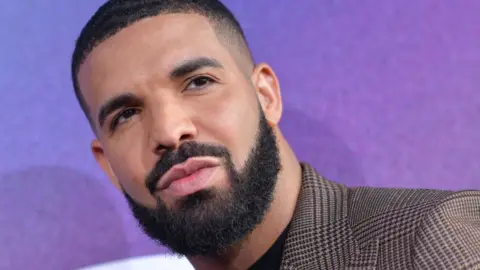
Rap superstar Drake is suing Universal Music Group (UMG) for defamation and harassment over the release of Kendrick Lamar’s diss track Not Like Us last year.
The song, which forms part of a heated argument between the two stars, accuses Drake and his inner circle of being “certified pedophiles” who “should be registered and placed on neighborhood watch.”
In papers filed in New York, Drake’s lawyers accused the record label of launching a “campaign to create a viral hit” from a song that contained false claims that Drake was a criminal pedophile, and suggested the public should resort to it. In response, we stand guard for justice.”
Universal has yet to respond to these claims.
The move comes just 24 hours after Drake withdrew separate legal claims against UMG and Spotify. He accused the two companies of conspiring to artificially increase Not Like Us’ streaming at the expense of his music.
In this case, he claimed that Universal licensed the song “to Spotify at a significantly lower price” and used bots to generate additional plays, creating “the false impression that the song was more popular than it actually was.”
At the time, Universal told the BBC in a statement: “The suggestion that (the company) would do anything to undermine its artists is offensive and untrue.”
He added, “No matter how artificial and absurd the legal arguments are, they cannot obscure the fact that fans choose the music they want to listen to.”
Spotify also responded that “there is no economic incentive for users to stream Not Like Us over Drake’s tracks.”
The Swedish streaming company later filed an objection to Drake’s petition, saying it “should be rejected.”
His lawyers withdrew their case Tuesday after meeting with representatives from both companies, according to court documents.
There seemed to be a limit to legal action until the story took a dramatic turn Wednesday morning.
In a lawsuit filed in the U.S. District Court for the Southern District of New York, Drake accused Universal, which distributes both his music and Lamar’s, of prioritizing “corporate greed over the safety and well-being of artists.”
His lawyers pointed out that the artwork in Not Like Us was based on an aerial photo of Drake’s $100 million Toronto mansion, dotted with a red marker often used to indicate the presence of a registered sex offender.
Court documents link the piece to a shooting that occurred at the building shortly after Kendrick’s song was released, calling it “2024’s equivalent of ‘Pizzagate’.”
The comment referenced a conspiracy theory about an American child sex trafficking ring operating out of a Washington pizza restaurant. An incident in which a gunman opened fire At a restaurant in 2016

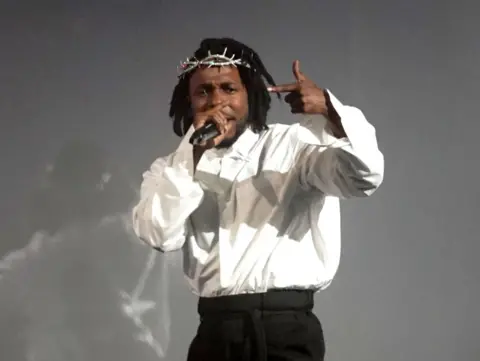
Not Like Us was widely viewed as the definitive blow to the long-running feud between Drake and Lamar, which dates back to the early 2010s.
In the lyrics, Lamar claims Drake “likes ’em young” and accuses him of using other, more credible rappers to boost his own profile.
Drake responded with a track called The Heart Part 6 and denied the allegations, saying “I have never been with a minor.” He also claimed that he had provided “false” information to Rama through a double agent.
But his retort didn’t garner as much attention as Not Like Us, which debuted at No. 1 on the U.S. charts and garnered more than a billion streams on Spotify.
The song was nominated in five categories at the February 3 Grammy Awards, including album and song of the year. A week later, Lamar will headline the Super Bowl halftime show.
But according to Drake’s attorney, the new lawsuit is not aimed at Lamar himself.
“This lawsuit is not about the artist who created Not Like Us,” court documents state.
“It’s about UMG, a music company that has decided to publish, promote, exploit and monetize claims that are not only completely false, but dangerous.”


