



The final test of the 2026 Formula 1 pre-season takes place on Wednesday. But the most important action of the day may be far from the track at the Bahrain International Circuit.
Two important meetings are scheduled, with discussions that could potentially have a major impact on the upcoming season in Australia in just two weeks.
One of them will be held by the Power Unit Advisory Committee (PUAC), which is made up of the sport’s five engine manufacturers, the sport’s governing body, the FIA, and the sport’s commercial rights holder, Formula One Management (FOM).
Topping the agenda on Wednesday will be a debate over the implementation of rules on limiting the compression ratio of F1’s new engines, a topic that has dominated pre-season.

Mercedes chief Toto Wolff said the team had received FIA approval throughout engine development.
The introduction of all new chassis and powertrains for 2026 has made this season one of the most anticipated in the sport’s history, but it has also created uncertainty about how the racing will proceed.
Fears for the race were heightened at the first official test in Bahrain last week, particularly around the starting procedures, and there were also loud calls for changes to ensure everything runs smoothly in Melbourne on March 8.
The starting issue will be taken up by the F1 Commission (made up of senior representatives from the 11 teams, the FIA and FOM) at another key meeting on Wednesday.
Will the power unit dispute be resolved?
The year of rumors of an engine dispute had just begun when it was reported that Mercedes and Red Bull had found loopholes in rules that three other powertrain manufacturers – Ferrari, Honda and Audi – were not happy with.
The center of the row is compression ratio limits, amid suggestions from rivals that the two manufacturers may have found a way to offer higher limits than theoretically imposed by the new 2026 regulations.

Wolff criticized rival F1 teams for criticizing the legality of Mercedes’ new engines.
The compression ratio limit has been lowered to 16.0 from 18.0 in the previous rule set, but measurements are only made when the engine is not running at maximum temperature.
In January, Red Bull engine chief Ben Hodgkinson described the saga as “a lot of noise about nothing” and the Milton Keynes team appeared to be working with Mercedes in resolving the legality issues.
Mercedes boss Wolff was aggressive in his initial response, telling rivals to “come to their senses” and accusing them of making “excuses” before the season even started.
But when the first official test began in Bahrain on February 11, Wolff struck a much more conciliatory tone, appearing to acknowledge that Mercedes being forced to change its powerplant seemed a real possibility.
Wolff’s position has probably changed due to Red Bull’s apparent change in stance. Now Red Bull appears to be joining forces with three other manufacturers in lobbying the FIA to ensure that compression ratios are kept below stated limits at all times, not just when cars are stopped for inspection.
Mercedes’ rivals believe the Silver Arrows were not run near maximum capacity during the first test in Bahrain in a bid to convince the FIA that no rule changes were needed.

Williams boss James Vowles said the engine rule changes would ‘open a can of worms’.
But it looks like things will come to a head on Wednesday. If the FIA and FOM agree with the other four engine manufacturers that rule changes or clarifications are needed, it would create the ‘largest majority’ needed to force them.
Mercedes also supplies powerplants to McLaren, Williams and Alpine, so such a ruling is likely to harm the competitiveness of all four teams heading into the new season.
Will the race start procedure change?
The second area of contention concerns the moment of Sunday that most excites most F1 fans: the start of the race.
There are some concerns about what problems the new powerplant will cause when drivers try to go off the grid.
Most teams believe that drivers will need more time to prepare for lights out than is currently allowed, and that additional seconds should be added to the time between all cars lining up on the grid and the start of the departure procedure.
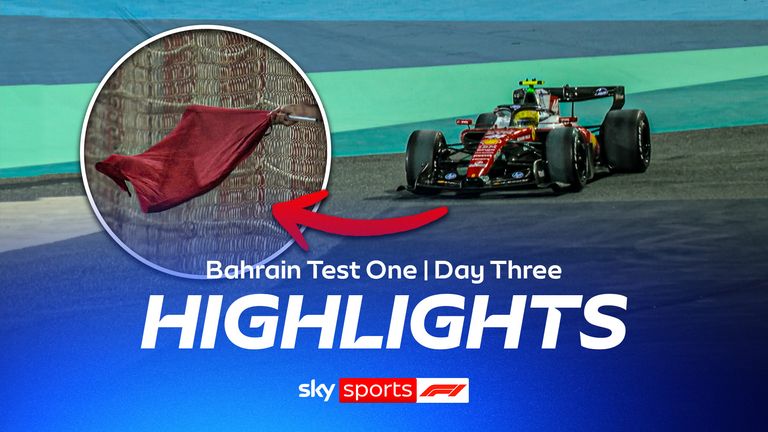
Watch highlights from day three of the first Bahrain pre-season test.
The problem in this case is that Ferrari is understood to be adamantly opposed to any rule changes, considering the technical difficulties starting with the powerplant design.
Speaking in Bahrain on Friday, McLaren team principal Andrea Stella said adjusting starting procedures was a matter of “safety” and that it was “imperative” to make changes before the Australian Grand Prix.
Stella said: “We’re not talking about how fast you qualify or how fast you race, we’re talking about safety on the grid.
“There are some topics that are bigger than just competing interests, and for me, ensuring the safety of the grid, which can be achieved with simple adjustments, is a no-brainer. It’s just a bigger concern.”

Fred Vasseur downplayed the hype over Charles Leclerc’s fast race simulation on Day 2 in Bahrain. Because he believed the other teams ‘didn’t reach their maximum’.
Stella says there will likely be strong pressure from several teams on Wednesday for change, but there are no signs of Ferrari’s stance softening.
One of the areas where all team leaders seem to be unified is that the engine dispute, in particular, needs to be resolved now.
Vasseur said. Sky Sports F1 Friday: “The most important thing now is to make a decision, because staying gray is not the solution, it has to be black and white.
“This is important to us, it’s important to everyone, it’s important to you (the media) and our fans. The sooner we get this out there, the better.”
Sky Sports F1 Bahrain Test Schedule
Test 2: Wednesday 18 February, Thursday 19 February, Friday 20 February
- 6:50 AM – 11:05 AM: Morning Session Live
- 11:55 AM – 4:10 PM: Live Afternoon Session
- 8 PM: Test Lab
Watch every race of the 2026 F1 season live on Sky Sports, starting with the Australian Grand Prix from March 6-8. Stream Sky Sports NOW – No Commitment, Cancel Anytime





