



Lewis Hamilton was one of several Formula 1 drivers to voice concerns about a possible lack of speed in Formula 1's 2026 model car after new regulations were revealed on Thursday.
The sport's governing body, the FIA, has published regulations governing the design of the next generation of F1 cars, with a focus on reducing the size of current models to create closer races.
The smaller machine will see the F1 car shed 30kg of weight, while also incorporating a simplified combustion engine that uses fully sustainable fuel and introducing a new overtaking boost button.
“It’s only 30kg, so it’s a step in the right direction, but it’s still heavy,” said seven-time world champion Hamilton, who has signed a contract to drive for Ferrari when new rules are introduced in 2026.
“I just saw what everyone saw this morning, so I don’t think much about it yet.
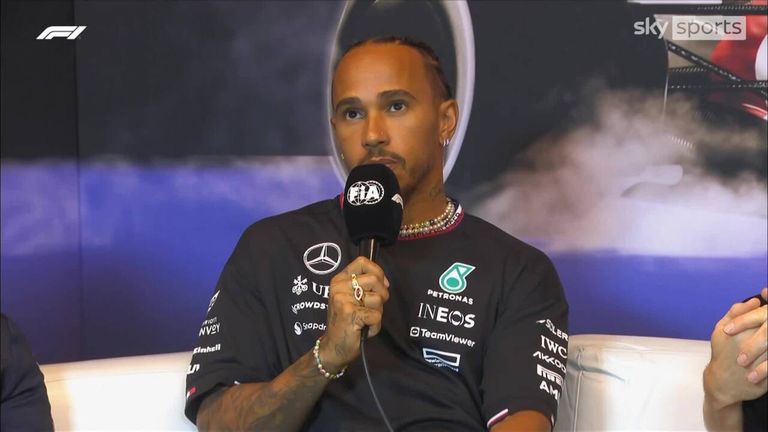
Lewis Hamilton believes the car continues to improve and hopes Mercedes can close the gap on the teams ahead.
“I've talked to some drivers who have driven (the 2026 car) in the simulator and they say it's quite slow, so we'll make sure it's actually the right direction.
“But in terms of sustainability, especially in terms of powertrains, this is a really bold move and I think we are moving in the right direction.
“But we have to make sure the car is efficient, fast and can make real progress, which actually improves the racing.”
Albon: I think the 2026 car will be incredibly slow
With the rules released ahead of media days ahead of this weekend's Canadian Grand Prix, several drivers took the opportunity to give their reactions.
Some drivers have had the opportunity to drive a simulated version of the 2026 car, and rumors of unconvincing performance appear to have spread around the paddock.
Williams driver Alex Albon, who recently signed a long-term contract with the team, is probably the most honest of the current drivers.
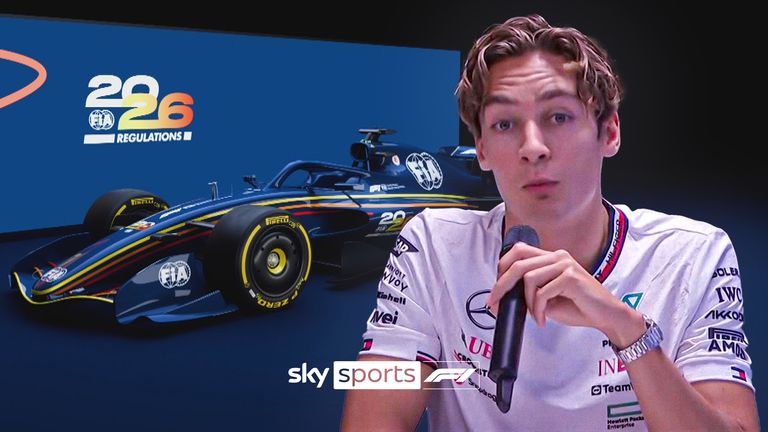
Mercedes' George Russell said this about the radical new regulations set to be introduced in F1 in 2026:
“I don’t want to talk out of turn, but I think it will be very slow,” Albon said. “It seems like a lot of work is being done to make sure that straight line speed doesn’t taper off at the end due to all the non-MGU-K related work.
“I think there’s still more work to be done. “If you look at some of the work we’ve done and look at the speed traces around some of the tracks, it’s quite slow.
I think the size of the car is in the right direction. I'm not saying this negatively, but I think there are positive and negative sides to everything. Restoring what the new engine regulations have created seems to mean that everything becomes extremely complicated.
“The whole aviation path that we're going down, it's better to go back to more basic regulations, whether it's a little bit simpler engines, a little more standardized parts within the engine, or whatever it is.”
Alonso: Fierce competition is the most important thing
Aston Martin's Fernando Alonso, the only driver older than Hamilton on the grid and who has signed a contract to continue driving under the new regulations, said the most important factor will be competitiveness.
“I think a smaller car that can overtake or fight a little more will be the best part for the driver,” the Spaniard said.
“The most important thing for us is that it is a tough competition and that many teams and drivers have the potential to win. What we don't like is one team winning every race for two or three years. Can the 2026 rules bring that? “Let’s take a look.”
New regulations tended to produce cars that dominated for a considerable period of time before rivals began to catch up. Just as is happening in the current campaign with Red Bull's Max Verstappen finally coming under pressure from Ferrari and McLaren after two dominant campaigns.
But keeping the rules the same for too long goes against the nature of the sport and the cutting-edge design and technology its engineers create.
“When they (the FIA) make changes, it happens more often than not that some teams perform better than others,” Hamilton added.
“I hope this rule doesn’t make a big difference.”
McLaren's Oscar Piatri expressed concern that regulatory changes could lead to a resurgence of the sector.
“Every time the rules change there is a pretty big outbreak,” the Australian said.
“With these regulations, we are just starting to catch up with Red Bull.
“But we have a place in society to be at the forefront of technology and innovation, and I guess you could argue that sometimes that comes at the cost of the race.
“I wouldn’t be surprised to see more separation of teams into aero and engine regulations in 2026.”
Live Canadian GP schedule on Sky Sports F1
Friday, June 7th
6 p.m.: Canadian GP Practice 1 (Session begins at 6:30 PM)
8pm: F1 Show
9:45 p.m.: Canadian GP Practice 2 (Session starts at 10pm)
Take a look back at the most dramatic moments of the Canadian Grand Prix
Saturday, June 8
5:15 p.m.: Canadian GP Practice 3 (Session starts at 5:30 PM)
8 p.m.: Preparing for Canadian GP qualifying
9 p.m.: Canadian GP qualifying
11 p.m.: Ted's Qualifying Notes
Sunday, June 9
5:30 p.m.: Grand Prix Sunday – build-up to the Canadian GP.
7 p.m.: Canadian Grand Prix
9 PM: Checkered Flag – Canadian GP Reaction
10 PM: Ted's Notes
Formula 1 leaves Europe for the final time before the summer break as the championship moves to Montreal for the Canadian Grand Prix. Watch every session from this weekend's Circuit Gilles Villeneuve live on Sky Sports F1 on Sunday at 7pm. Stream every F1 race and more with a NOW Sports Month membership. There is no contract and you can cancel at any time.






