



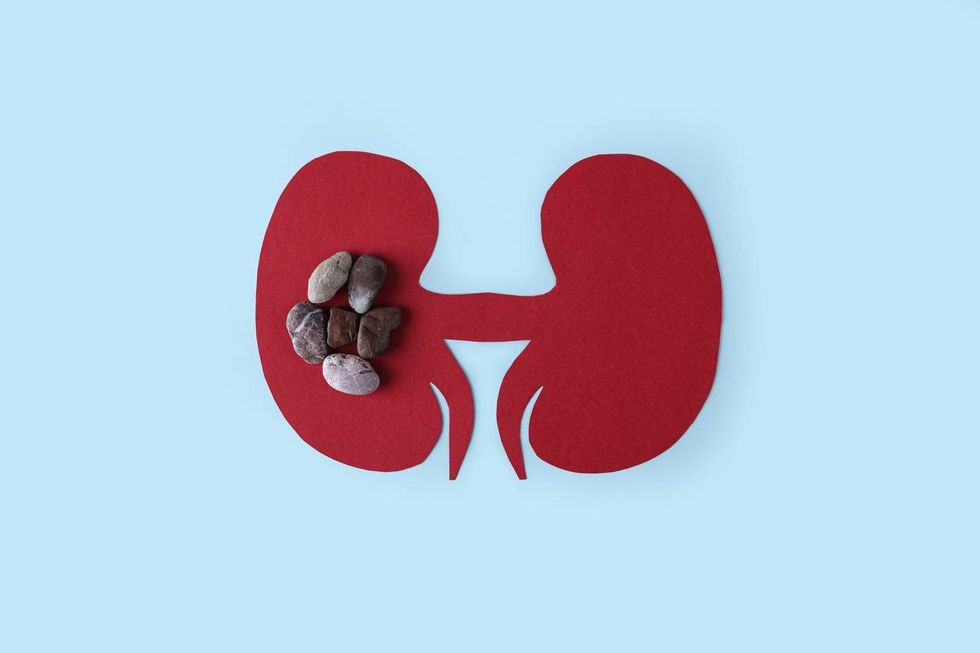
Kidney stones may be as small as a grain of sand or rice, but they can still cause severe pain. That’s because the pain occurs when stones block or stretch the ureters (tubes that carry urine from the kidneys to the bladder) as they travel through the urinary tract.
Here’s what you need to know about kidney stones, what causes them, and how to treat them.
What are kidney stones?
The kidneys’ job is to cleanse the blood and remove waste products through urine. If your urine contains too many minerals and salts and not enough water to dissolve them, they can stick together and form kidney stones.
The most common minerals and salts that form kidney stones are calcium, oxalate, uric acid, cystine, and phosphate.
What Causes Kidney Stones?
Kidney stones are usually caused by a combination of factors, including:
- Diet and Lifestyle — Not drinking enough water, eating a diet high in salt or animal protein, consuming sugary drinks, or eating foods high in oxalate (spinach, beets, nuts, chocolate, etc.)
- Medications and Supplements — High doses of vitamin C, calcium supplements (especially if taken without food), frequent use of laxatives, certain medicines (such as topiramate for migraines or seizures or some HIV medicines)
- Certain health conditions — Conditions such as obesity, hyperparathyroidism, chronic diarrhea or malabsorption (including inflammatory bowel disease), gout, recurrent urinary tract infections, and rare genetic disorders such as primary hyperoxaluria (which causes the body to produce too much oxalate)
- Genetics — If someone in your family has one or more kidney stones
What types of kidney stones are there?
There are four types of kidney stones:
- calcium stones — Calcium stones are the most common type of kidney stones. Most of them are calcium oxalate stones. Oxalates are made by the body and are also found in some foods (spinach, nuts, chocolate, etc.). Calcium phosphate stones are uncommon and may be associated with certain metabolic disorders or medications (including some medications used to prevent migraines or treat attacks).
- uric acid stone — Uric acid stones can form when urine is persistently acidic. Risk factors include gout, dehydration, chronic diarrhea, diabetes, and eating a diet high in purines (found in foods such as organ meats and some shellfish).
- Struvite stones — Struvite stones (sometimes called infection stones) may form after a urinary tract infection caused by certain bacteria. They can grow and become large quickly.
- Cystine stones — Cystine stones are caused by a rare genetic condition called cystinuria, which causes too much cystine to leak into the urine.
What are the symptoms of kidney stones?
Kidney stones can cause symptoms if they travel into the ureters, the tubes that connect the kidneys to the bladder. One of the first symptoms is sudden, severe pain that:
- Sharp pain in your side, back, or under your ribs
- Pain that spreads to the lower abdomen and groin
- Pain or burning when urinating
Pain may come and go or the level of pain may change. And as kidney stones travel through the urinary tract, the pain may travel with them.
Other symptoms of kidney stones include:
- pink, red, or brown urine
- Cloudy or foul-smelling urine
- You constantly feel the need to urinate and urinate more often or produce less urine than usual.
- nausea or vomiting
- Fever and chills (If you have a fever and chills, seek medical attention immediately. These may be signs of infection.)
Do kidney stones cause complications?
Most people recover from kidney stones without any lasting problems. However, it can sometimes cause complications, especially if it blocks urine flow or leads to infection. People with recurrent stones may be at higher risk for chronic kidney disease. Studies have also found a link between kidney stones and conditions such as high blood pressure, cardiovascular disease, and low bone density. However, this association does not necessarily mean that stones directly cause kidney stones.
What is Kidney Stone Treatment?
Most kidney stones pass out on their own when you urinate. This process can be very uncomfortable or painful, so your doctor may prescribe medications to help the stones pass more easily and reduce nausea, vomiting, and pain.
If a kidney stone is too large to pass on its own, you may need a procedure to break up or remove the stone.
shock wave lithotripsy — Uses sound waves to break stones into smaller pieces and excrete them in the urine.
ureteroscopy — A thin endoscope is inserted through the urethra and bladder into the ureters. The laser breaks up the stone and a small basket can be used to remove the pieces. A temporary stent may be inserted to maintain urine flow while the swelling goes down.
percutaneous nephrolithotomy — Used for larger or more complex stones. The surgeon makes a small incision in the back and uses an endoscope to reach the kidney to break up the stone and remove the fragments.
Laparoscopic or open surgery — Surgery for kidney stones is rarely necessary today, but may be used optionally when other treatments are not an option.
This training material was created with support from:m alnylam.
From your site article
Related articles on the web





