



April is Parkinson’s Disease Awareness Month.
In a recent episode of the hit Apple TV show Shrinking, actor Michael J. Fox made a cameo appearance as a real-life person with Parkinson’s disease.
“I fall three times a day,” he said. “I plan to become a stuntman.”
Balance problems and uncontrollable tremors are common symptoms of Parkinson’s disease. The progressive brain disorder occurs when dopamine-producing neurons in the part of the brain that control movement are damaged, causing involuntary muscle contractions. The disease may also cause non-motor symptoms, such as difficulty sleeping and constipation.
The cause of Parkinson’s disease is unknown, but more and more research suggests that the gut microbiome may be linked to the disease.
What is the gut microbiome?
The gut microbiome is a wild world of trillions of microorganisms, including bacteria, viruses and fungi, that reside in your digestive system.
The complex ecosystem of microorganisms plays a huge role in our health and overall well-being. “The gut microbiome has a variety of functions, including producing short-chain fatty acids, some vitamins and neurotransmitters, influencing immune system development and regulation, and maintaining gut barrier integrity,” says Kaylyn Koons, MS, RD, LD, a clinical dietitian at the Norman Fixel Institute for Neurological Diseases.
Everyone’s gut microbiome is unique, with microbes shaped by a variety of factors, including genetics, early experiences (birth method and formula vs. breastfeeding), lifestyle habits, and environment.
Read: The Amazing World of Microbiome >>
Gut microbiota and Parkinson’s disease
Patients with Parkinson’s disease often have marked changes in their gut microbiome compared to people without Parkinson’s disease.
Studies have shown that people with Parkinson’s disease have reduced overall microbiome diversity due to an imbalance in the microbiome known as dysbiosis. This means that your gut microbiome has an increased amount of inflammation-causing bacteria and a reduced amount of beneficial microbes compared to a healthy gut microbiome. And bacterial imbalance increases the risk of chronic diseases such as Parkinson’s disease.
Koons said Parkinson’s patients also show changes in the metabolites produced by their microbiome – molecules necessary for basic survival. These changes include decreased production of short-chain fatty acids and increased production of the metabolite trimethylamine N-oxide, a potential biomarker for Parkinson’s disease.
This is important because reduced levels of short-chain fatty acids can disrupt the intestinal barrier, also known as leaky gut, which can lead to brain inflammation and misfolding of a protein called alpha-synuclein, a key feature of Parkinson’s disease.
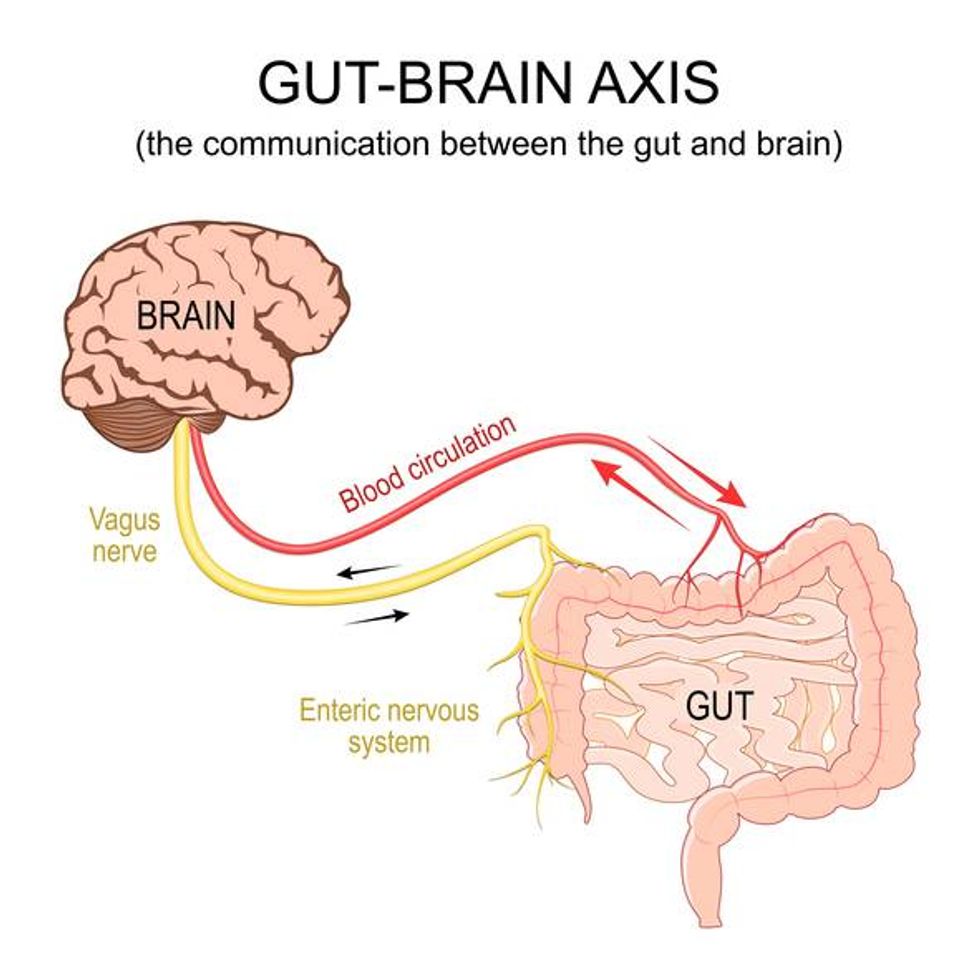
Brain-gut axis and Parkinson’s disease
iStock.com/ttsz
Although Parkinson’s disease is a brain disease, there is growing interest in the idea that the disease originates in the gut.
A 2019 study found that misfolded proteins that damage and kill neurons in the brain originate in the gut and travel to the brain via the vagus nerve.
Abnormal proteins accumulate in the intestines and enteric nervous system, causing symptoms such as constipation, which is very common in Parkinson’s disease patients.
“Non-motor symptoms of Parkinson’s disease affect multiple organ systems, including the gastrointestinal system, and have been found to appear years, even decades, before motor symptoms,” Koons said.
Research also suggests that common gastrointestinal (GI) conditions, such as gastroesophageal reflux disease and H. pylori infection, may be early risk factors to consider. One recent study found that damage to the lining of the upper digestive tract (erosions, esophagitis, ulcers, or peptic injury) increased the risk of developing Parkinson’s disease by 76%.
Although research is ongoing into the exact role gut health plays in the development or progression of Parkinson’s disease, the gut-first hypothesis could mean new ways to detect and treat the disease.
How to Support Your Gut Microbiome If You Have Parkinson’s Disease
Many people with Parkinson’s disease experience digestive problems that affect their entire system, from difficulty swallowing to delayed stomach emptying. In fact, nearly 4 out of 5 people with Parkinson’s disease experience gastrointestinal problems, and women may have more severe gastrointestinal symptoms than men.
“Women experience significantly higher levels of fullness after eating, are less able to finish meals of consistent size, and experience epigastric pain,” Koons said.
For people with Parkinson’s disease, a fiber-rich eating plan may help curb gastrointestinal symptoms and balance gut microbiota. When gut bacteria break down fiber, short-chain fatty acids are produced, which strengthen the intestinal mucus barrier, which can fight inflammation and protect the brain.
Eating foods that contain live cultures, such as fermented foods or yogurt, can help balance the beneficial bacteria in your gut and support good digestion.
Koons recommends a Mediterranean diet for people with Parkinson’s disease. “The Mediterranean diet is associated with an increase in beneficial bacteria, such as Faecalibacterium prausnitzii and Bifidobacterium bifidum, and greater production of short-chain fatty acids,” she said.
There is no cure for Parkinson’s disease, but managing gastrointestinal problems can help relieve non-motor symptoms and improve overall health. If you have Parkinson’s disease, talk to your doctor about what you can do to keep your gut as healthy as possible.
Related articles on the web






