



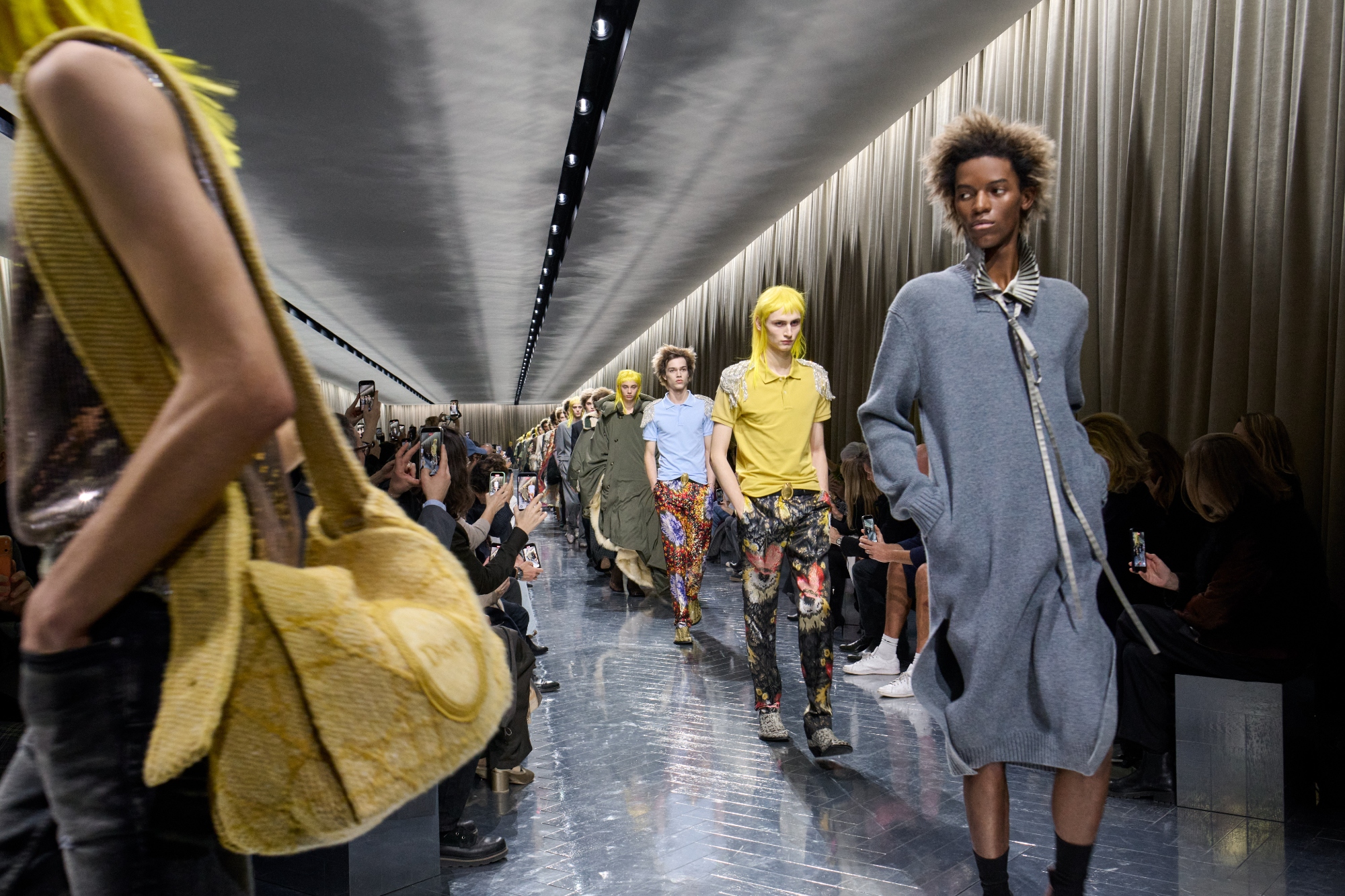
LUXUO takes a look at what the recently concluded Men’s Autumn/Winter ’26 Fashion Week reveals about the current state of menswear. This January’s Milan and Paris calendars reflected a luxury sector under pressure. The absence of major players and the scaling back of major shows was causing a realignment as luxury brands reconsidered the role of menswear in an increasingly cautious market.
With fewer labels represented and several key names missing, the Milan and Paris Men’s Fall/Winter ’26 fashion weeks signaled a shift towards sartorial fundamentals and commercial credibility. The Maison focused on what men would actually wear, what they would put in their wardrobes, and what they would be more likely to invest in over time. This new focus is further reinforced through artisanal leathers and refined textures, making tactile quality central to the value proposition of contemporary menswear.
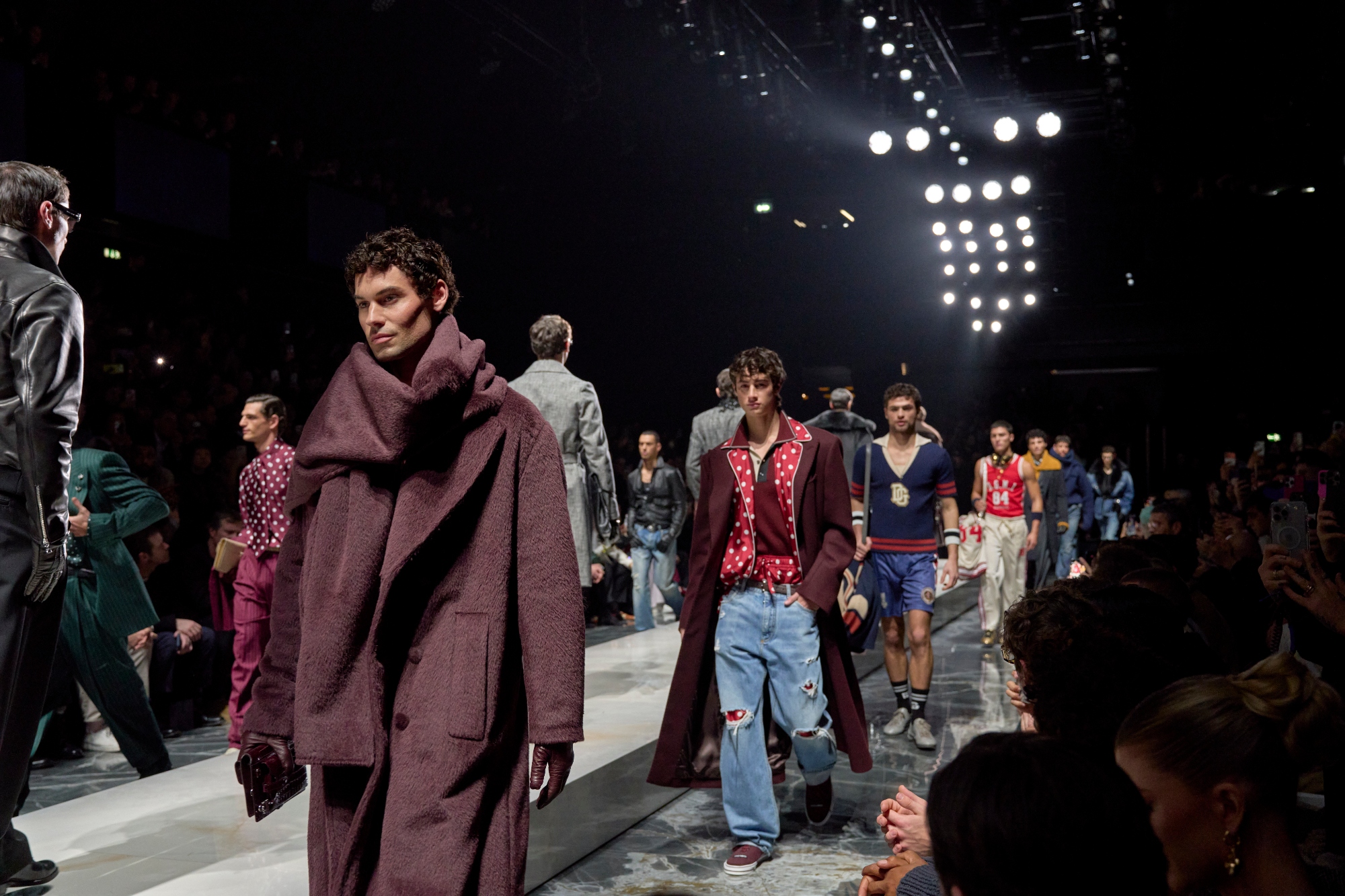
Tailoring re-emerged as a cornerstone of modern menswear, the tie quietly returned as a symbol of styling, bags took on utilitarian significance, and familiar menswear codes were reworked into the hybrid forms that streetwear once represented. Experimentation remained, but it was based on striking silhouettes and sophisticated materials. In a season without Gucci, Emporio Armani toppled its menswear presentation and Zegna’s cultural influence appears (for now) to have waned, Men’s Fall/Winter ’26 highlighted a wider shift in priorities. What emerged from Milan and Paris was a reflection on how men dress today and how luxury brands must respond commercially and creatively to maintain profits.
The return of the tailored suit
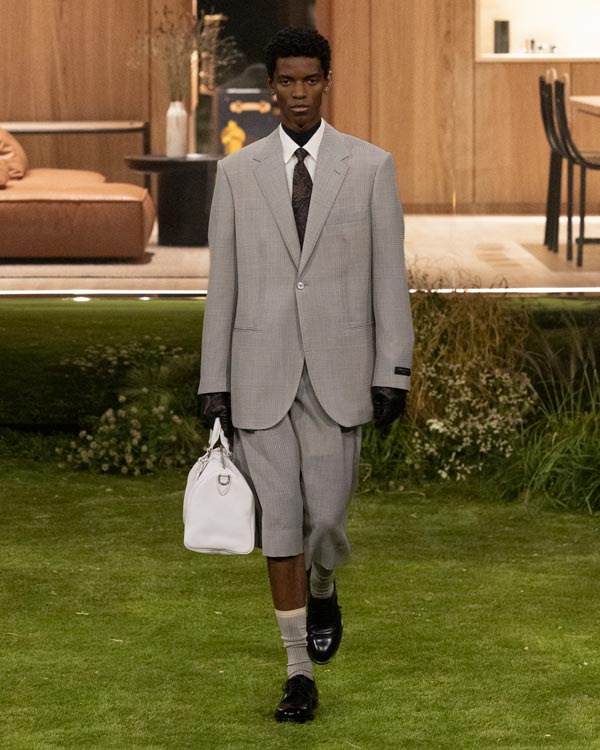
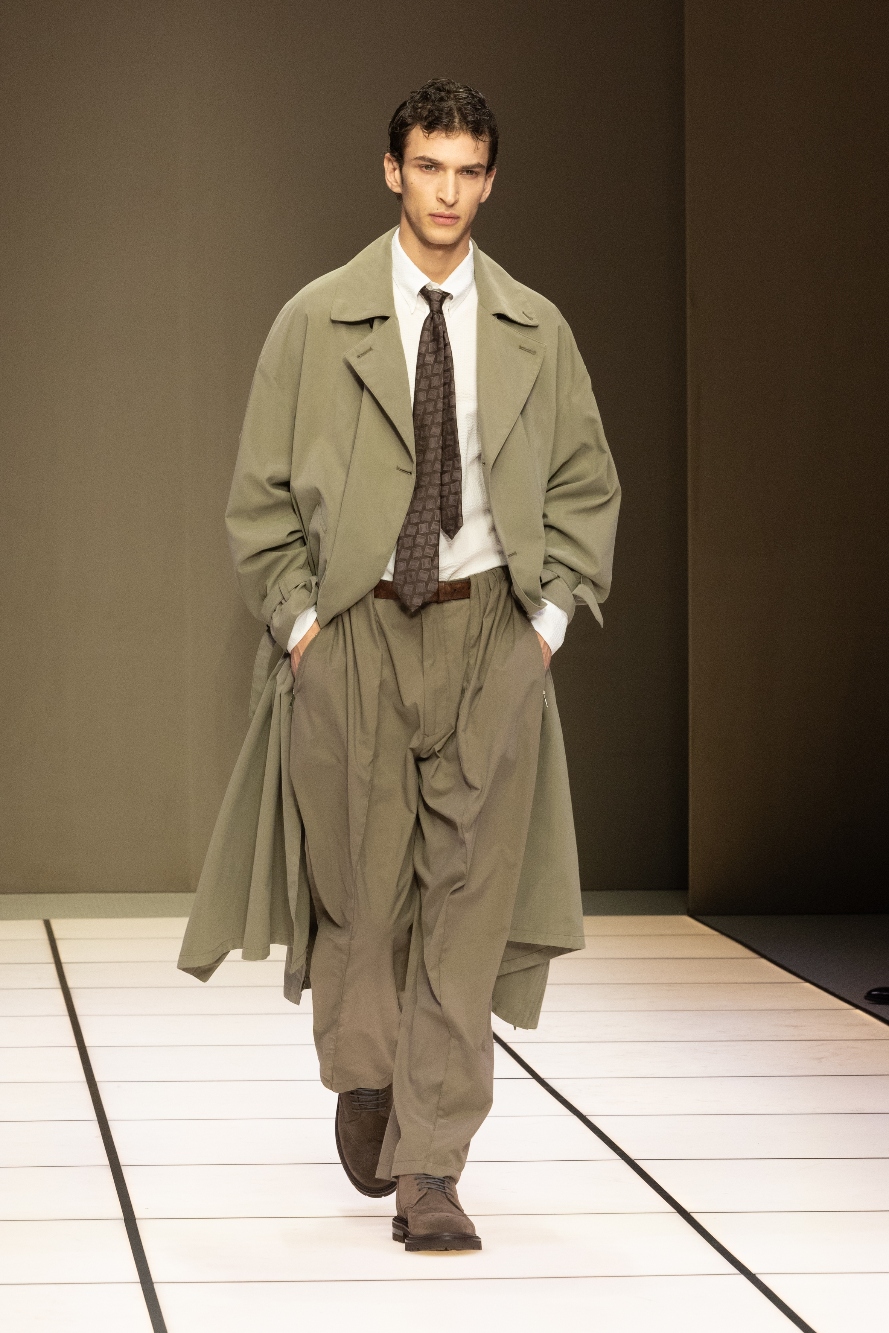
Louis Vuitton (left), Giorgio Armani (right)
Suits are the backbone of menswear and while previous seasons saw the rise of streetwear, this season they are back, but with a twist. After a season dominated by relaxed silhouettes, sharp tailoring is reemerging as the core language of menswear. For Fall/Winter 2026, suits are back in the spotlight, but not in a completely traditional sense. Dolce & Gabbana, Louis Vuitton and Ralph Lauren have stepped up bespoke staples, but designers have infused them with a contemporary tension through unexpected combinations and experimentation with materials. At Louis Vuitton, Pharrell Williams referenced classic houndstooth and checks, but used reflective yarns and bonded shirts to give traditional tailoring a technical, almost sculptural quality. Suits were also accompanied by an unmistakable revival of the tie.
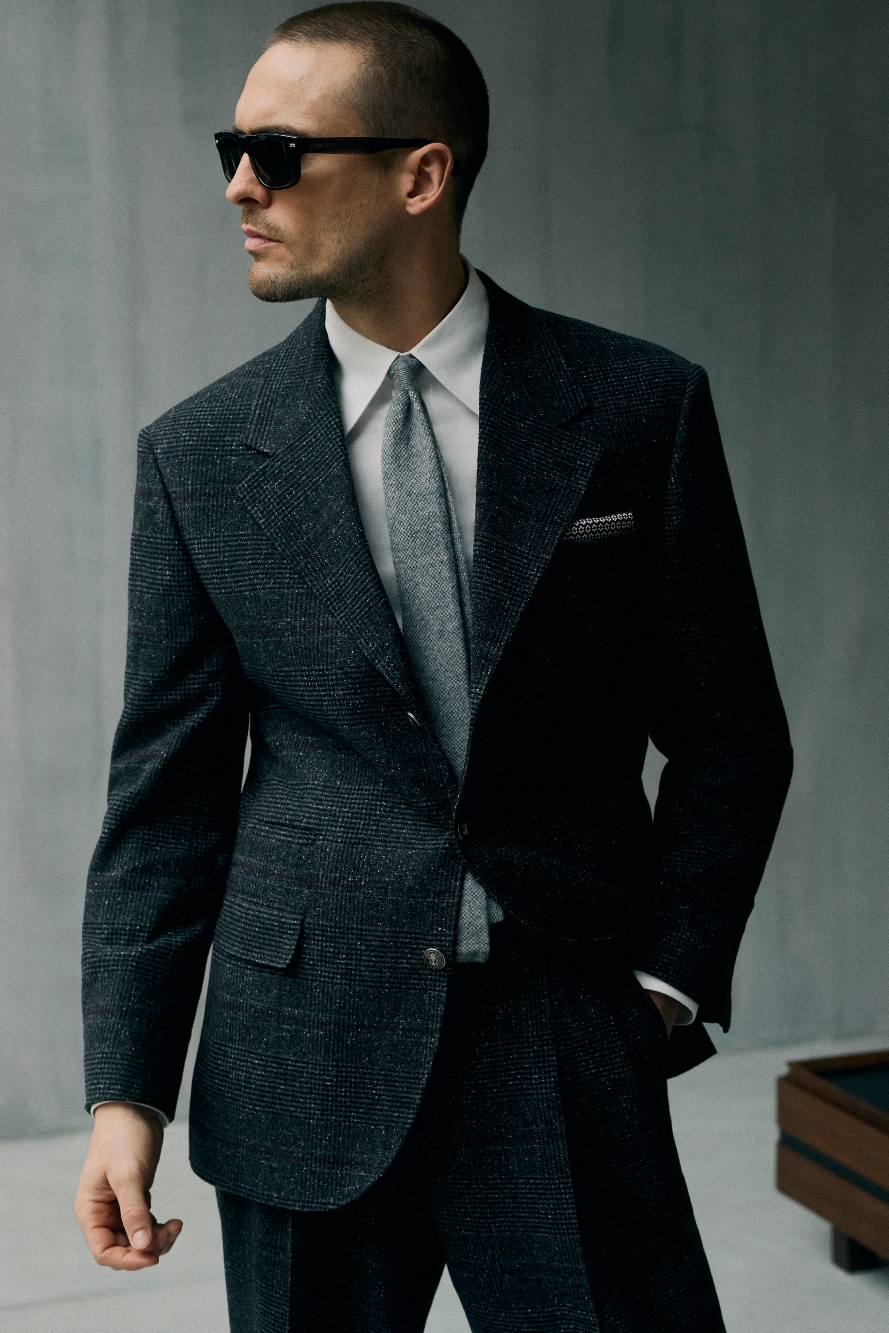
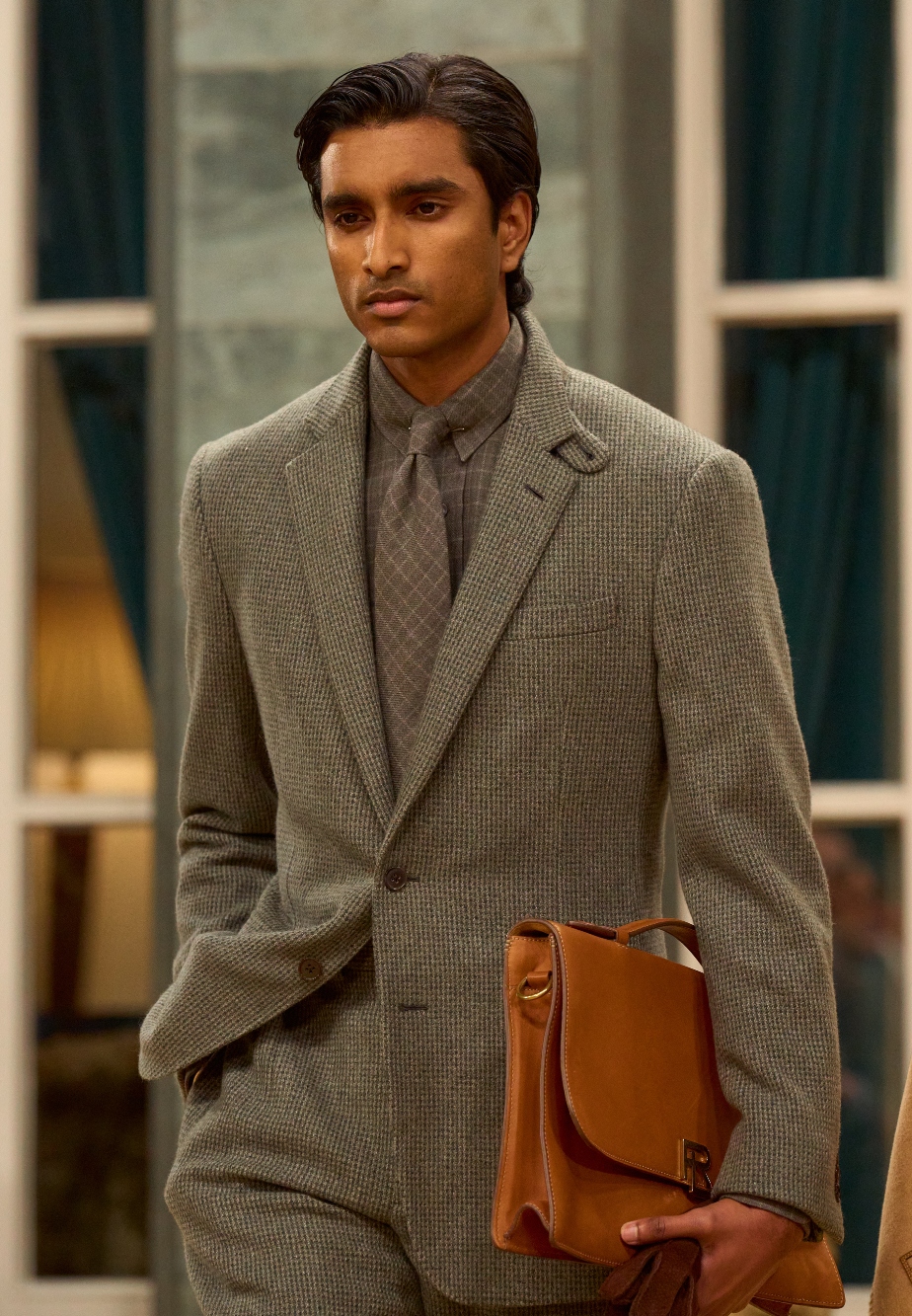
Brunello Cucinelli (left), Ralph Lauren (right)
Brunello Cucinelli reflected this recalibration with soft blazers with subtly structured shoulders and garment-dyed trousers featuring cargo and utility pockets. The reintroduction of the tie as a key accent signaled a new confidence in classic menswear codes, albeit relaxed and modern. At Ralph Lauren, tailoring became central to the brand’s Purple Label and Polo presentations. From cashmere sports coats to relaxed suit silhouettes, tailoring was presented as lifestyle attire rather than event wear, reinforcing its role as a long-term wardrobe staple. Meanwhile, Dior reimagined tailoring through hybridization. Cropped bar jackets, elongated blazers and tailcoats were paired with denim, parkas and long johns to demonstrate how formal structure can coexist with experimentation.
The emergence of bags that fit the purpose
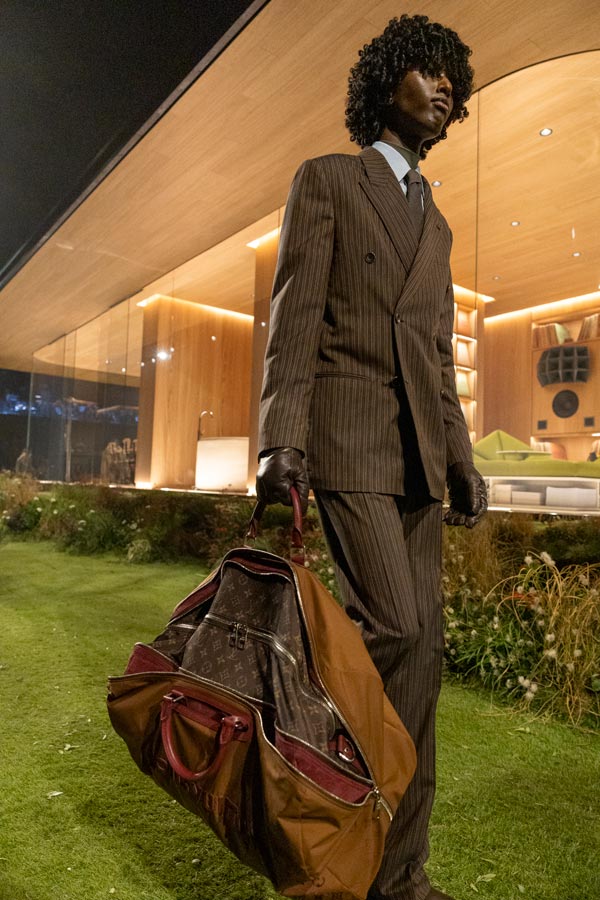
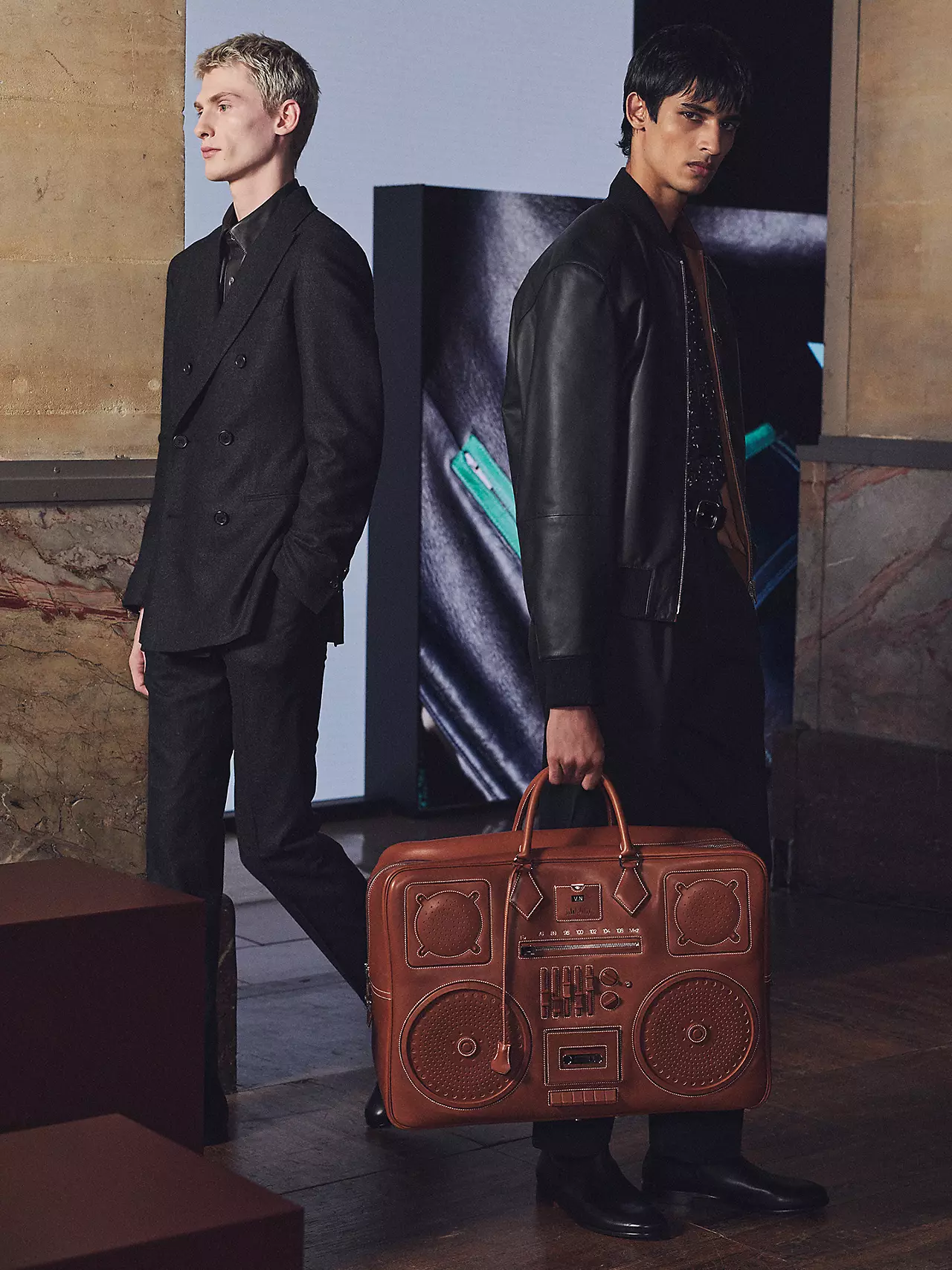
Louis Vuitton (left), Hermes (right)
Accessories were deliberately weighted throughout Paris and Milan. This season’s men’s bags are made to be used. There has been a practical shift towards functional silhouettes, including crossbodies, utility pouches and structured totes that emphasize utilitarian qualities and everyday use. From Hermès’ reinterpreted Plume bag, including a lightweight canvas version with leather trim, to Dior’s slouchy knit messenger bag featuring cannage stitching, the Fall/Winter 2026 collection highlighted how menswear bags are used. Louis Vuitton continues its brand heritage with the Christopher Backpack and Shoulder Alma, while introducing a silk-nylon hybrid and functional backpack that balances durability and luxury. Throughout the show, this practical energy indicates that accessories are an essential and commercially operational element of menswear.
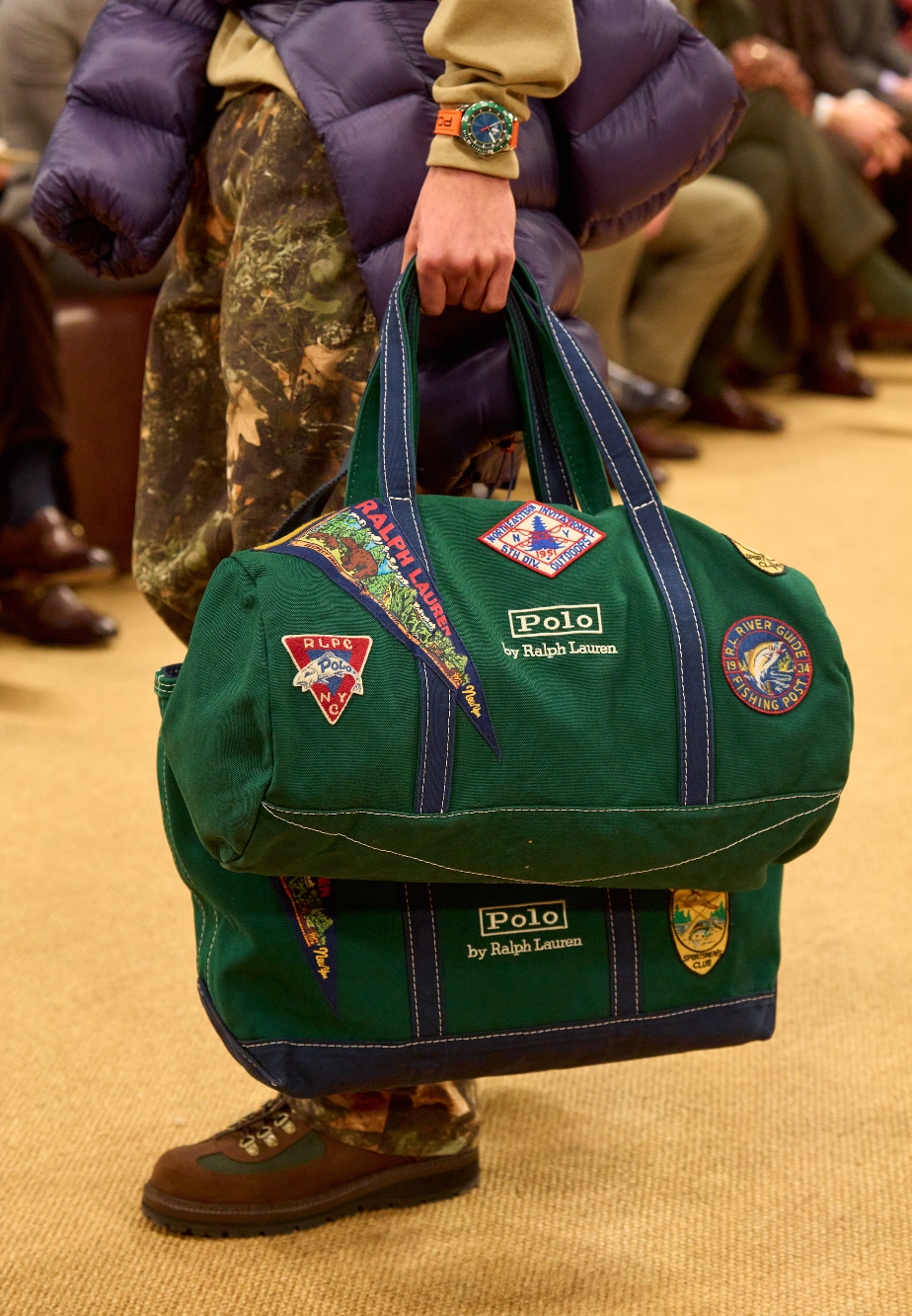
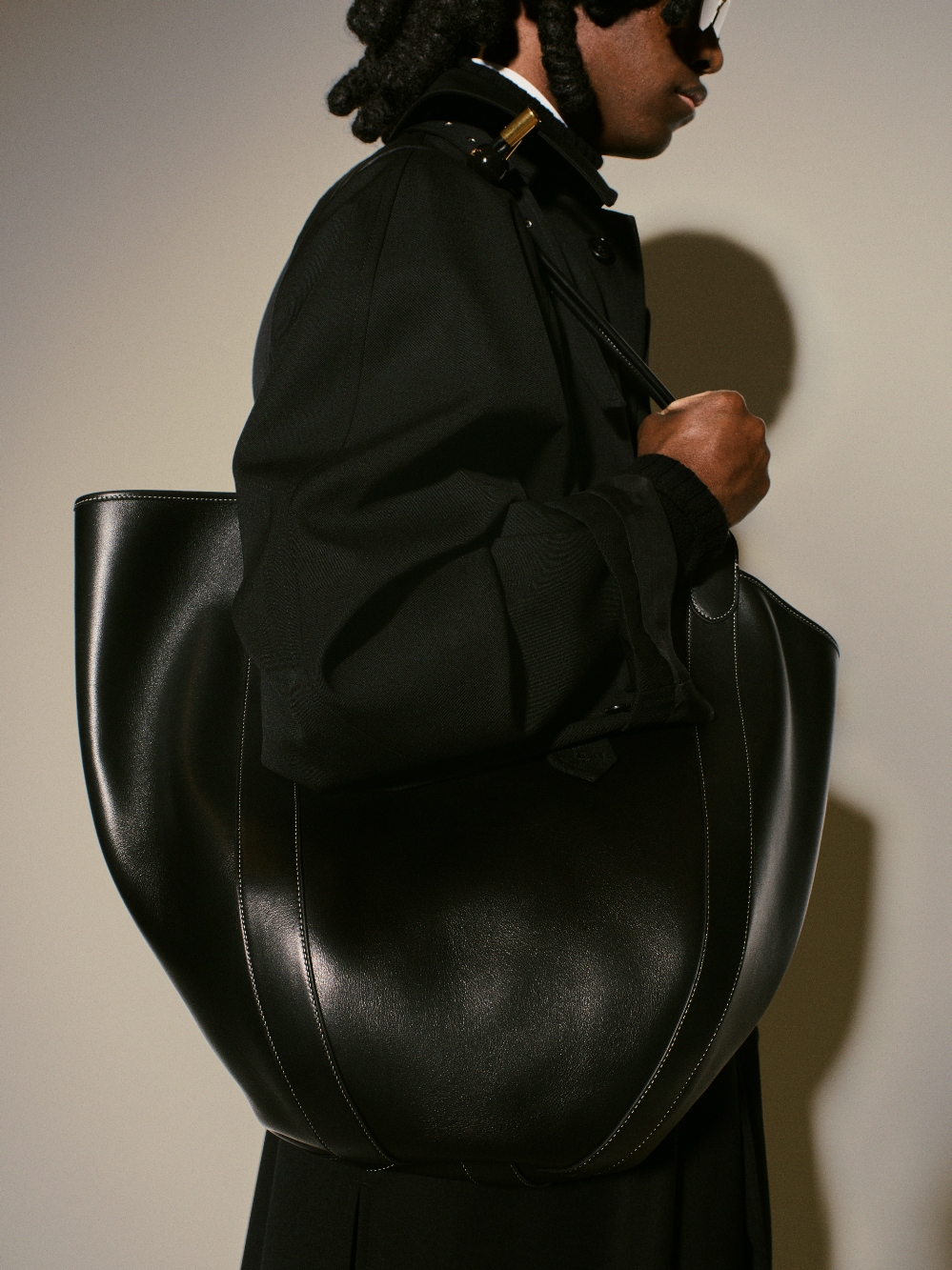
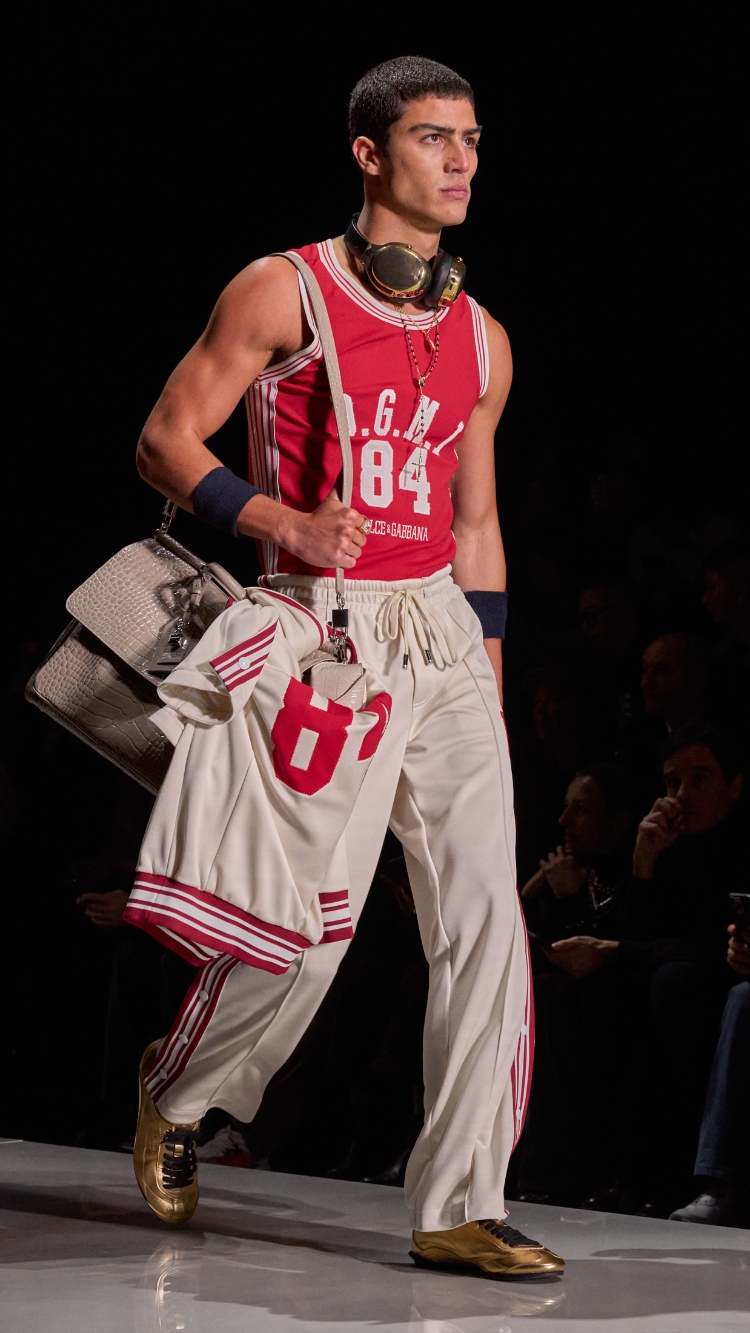
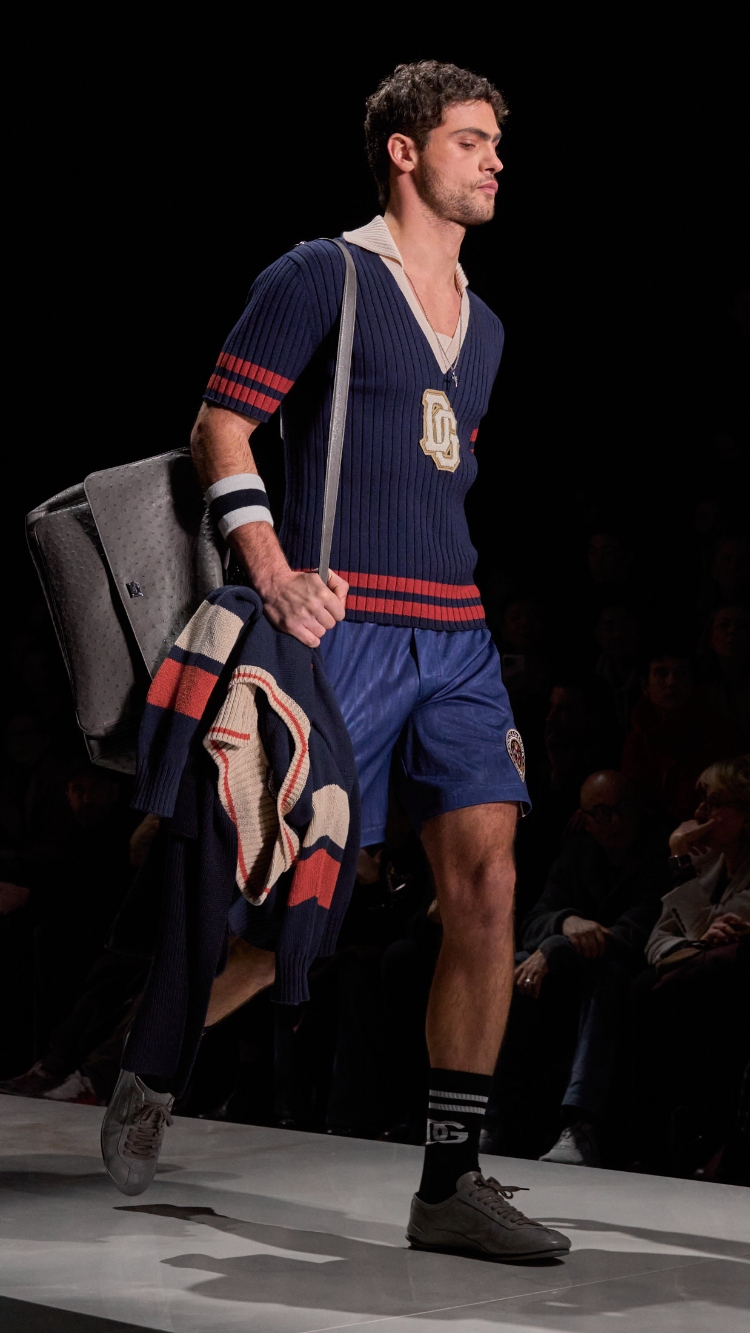
Ralph Lauren (left), CELINE (center), Dolce & Gabbana (right)
Ralph Lauren established the look with Heritage Collection bags and Alpine boots, reinforcing the idea of accessories as lifestyle tools, while Emporio Armani’s roomy tote bags and crossbody bags reflected priorities for comfort and mobility. As menswear shows have become more streamlined, accessories now carry significant commercial weight, making bags one of the most reliable sources of revenue on the runway.
Experiment using familiarity
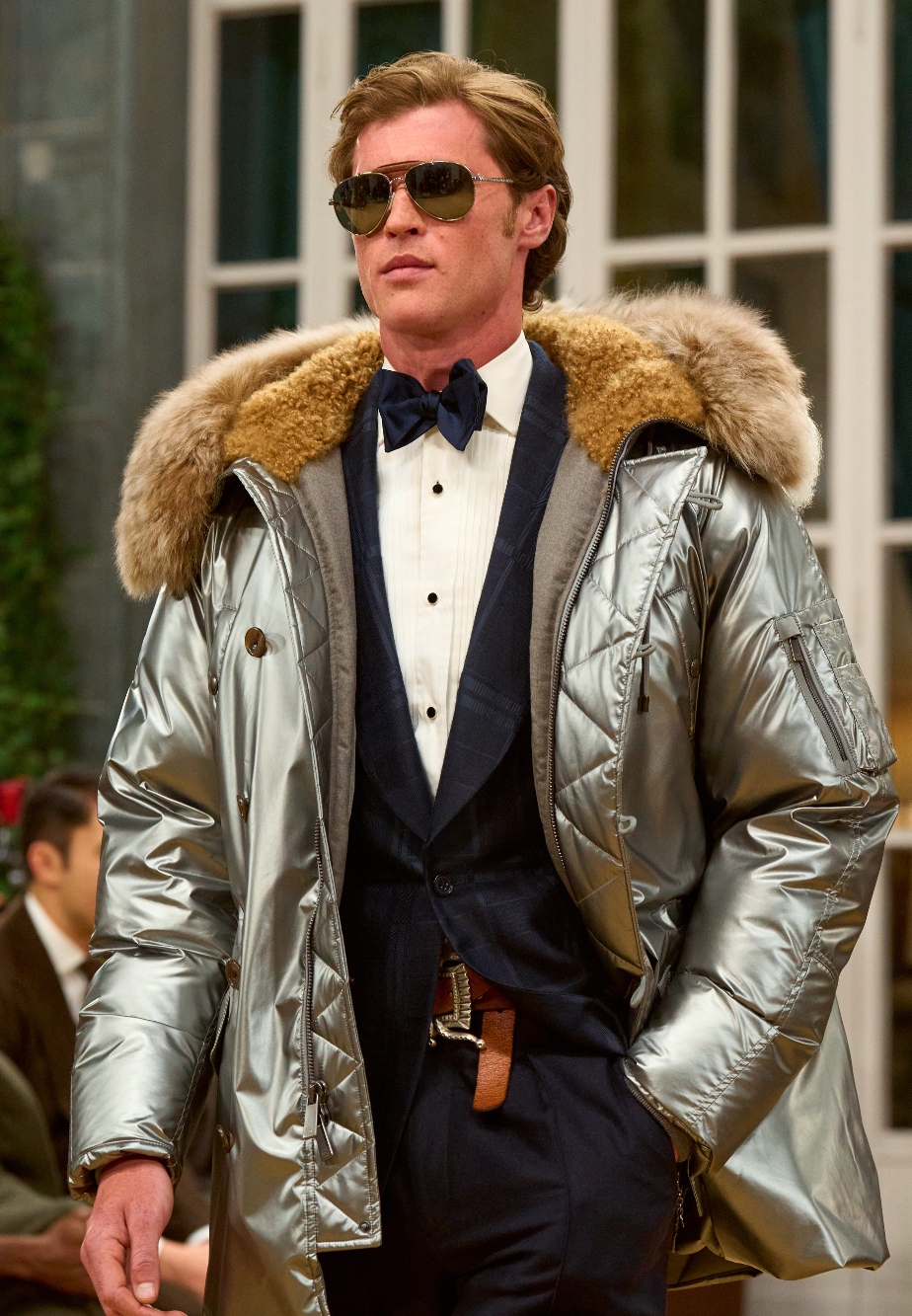
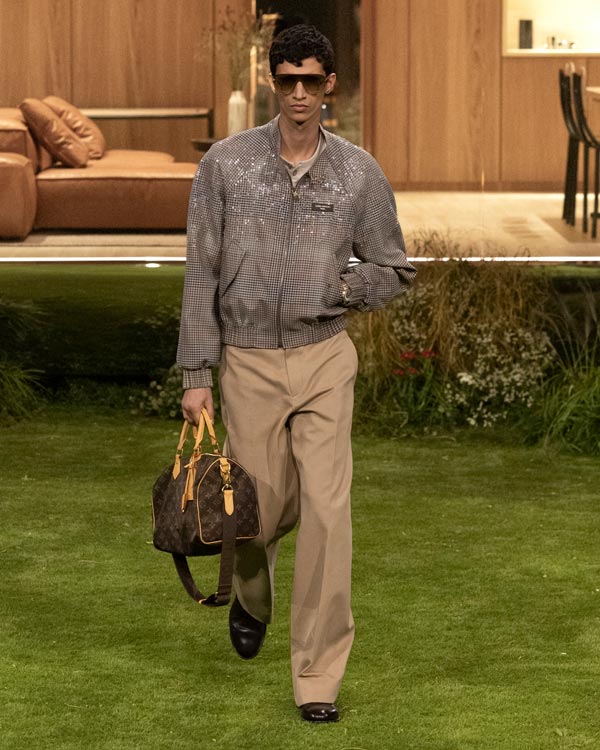
Ralph Lauren (left), Louis Vuitton (right)
Throughout Paris and Milan, experimentation was based on familiarity. Outerwear was wearable yet experimental. At Dior, contradictions drove creativity. Technical bombast flowed into brocade capes, and military references clashed with couture details. The bar jacket has been reinterpreted in denim and technical fabrics, and its cropped and elongated silhouette offers a variety of sartorial codes between formal and casual. Louis Vuitton combines classic “gentlemanly” coats with technical and reflective materials, highlighting functional tailoring and workwear references. Even Hermes favored elongated silhouettes and geometric leather patchwork.
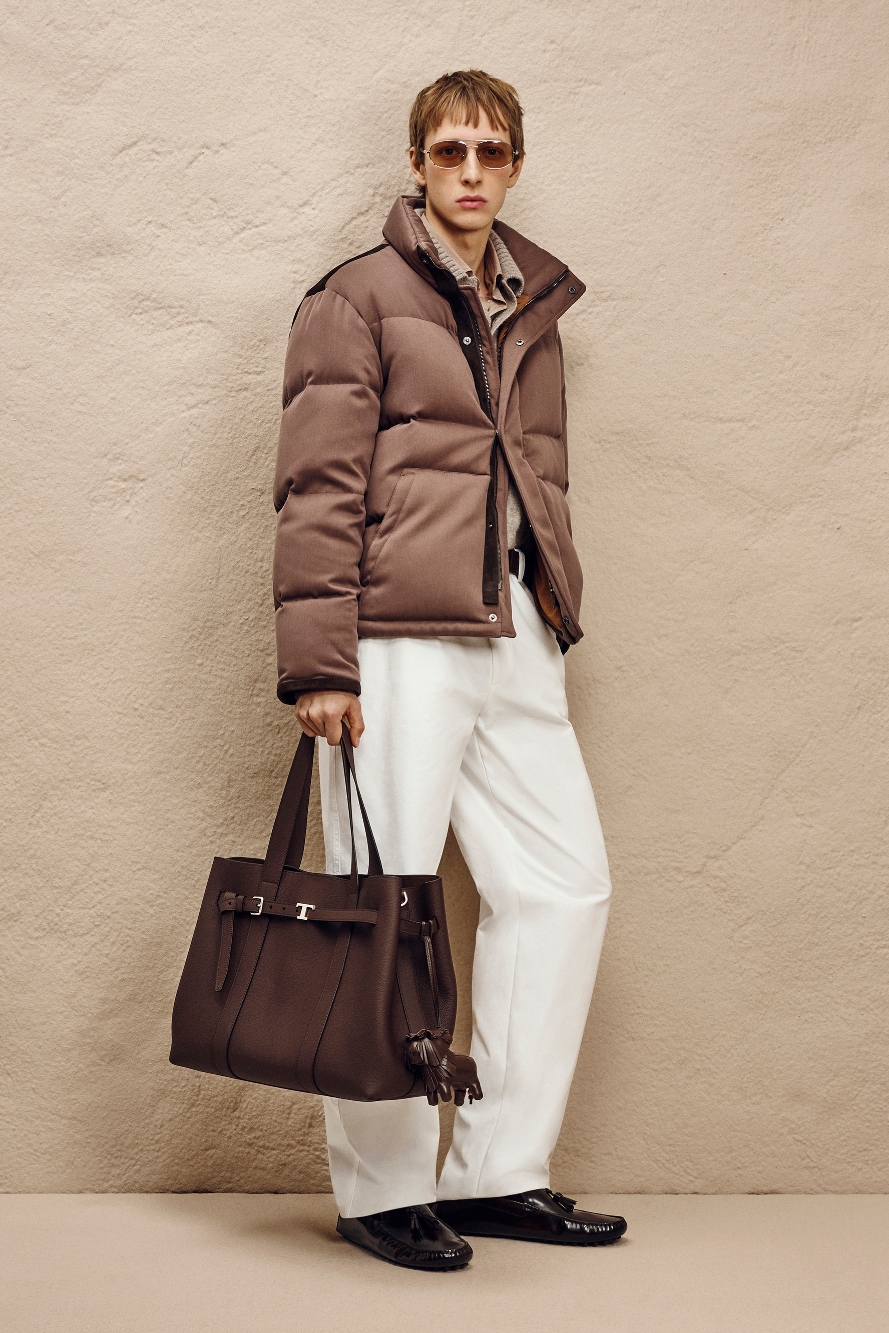
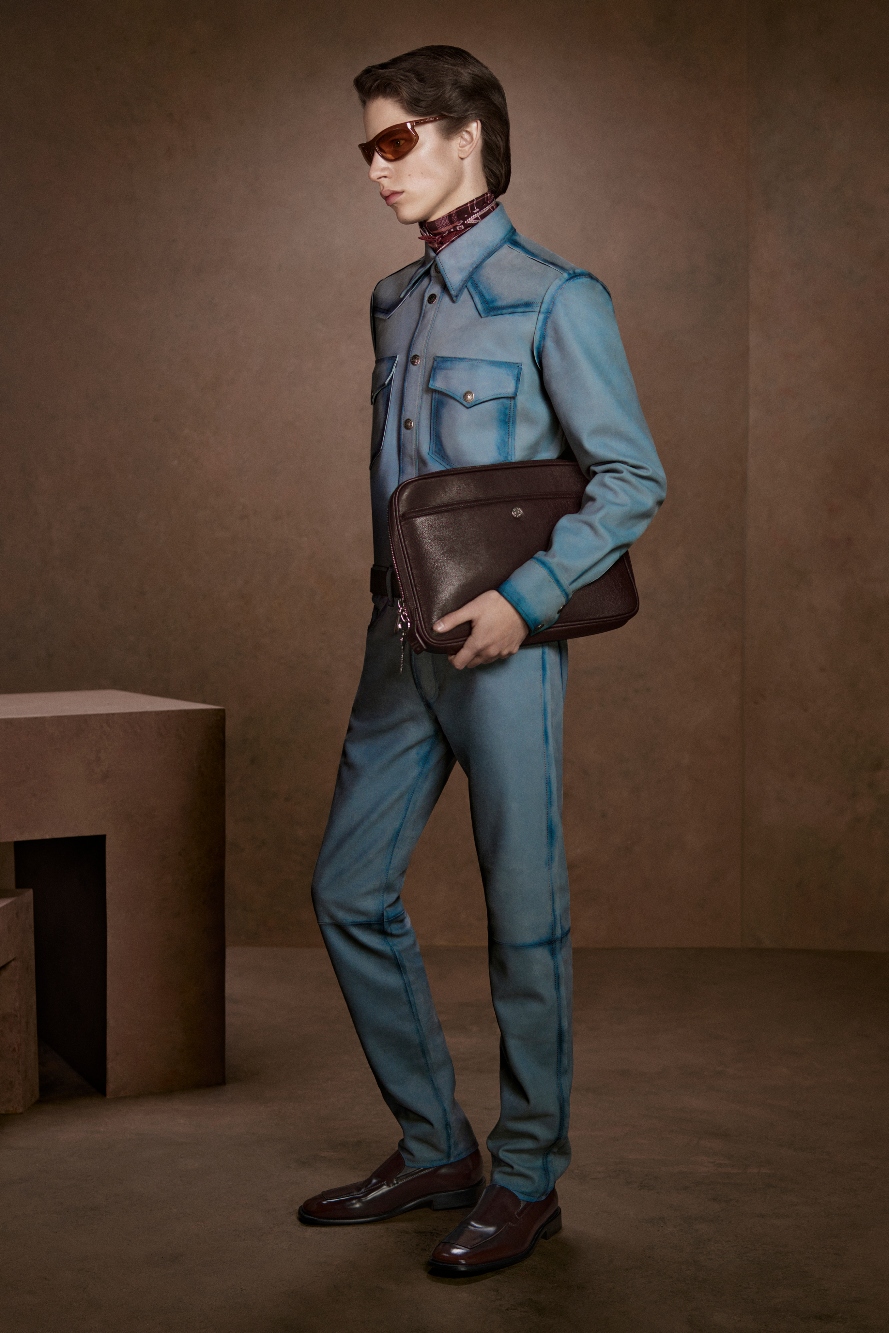
Tods (left), Acne (right)
These changes reflect men’s fashion that responds to practical needs by prioritizing movement and meeting the elements without sacrificing style. It is a response to the cultural need for functional and wearable luxury. Acne Studios explored the evolution of menswear codes through lively denim, elegant tailoring, and heritage silhouettes such as the revived 1996 straight leg jeans. The trompe l’oeil treatment and visible repairs created an illusion, but the foundations were still deeply recognizable.
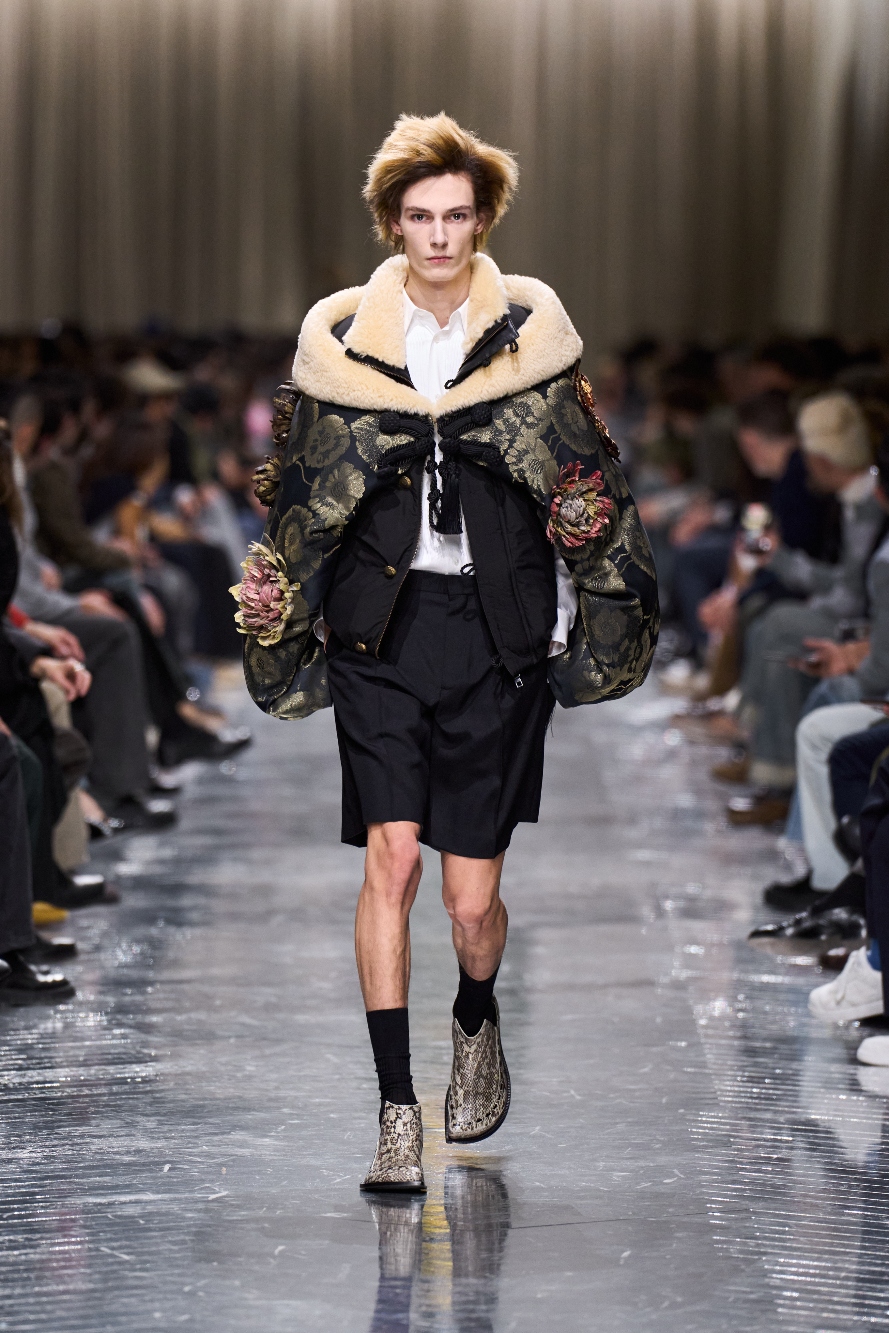
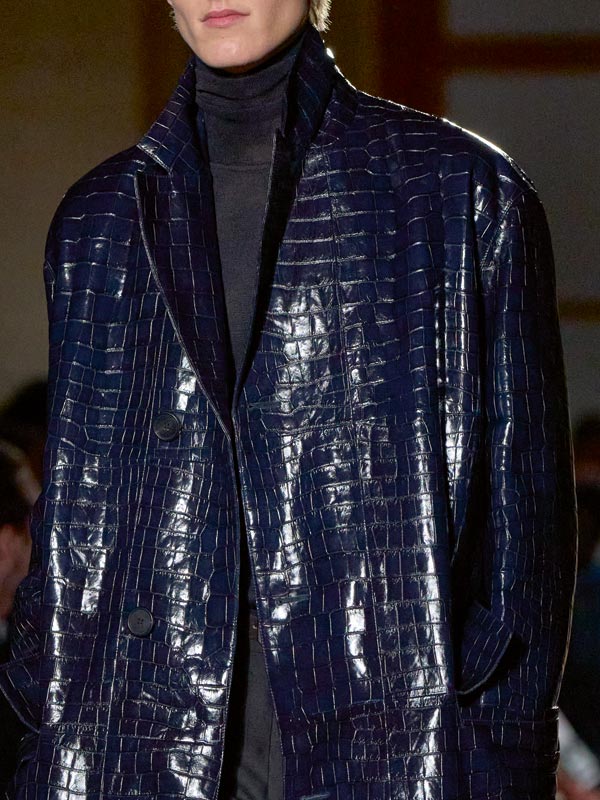
Dior (left), Hermes (right)
At Dior, contradictions drove creativity. Technical bombast flowed into brocade capes, and military references clashed with couture details. Cropped bar jackets, elongated blazers and tailcoats were paired with denim, parkas and long johns to demonstrate how formal structure can coexist with experimentation. Hermès, led by Véronique Nichanian, presented perhaps the clearest example of uninterrupted evolution. Elongated silhouettes, leather shirts and cropped jackets maintained balance and restraint. Elongated silhouettes, leather shirts and cropped jackets became the focus of the collection, with archival references folded seamlessly into new looks, reinforcing the idea that timelessness is innovation in itself.
subtle luxury
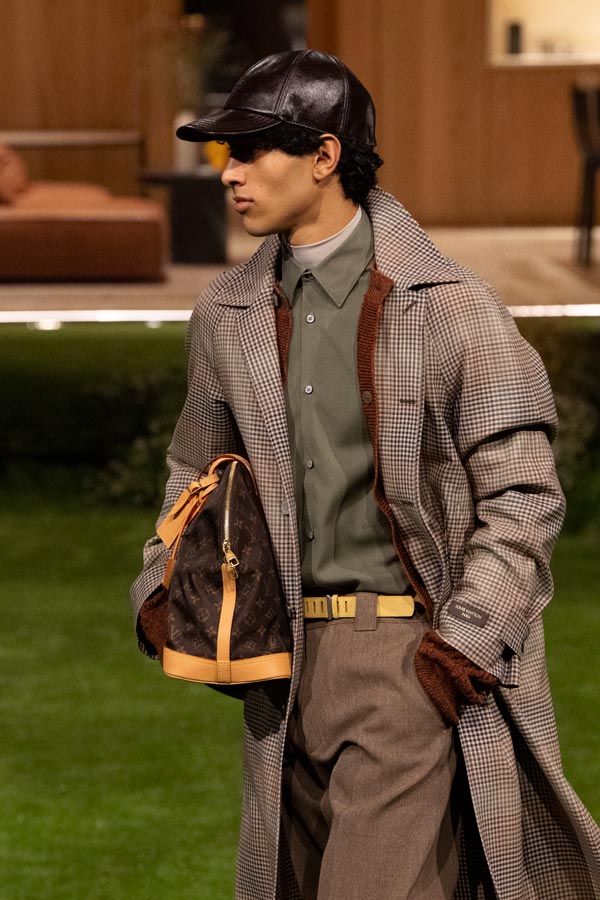
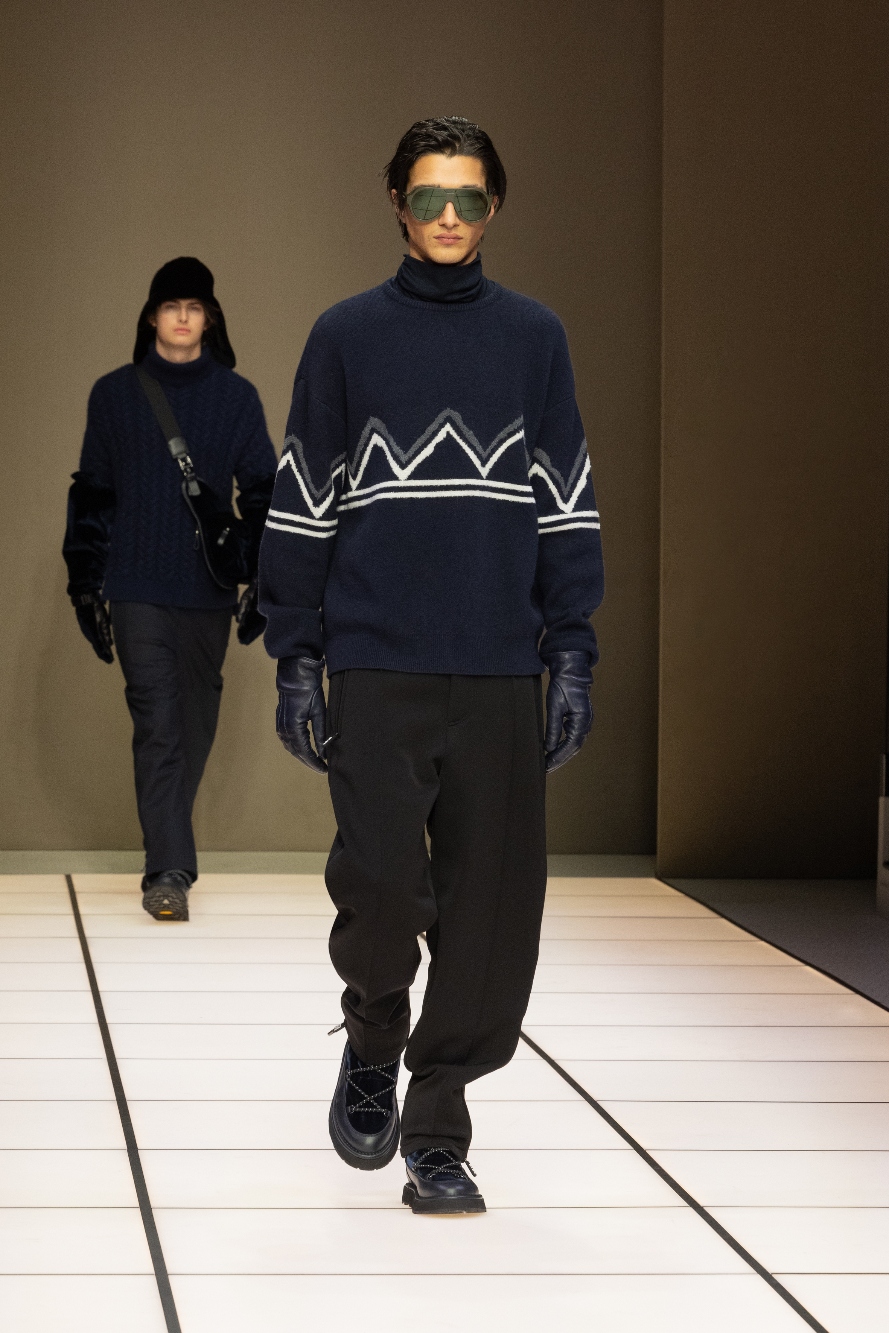
Louis Vuitton (left), Giorgio Armani (right)
Menswear Fall/Winter 26 saw the merchandising of wardrobe essentials with luxurious details. Intricate knitwear, tall cashmere sweaters, leather jackets and tailored coats are positioned as long-term investments rather than seasonal pieces. Tod’s focuses on leather, particularly exemplified by the Pashmy project, where classic jackets are enhanced through superior materials rather than trend-setting designs. Winter Gommino was also a symbol of understated longevity. At Brunello Cucinelli, knitwear took center stage. Cashmere, tweed and Donegal fabrics have been reworked into cozy cardigans and textured knits that can define entire looks. Led by Michael Rider, Celine curated menswear with “everything you need.” Classics with bite, clothes that feel necessary and personal, fabrics that reinforce the idea of menswear as a reliable wardrobe system.
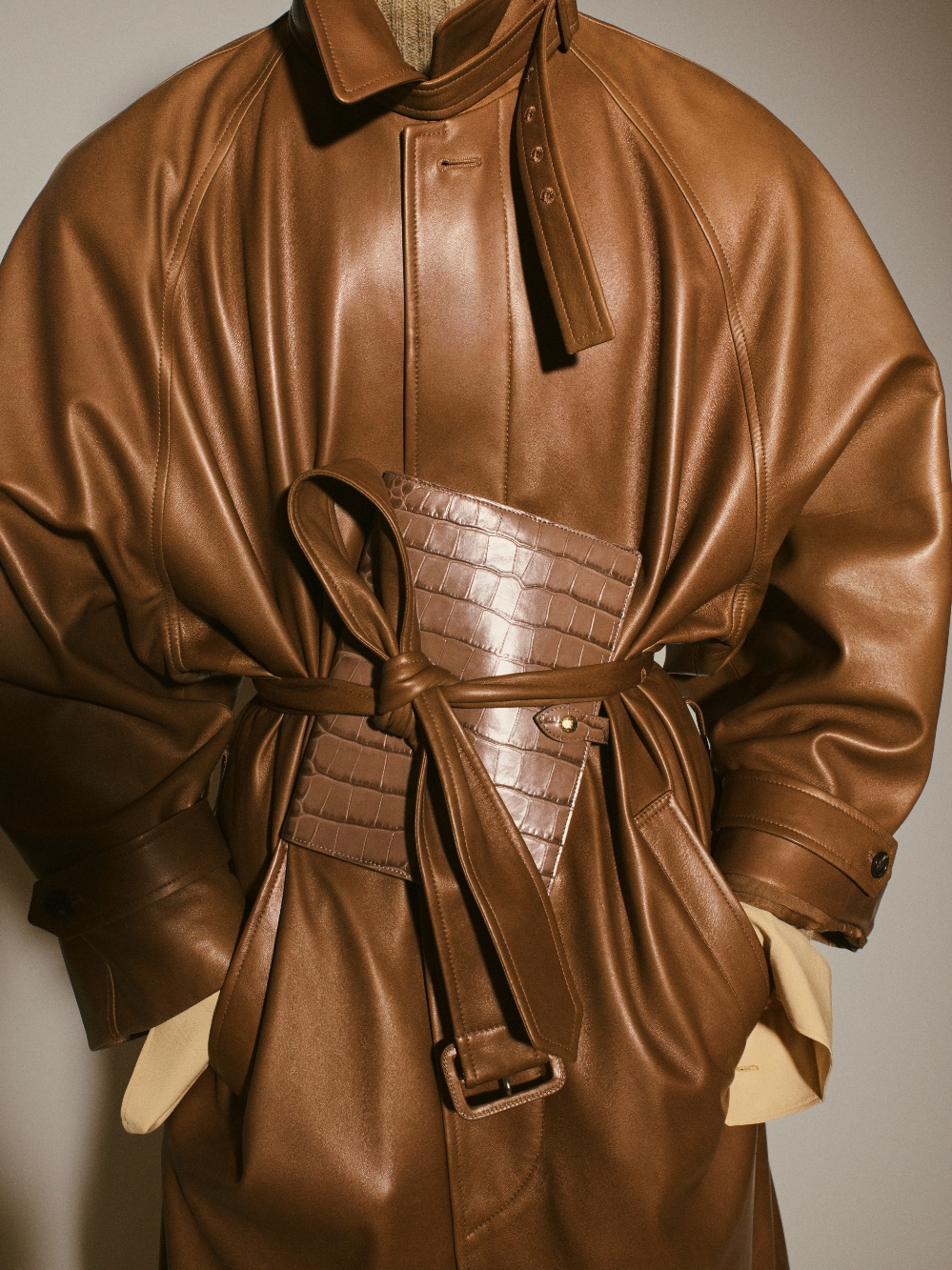
Celine (left), Dior (right)
Dior’s knitted tops paired with sequined vests, bar jackets over denim jorts and D-shaped boots borrowed from womenswear emphasized a flowing, high-low style. Hermès maintained long, balanced proportions while incorporating sensual materiality: leather shirts, cropped jackets, and archival nods that appealed across traditional gender boundaries. Acne Studios reflected this with sophisticated outerwear archetypes such as cashmere layering, argyle knits, harrington and suede flight jackets.
For more information on the latest luxury fashion and style, Click here.







