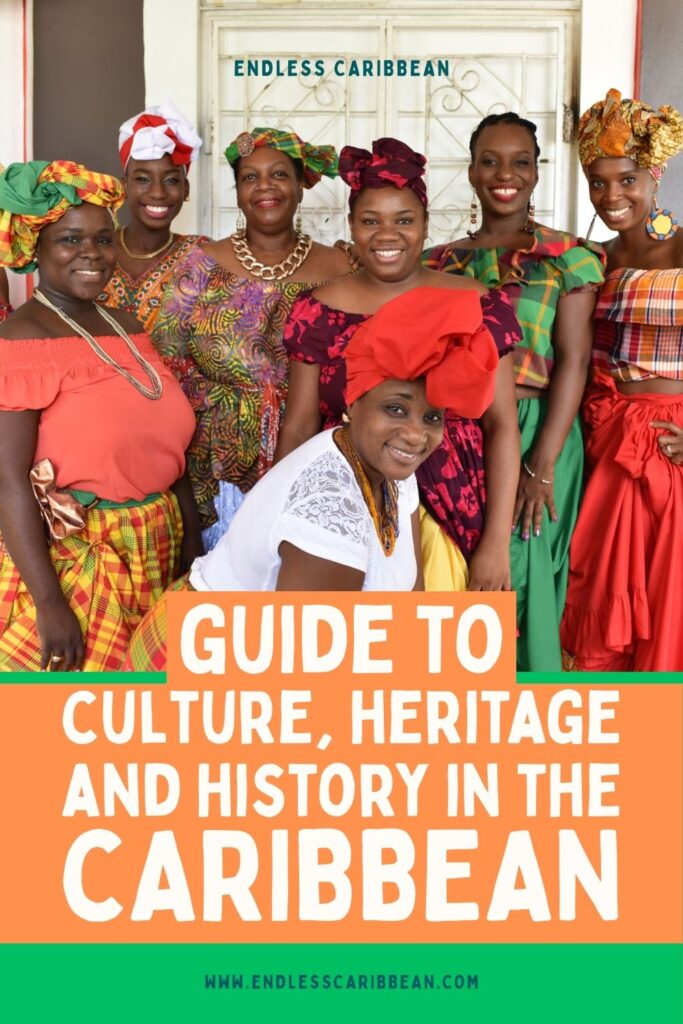
The culture, heritage and history in the Caribbean reveals a region shaped by layered histories. These histories include indigenous beginnings, African and Asian diasporas, European colonization, and constant cultural exchange.
The Caribbean’s music, language, food, and festivals all trace those intersections and keep traditions alive while reshaping them for today.
By partaking in what the Caribbean provides to the world, you will discover how living traditions and historic sites reveal a shared identity that is both diverse and deeply rooted. There are stories in architecture, rituals, and everyday practices that explain how communities survived, adapted, and celebrated across centuries.
Culture, heritage and history can be experienced when you explore destinations where UNESCO sites, vibrant festivals, and evolving culinary and artistic scenes connect past and present. On your visit to the Caribbean, you can learn practical ways to appreciate, preserve, and experience this cultural mosaic.
Key Takeaways
- Caribbean culture arises from layered historical encounters and ongoing cultural exchange.
- Tangible heritage and daily traditions both reveal the region’s diverse identity.
- Festivals, cuisine, and sites offer accessible ways to engage with and protect cultural legacy.
Origins of Caribbean Culture
The region’s culture grew from a layered mix of indigenous traditions, forced African migration, and European colonial systems. These elements shaped language, religion, food, music, and social structures across islands and mainland Caribbean territories.
Indigenous Influences
Indigenous peoples such as the Taíno, Arawak, and Carib established early social, agricultural, and maritime practices that shaped Caribbean lifeways. They cultivated cassava and sweet potatoes, developed canoe navigation for inter-island travel, and created pottery and woven goods—techniques later adapted by other groups.
Place names, crop choices, and culinary techniques echo indigenous origins today. Words like “hammock,” “canoe,” and “barbecue” entered European languages from indigenous terms. Archaeological sites and oral histories preserve material culture and cosmologies that continue to influence regional identity.
African Heritage and Enslavement
The transatlantic slave trade brought millions of Africans to work on sugar, coffee, and tobacco plantations, making African peoples central to Caribbean demographic and cultural formation. Enslaved Africans preserved languages, religious practices, musical rhythms, and food traditions despite oppression and forced displacement.
Creolization produced syncretic religions (e.g., Vodou, Obeah, Santería), musical forms (drum-based rhythms, calypso, mento), and culinary staples (ground provisions, okra, callaloo) that fused African techniques with available local ingredients. Resistance—through maroon communities, revolts, and everyday cultural retention—shaped political as well as cultural landscapes.
European Colonization and Legacy
Spanish, French, British, Dutch, and Portuguese colonizers imposed new languages, legal systems, plantation economies, and Christianity across the Caribbean. Colonial land division and labor regimes structured social hierarchies that persist in economic patterns and property relations.
European influence appears in official languages, legal codes, architecture, and education systems. At the same time, colonizers adapted indigenous and African practices—producing hybrid cultural forms like creole languages, Catholic festivals with African elements, and European musical instruments used in local genres.
Caribbean Historical Timeline
The Caribbean historical timeline highlights deep indigenous roots, dramatic colonial restructurings, and 20th-century independence movements that reshaped politics, economies, and identities across the islands. It emphasizes key people, institutions, and events that still influence culture and heritage today.
Pre-Colonial Period
Indigenous peoples—Arawak (Taíno), Carib, and earlier Archaic groups—populated the islands for millennia. They developed fishing, horticulture, and canoe-based trade networks connecting Greater and Lesser Antilles long before European contact.
Archaeological evidence places sustained habitation back several thousand years, with distinct pottery styles, agroforestry practices, and settlement patterns on Hispaniola, Puerto Rico, Cuba, and smaller islands. Social organization varied: village chiefs, ritual specialists, and communal land use were common.
Material culture included stone tools, carved zemis (in Taíno belief), and woven textiles. These elements shaped place names, oral traditions, and agricultural knowledge that survived through creolization and influenced later cultural forms.
Colonial Era Transformations
European arrival after 1492 triggered rapid demographic collapse of many indigenous communities. Many of the indigenous people died from disease, forced labor, and violence. Spanish, British, French, Dutch, and Danish powers established competing colonies, fortifications, and plantation systems.
Sugarcane plantations expanded in the 17th–18th centuries, driving the transatlantic slave trade that brought millions of Africans to the Caribbean. Enslaved Africans transmitted languages, religious practices, music, and culinary techniques, and created syncretic cultures such as Vodou, Santería, Obeah, and Rastafari.
Colonial economies centered on monoculture exports—sugar, coffee, tobacco, and later bananas—linked to global markets and shaped class hierarchies and urban development. Colonial laws, manumission patterns, and creole cultures produced distinctive island identities and periodic revolts, including maroon communities and slave uprisings.
Independence Movements
Anti-colonial struggles began with slave revolts and maroon resistance, culminating in major political shifts in the late 18th to 20th centuries. The Haitian Revolution (1791–1804) stands as a pivotal event. Formerly enslaved people overthrew French rule and established the first Black republic in the Americas.
Throughout the 19th and 20th centuries, gradual emancipation, nationalist movements, and world wars accelerated demands for sovereignty. Britain, France, and the Netherlands granted independence to many territories between the 1950s and 1980s, while some islands chose continued association with metropolitan states.
Post-independence states faced challenges such as economic dependency, migration, and Cold War geopolitics. But most of them were resilient, overcame these challenges and embraced cultural revival movements that reclaimed indigenous, African, and creole heritage in literature, music, and public memory.
Multicultural Identity and Societal Diversity
Today’s Caribbean communities blend African, Indigenous, European, Asian, and Middle Eastern roots into daily life, institutions, and personal identities. This blending shows in festivals, legal systems, religious practice, foodways, and patterns of social belonging.
Hybridization of Traditions
People in the Caribbean combine ritual forms, music, and culinary practices into new, place-specific traditions. For example, religious syncretism merges Catholic saints with West African deities, producing distinct devotional practices and public processions. Carnival celebrations fuse European masquerade with African drumming and Indigenous motifs, creating performance forms that vary island to island.
Cultural fusion also occurs in crafts and dress. Woodcarving, textile patterns, and culinary recipes incorporate techniques and ingredients from multiple heritages. These hybrid traditions function as markers of local identity and as adaptive strategies during social change.
Language and Dialects
Creole languages and dialects dominate many Caribbean communities, reflecting contact among European languages, West African languages, and Indigenous tongues. Haitian Creole, Jamaican Patois, Bajan Dialect, and Antillean Creole each display unique grammar and vocabulary shaped by slavery-era mixing and later nation-building.
In many countries, language choices can signal social position, education, and political stance. Standard varieties (e.g., English, Spanish, French) appear in formal institutions, while creoles thrive in homes, music, and oral storytelling. Code-switching is common; speakers shift registers for intimacy, authority, or cultural expression.
Migration and Diaspora Impacts
Transatlantic and regional migration have continuously reshaped Caribbean demography and identity. Indentured labor from South Asia and East Asia introduced languages, religions, and culinary traditions that became integral to island societies. Later waves of labor migration and professional emigration created transnational networks linking islands to North America and Europe.
Diaspora communities influence homeland culture through remittances, political advocacy, and cultural exchange. Music, literary forms, and religious practice travel with migrants, then re-enter Caribbean contexts transformed. These flows produce layered identities: people may identify with an island community, an ancestral homeland, and a diasporic city simultaneously.
Traditional Arts and Expressions
The Caribbean’s creative life centers on performance, visual crafts, and storytelling that link people to history, ritual, and daily practice. These arts combine Indigenous, African, European, and Asian elements into locally specific forms.
Music and Dance
Music and dance drive public life across the Caribbean, from Trinidad’s Carnival to Haiti’s rara processions. Rhythms such as calypso, soca, reggae, salsa, and kompa grew from African drumming patterns fused with European harmonic structures and Indigenous motifs.
The choice of instruments varies from country to country. Steelpan orchestras emerged in Trinidad from repurposed oil drums; Jamaican reggae relies on bass-heavy drum patterns and guitar skanks; whilst Cuban son uses tres and claves to anchor danceable syncopation.
Dance also functions as social commentary, ritual, and celebration. Quadrille and folk steps preserve colonial-era court dances, while Afro-Caribbean forms like joropo, bélé, and rumba keep ancestral movement vocabularies alive. Contemporary artists mix traditional steps with global styles to address identity, migration, and politics.
Visual Arts and Handicrafts
Visual arts in the Caribbean include painting, sculpture, textile work, and utilitarian crafts rooted in local materials and cosmologies. Artists draw on landscape, syncretic religions, and historical memory—examples include bright modernist canvases, woodcarving traditions in the Dominican Republic, and painted storefront signs that blend commerce with folk iconography.
Handicrafts remain economically and culturally important. Techniques such as basket weaving, straw work, and beading use coconut fiber, palm fronds, and native hardwoods. Markets sell carved masks, embroidered linens, and recycled-metal sculpture, reflecting both tourism demand and long-standing artisanal knowledge. Museums and community workshops support preservation and innovation and provide constant connections between past and present.
Literature and Oral Storytelling
Caribbean literature spans poetry, novels, and plays that interrogate colonialism, migration, and creole identity. Writers from Jamaica, Trinidad, Barbados, Haiti, and elsewhere use English, French, Spanish, Dutch, and Creole languages to convey local nuance. Notable forms include calypso lyrics as social critiques and novels that explore diasporic experiences.
Oral storytelling traditions persist in proverbs, folktales, and historical recounting. Griot-like figures, elder storytellers, and street performances transmit moral lessons, genealogies, and resistance narratives. Story cycles often feature trickster characters—Anansi, Bouki, Ossie Moore, or Ti Malice—who teach strategy and survival through humor and wit.
Landmarks and UNESCO Heritage Sites
The Caribbean’s landmarks range from colonial military complexes to living cultural sites that document centuries of migration, trade, and creolization. Many are UNESCO-inscribed for outstanding architectural, historical, or natural value and continue to shape local identity and tourism.
Historical Forts and Architecture
Forts and colonial architecture testify to the region’s strategic role in Atlantic trade and warfare. Examples include Castillo San Felipe del Morro and Castillo San Cristóbal in San Juan, Puerto Rico, which showcase layered Spanish military engineering from the 16th to 18th centuries.
These fortresses feature thick masonry walls, bastions, and underground tunnels designed to withstand artillery and sieges. Urban ensembles such as Old Havana illustrate how European planning blended with local materials and labor.
Preserved street grids, plazas, and civic buildings demonstrate administrative and commercial functions of colonial port cities.
Conservation challenges focus on erosion, humidity, and development pressure, so many sites combine active restoration with visitor management.
Local museums and guided tours often interpret the architecture alongside the histories of enslaved and indigenous peoples involved in construction.
Sacred and Cultural Monuments
Religious and ritual sites reveal the Caribbean’s spiritual pluralism and syncretic practices. Colonial cathedrals like the Cathedral of Santa María la Menor in Santo Domingo stand beside African-derived sacred spaces and Afro-Caribbean ceremonial grounds.
These monuments often hold archival records, liturgical art, and funerary architecture that document community continuity.
Living cultural sites, including marketplaces, festivals, and convent ensembles, carry intangible heritage elements—music, dance, craftsmanship, and oral histories—recognized in several UNESCO inscriptions.
Protection of sacred places balances religious use with tourism and conservation.
Interpretation efforts emphasize community stewardship, ensuring rituals and local meanings remain central to site management.
Festivals and Rituals
Festivals fuse music, food, costume, and communal memory, while rituals preserve spiritual practice, ancestral links, and seasonal cycles. Both shape public life, mark identity, and transmit history across generations.
Festivals, Carnivals, and Public Celebrations
Festivals and carnivals stand as the region’s largest public spectacles. These events combine masquerade, calypso and soca music, steelpan orchestras, and elaborate costumes that reference emancipation, plantation history, and Afro-Caribbean creativity.
Street parades culminate in judged competitions for bands, costumes, and music, drawing local and diaspora participants. Events like Crop Over in Barbados and Junkanoo in the Bahamas follow similar patterns of seasonal timing tied to harvests or colonial calendars.
Public celebrations also include national independence days and heritage festivals that highlight creole food, craft markets, and historical reenactments. These events often partner with cultural ministries to fund venues, pay performers, and preserve intangible heritage through workshops and archives.
Festivals and tourism intersect closely, and organizers balance commercial demand with community ownership to keep traditions authentic.
Religious Ceremonies
Religious practice in the Caribbean blends Christian rites with African-derived and indigenous spiritualities. Anglican and Catholic liturgies, Pentecostal services, and Revivalist worship coexist with Santería, Obeah, Rastafari, and Hindu puja, each with distinct ritual calendars and community roles.
Baptisms, funerals, and feast days punctuate life stages. They feature processions, drumming, call-and-response singing, and ritual foods that affirm lineage and social bonds.
Syncretic ceremonies also incorporate offerings, spirit possession, and ancestral veneration, especially in rural and Afro-descendant communities. Hindu celebrations such as Phagwah (Holi) and Diwali persist in Guyana and Trinidad with temple rites, music, and public lighting.
Religious festivals frequently reinforce social networks, transmit moral codes, and sustain languages and songs that otherwise risk fading.
Cuisine and Culinary Traditions
The Caribbean’s food ways center on bold spices, starchy staples, fresh seafood, and techniques passed down through families and communities. Meals are often linked to festivals, labor histories, and local harvest cycles.
Signature Dishes and Ingredients
Jerk chicken and pork illustrate the region’s smoking and spice-blend traditions, using pimento (allspice), Scotch bonnet chilies, thyme, and scallion. Fish stews and saltfish with ackee (Jamaica) showcase preserved fish and native produce combined with tropical fruits.
Rice and peas, often cooked with coconut milk and kidney beans or pigeon peas, appear across islands as a daily accompaniment. Plantain—fried, mashed, or baked—serves as a staple carbohydrate in many plates. Root crops like cassava, yams, and dasheen underpin dishes with indigenous and African roots.
Common condiments include pepper sauces, marinades with citrus or brown sugar, and sofrito-style bases that layer garlic, onion, and cilantro. Local markets prioritize catch-of-day seafood, fresh meat, ripe fruit and vegetables, and fresh herbs, which shape day to day and seasonal menus.
Fusion Flavors
African techniques such as stewing and deep-frying meet European preservation methods like salt-curing, producing dishes such as pepperpot and salted cod preparations.
Indian indentured-labor influences introduced curries, dhal, and roti, which fused with local produce to create styles like Trinidadian curry goat and curried crab. Chinese and Lebanese arrivals added stir-fry methods, soy-seasoned dishes, and halal-style grills, blending into street food and family meals.
Creolization appears in layered flavoring: a dish might combine West African spice profiles, Indian curry powder, and Spanish sofrito in one pot. This syncretism keeps recipes evolving while maintaining identifiable island signatures.
Preservation of Heritage
Communities, governments, and specialist organizations work together to document collections, restore structures, and protect living traditions. Efforts range from physical conservation of buildings and artifacts to legal protections and community-led oral history projects.
Museums and Archives
Museums and archives in the Caribbean hold tangible records—ceramics, colonial maps, plantation ledgers, ritual objects—and provide secure storage, cataloguing, and public access. National museums maintain conservation labs for paper, textiles, and wood; university archives preserve oral histories from indigenous descendants.
Digitization programs extend access and reduce handling damage. Institutions prioritize high-resolution imaging, metadata standards, and redundant digital storage locations to safeguard collections against storms and theft. Community partnerships guide provenance research, repatriation requests, and exhibit narratives to reflect local perspectives.
Funding and capacity remain uneven across islands. Smaller repositories rely on international grants and NGO partnerships for climate-proofing buildings, archival supplies, and trained conservators. Training workshops for local staff and volunteer networks can help sustain daily collections care.
Conservation Initiatives
Conservation initiatives address both built heritage—forts, sugar estates, vernacular architecture—and natural-cultural sites like sacred groves. Conservationists use condition assessments, materials analysis, and historically appropriate repair techniques such as lime mortar for masonry and traditional carpentry for timber frames.
Climate resilience is central: projects raise masonry plinths, install storm shutters, and improve drainage to reduce saltwater intrusion and mold. Some programs integrate ecosystem restoration to protect coastal archaeological sites from erosion and sea-level rise.
Policy measures include listing sites on national registers and seeking UNESCO recognition for properties that meet outstanding universal value criteria. Successful conservation combines legal protection, local stewardship plans, and sustainable tourism strategies that fund maintenance while limiting visitor impact.
Modern Influences and Global Connections
Caribbean societies blend long-standing local practices with global flows of music, cuisine, migration, and commerce. These forces reshape identity, cultural production, and the islands’ roles in international cultural and economic networks.
Contemporary Caribbean Identity
Contemporary Caribbean identity mixes African, Indigenous, European, and Asian legacies with modern influences from North America, Europe, and Latin America. Music genres like reggae, soca, and dancehall travel globally and feed back into local scenes, while new digital platforms let younger creators produce and distribute Caribbean culture.
Urban migration and diasporic returnees shape language, fashion, and food. Streetwear, fusion restaurants, and bilingual media reflect lived transnational connections. Governments and cultural organizations also promote heritage tourism and festivals to sustain traditions and generate income, balancing authenticity with market pressures.
International Recognition and Contributions
Caribbean artists, writers, and scholars receive international awards and festival invitations that raise regional visibility. Nobel laureates, award-winning filmmakers, and globally sampled musicians underline the islands’ cultural influence beyond their size. Institutions such as UNESCO engage with Caribbean heritage projects, and regional archives and museums collaborate on conservation and research.
Economic links such as maritime trade, tourism, and remittances, tie Caribbean states to global systems and affect cultural policy choices. Diaspora communities maintain political and cultural ties that translate into transnational advocacy, cultural exchanges, and investment in heritage initiatives.
Frequently Asked Questions
This section answers specific points about colonial encounters, slavery, migration, language, music, festivals, and heritage preservation in named islands and territories. It addresses historic dates, cultural practices, leading music styles, major sites, and common folklore motifs.
What are some of the key historical events that have shaped Caribbean culture?
The arrival of Christopher Columbus in 1492 initiated sustained European colonization across the islands, altering demographics and land use. Another is the transatlantic slave trade brought millions of Africans to the islands. Their labor and cultural practices deeply influenced language, cuisine, religion, and music.
Emancipation in the 19th century transformed social structures and labor systems throughout the region. Post‑emancipation migrations, indentureship from India and elsewhere, and 20th‑century independence movements further diversified societies and political identities.
How do Caribbean traditions reflect the region’s diverse ethnic backgrounds?
Religious life shows layered influences: Catholicism, Protestantism, African‑derived spiritual practices (Vodou, Santería), Hinduism, and Islam appear across different islands. Foodways combine Indigenous, African, European, and Asian ingredients and techniques—examples include callaloo, roti, jerk seasoning, and saltfish dishes.
Language use ranges from standard English, Spanish, French, and Dutch to numerous Creole languages that fuse European lexicon with African and Indigenous grammars.
Festivals such as Carnival, Junkanoo, and Diwali reveal blended ritual forms, music, costume, and community roles drawn from multiple ancestries.
In what ways has Caribbean culture influenced global arts and music?
Calypso, ska, reggae, and soca originated in the Caribbean and reshaped popular music worldwide, influencing artists across Africa, Europe, and the Americas.
Dance forms and performance traditions from Trinidad, Jamaica, and Cuba contributed to global genres, from salsa to dancehall and hip‑hop sampling.
Literature and visual arts by Caribbean writers and painters—such as narratives about migration, diaspora, and colonial legacies—have entered global curricula and museum collections.
Cuisine and fashion from the region have informed international food trends and design aesthetics, often through diasporic communities in cities like London, Toronto, and New York.
What role has colonial history played in the development of Caribbean identity?
Colonial powers established plantation economies that structured labor, land ownership, and racial hierarchies.
Those institutions influenced legal systems, official languages, and administrative borders that persist in modern nation‑states and territories.
Colonial rule also prompted cultural resistance that shaped identity: slave rebellions, Maroon communities, and later independence movements forged regional political and cultural narratives.
The legacy of colonial education, religion, and migration patterns continues to shape debates over reparations, citizenship, and cultural heritage.
How are Caribbean cultural heritage sites preserved and celebrated today?
National and local governments designate historic forts, sugar plantations, indigenous archaeological sites, and colonial towns as protected areas.
International bodies such as UNESCO list select locations—like historic port cities and natural sites—supporting conservation and tourism management.
Community groups and cultural institutions host festivals, museums, and oral‑history projects that animate living traditions and intangible heritage.
Digital archives, restoration projects, and partnerships with universities and NGOs help document craft techniques, music recordings, and endangered languages.
What are the common themes found in the traditional folklore of the Caribbean?
Folklore frequently features trickster figures, spirit beings, and stories explaining natural phenomena and social norms.
Tales often transmit moral lessons about survival, hospitality, family duty, and resistance to oppression.
Many stories reflect African cosmologies adapted to island environments and mixed with Indigenous and European motifs.
Oral performance, call‑and‑response patterns, and ritualized storytelling at festivals and family gatherings keep these themes alive.
Image: The Antigua and Barbuda Tourism Authority