Extreme sports in the Caribbean islands serve up high-adrenaline options tailored to skill level and comfort. You can step onto sun-warmed sand knowing the Caribbean offers more than beaches and cocktails. There are wind-swept kite-surfing bays, jungle zip lines and angry rivers perfect for white water rafting.
It is very easy to find exactly which island and activity match your appetite for risk, ability, and season so you can book the right guides, gear, and insurance before you go. This guide will provide practical tips on where to kite, dive, climb, zip, and paddle keep planning simple and safer.
You can also expect clear overviews of water, land, and aerial adventures, plus eco-friendly options and answers to common safety and logistics questions to help you choose smartly and confidently.
Overview of Extreme Sports in the Caribbean
The region pairs warm, clear water and varied terrain with steady trade winds and accessible infrastructure. Participants find both high-adrenaline options like cliff jumping and technical pursuits such as cave diving across different islands.
Why the Caribbean Is a Hub for Adventure Seekers
The Caribbean’s geography concentrates adventure settings: coral reefs, volcanic peaks, dense rainforest, and long coastlines sit within short travel distances. Warm seawater (around 26–29°C) and good visibility make diving, snorkeling, and freediving feasible year-round in many locations.
Trade winds along islands such as Aruba and Bonaire produce consistent wind-sports conditions, which support reliable kitesurfing and windsurfing seasons.
Infrastructure and tourism specialization matter for extreme activities. Many islands maintain certified dive operators, zip-line parks, canyoning guides, and charter fleets for deep-sea fishing. Local regulations and seasoned operators reduce risk when participants choose licensed providers.
Cultural diversity also shapes offerings in the Caribbean. French Antilles and Leeward islands emphasize hiking and canyoning, while Bahamas and Belize focus on big-game fishing and cave/diving experiences.
Major Types of Extreme Sports Available
Water sports dominate due to the region’s marine environment. Key activities include:
- Scuba diving and technical cave diving around Belize’s Great Blue Hole.
- Kitesurfing and windsurfing along Aruba, Bonaire, and Punta Cana.
- Big-game and deep-sea fishing in the Bahamas and neighboring banks.
- Zip-lining and canopy tours in Jamaica and Dominica traverse rainforest canopies.
- Volcano trekking and rugged hiking appear on Montserrat and St. Lucia.
- Skydiving over Antigua or paragliding near the Pitons offers aerial perspectives.
Adventure tours often combine elements so travelers can tailor intensity and technical requirements. For example, canyoning may be paired with waterfall abseils or multi-pitch rock routes with guided climbs.
Seasonal and Weather Considerations
Weather affects surf, wind, and diving conditions. The Caribbean hurricane season runs June 1 to November 30, with peak risk from August to October. Travelers planning high-risk activities should avoid this window on vulnerable islands or verify operator contingency plans.
Trade winds peak from December to March in many eastern Caribbean locations, delivering ideal kitesurfing and windsurfing conditions. Conversely, summer months often provide calmer seas and better visibility for certain dive sites but raise storm risk.
Microclimates matter and can impact activities. Rainforests receive short, intense showers that can change river and canyoning conditions quickly. Visitors should check recent weather reports and operator updates. Operators with local knowledge can advise on daily windows for safe dives, launches, and high-wind activities.
Action Water Sports
These activities deliver high-speed thrills, require specific gear, and demand attention to local conditions and operator credentials. Participants should expect variable wind and swell patterns, mandatory safety briefings, and clear rules about age, certification, and alcohol use. Before you engage in a water-based extreme sport, you must be a comfortable swimmer and be able to hold your own in the water.
White Water Rafting
White water rafting in the Caribbean usually takes place on river systems with steep gradients and cascading drops, notably on islands with mountainous interiors. Rivers in Dominica, Jamaica and Puerto Rico offer guided runs with Class II–IV rapids, suitable for intermediate to advanced paddlers.
Guides supply helmets, buoyancy aids, throw ropes, and wet suits when water is cold; participants should bring closed-toe water shoes and a dry bag for essentials. Tours vary from half-day technical runs requiring strong paddling to relaxed float trips focusing on scenery.
Operators typically limit group size and enforce weight or age minimums. Anyone with heart or mobility issues should disclose concerns in advance. Before embarking on the activity, check that guides carry communication devices and first-aid kits, and confirm cancellation policies during heavy rain or high-water advisories.
Surfing and Windsurfing
Surfing spots like Barbados’ Soup Bowl and St. Vincent’s southeast reefs produce consistent breaks for experienced surfers, while sheltered bays on Antigua and the Grenadines offer gentler waves for learners. Surf schools provide boards, rash guards, and lesson packages; look for certified instructors and student-to-instructor ratios no larger than 4:1.
Windsurfing thrives where steady trade winds meet shallow coastal flats—Bonaire and Aruba are prime examples—offering both planing conditions and calmer bays for learning technique. Gear ranges from beginner-friendly freeride boards with larger sails to performance slalom rigs.
Surf shops in the Caribbean may require a competency check before issuing advanced equipment. Before you head out on the water, check tide charts and local surf forecasts. Whilst surfing, respect reef markers and rules and regulations in marine protected areas to avoid reef damage.
Kiteboarding and Kitesurfing
Kiteboarding hotspots cluster where consistent cross-onshore winds and wide launch beaches exist, such as Aruba, Turks & Caicos, and parts of the Lesser Antilles. Lessons follow a progression that includes land-based kite control, short-line water relaunch, body-dragging, then board starts. Certified schools use staged curricula and insist on helmet, impact vest, and quick-release harnesses.
For beginners, lesson packages generally span 2–5 days to reach independent riding safely. Advanced riders will seek out flatwater bays and wave-exposed reef breaks for freestyle, wakestyle, or wave sessions. Depending on where you are in the Caribbean, local regulations may restrict launching zones and limit rider numbers. If you fail to comply with the regulations, you may receive a fine or your equipment will be confiscation.
Reputable guides will check wind windows, offshore current warnings, and whether boats patrol high-traffic kiting areas.
Jet Skiing and Jet Ski Tours
Jet ski tours provide accessible speed and coastal exploration, commonly offered as guided loops around coves, reefs, and sandbars. Tours combine orientation on throttle, reverse, and emergency stop with safety briefings about no-wake zones, distance limits from shore, and areas where there are swimmers. Sometime guides often lead in tandem and carry a chase boat for rescues. But there are instances where it’s just you and the jet ski operator.
Some rentals may allow independent riding, but typically require a valid ID, a short competency check, and adherence to age restrictions—often 16+ with adult supervision. Operators will advise you how to avoid shallow reefs and seagrass beds.
When you book through established marinas, you reduce the risk of riding with uninsured operators and ensure proper lifejackets and liability coverage.
Parasailing and Paragliding
Parasailing lifts passengers behind a boat on a tethered canopy; operators emphasize secure harnesses, dual-operator winch systems, and weather cutoffs for gusty conditions. Standard flights last 5–15 minutes, reach heights of 200–400 feet, and allow tandem or triple rides for families. Passengers receive water-entry and hand-signal instructions before launch.
Paragliding from cliffs or ridgelines—often tandem with certified pilots—offers ridge lift and longer flight times, especially on wind-exposed slopes in islands like St. Lucia. Pilots inspect wing condition, harness buckles, and reserve parachutes before every flight.
Check that operators follow insurance and inspection requirements and avoid flights after heavy rain or with offshore wind shear.
Wakeboarding Thrills
Wakeboarding requires a properly tuned tower or towpoint, boards sized to rider weight, and either boat-based or cable-park setups. Boat wake sessions favor heavier boards and continuous edge control for carving, while cable parks provide repeated passes and rail/jump features for tricks. Beginners start on larger, more buoyant boards with two-foot plant stances.
For beginners, your instruction will focus on edging technique, pop off the wake, and safe fall posture to protect your head and spine. Protective gear includes a snug life jacket and, in cable parks, helmets and impact vests. Operators will adjust the rope length and boat speed to your skill level. It is important that when riding, you obey hand signals and queue protocols at shared facilities.
Water Sports Safety
Safety centers on equipment standards, operator credentials, and environmental awareness. Demand U.S. Coast Guard–equivalent lifejackets, functioning quick-release systems on kites and parasails, and inspected tow towers or jet ski kill-switches.
Check that guides hold local certifications, carry VHF radios, and that operators provide written safety briefings and emergency action plans. Respect weather windows: avoid offshore winds above rated limits, heed surf and current bulletins, and never mix alcohol with active participation.
Carry waterproof ID and emergency contacts, apply reef-safe sunscreen, and secure personal medical information and medications in a waterproof pouch before any high-action water activity.
For regional activity overviews and site recommendations, consult the Guide To Caribbean Water Sports And Activities and a list of top-rated operators and trip types on Tripadvisor’s Caribbean Water Sports page.
Land-Based Adventures
Extreme sports in the Caribbean also include land-based activities. There are several high-adrenaline options that use wind, wheels, or vertical terrain to deliver speed and technical challenge.
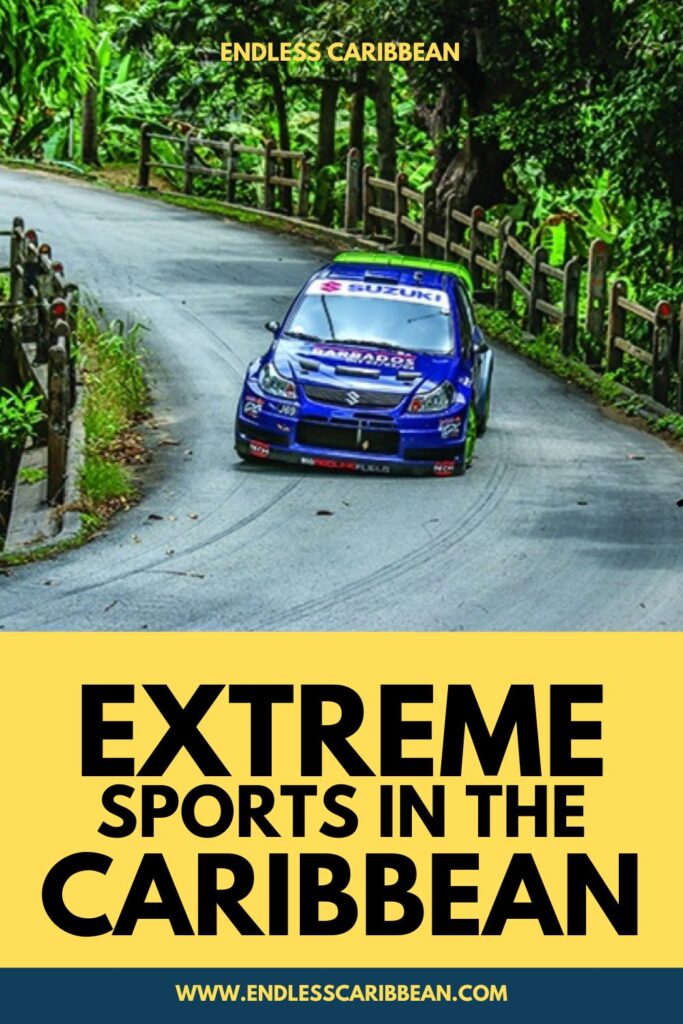
Rallying
Rallying in the Caribbean combines high-speed driving on varied surfaces—paved coastal roads, narrow mountain passes, and compacted dirt tracks. Drivers and co-drivers rely on precise pace notes, suspension setups tuned for mixed surfaces, and tires chosen for grip on sand, gravel, or wet asphalt. Popular events and private rally routes appear on islands with road networks and elevation changes. Competitors often use modified compact cars with roll cages, rally suspension, and upgraded brakes.
Rallying requires a specific skill focus that includes advanced car control, left-foot braking, and reading traction changes fast. Drivers and navigators must wear helmets that meet Snell or FIA standards and HANS devices. Cars must be equipped with a fire extinguisher and fitted harnesses. Organizers also require vehicle inspections, local permits for overseas drivers and insurance.
Spectator safety is also very important, and organizers take steps to ensure that no one gets hurt. There are clearly marked zones and marshals are in place to that these zones remain clear. Attendees should follow the directions of marshals and avoid standing on the outside of blind corners.
Land Yachting
Land yachting or land sailing exploits steady trade winds to propel wheeled sails across beaches, salt flats, or wide coastal strips. The design ranges from single-seat speed craft to two-seat recreational rigs. Lac Bay in Bonaire and long flat beaches in Aruba and Barbados offer consistent wind windows and smooth surfaces that suit beginners and experienced pilots.
Participants should wear helmets, gloves, and eye protection, and newcomers start with supervised lessons that cover sail trim, steering mechanics, and emergency downwind stops. Rigs have wind ranges; operators typically set maximum wind limits for safety. Land yachting pairs well with kite-boarding experience because both require wind-reading skills and sail-handling. Those who kite often adapt quickly to land rigs.
Rock Climbing
Rock climbing in the Caribbean includes single-pitch sport routes, multi-pitch trad lines, and bouldering on coastal limestone and volcanic cliffs. Notable areas offer bolted sport routes on solid limestone and sea cliffs where tidal timing matters. Climbers need harnesses, dynamic ropes, quickdraws, and helmets; trad climbers add cams and nuts. Top-rope access via anchored belays suits beginners, whilst advanced climbers tackle lead climbing and multi-pitch descent techniques.
The environment plays a major role in rock climbing. Salt spray accelerates gear corrosion, so rinse hardware after sea-facing climbs. Local guides can provide beta on route condition, anchor quality, and descent paths. Your guide should check tide charts and rock stability before committing to sea-level approaches. Climbers must follow leave-no-trace practices to preserve fragile cliff ecosystems, especially those close to the sea.
Canyoning
Canyoning (also called canyoneering) takes participants through steep gorges, rappels down waterfalls, and swims in plunge pools. Dominica and parts of Puerto Rico offer classic canyoning with high-volume water flows and vertical drops. Groups typically use helmets, harnesses, static or half ropes for single- and multi-pitch abseils, and wet suits where water is cold or currents are strong.
When canyoning, you should be knowledgeable about rope management, controlled rappelling, and pool-to-pool route finding. Cayoning guides should assess water level, seasonal rainfall, and upstream hazards before embarking on the climb. Rescue planning is essential and emergency backpacks should contain throw lines, a knife for rope entanglement, and a means of emergency extraction. Canyoning can overlap with caving when routes enter subterranean gorges. If you are interested in training for this extreme sport, you should focus on ropework and confined-space movement.
Parkour and Free Running
Parkour and free running consist of urban and natural obstacle navigation. Runners complete vaults, precision jumps, and controlled landings on surfaces ranging from harbor seawalls to abandoned sugar-mill ruins. Practitioners focus on core strength, ankle stability, and plyometrics to reduce impact forces. To warm-up, remember to emphasize wrist and ankle mobility, progressive skill drills, and landing technique to protect joints.
When doing parkour and free running in the Caribbean, pay attention to the desired site. Choose clean, stable structures free from loose masonry and sharp rebar. Local regulations may restrict activity in historic sites, so you will have to obtain permission when required. Runners should use protective tape, low-profile shoes with good grip, and practice falls on padded surfaces before moving to harder urban features. Parkour complements hang-gliding and other aerial sports by improving spatial awareness and body control during dynamic entries and exits.
Mountain Biking
Mountain biking in the Caribbean spans technical singletrack through rainforest root systems, rocky descents on volcanic slopes, and fast coastal trail rides. Islands with elevation change—Montserrat, Dominica, and Puerto Rico—offer varied terrain: steep climbs, bermed switchbacks, and rock gardens. Bikes require appropriate setups such as dropper posts for steep drops, tires tuned for mixed mud and rock, and hydraulic disc brakes.
Riders must respect water crossings and avoid fragile trail sections after heavy rain to prevent erosion. Protective kits should include a full-face helmet for downhill runs, knee pads, and a tool kit with spare tubes and a multi-tool. Guided tours often combine trail knowledge with shuttle services to maximize descent time. Cross-training in white-water rafting or canyoning can help to develop grip endurance and comfort on wet technical lines.
Off-Roading
Off-roading in the Caribbean offers thrilling adventures for outdoor enthusiasts.
Popular destinations like Puerto Rico, the Dominican Republic, and Jamaica offer guided ATV tours that take riders through scenic trails, hidden beaches, and remote villages, allowing them to explore parts of the islands that are otherwise inaccessible.
Off-roading is an exciting and adventurous activity, but it also comes with its own set of risks. To ensure a safe and enjoyable experience, following proper safety guidelines is crucial. You should wear protective gear, inspect your vehicle, stay on designated trails, drive at safe speeds and use the buddy system.
Land Sports Safety
Land sports safety centers on risk reduction through equipment, training, and environmental awareness. Mandatory items across activities include helmets rated to applicable standards, communication devices (VHF or satellite messenger in remote areas), and first-aid kits with trauma supplies. Organizers should check weather and tidal forecasts, confirm emergency access routes, and maintain rescue plans specific to each terrain.
Training, especially certified instruction for high-risk skills (rappelling, lead-climbing, vehicle rallying) significantly reduces incident rates. Gear should be maintained and inspected after each use. At the minimum, rinse and inspect gear after salt exposure, replace worn ropes and webbing per manufacturer life limits. Local regulations often require permits, liability waivers, and proof of insurance for commercial operations. Please verify these before booking.
Aerial and Cliffside Thrills
This section covers high-altitude and cliff-based activities that combine height, scenery, and technical skill. It highlights typical locations, what participants need to bring, and the primary risks and safety controls to reduce those risks.
Paragliding
Paragliding flights in the Caribbean often launch from coastal ridges and limestone bluffs that create reliable lift and dramatic views. Operators commonly run tandem flights for first-timers where pilots handle takeoff, steering, and landing, while passengers enjoy panoramic views of reefs, cays, and shorelines. Typical flight durations range from 15 to 40 minutes depending on wind and thermals.
Participants should wear closed-toe shoes, long shorts or pants, and a windproof jacket. Reputable schools require a pre-flight briefing, weight limits, and functioning helmets and harnesses. Book with operators that maintain certified gliders, perform daily pre-flight checks, and carry radios for weather updates.
Skydiving Experiences
Tandem skydives give non‑jumpers, controlled exposure to freefall and canopy flight with a certified instructor attached. Common drop zones in the region operate from 10,000 to 14,000 feet and freefall times typically last 30–60 seconds before the instructor deploys the parachute. Many centers offer photo or video packages recorded by a second jumper or helmet camera.
Medical screening and minimum age/weight rules apply for skydiving. Skydiving centers must keep aircraft maintenance logs, instructor credentials, and reserve parachutes. The weather is critical to skydiving experiences, and cancellations are possible. Weather events such as wind shear, low clouds, or storm cells can stop operations. Travelers should confirm manifest limits, arrival times, and whether manual or automatic activation devices (AADs) are fitted to reserve chutes.
Cave Diving and Exploration
Cave diving in the Caribbean focuses on submerged blue holes, flooded passages, and cavern systems with high visibility but complex overhead environments. Trained cave divers use redundant gas systems, reels, and guideline protocols to manage navigation and emergencies. Popular technical sites require full cave certification and prior experience in overhead environments.
Divers must plan gas mixes, bottom times, and bailout options before entering. Surface support, dive plans filed ashore, and reliable lighting are mandatory. Non‑technical cavern tours exist near entrances but strictly limit penetration depth and require guide supervision. When cave diving, prioritize your safety and do not attempt any penetration without proper training and equipment.
Bungee Jumping
Bungee jumping in the Caribbean occurs at bridges, cranes, or purpose-built platforms, often with coastal or forest backdrops. Jumps typically use single or double‑leg harnesses and dynamic cords sized to jumper weight. Operators perform a thorough harness fit and measure jumper weight to calculate cord length and rebound profile.
Participants should disclose medical conditions—cardiac issues, recent surgeries, or pregnancy usually disqualify a jumper. Reputable operators maintain inspection logs for cords and anchor points, use double safety systems for harness attachment, and provide a ground briefing. When you sign up for a bungee jumping experience, you will have to sign a waiver and watch a safety demonstration before jumping.
Cliff Jumping
Cliff jumping in the Caribbean takes place on informal coastal spots where locals congregate to supervised tourist platforms with known depth and entry zones. Jumpers should check depths by boat or line, scan for submerged rocks, and time jumps with tidal conditions. Popular cliff sites often have designated entry points and local guides who know the safe routes to shore.
Jumpers should enter feet first, keep arms tight to the body, and avoid flips unless trained. To protect feet on rocky approaches, wear water shoes. When visiting popular islands, consult local operators about legal access and restrictions. Some sites close seasonally for nesting birds or hazardous swell conditions.
Aerial Sports Safety
Aerial and cliffside activities share safety fundamentals – certified operators, equipment inspection, clear weather minima, and emergency plans. Operators should display certification from relevant national or international bodies and maintain written maintenance and training records. Participants must understand weight limits, disclose medical conditions, and follow briefings without exception.
Emergency preparedness includes on-site first aid, rescue boats for water incidents, and radios or satellite communication for remote sites. Insurance that covers aerial sports and evacuation is advisable and travelers should verify coverage limits and exclusions before booking.
Eco-Friendly and Sustainable Adventure Options
It is possible to participate in eco-friendly extreme sport and sustainable adventures. Participants who pursue high-adrenaline activities should also be mindful of how they can minimize environmental impact, support local communities, and protect delicate coastal and inland habitats.
Eco Tours and Nature Adventures
One way to do this is to choose eco-certified guides and small-group outings that minimize trail and wildlife disturbance. Look for operators with written conservation policies, local hiring practices, and clear limits on group size. Groups of no more than 8–12 participants for sensitive sites are recommended.
Some recommended activities include guided waterfall canyons in Dominica, mangrove kayaking in Los Haitises, and low-impact birding treks. Each activity includes a pre-brief on “leave no trace” rules and a plan for litter retrieval. Travelers should verify guides carry reusable hydration systems and portable waste kits.
When booking, confirm operator accreditation, ask about visitor caps and revenue-sharing with communities, and prioritize tours that fund habitat restoration projects. For listings of vetted options and eco-adventure ideas, consult regional eco-tourism guides like the Caribbean Eco Adventure Guide.
Protecting Marine and Land Ecosystems
Another option is to avoid motorized reef tours and choose engine-free options. Sailing, pedal or silent electric boats, and kayak trips can reduce noise and fuel pollution. For water based extreme sports, use reef-safe sunscreen, secure camera straps, and buoyancy control to prevent coral contact.
On land, hikers stay on marked trails, wear soft-soled shoes to reduce trail erosion, and avoid picking plants or disturbing nesting areas. When visiting tidal flats or mangroves, follow established boardwalks and maintain a 2–3 meter distance from wildlife where possible.
Specific practices to check before booking:
- Reef-safe sunscreen policy and gear-cleaning stations.
- Equipment maintenance procedures to prevent fuel or oil leaks.
- Waste management plans, including pack-in/pack-out or composting systems.
Best Practices for Responsible Travel
Some best practices for responsible travel include packing intentionally, using reef-safe sunscreen, a refillable water bottle, biodegradable soap, and a lightweight trash kit. Single-use plastics may be replaced by reusable cutlery and zip packs can carry out waste when local disposal is limited.
Respect for local communities matters. Book locally owned lodges or community-run homestays, dine at restaurants sourcing local produce, and tip guides fairly. Travelers should verify accommodations’ renewable energy use, water conservation measures, and staff training in sustainable operations.
Before joining any extreme-activity operator, travelers should confirm emergency plans, environmental codes of conduct, and transparent pricing that includes conservation fees when applicable. These steps reduce ecological footprint and ensure the adventure supports long-term preservation of Caribbean landscapes and waters.
Frequently Asked Questions
Are you trying to find destinations for extreme sports in the Caribbean? Find out where to go for specific adrenaline sports, safety and permit requirements, seasonal timing to reduce storm risk, and what gear and insurance travelers should arrange before booking.
Which Caribbean islands are best for adrenaline activities like kitesurfing, cliff jumping, and canyoning?
Aruba and Bonaire rank high for wind-driven sports; Aruba’s constant trade winds and beaches like Fisherman’s Huts attract kitesurfers. Bonaire’s Lac Bay is noted for windsurfing and flat-water learning conditions.
The Dominican Republic and Jamaica offer reliable cliff-jumping and waterfall circuits; the 27 Waterfalls of Damajagua in the Dominican Republic is a well-known cliff-jump route. Dominica stands out for canyoning and waterfall abseils because of its rugged interior and frequent guided canyoning trips.
St. Lucia and Antigua provide aerial options such as paragliding and skydiving, with St. Lucia offering dramatic views near the Pitons. For diving and technical underwater entry points, Belize’s Great Blue Hole and Puerto Rico’s Río Camuy caves are primary destinations.
Which Caribbean island is safest for adventure travelers and why?
Barbados and Curaçao often rank as safer picks due to developed tourism infrastructure and easily reachable medical facilities. Both islands maintain numerous licensed operators and established emergency-response access for common adventure sites.
Smaller islands with remote terrain, like Dominica and Montserrat, present higher logistical risk despite strong guiding services; travelers should plan evacuation routes and check hospital access beforehand. Choosing licensed guides and operators with local emergency plans significantly reduces risk on any island.
What are the top extreme sports you can do in the Caribbean, and where can you do each one?
Kitesurfing: Aruba (Boca Grandi, Fisherman’s Huts) and Cabarete, Dominican Republic.
Windsurfing: Bonaire’s Lac Bay and several spots on Barbados.
Scuba diving and blue-hole dives: Belize’s Great Blue Hole and off the coast of the Bahamas.
Cliff jumping and waterfall runs: Dominican Republic’s 27 Waterfalls and various coastal cliffs in Jamaica.
Canyoning and waterfall abseils: Dominica’s interior rivers and waterfall systems.
Zip-lining and canopy tours: Jamaica and Puerto Rico.
Paragliding and skydiving: St. Lucia (near the Pitons) and Antigua.
ATV and off-road adventures: Curaçao and many Dominican Republic excursion operators.
When is the best time of year to plan an extreme-sports trip to the Caribbean to avoid storms and rough seas?
Travelers should aim for the dry season, roughly December through April, to minimize storm and hurricane risk. Peak hurricane season runs from June to November, with highest storm probability between August and October.
Sea conditions can still be rough during transitional months; operators sometimes cancel water-based activities when swells exceed safe limits. Confirm cancellation policies and local sea-state forecasts before finalizing bookings.
What permits, certifications, or experience levels are typically required for popular Caribbean extreme-sport operators?
Scuba diving: Open Water certification is required for most guided reef dives; advanced certifications and experience are needed for technical dives such as the Great Blue Hole. Operators will check certification cards and logbooks.
Kitesurfing and windsurfing: Beginner lessons require no prior certification, but reputable schools use staged progressions and instructor supervision. Advanced wave or freestyle sessions expect demonstrable experience.
Skydiving and paragliding: Tandem jumps allow first-timers but require medical screening and weight limits; solo operations require relevant licensing from recognized national or international bodies. Canyoning and canyon abseil routes generally require guide-led groups and basic fitness plus willingness to follow route-specific training.
What essential safety gear and travel insurance coverage should you have for extreme sports in the Caribbean?
Carry sport-appropriate protective gear: helmets for canyoning and zip-lining, impact vests for certain water sports, and a properly fitted life jacket for boating or jet-based activities. Use well-maintained harnesses, certified shackle systems, and shoes with good grip for land-based adventures.
Buy travel insurance that covers emergency evacuation, helicopter rescue, and medical treatment for adventure sports. Verify policy language for exclusions related to specific activities and minimum certification requirements. Keep digital and hard copies of insurance and certification documents while traveling.
How do the Caribbean destinations compare for risk, emergency access, and overall safety for adventure activities?
Larger, tourism-focused islands (Barbados, Aruba, Curaçao) generally offer faster emergency response times and clearer operator regulations. These destinations combine reliable transport links with hospitals that handle tourist injuries.
Remote islands with rugged landscapes (Dominica, Montserrat) provide exceptional adventure terrain but slower emergency access and fewer nearby medical facilities. Operators on those islands often include comprehensive emergency plans; travelers should confirm response times and evacuation methods before booking.
Image: The Barbados Rally Club