



New York, New York — The Strait of Hormuz, a major shipping route connecting the Persian Gulf and the Gulf of Oman, reached a virtual stalemate due to airstrikes on Iran by the United States and Israel at the end of last month.
One of the most important conduits for global energy markets, the strait handles nearly 20% of the world’s oil supplies and 20% of the world’s liquefied natural gas.
As oil prices continue to soar at a breakneck pace and the war shows no sign of ending, some countries are scrambling to find new sources of supply outside the Gulf, including the Caspian countries, Scandinavia, North Africa and even Latin America.
Some Latin American oil-producing countries, such as Brazil, may prosper from increased exports, while others that are not oil-producing countries may struggle to compete for energy in an increasingly expensive market.
Brazil, Guayana could benefit most from oil sector
Brazil, the region’s largest oil producer with about 4 million barrels a day, already exports more than 3 million barrels a day and has limited capacity to increase in the near term. However, the country’s energy expansion plan could see production rise to more than 4.4 BPD in the coming years.
Brazil could benefit from oil exports, especially as many countries in Asia struggle to make up for supply shortages.
Shell Brasil President Cristiano Pinto da Costa said the U.S.-Israel-Iran dispute was a “tremendous opportunity” for Brazil to attract investment, citing the country’s geopolitical stability and credibility as a producer.

Shares of state-owned oil company Petrobras soared on Monday following the strike.
For Brazil, it’s less about increasing production and more about redirecting barrels from the U.S. to higher-paying Asian markets, according to Matt Smith, senior oil analyst for the Americas at commodity intelligence firm Kpler. This is something we were already doing before the strike.
“We’re seeing Brazil already doing tremendously well in terms of production, basically at record levels,” Smith said. Latin America Report. “So what we see is those barrels being moved from other countries to Asia.”
He pointed out that market changes were underway even before the war, with more than half of Brazil’s oil exports going to China and exports to India increasing.
Diego Rivera Rivota, an energy researcher at Columbia University’s Center for Global Energy Policy, cautioned, however, that this may not be a positive thing for Brazil.
He said any benefit in a crisis is likely to be temporary. “I think any book is useful in a crisis, but can (Brazil) compete with the huge volumes of volume that are flowing through Hormuz and into the Asia-Pacific? I don’t think so.”
Petrobras could benefit from a windfall from the crisis, but the macroeconomic situation is more complex.
nation Brazil’s transportation is mainly truck-based and its agricultural hub relies heavily on imported fertilizers linked to natural gas prices, so food costs could rise, the report said.
“Perhaps the balance sheets of Petrobras and other companies will seem heavier, but the balance sheets of some food distributors, supermarkets or other companies will not feel the same way. It is very difficult to balance that as a society,” Rivera said. Latin America Report.
Another South American country, small but oil-rich Guayana, could also benefit from closing the strait.
Oil production is growing rapidly, and new crude oil flows are starting to come online and enter Asian markets.
“We are starting to see some of these barrels heading to Asia as we have seen Guyana continue to increase production as they add new crude oil flows,” Smith said. “These developments will certainly attract more Guyanese barrels to Asia.”

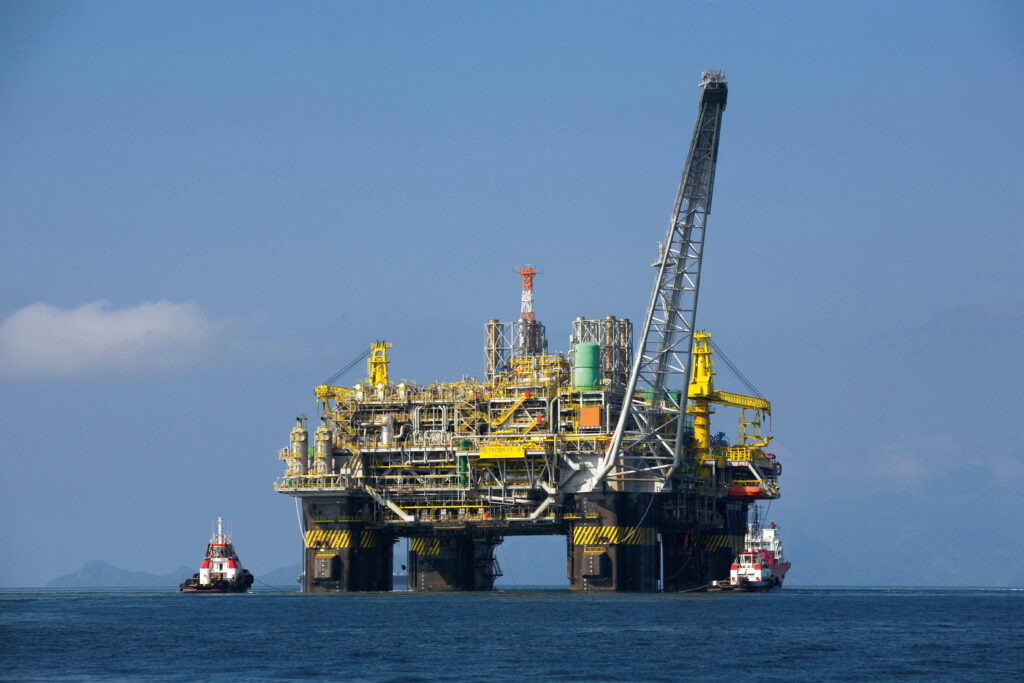
venezuela problem
Venezuela, which has the world’s largest proven oil reserves, naturally rises in the context of the global energy crisis.
But crumbling infrastructure means the country is currently producing only a fraction of its potential, about 1.2 million barrels per day. Nonetheless, rising prices can bring significant revenue to the country.
Alejandro Grisanti, Director of Ecoanalytics, said: nation Venezuela will receive approximately $400 million for every additional dollar in the average price of crude oil.
The U.S. kidnapping of President Nicolas Maduro on January 3 and the appointment of Acting President Delcy Rodriguez have raised questions about how much control the U.S. has over Venezuela’s oil flows.
Prior to the intervention, Venezuelan crude oil was reportedly flowing into China primarily through authorized shadow fleets. Since January, flows to the United States have increased significantly under supply agreements involving traders such as Vitol and Trafigura.
Smith described a potential tug-of-war between the U.S. and China over Venezuelan barrels.
“In recent months, we’ve seen that most of the Venezuelan crude that previously went to China is now heading to or starting to come into the United States,” Smith said. “You have these trading companies that basically don’t discern who they’re selling their crude oil to. So if China comes back into the market and they’re willing to pay the most, they’ll head in that direction. But if flows back to China start to increase on a large scale, there may be some reaction in the U.S.”
Rivera approached this scenario with more skepticism, saying it would be “very difficult” for trading companies to sell Venezuelan oil to China without “the approval or blessing of the U.S. administration for the specific case of Venezuela.”
Consumers take a hit
Elsewhere in Latin America, costs for consumers could rise if wars do not ease in countries importing oil products.
Rising liquefied natural gas prices may also cause inflation. This is especially true in countries like Brazil where goods are primarily transported by truck rather than rail.
With so much food, goods and manufactured goods moving by road, rising fuel prices will have a ripple effect across consumer goods. Rivers warns that if sustained, the shock could “mean a lot of inflationary pressures.”
Chile is particularly vulnerable. “We are a major importer in the region, importing the majority of our consumption of both crude oil and petroleum products,” Rivera explained.


Just hours after the first U.S. strike, the Chilean peso fell about 14.8 pesos against the dollar, reaching 886.8 pesos per dollar.
Countries in Central America and the Caribbean face much greater exposure.
“Some of them use petroleum products not only for transportation (of course on a fairly large scale) but also for power generation,” Rivera said. “So they’re kind of experiencing a double whammy of price pressure.”
He pointed out that while some of these countries may be protected by long-term contracts, many others, such as Jamaica, the Dominican Republic and Nicaragua, rely heavily on the spot market and would therefore be immediately exposed.
Experts said the extent to which Latin American countries will feel the impact of the Middle East war will depend on how this war unfolds and how long it lasts.
Rivera said the crisis had left the world in an “unprecedented” scenario and a “nightmare” situation. He warned that if the conflict continues, the world could face “a massive energy crisis the likes of which we have never seen in our lifetime.”
Some major oil and gas producers could benefit from the windfall, but he argues the wider economic consequences, inflation and disruption to major trade outweigh any ‘benefits’.
“The negative implications seem to outweigh any possible victory,” Rivera concluded.
Featured Image: Strait of Hormuz via Wikimedia Commons


