



Annesha Ghoshsports writer



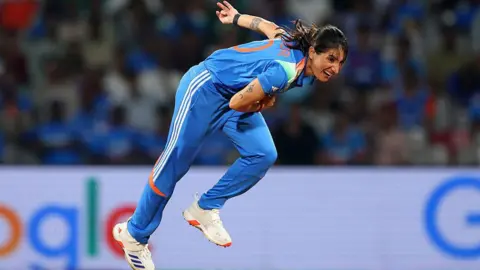
Earlier this week, the Indian women’s cricket team created history by winning their first World Cup, almost 50 years after playing their first international match.
Women fought hard for victory. After three straight defeats in the round robin stage, they overcame external and internal challenges to beat then-undefeated Australia in the semi-finals and a determined South African side in the final.
The grit and determination they show on the field is also reflected in their lives off the field.
Many of the players come from small villages in India and have humble beginnings. They come from a family that had to sacrifice a lot to support their dreams and believed in them when no one else did.
These are women who have made a career out of playing cricket in village alleys with second-hand bats and seamless balls, and many doubt their ambitions because of their gender. Their legacy is a forged one because they kept going when it would have been easier to stop.
Harmanpreet Kaur: Leading from her origins
After the historic win, captain Harmanpreet Kaur ran towards her father Harmandar Singh Bhullar as soon as she saw him. She jumped on him and wrapped her arms and legs around him as he held her. The captain and his daughter celebrated.
Born on March 8, 1989, in the village of Moga, long known as the drug capital of northern Punjab province, Harmanpreet grew up in a family of simple ambitions and unwavering discipline.
Her father, a club cricketer and local court clerk, sold milk from the family’s four buffaloes to support his family. Cricket equipment was often out of reach.
Her first coach, Yadwinder Singh Sodhi, once recalled how she trained using old bats and seamless balls.
Mr. Bhullar ignored his neighbours’ refrain of “ladki ko khilaake kya karoge?” – What do you get from letting your daughter play cricket? He did not argue with his opponents. He just let his daughter, the eldest of three siblings, play.
From the open ground in Moga to the moment she lifted the World Cup trophy at the DY Patil Stadium in Mumbai, Bhullars’ values remained unchanged. It’s about working hard, staying strong, and keeping going.
Amanjot Kaur: Composed under pressure
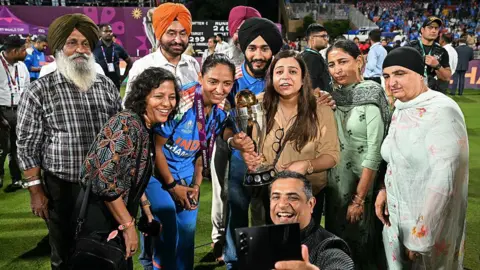
The story of pace bowling all-rounder Amanjot Kaur begins in her father Bhupinder Singh’s woodworking workshop in Punjab. Unable to buy cricket equipment, he carved out some leftover wood and made her first bat himself.
Neighbors questioned why he encouraged the girl to play. He continued to work. She kept playing.
Her influence reached a turning point during the World Cup final. As South Africa settled down in the 10th over, she beat dangerous opening batsman Tazmin Brits with a clean gather-and-throw. Later, with opposition captain Laura Wolvaardt passing 100 and the chase continuing, Kaur steadied herself under a swirling ball deep at midwicket. She juggled it twice and held on. The stadium erupted in cheers at the catch.
The roots of that equanimity are deep. On her India debut in South Africa in January 2023, she scored an unbeaten 41 to lift India from 69th to 5th at 7th. At a press conference after that game (with few other journalists in attendance), she spoke quietly about her father’s years of sacrifice. She didn’t make it up. She acknowledged what made her cricket possible.
Her final catch is replayed. The hands that made her first bat were also part of that moment.
Radha Yadav: From stall to podium
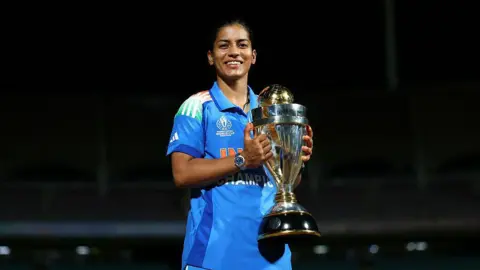
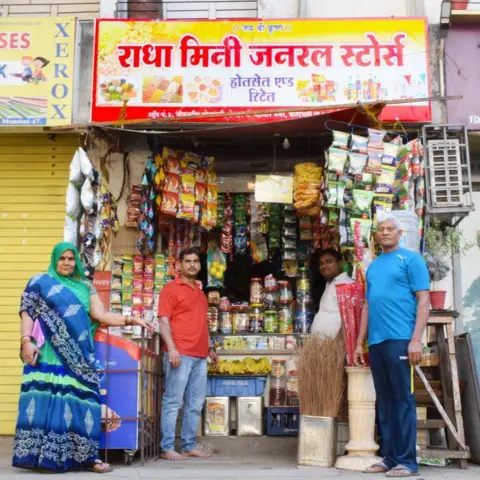
Left-arm spin bowler Radha Yadav’s journey is measured in steps along a lane in Kandivali, a suburb of the western city of Mumbai. After signing her first BCCI contract six years ago, at the age of 19, she bought her family a small grocery store called Radha Mini General Store. It is just a few steps from the stall where her father Omprakash Yadav has been selling milk and vegetables for many years.
The house above the store measures approximately 225 square feet (21 square meters). Space was limited. It wasn’t an ambition. Her older sister Sonee, who played cricket, also gave up the sport so that Radha could continue playing. A family supported a dream and kept it alive.
She was encouraged not to stop, so she moved from narrow lane tennis ball cricket to the highest echelons of the sport.
The morning after India’s World Cup win, a photo went viral. A beaming Omprakash walked beside coach Amol Muzumdar as he took a knee in honor of the team on the field, the World Cup trophy held high above his head.
The passage of time, including streets, stores, family, and faith, is captured in one frame.

Renuka Singh Thakur: Quiet Control
Fast bowler Renuka Singh Thakur lost her father Kehar Singh Thakur in 1999 at the age of three. Her mother Sunita worked as a civil servant to support the family. Although her income was small, her support for her daughter’s dream did not waver.
Thakur initially played cricket in the village alleys and later moved to the Himachal Pradesh Cricket Association’s residential academy in Dharamshala, one of the first residential facilities for female cricketers in the country.
It was a long way from home and training was needed. There were constant moments where I felt unsure. The coaches she worked with reminded her of the sacrifices her mother made to make playing cricket possible.
That awareness is what kept her in the game.
In this World Cup, she overcame a long-term injury layoff to lead India’s new-ball attack. In the final, she shot 8 over for 28 points. There is no release, no excess, no change in discipline. A performance that shaped the match without drawing attention.
It is a spell built on patience, discipline, and memory.
Follow BBC News India Instagram, youtube, X and Facebook.


