



Mexico City, Mexico – The recent departure of major international hotel chains from Cuba was widely reported as a response to tightening U.S. sanctions.
But some analysts question whether the departure of a hotel operator that has been part of the island’s tourism economy for three decades could conveniently clear the playing field for future U.S. investment.
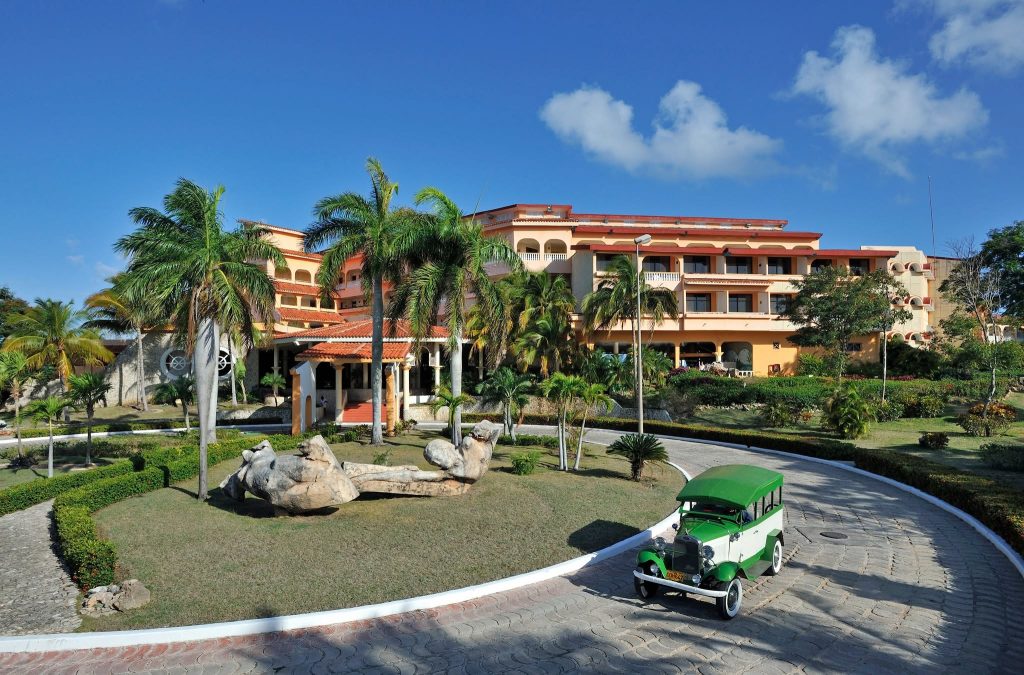
In the past few weeks, hotel brands such as Meliá, Iberostar, Blue Diamond and Archipelago International have pulled out of Cuba. Melia and Iberostar cited “external circumstances beyond their control” and “adaptation to the international regulatory environment” as reasons for their departure.
Cuba’s tourism sector was in decline even before the recent U.S. sanctions, according to Ricardo Torres, a Cuban economist and researcher at American University.
The island attracted just 1.6 million international tourists in 2022 and 2.4 million in 2023, before falling again the following year, failing to recover even half of the 4.2 million visitors recorded in 2019.
ForwardKeys, a European travel analytics consultancy, ranked Cuba last among 28 destinations in the Caribbean for post-pandemic tourism recovery.
Since then, the situation has worsened. Visitor arrivals fell 56% in the first four months of 2026 compared to the same period in 2025, and the exits of four major chains included 42 of the country’s highest-rated hotels. This included the marketing network, brand positioning, and supply chain that made the hotel bookable internationally.
Now GAESA, a business group controlled by the Cuban military, is left to foot the costs of the departed chain.
“Gaviota, the hotel arm of our Cuban partner GAESA, is already weakened by the crisis and sanctions and will have to cover the fixed costs (maintenance, security, electricity) of a facility with virtually no revenue,” Torres said. Latin America Report.
The transactional nature of Trump’s foreign policy
The Trump administration has stepped up pressure on Cuba in recent months, including imposing a near-total blockade of oil flows into the country. This effectively paralyzes an economy that has struggled for years under the Cuban regime and leaves ordinary Cubans with little food or basic resources.
Torres acknowledges that while liquidating the island’s hotel operators is “not a primary goal of the (Trump) administration,” it “could be a convenient byproduct.” Especially considering the “primarily transactional nature” of the administration.
Cuban journalist and political analyst José Manuel González Rubines noted that about a decade ago, the Trump Organization was already exploring the possibility of opening a golf course and luxury hotel on the island.
Businessman Trump also registered his trademark on the island in 2008.
Recently, the mining industry presented a similar example.
Canadian mining giant Sherritt International, which operated nickel and cobalt mines on Moa for decades, has suspended operations on the island due to U.S. sanctions. A few days later, reports emerged that the former Trump adviser was exploring buying Sherritt’s Cuban stake. Associated Press.
González Rubines believes the presence of rare earth minerals in the area may have been a deciding factor, but said, “We don’t know for sure the amount of rare earth minerals in the area and we don’t have reliable information about it.”
A sign of America’s ties to Cuba?
The Trump administration’s official approach to relations with Cuba has been a mix of quiet diplomacy and economic pressure.
CIA Director John Ratcliffe recently traveled to Havana to meet with Cuban officials, and the commander of Southern Command held a rare meeting with senior Cuban military officials around the Guantanamo Bay military base.
At the same time, Secretary of State Marco Rubio announced sanctions against Cuban state oil company CUPET and the family of President Miguel Diaz-Canel.
But a recent meeting between Raúl Guillermo Rodríguez Castro, Raúl Castro’s grandson, and Vic Mellor, a Trump ally and Republican congressional candidate from Rhode Island, has some members of the Cuban-American community hoping that Cuba’s political opening may be closer than some think.
Mellor said telemundo Rodriguez Castro is “completely open” to talks with Trump and willing to “let Trump lead.”
Mellor said he traveled as a private citizen and congressional candidate, not as a representative of the U.S. government, and that the White House did not contact him about the meeting.
Nonetheless, he was invited to return to Cuba for further talks.
What will happen to Cuba’s tourism sector?
“Tourism (in Cuba) never recovered after the pandemic,” said a Cuban hotel executive with more than 20 years of experience. Latin America Report. He requested anonymity for fear of retaliation.
He said that in addition to sanctions, GAESA’s financial mismanagement and systematic mismanagement had sunk the island’s tourism industry.
“GAESA owes these chains a lot of money. Many Spanish hotel advisors have left the island without being paid,” he said. “There was no food, there was nothing in the hotel.” (Latin America Report We cannot independently verify these claims.)
The Cuban government has floated the idea of allowing Cubans living abroad to invest in the island’s hospitality sector as a means of reviving the industry. González Rubines dismissed the plan as “unworkable.”
The obstacle is not capital or interest. There is no legal guarantee.
As reported in March, the Cuban government had no choice but to appeal to the Spanish government for help after accumulating at least 300 million euros in debt to Spanish companies, leaving them unable to rely on the island.
“Which independent agency would you like to file a complaint with?” González Rubines spoke wittily about the legal pathways for foreign companies on the island.
Featured image source: Iberostar Cuba Hotels & Resorts







