



index
In 2016, Joel Monegro introduced the idea of “Fat Protocols,” which states that value in a blockchain ecosystem is primarily accumulated at the protocol layer, rather than the application layer.
Essentially, most of the value goes to native tokens used for transactions, such as ETH and BNB, rather than dApp tokens like $CAKE and $UNI. The more decentralized applications (dApps) built on these platforms, the greater the network effect and demand for the protocol’s native token.
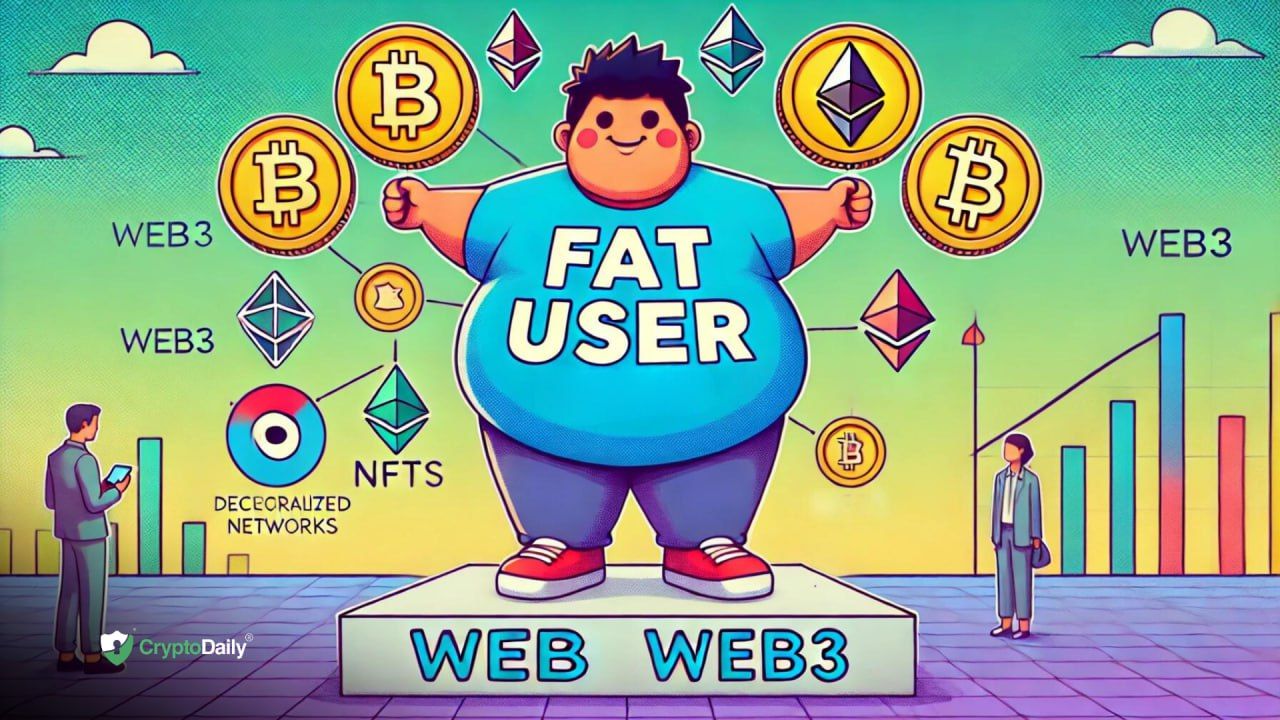
This will drive value. This is in contrast to the traditional Internet model, where companies like Facebook capture most of the value while the underlying protocols (e.g. TCP/IP) do not. There are several ideas that counter the Fat Protocol Thesis, one of which was recently Found via this X post. We propose a solution called “Fat User Model”.
The debate over value capture
Despite the persuasiveness of the Fat Protocols theory, critics like Pantera Capital argue that value will be concentrated at the application layer.
They believe that dApps focused on specific use cases can extract significant value by building deep advantages such as liquidity, user experience, and brand loyalty.
But what about the users?
What's interesting is that Fat Protocols and application layer frameworks overlook the most important stakeholder in the Web3 economy: the users.
Isn't the goal of this new financial system to benefit users above all else? But this value capture model doesn't show that.
Web3 needs a new approach to thrive: one that rewards ongoing contributions and redistributes capital to new entrants.
Why the Fat User idea is relevant
This is where the Fat User Thesis comes into play: the current value capture model is a temporary mistake that will correct itself, and Web3 users will capture most of the value going forward.
competition
In a competitive market, value capture is unsustainable, as value capture tends to be lost to competition through the mercenary capital problem that has plagued the crypto industry for years.
The Web3 ecosystem is highly competitive, with forkable open source code and a multitude of L1, L2, and dApps to choose from. No single player can dominate for long, so it is essential that protocols and applications continue to innovate and deliver value to users.
low switching costs
The concept of self-sovereignty and interoperability means that the asset is highly mobile. Any token, liquidity provider (LP) position, or user activity can be easily transferred to another protocol with minimal switching costs.
This mobility further supports the Fat User Thesis by allowing users to choose the platform that provides them with the best value.
Limited network effects
Some might argue that the network effects at the core of Fat Protocol and the application layer are overblown.
With fierce competition and low switching costs, bootstrapping a network has never been easier. New networks gain popularity quickly, lowering the barrier to entry and allowing users to take advantage of the new platform.
Programmable Incentives
Programmable incentives act as switching rewards, creating on-demand network effects for any protocol or dApp. This dynamic creates a more equitable distribution of value, which is perfectly aligned with the core tenets of the Fat User Thesis.
And now, a dApp has emerged that brings all of this together and officially brings the Fat User idea to life.
Nudge believes there is a solution
Web3 needs a catalyst to promote the Fat User Thesis. nudge The team thinks they’ve figured it out. The project will incentivize, or “nudge,” users to reallocate assets, liquidity, and activity by enhancing the protocol and application.
This creates a conversion reward that effectively redistributes value between protocol and dApp users, providing a scalable customer acquisition channel and a robust retention mechanism.
Most nudges are not one-time events, but ongoing incentives that reward reallocation over time and take future users into account.
This approach is similar to advertising budgets, which are recurring costs for off-chain businesses, but with the important difference that these “advertising budgets” directly benefit the end user, rather than an intermediary like Google.
Still in its pre-launch phase, Nudge is expected to revolutionize the on-chain economy by reallocating value to users and ultimately scale the entire ecosystem. By providing programmable incentives to users, Nudge is aligned with the Fat User Thesis and drives a more user-centric Web3 economy.
Fat users are the end game of Web3
The discourse surrounding the Fat User Thesis represents a paradigm shift in the Web3 ecosystem. It advocates a more user-centric approach that prioritizes user needs and contributions by challenging the existing value capture model that primarily favors protocols and applications.
Platforms like Nudge demonstrate how programmable incentives can be used to drive user engagement and ensure fair value distribution. The success of Web3 depends on the ability to empower users, making them the primary beneficiaries of this new financial framework.
By embracing this perspective, the Web3 community can build a thriving, inclusive ecosystem that redefines participation and value in the digital world.
Disclaimer: This article is provided for informational purposes only. It is not provided or intended to be legal, tax, investment, financial or other advice.
Investment Disclaimer


