




index
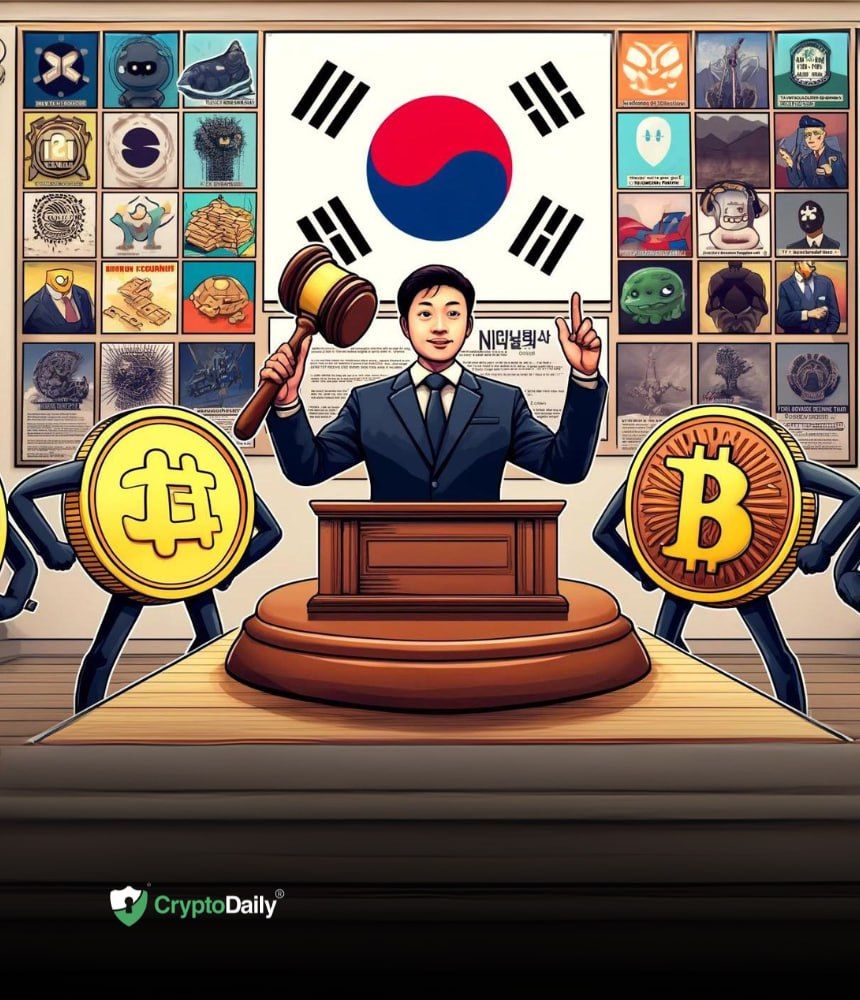
The Financial Services Commission of Korea (FSC) has issued new guidelines to regulate NFTs. Under the new rules, financial regulators will reportedly treat certain NFTs as regular cryptocurrencies.
South Korea's financial regulator has issued new guidelines related to non-fungible tokens (NFTs). According to local reports, the Financial Services Commission (FSC) will consider certain NFTs as regular cryptocurrencies if they no longer have unique characteristics that distinguish them from cryptocurrencies.
Certain NFTs are classified as general cryptocurrencies
On Monday, the FSC published new guidance clarifying how NFTs will be regulated. According to a report by Yonhap News, South Korea's financial regulators will treat certain non-fungible tokens as regular cryptocurrencies if they no longer possess unique characteristics that distinguish them from cryptocurrencies.
This guideline comes ahead of the implementation of Korea's 'Virtual Asset User Protection Act' on the 19th.Day In July.
Under the guidance, regulators may classify NFTs as cryptocurrencies in a regulatory context if:
- When mass produced.
- This is when exchange is possible.
- If you can break it down.
- When used to pay for goods and services
On the other hand, digital tokens that are non-transferable and have little or no economic value are classified as regular NFTs.
FSC stated, “Even though it is in the form of an NFT, if it is actually a virtual asset, the ‘Virtual Asset User Protection Act’ applies.”
NFTs not subject to the Virtual Asset User Protection Act
The FSC's decision to clarify the regulatory technology surrounding NFTs was necessary as the country prepares to implement the 'Virtual Asset User Protection Act'.
According to Yonhap News, NFT refers to tokens with “unique” information that “cannot be replaced” by anything else.
Non-fungible tokens are issued in limited quantities and traded primarily for the purpose of content collection, so they are excluded from the scope of virtual assets subject to new legislation. The quality of NFTs means that the number of holders and secondary transactions is limited.
Jeon Po-seop, manager of the Financial Innovation Planning Department of the Financial Services Commission, explained it this way.
“For example, if 1 million NFTs are issued, there is a possibility that they will be used for payment purposes due to the high transaction volume,” he said.
However, FSC explained that it will manage classification on a case-by-case basis rather than presenting specific issuance volumes as a standard.
Ensure regulatory clarity
The Korean government recognizes the need for absolute regulatory clarity for the digital asset sector and is acting accordingly. In 2023, the FSC has proposed a number of mandates relevant to the industry, including regulations that would force companies to disclose their cryptocurrency holdings.
The country has a seemingly warm approach to blockchain technology, creating a welcoming environment for digital asset investments. Last December, the FSC announced an interest benefit that would mandate digital asset investors earn interest when they deposit their funds on cryptocurrency exchanges. The Bank of Korea (BOK) also plans to leverage the power of blockchain to announce a central bank digital currency (CBDC) pilot program that will begin in the fourth quarter of 2024.
Disclaimer: This article is provided for informational purposes only. It is not provided or intended to be used as legal, tax, investment, financial or other advice.
Investment Disclaimer


