



Caracas, Venezuela — It’s been three weeks since twin earthquakes struck Venezuela, leaving nearly 18,000 people homeless in the worst tragedy in the country’s recent history.
According to data released by National Assembly President Jorge Rodriguez, the disaster left 4,490 people dead and 16,740 injured.
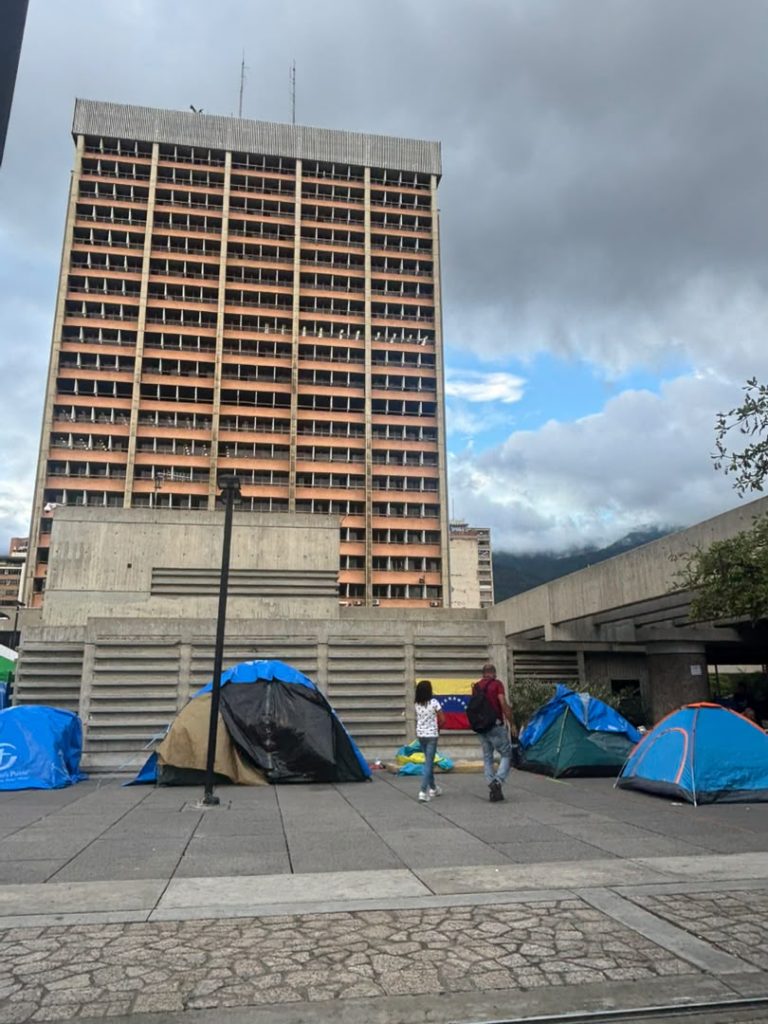
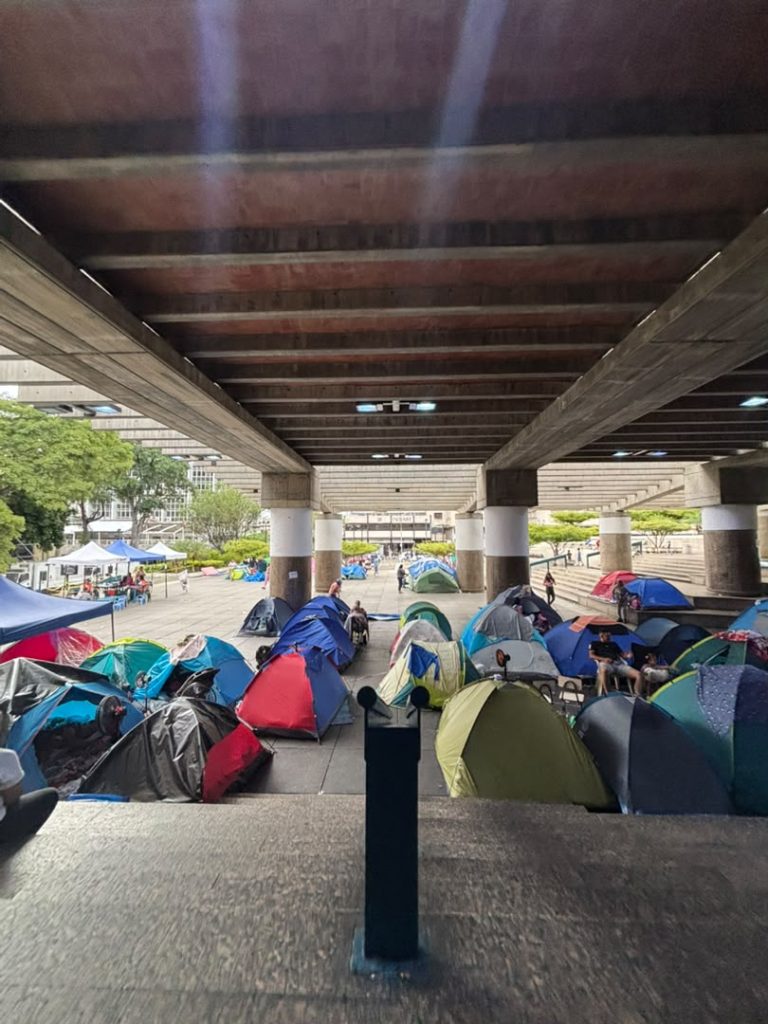
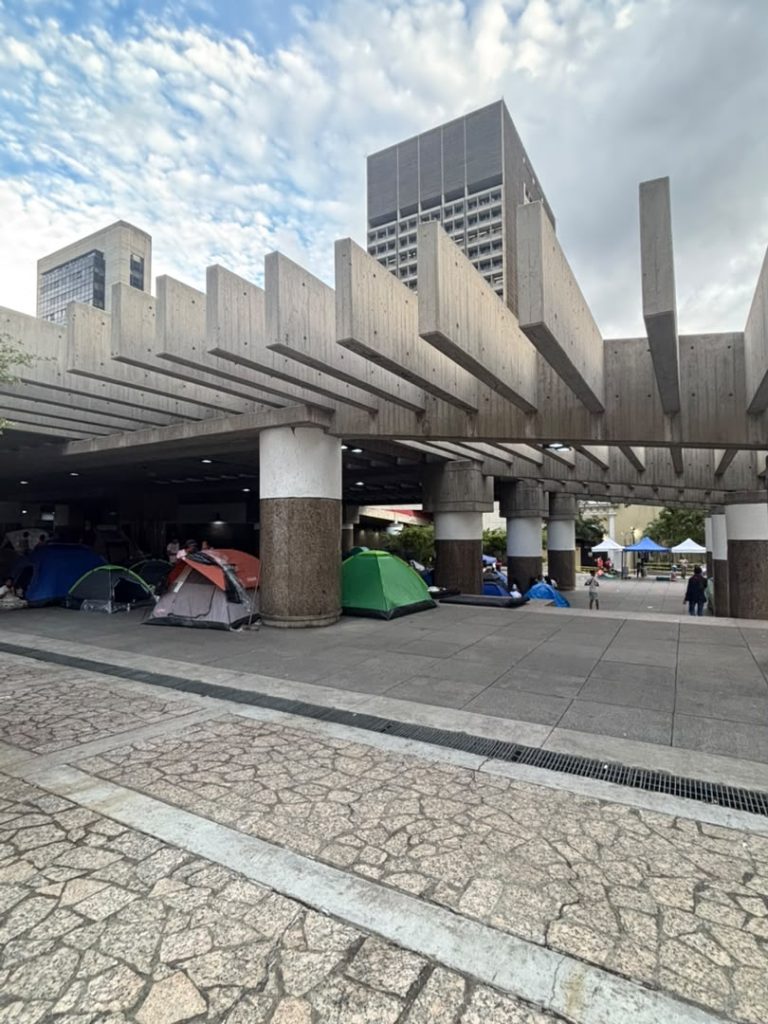
In response to the emergency situation, camps were set up in various areas of the capital Caracas (parks, squares, schools, etc.) to protect residents.
But many people complain that conditions are not ideal and that distribution of aid has been left in the hands of the Venezuelan government, which has been criticized for an inadequate response.
In downtown Caracas, directly across from the Ministry of Education, one of the city’s largest encampments has sprung up in Plaza Juan Pedro López.
The 14,000 square meter property is bustling with activity.
After 6 p.m. on July 6, families begin setting up their tents in preparation for sunset. Some people were lucky enough to spread tarps to keep the rain from soaking the few belongings they had salvaged from their homes, including mattresses.
Children are seen running and playing to escape the dire situation their family finds themselves in. Aid groups in the camp have been organizing activities such as face painting and balloon twirling to engage children.
Many camp residents are unhappy with the situation.

Stefany Hernández, a 52-year-old shop owner, is worried about her water supply. She believes water deliveries are becoming less frequent and authorities’ control of the square is too strict to allow neighbors and organizations to deliver aid directly to the affected people. (NGOs active in this area Latin America Report that there are safety concerns regarding the distribution of aid within the camp).
“We must humiliate ourselves right now. We only give you enough water for two people. What should we drink here?” Hernández said, pointing to a small container.
Poor sanitary conditions and the potential for disease outbreaks are becoming a growing concern for health authorities. Camps often lack adequate toilets, and some residents say they prefer not to use them for fear of getting sick.
“The bathrooms are just horrible,” Hernández said, adding that he prefers to use the bathrooms in the damaged homes instead.
With between 885 and 70,000 structures estimated to be damaged or destroyed, thousands of Venezuelans like Hernández are waiting for inspectors to determine if their homes are safe to return to.
“In my house, there are no cracks in any of the rooms, absolutely nothing, but there are leaks in the basement and they say the foundation has shifted,” she said. Currently, she is waiting for news about her home after packing up all her belongings.
She also lamented that authorities had played a greater role in distributing aid throughout the encampment in recent days. In particular, Hernández said authorities appear to be deciding when and to whom to distribute aid.
“People bring arepas early in the morning and later when it gets cold, the authorities distribute them,” she said. “We are going through a difficult situation, but not to this extent. There is more than one person who is complaining.”
Ruth Herrera, whose home on Urdaneta Avenue was damaged by the quake and who now spends her days on a bench in the square, told Latin America Reports that aid, especially water, is distributed when authorities deem it appropriate.
“I have diabetes, so I have to drink a lot of water,” she said.
“People bring hot food, but we’re not allowed to distribute it here. The authorities tell us to leave the food there, and then they come down at 2, 3, 4 in the morning, and who’s going to eat at those times? Especially the children.”
President Delcy Rodriguez’s government has been criticized for opposing politicization of aid efforts. There are also rumors circulating inside the camp about who is doing the relief work.
That’s what people say. That foreigners are the ones who will help us because Delcy Rodríguez has already surrendered,” Herrera said.
As each day passes, the uncertainty becomes more and more exhausting for the camp residents.
“We want to know what they’re going to do with us. We want them to inspect our building to see if we’re going to leave or if we’re going to relocate somewhere else,” Herrera said.
Stefany Hernández seems to be leaving it to fate. “I am waiting for them to inspect my house and for God to do His will. And if the earthquake does not kill me, I will return home.”
Featured image: An encampment of people displaced by the June 24 Caracas earthquake, Venezuela.
Image credit: Julio Blanca for Latin America Report


