



Mexico City, Mexico – As the FIFA Opening Ceremony began at the Azteca Stadium on Thursday afternoon, similar scenes unfolded on the streets surrounding the stadium.
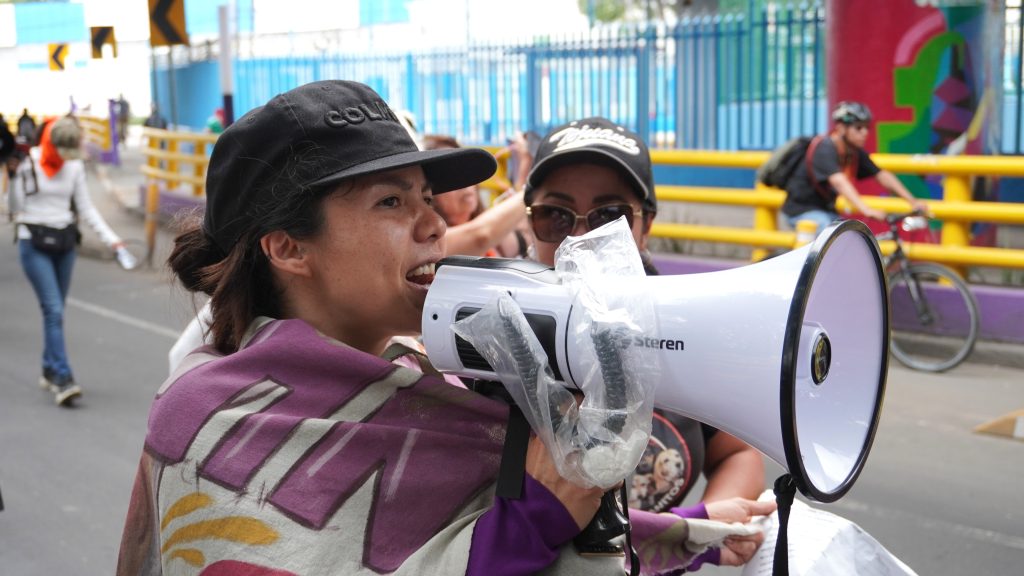
Several social movements have gathered in Mexico City to protest what many social activists are calling the “World Cup of Dispossession.” The tournament was built on the support of Mexico’s poorest citizens, but their most urgent needs were not met.
Among the most prominent groups were the CNTE Teachers’ Union, the Search for Mothers of Missing Persons group, and the parents of 43 Ayotzinapa students (trainee teachers) who forcibly disappeared in 2014.
Protesters gathered mainly near the Azteca Stadium and blocked all major access routes to the stadium and the Zocalo, where a large fan festival was scheduled.
Security forces have deployed what city officials call the “last mile.” A security perimeter has been set up for about a mile around the Estadio Azteca, designed to prevent anyone without a ticket from accessing the stadium. However, in some cases, some protest groups were surrounded by police and blocked from advancing before they even reached the border.

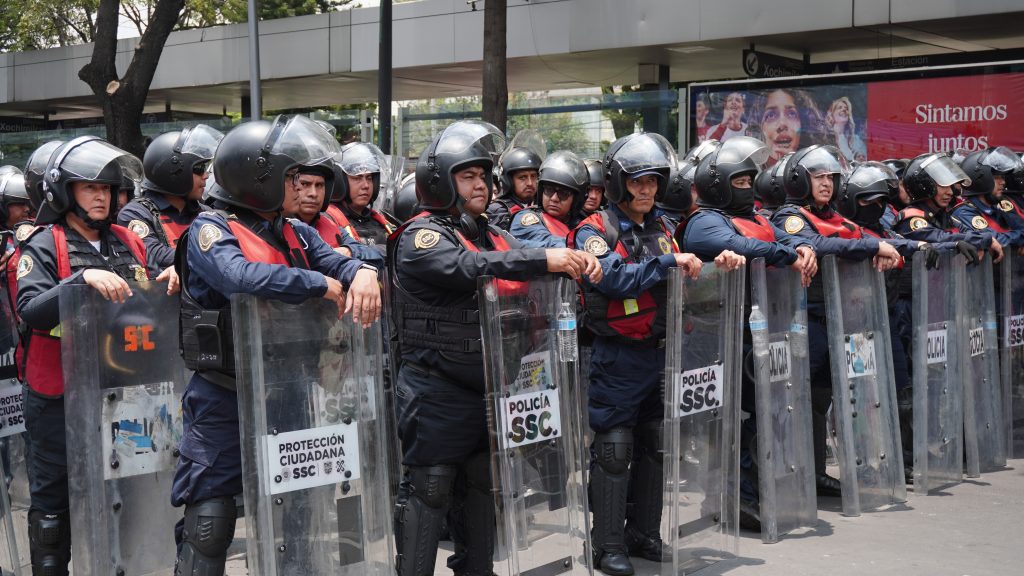
Several protesters were injured in clashes with detained police and journalists during the day, including independent journalist Axel Hernández, who was stopped while walking to the protest and had his equipment searched under the pretext of testing for explosives. “When they found nothing but the posters, they insisted that they arrest us for putting up the posters,” he said. Latin America Report.
Police took Hernández and a colleague 10 kilometers away from their detention point and released them.
Aaron Gardúñez Jiménez, secretary-general of Mexico City’s Office for the Implementation of the Human Rights System, acknowledged that he was monitoring eight to 10 simultaneous protest actions – some peaceful, some “complex” – but insisted that “despite the difficulties, freedom of expression was guaranteed throughout the day.”
Erika, a member of the feminist group “We Exist Because We Resist,” who asked to remain anonymous for security reasons, had a personal reason for marching. Her daughter was murdered in 2023. In her view, the government is not simply failing to accommodate the protesters’ demands, but is actively trying to silence them. “We want her (Sheinbaum) to listen to us, think on our behalf and commit,” she demanded.
Alejandro Gutierrez, a Mexico City secondary school teacher and current CNTE member, said negotiations with the government are progressing but only superficially, with proposals failing to address the union’s core demand: the repeal of the 2007 ISSSTE law reform that handed over pensions to private capital management.
Sheinbaum between the global stage and the streets
President Claudia Sheinbaum navigated the opening day of the World Cup under significant political pressure. She has already announced that she will not attend the opening match and gifted a ticket to a low-income girl. When the Zócalo encampment threatened the fan festival, she admitted there were 18 alternative venues where people could watch for free.
All week her tone was deliberately restrained. Sheinbaum directly addressed the specter of historical repression: “They want us to indulge in repression right before the World Cup. We will not indulge in such provocations. We are not Díaz Ordaz.” The reference is to Gustavo Díaz Ordaz, who ordered the massacre of student protesters in Tratelolco in October 1968 (just days before Mexico City hosted the Olympic Games). As the successor to the left that emerged from these protest movements, the Sheinbaum government knows the implications of any mistake.
World Cup as an Amplifier
The president initially denied that there was social unrest ahead of the tournament, but as the weeks passed, this stance became increasingly untenable. Mexico is already navigating a deteriorating relationship with the United States ahead of July trade talks, political scandals and ongoing security concerns following an outbreak of cartel violence in Guadalajara in February.
The World Cup presents a huge economic opportunity for countries – expected to generate $3 billion in revenue for hotels, restaurants and sports stadiums – while providing a platform for social and political movements to take to the world stage.
With stagnant teacher salaries, decades of impunity for the Ayotzinapa incident and an enforced disappearance crisis that has left more than 100,000 people missing across the country, the stakes at tournaments in Mexico go far beyond full-time scores.
Featured image caption: A protester holds a soccer ball next to riot police.
Featured image credit: Jorge Alfonso.


