



Caracas, Venezuela — Venezuela’s recent approval of a new amnesty law aimed at freeing political prisoners detained by Nicolas Maduro’s government has drawn scrutiny from critics for excluding some prisoners, including soldiers who have rebelled against the government.
Prisoners’ families and human rights groups criticized this law, which was passed by the National Assembly on February 19, saying it was unfair.
“On paper it speaks of peace and reconciliation, but in practice it excludes those who have suffered the greatest political persecution and torture: the soldiers who did not betray their conscience and decided to stand on the side of history and the people,” said Irene Olaso de Caguaripano. Latin America Report.
Her husband, Juan Carlos Caguaripano, was detained in August 2017 after leading a group of 20 people to the Paramacay military base in Valencia province, declaring rebellion against the government and fleeing with a small cache of weapons.
“The soldiers in prison today are not ordinary criminals, but people who have sworn to protect the Constitution, the honor of our military, and our sovereignty,” she said. “Many of them acted not out of ambition for power, but out of conviction, out of conscience, and a refusal to participate in what they considered unjust or unconstitutional.”
Representative Jorge Arreaza said the amnesty law freed about 223 people imprisoned since Maduro’s arrest on January 3 and benefited about 4,534 people who had been placed under house arrest and other restrictions on their freedom.
The lawmaker explained that out of the 8,110 amnesty applications received by authorities, 4,757 cases were fully released. These cases must be resolved within 15 days.
On February 27, Arreaza announced that 31 detained soldiers had been granted conditional release, a surprising move considering ongoing complaints from NGOs and their families. He described this as an “alternative measure” in an effort to achieve coexistence and peace in the country.
Foro Penal, an NGO that tracks political prisoners in the country, counted a total of 568 people, including 182 military political prisoners and 386 civilians, as of February 27.
Torture and human rights violations of prisoners
A 2019 report by Human Rights Watch and Foro Penal found that the Venezuelan government tortured soldiers accused of subversion. The report said the country’s General Directorate of Military Counterintelligence (DGCIM) and Bolivarian National Intelligence Service (SEBIN) subjected prisoners to “severe beatings, asphyxiation and electric shocks.”
For families like Olajo’s, fear for their loved ones remains despite the amnesty law.
“I saw the mothers’ tears and how they broke down,” she said. “We have recently seen how relatives of the so-called ‘Gedeon’ could be seen after months without any trace of them: emaciated, malnourished young men weighing less than 20 kilograms, disoriented, with yellow skin and serious health problems,” she added, referring to the soldiers who took part in Silvercorp USA’s Jordan Goudreau’s failed 2020 attempt to overthrow Maduro.
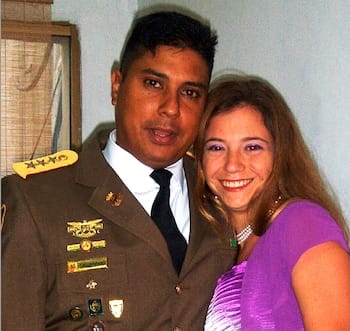
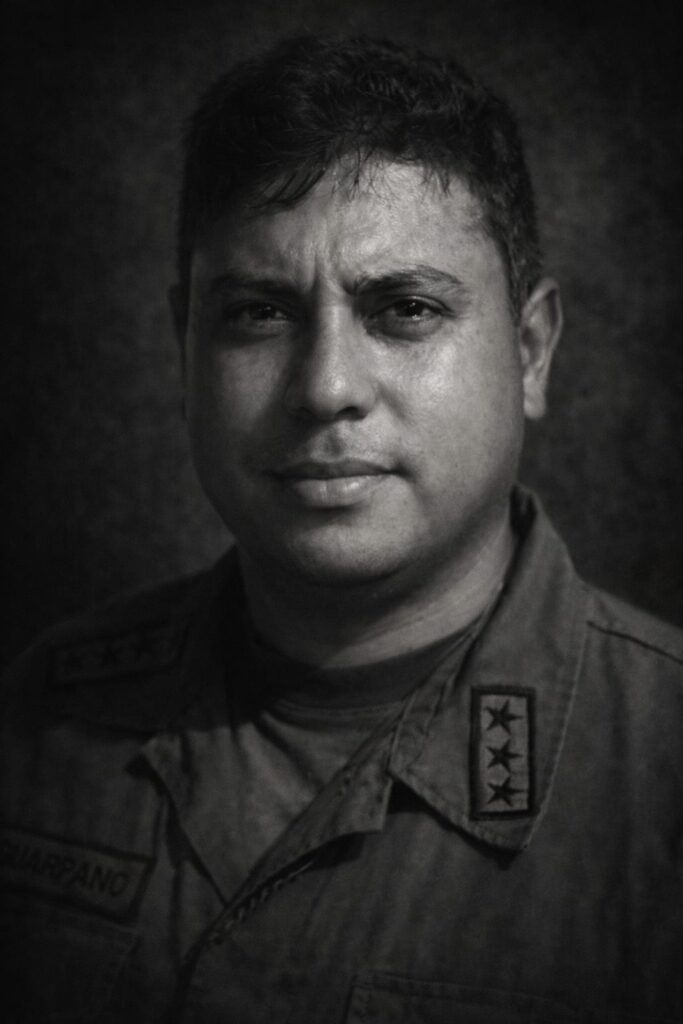
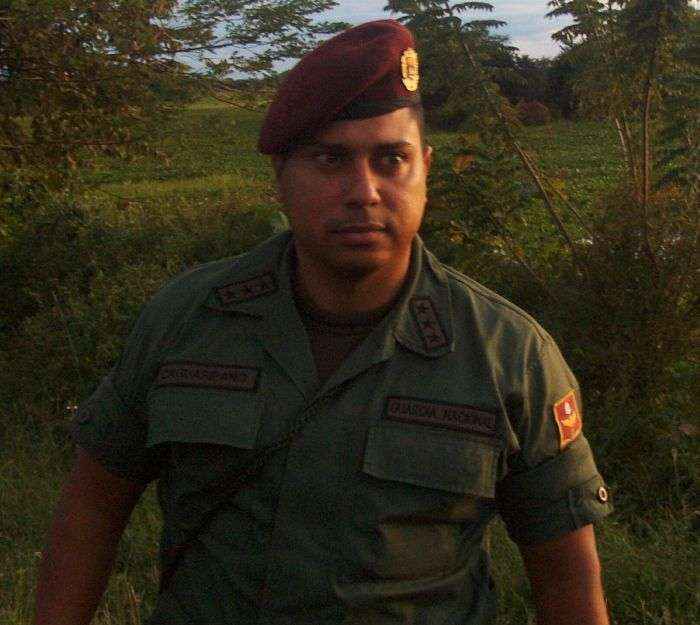
Juan Carlos Caguaripano and his wife Irene Olazo de Caguaripano. Image Credit: Irene Wave
The problem of exiles
Another point of contention about the law surrounds people fleeing Venezuela in exile. Nearly 8 million people have fled Venezuela in recent years, some facing criminal charges in their home countries.
Article 11 of the law obliges courts to dismiss cases and cancel international arrest warrants (e.g. Interpol alerts) against people accused of 13 political incidents mentioned in the law. However, there are significant limitations to influencing key leaders in exile.
The law excludes from amnesty those who “encourage or solicit foreign intervention or sanctions against the republic.”
Critics, especially families of soldiers who have fled the country, want stricter coverage for exiles.
“People who have been forced into exile due to persecution should not be asked to return until it is clearly determined whether amnesty applies to their case,” UN experts said.
“The law allows people abroad to submit applications through overseas lawyers, but how can they assign a lawyer when many countries do not have embassies?” Olajo said. Last February, the United States announced that it would resume diplomatic relations with Venezuela.
What role will amnesty play in Venezuela’s reconciliation after the Maduro regime?
After years of bitter political confrontation, the country may enter a new phase with the possibility of reconciliation between Chavismo supporters and opponents.
But despite years of efforts to reach an agreement between the two sides, no real changes have yet been made.
To achieve this, we will focus on dismantling the repressive apparatus that has persecuted and imprisoned Venezuelans who oppose the Chávez government.
Amnesty serves as an important signal for reconciliation because it allows the Rodriguez government to say it is complying with international demands and allows the opposition to rescue some of its jailed leaders.
But Olajo argues that the selectivity of the amnesty law shows no real interest on the part of the government to achieve full reconciliation.
“You can’t have a history with selective memory,” she said. “True reconciliation cannot have double standards. It is either for everyone or it is not reconciliation.”
“They want us to forgive them for the crimes against humanity, corruption, violent repression and torture committed against the Venezuelan people,” Olazo said, adding, “But who will forgive us for thinking differently?”
Featured Image: Families of political prisoners in Venezuela protest for their release.
Image credit: Julio Blanca





