



Lawmakers introduced provisions authorizing multi-year contracts to purchase the F-15EX Eagle II and F-35 Lightning II, reducing costs and shortening delivery schedules.
The draft 2027 National Defense Authorization (NDAA) released by the House Armed Services Committee (HASC) aims to allow the U.S. military to award multi-year contracts for the F-15EX Eagle II and F-35 Lightning II instead of recurring annual contracts. The proposed provisions will streamline the supply chain to reduce costs, better plan for current and future spare parts requirements and help manufacturers ensure faster delivery.
This provision follows other previous developments in the U.S. Congress that appear to have laid the groundwork for such a procurement pathway. A 2025 Congressional Research Service (CRS) report concluded that this could save the Treasury secretary between 5 and 15 percent.
The service recommended that industry expect higher F-15EX and F-35 production, not seeking additional funding in October 2025 before the 2026 NDAA and ultimately wanting 1,558 combat-coded jets. But the Air Force’s confidential report also acknowledged that the numbers were not feasible due to various constraints related to industry, foreign sales, competing equipment requirements from other services and budgets.
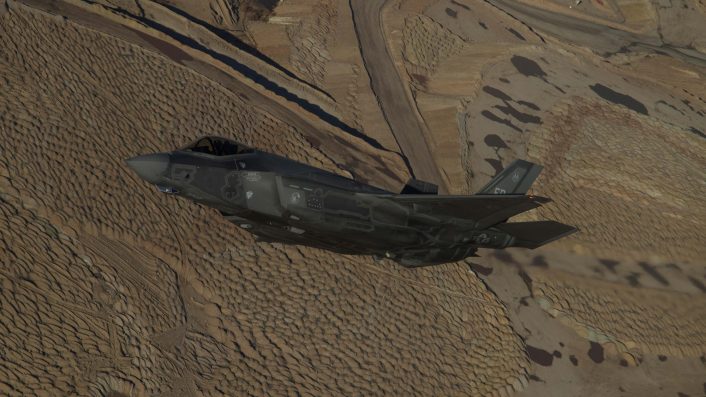
Then, the Air Power Acceleration Act, introduced in April 2025 by Senators Ted Budd (R-N.C.) and Jeanne Shaheen (D-N.H.), proposed multi-year procurements for F-15EX and F-35 jets, among other things. Its highlight was expanding the current known Eagle II order to 329 aircraft and specifically calling for the use of additional airframes to replace the F-15E Strike Eagle in the 2030s.
The draft NDAA now appears to incorporate provisions from these smaller defense bills, the Air Force and CRS report said.
2027 Draft NDAA
As previously mentioned, the proposed NDAA primarily covers the U.S. Air Force fleet’s most advanced Gen. 4.5 and Gen. 5 It deals with fighter aircraft F-15EX Eagle II and F-35. The U.S. Department of Defense purchases large quantities of these aircraft every year.
But manufacturers and governments, such as Boeing for the F-15 and Lockheed Martin for the F-35, can gain several benefits from multi-year contracts of up to five years. This includes potential savings of 5 to 15 percent as large volume purchases force the company to invest more specifically in factories, assembly lines, tooling and manufacturing equipment while securing future orders.
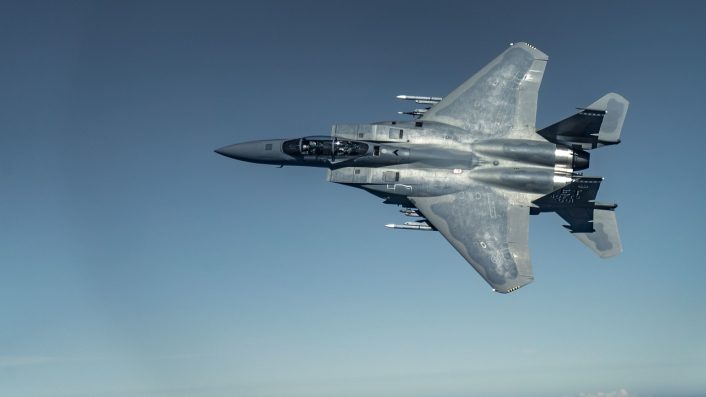
As a result, the draft bill states that more spare parts and components may be ordered further down the supplier supply chain. This benefits both production and maintenance, shortening delivery schedules and improving aircraft availability.
However, the draft 2027 NDAA, which has not yet been signed into law and is awaiting another revision in the first week of June, has several caveats and prerequisites before a multi-year agreement can be signed.
The War Department must first demonstrate to the House and Senate Armed Services Committees that the contract will meet both initial and future spare parts requirements for the jet. This entails the service department conducting a detailed study covering current and future requirements and submitting it to Congress.
Because the multi-year F-15EX and F-35 contracts require the Department of Defense to have the necessary budget for that period, these awards are based on the allocations finally approved in the final NDAA and balance procurement plans with other equipment requirements.

For the F-35, the draft NDAA specifically requires the Department of the Air Force, the Department of Defense, and the F-35 Joint Program Office (JPO) to submit a series of reports to Congress and the Government Accountability Office (GAO). One section requires the Pentagon to provide an update on F-35 recommendations that GAO has made since 2014 and have not yet been addressed.
An uncertainty analysis of future F-35 JPO cost estimates for the F-35, a review of the jet’s sustainment strategy, and a new baseline cost estimate for the Block 4 upgrade are also required. The Pentagon is expected to send a report to lawmakers and GAO on the cost, status and challenges of all critical data rights required for the F-35.
Meanwhile, the F-35 JPO has been asked to report by December 15 on its requirements for the fighter’s Power Thermal Management System (PTMS) modernization efforts required for the Block 4 upgrade.
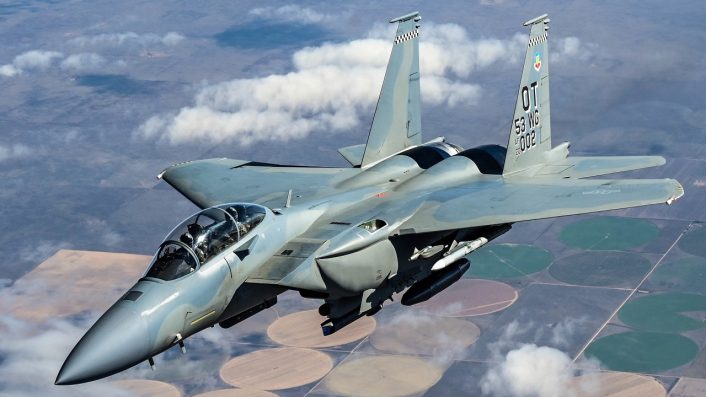
needed for air force
The Air Force recently similarly cited the benefits of multi-year contracts. Air Force and Space Force Magazine Air Force Secretary Troy E. Meink cited May 21 testimony to HASC highlighting the limitations of annual contracts, particularly as they relate to the F-15EX.
“The instability of the (F-15EX) production rate and the unknown future have prevented the contractor (Boeing) from making the investments necessary to prepare and improve the tools. This long-term stability allows the contractor to perform operations that ultimately save the government money and allows us to produce those aircraft faster.”
However, the Air Force is also pursuing other big ticket programs such as the B-21 Raider and F-47 Next Generation Air Supremacy (NGAD), complementing pursuits such as the Cooperative Combat Aircraft (CCA) and larger strategic strike programs such as the Dragon Cart, B-52J and Sentinel ICBM. Funding for this in the 2027 NDAA will determine whether the Air Force can combine multi-year orders for the Eagle II and Lightning II or enter into multi-year contracts.







