



Buenos Aires, Argentina — Marking the 50th anniversary of the Argentine military coup that led to one of the bloodiest dictatorships in South American history, Luis Moreno Ocampo, a former prosecutor at Argentina’s so-called Nuremberg Trials, argues that Argentina offers key lessons for today’s global conflicts. Violence must be met with justice, not war. Otherwise, “it doubles.”
In the 1970s, Argentina suffered from extreme political violence, including an escalation of guerrilla groups and state repression that intensified after the military coup led by General Jorge Rafael Videla in 1976. His military dictatorship implemented an unlawful nationwide campaign of enforced disappearances, torture, and systematic theft of newborns. According to the rights group Plaza de Mayo Grandmothers, about 30,000 people are missing and about 500 babies have been kidnapped from their detained parents.
After the dictatorship fell in 1985, Moreno Ocampo served as deputy prosecutor in the junta trials in which Argentina’s newly democratic government charged its leaders with crimes against humanity.
This landmark trial set a precedent for the development of international criminal justice, which was later reflected in the creation of the International Criminal Court (ICC) in 2002, under which Moreno Ocampo served as chief prosecutor.
In a conversation with Argentina ReportMoreno Ocampo argues that Argentina’s experience is an exceptional case. Argentina has succeeded in combating human rights violations through political agreements that do not rely on the logic of “the enemy,” which implies elimination without guarantees, but instead offer new methods.
“Argentina has shown that it is possible to confront the past with justice, not revenge,” Moreno Ocampo said.
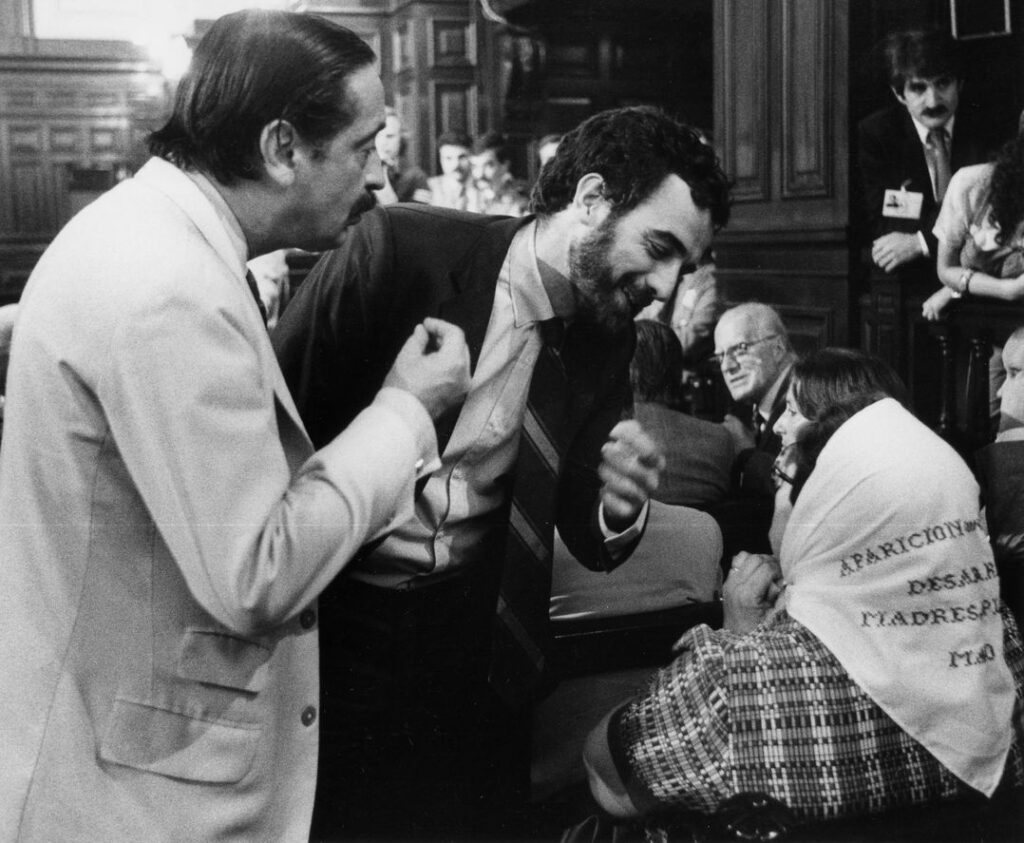
Justice, not war, protects society from violence
The creation of the ICC was, in part, intended to provide a mechanism for states to circumvent the political limitations of the United Nations Security Council. Permanent members of the UN Security Council have veto powers that often lead to gridlock on urgent conflicts.
Despite the organization’s existence, many powerful countries, including the United States, Russia and China, are not members, and as the former prosecutor increasingly laments, the world seems to be moving in the opposite direction.
“ICC is like global Wi-Fi: some countries are connected and others are not,” he said.
In the context of the fragmentation of the international order, large-scale wars such as those between Iran and Ukraine, and increasing nuclear risks, war has once again become a tool for resolving conflicts.
From Afghanistan and Iraq to Ukraine, Gaza and now Iran, Moreno Ocampo argues that war is the “mother crime” that makes everything else possible. In the face of renewed violence in response to terrorism and conflict among global actors, major powers are repeating models that are not working.
“The way to protect a country from terrorist groups is justice, not war, which causes more violence. This is the lesson of Argentina,” he said.
For Moreno Ocampo, the question is one of method. There are two ways to combat violence: treat the perpetrators of violence as enemies and eliminate them, or investigate and judge them while respecting their rights. In 1985, Argentina chose the second path.
“It gave the military a fair trial that they didn’t give the victims,” he said.
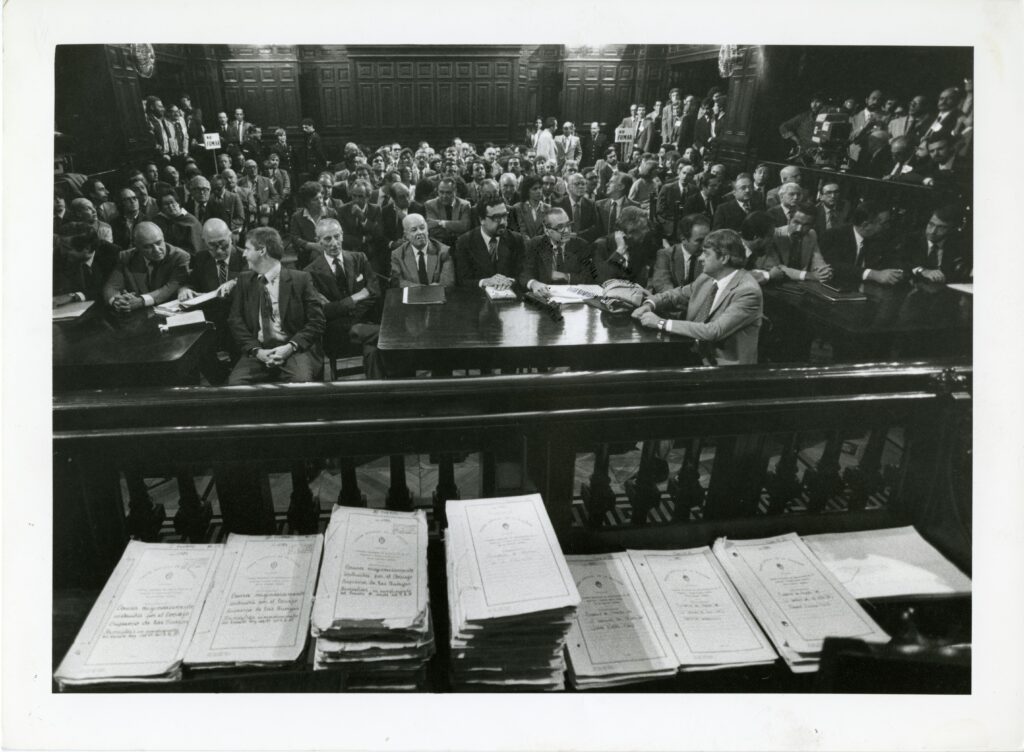
Image credit: Eduardo Longoni via FCJS NATIONAL UNIVERSITY OF THE COAST
return of war
Moreno Ocampo traces the return of war as a tool to resolve the conflict following the September 11 attacks, when the United States decided to treat al-Qaeda leader Osama bin Laden as a military target to be eliminated rather than a criminal to be prosecuted.
The result, he argues, was counterproductive. Bin Laden remained stagnant for years and the war in Afghanistan ultimately failed.
He says similar dynamics can be seen in Iraq and other conflicts.
“Every time America goes to war, it loses, but for many reasons it cannot learn from that experience,” he said.
He added that this logic can also be seen in the current conflicts in the Middle East. There, opposing projects seek to eliminate each other rather than coexist.
“When a project that seeks to exclude or eliminate others emerges, war inevitably breaks out.”
According to Moreno Ocampo, the continuation of war is also linked to the limitations of the current international system, which can be seen in today’s conflicts.
He argues that in the Middle East, opposing sides are locked in mutually exclusive projects with no room for coexistence. “When actors try to exclude or eliminate the other, it inevitably leads to war,” he said, pointing out the dynamic between Israel and Hamas.
He pointed out that there was broad international consensus in condemning Hamas after the October 7 attacks. But the subsequent military response failed to resolve the conflict and instead deepened the humanitarian crisis while Hamas remained in power.
For Moreno Ocampo, this reflects a widespread failure of the method. War continues to be used where justice mechanisms exist but are not applied.
Argentina’s warning
In a world of nuclear weapons, advanced technology and rising geopolitical tensions, Moreno Ocampo warns that continuing down this path could lead to global catastrophe.
“Warfare is a model that humanity has used for thousands of years, but in a world of atomic bombs and cyberattacks, it is no longer viable,” he said.
Quoting Albert Einstein, he added, “I don’t know how World War III will be fought, but World War IV will be fought with sticks and stones.”
For Moreno Ocampo, Argentina’s experience remains important not only as a historical process, but also as a possible model for the future.
“The world is returning to the logic of war to resolve conflicts, and this could lead us to disaster.”
Featured Image: Luis Moreno Ocampo
Image source: luismorenoocampo.com





