



You’ll need a rental car for days 2 through 6. Base yourself in Palma. It’s the smartest move and I’ll explain why later.
If you’re still planning, check out our full guide to things to do in Mallorca and our picks for where to stay in Mallorca.

Day 1. Palma
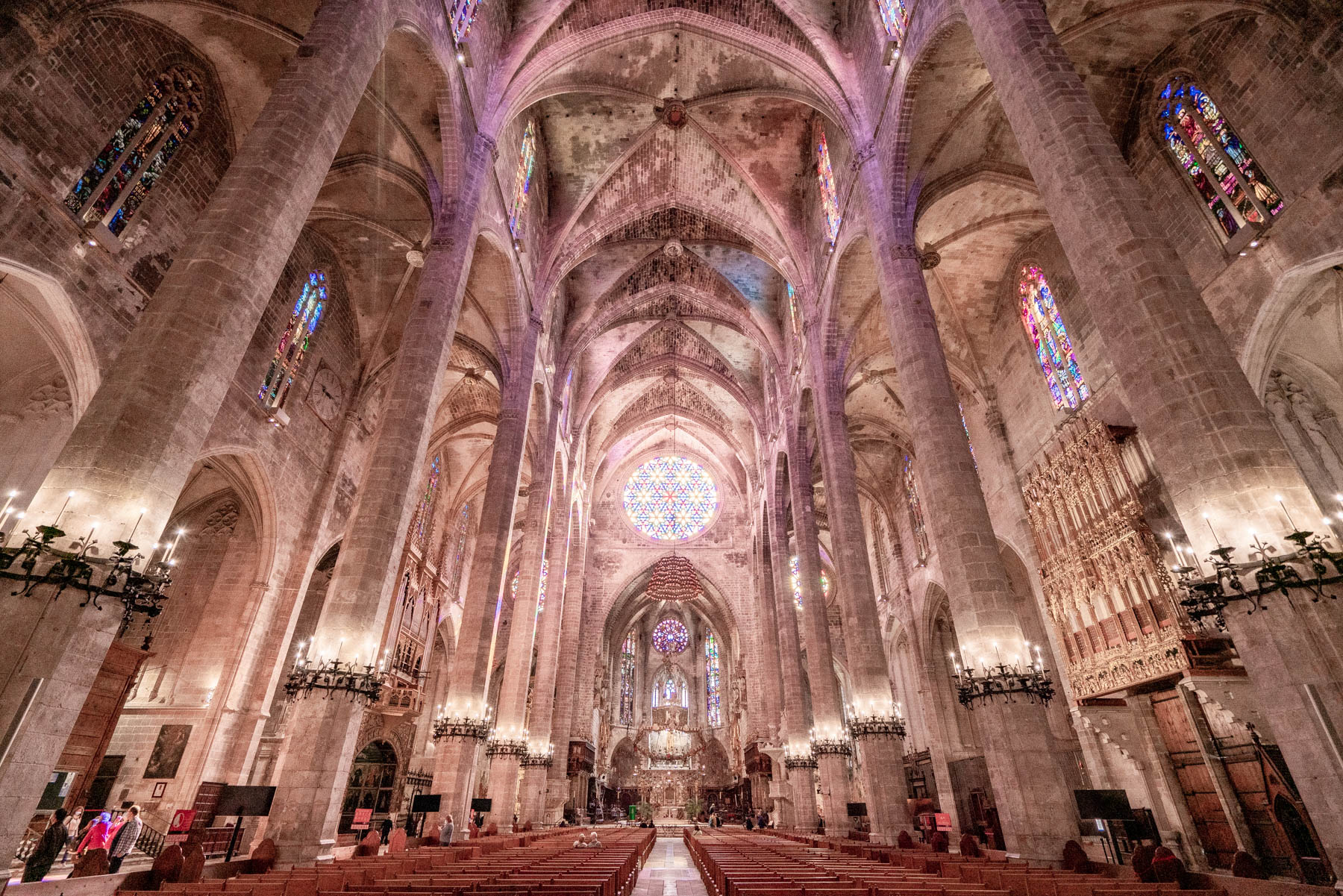
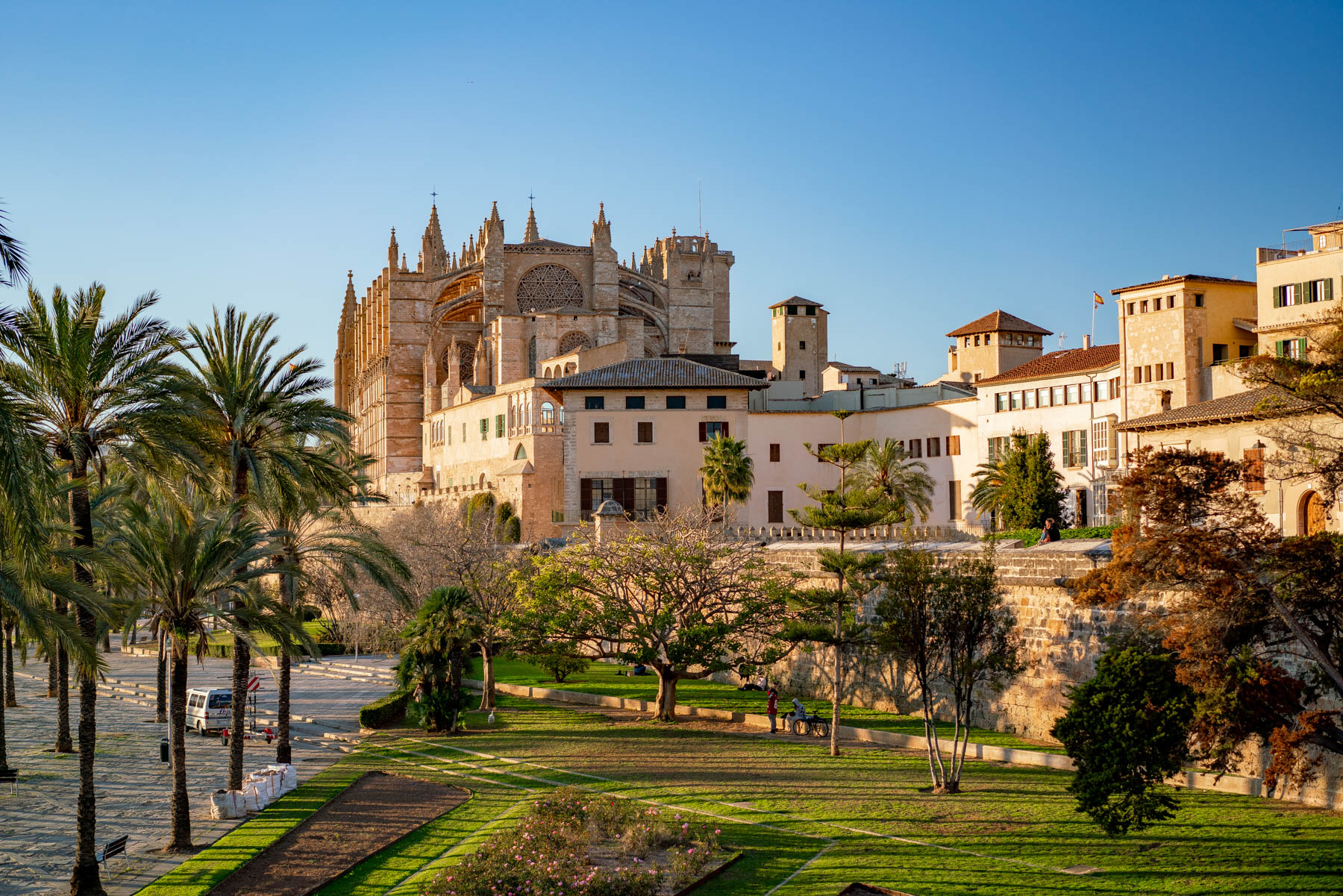
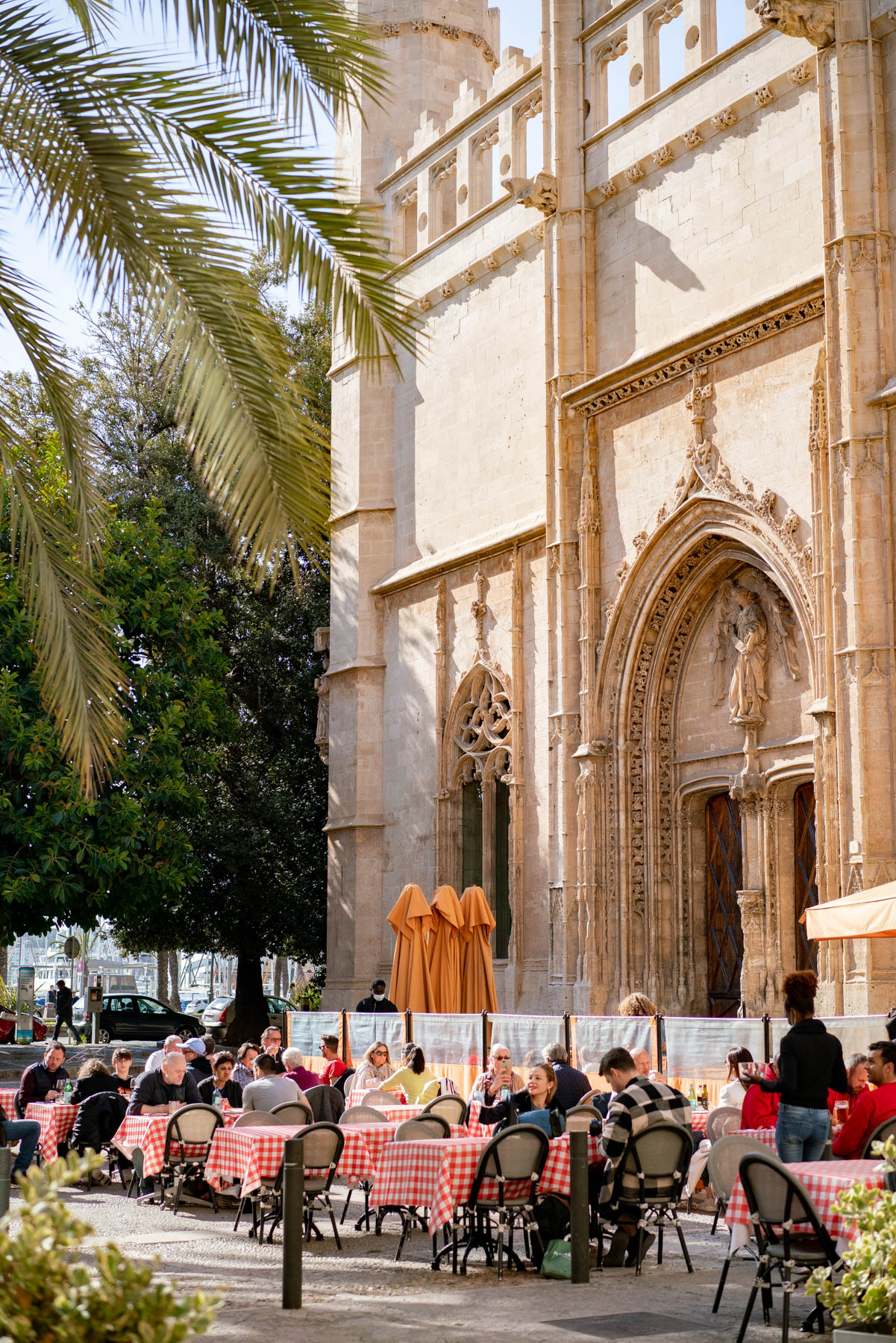
Start at La Seu Cathedral. Get there early, like 10am-on-the-dot early, because the cruise ship crowds roll in by noon and suddenly you’re in a theme park. Tickets are €8. The interior is genuinely jaw-dropping, especially the Gaudí-designed baldachin that looks like it belongs in a fever dream. The rose window is one of the largest Gothic rose windows in the world and when the morning light hits it, the whole nave fills with color.
From there, wander the Old Town. The Arab Baths are tucked in a courtyard garden and take maybe 15 minutes, but the quiet is worth it. Just meander. Get lost. The streets are all honey-colored stone and wrought iron balconies and you’ll find something interesting on every block. Duck into the Palau March courtyard to see the Chillida sculptures, and peek inside the Basilica de Sant Francesc if the doors are open.
Lunch at Mercat de l’Olivar. Head straight to the fish counter, order oysters and cava, and watch the whole market buzz around you. This is the most Palma thing you can do on day one. The market has been running since 1951 and it’s still where locals shop. You’ll see whole octopus, piles of prawns, and wheels of Mahón cheese everywhere you look.
Spend the afternoon in Santa Catalina. It’s the neighborhood where locals actually hang out. Cute shops, good coffee, zero tour groups. If you need a caffeine stop, Ca’n Joan de S’Aigo has been serving hot chocolate and ensaïmadas since 1700, which makes it one of the oldest cafés in Europe.
For sunset, grab the terrace at Es Baluard museum. You don’t need to go inside. The terrace overlooks the port and catches the light perfectly. Bring a drink from the museum café and watch the boats turn gold.
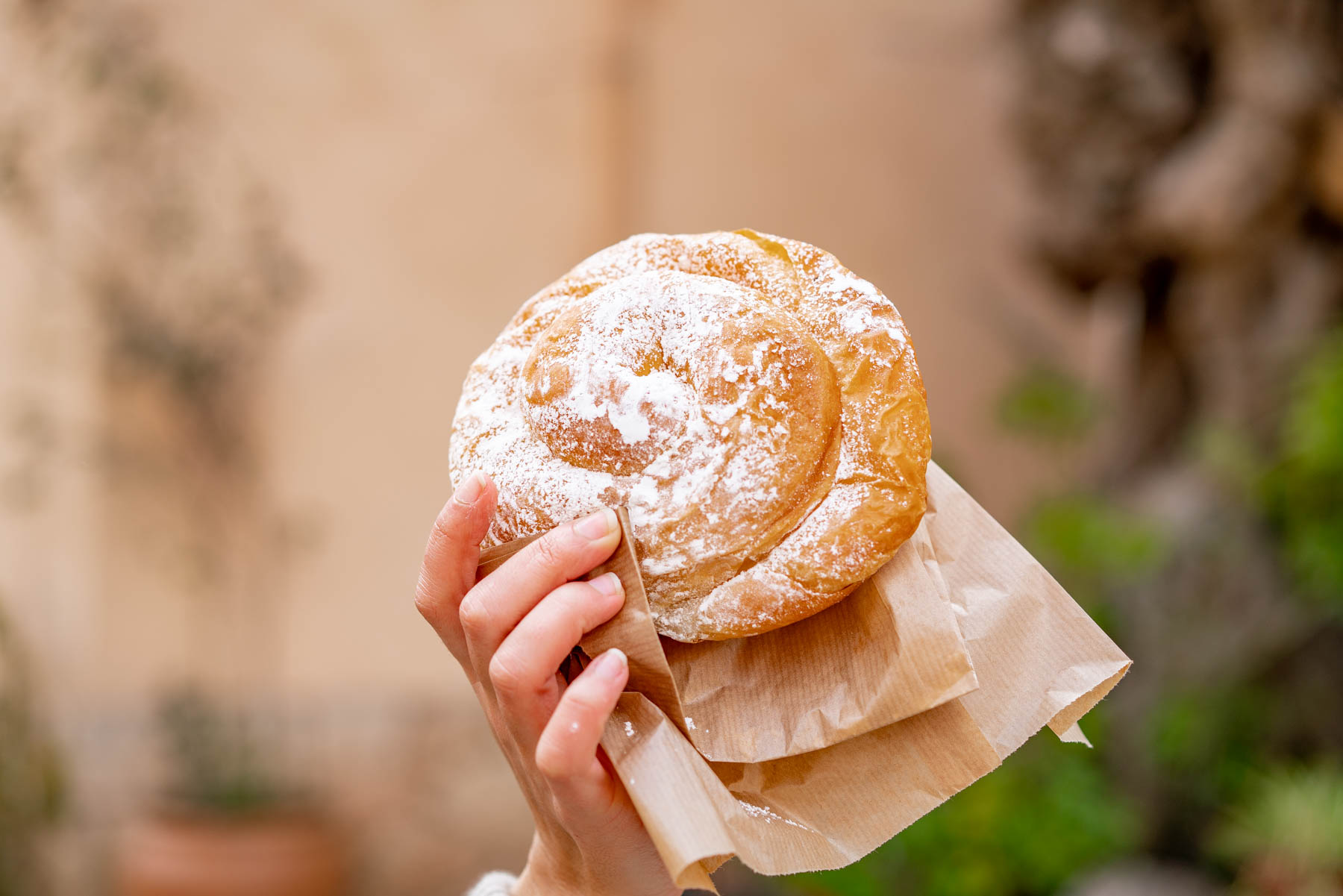
*Do not leave Palma without an ensaïmada from Fornet de la Soca.* It’s a spiral pastry dusted in powdered sugar and this bakery makes the best one on the island. I’m not being dramatic. I went back three times. They also make a pumpkin version that’s seasonal and if it’s available, get both.
No car needed today.
Day 2. Valldemossa, Deià, and Sóller
Leave by 9am. This is the day you fall in love with Mallorca’s mountains.
Valldemossa is a 25-minute drive from Palma and it looks like a postcard that’s trying too hard to be pretty. Visit the monastery where Chopin spent a winter and was, by all accounts, absolutely miserable the entire time. He wrote some of his most famous preludes here while battling tuberculosis and complaining about the weather. You can see his piano and original manuscripts. Grab a coca de patata from any bakery in town. It’s a soft, sweet potato roll and it’s the local thing. Every bakery claims theirs is the original recipe and they’re all lying and they’re all delicious.
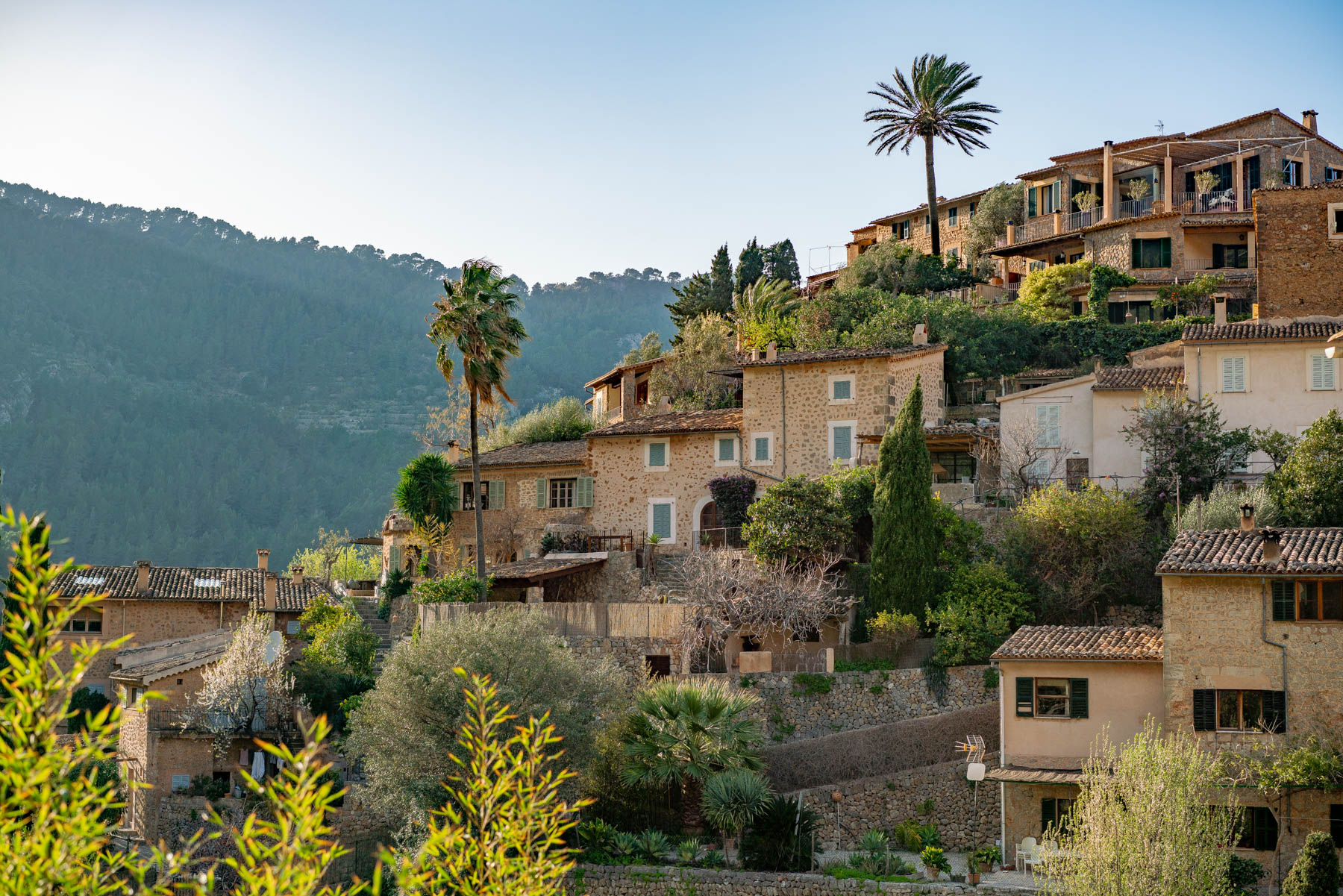
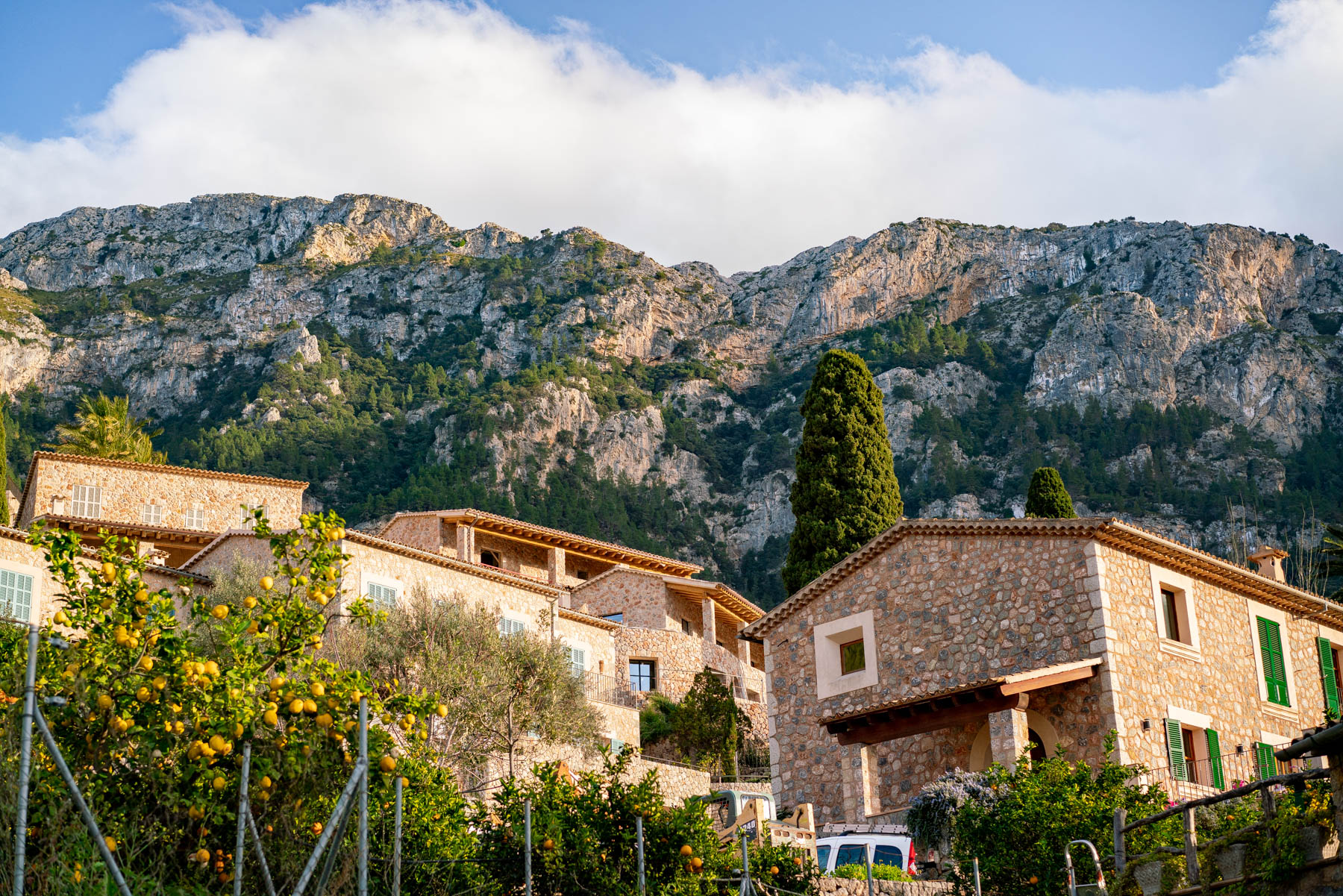
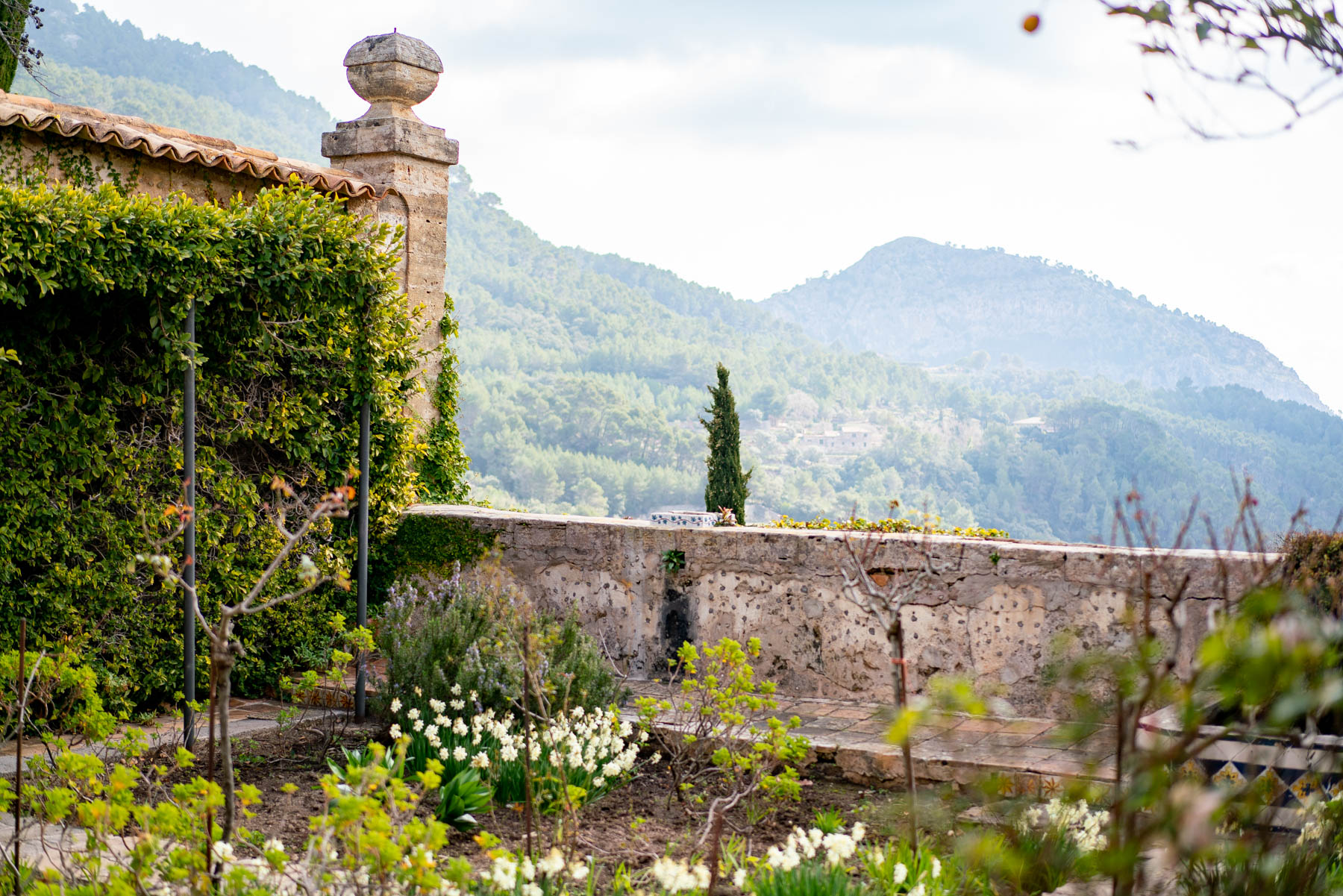
Drive to Deià. It’s only 20 minutes but the road is one of the most scenic drives on the entire island. Hairpins through olive groves with the sea far below. Deià has been an artists’ colony since the 1920s when Robert Graves moved here and basically never left. The village is tiny. You can walk the whole thing in 20 minutes. But the setting, a cluster of stone houses clinging to a hillside with the Mediterranean behind them, is absurd.
Lunch at Ca’s Patró March in Cala Deià. *Book this weeks ahead.* You eat fish on the rocks above the water and it costs €40-60 per person and it is worth every cent. This was probably my favorite meal of the whole trip. The grilled fish is whatever came in that morning. The view is of swimmers in the cove below you. There’s no menu decision to stress about.
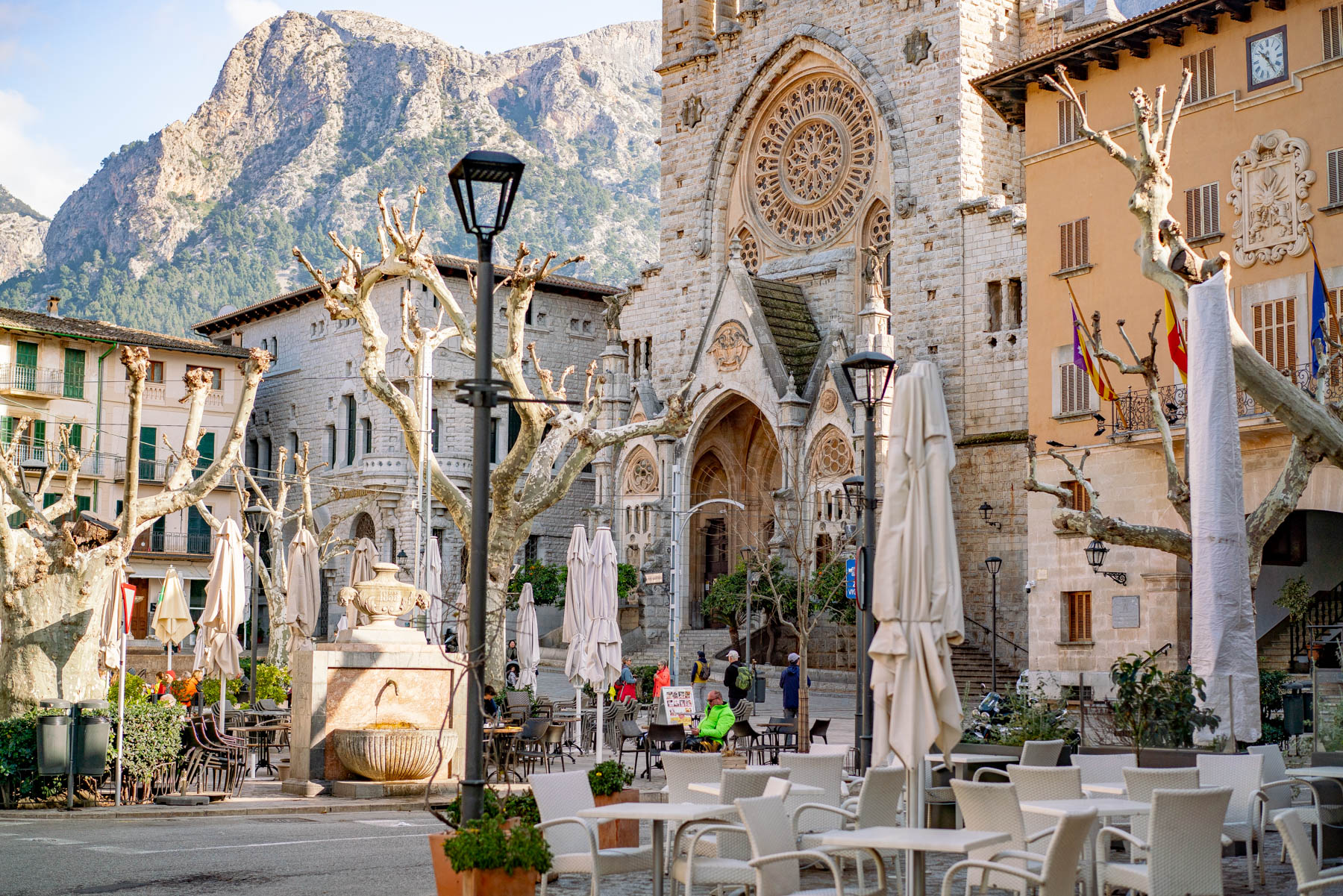
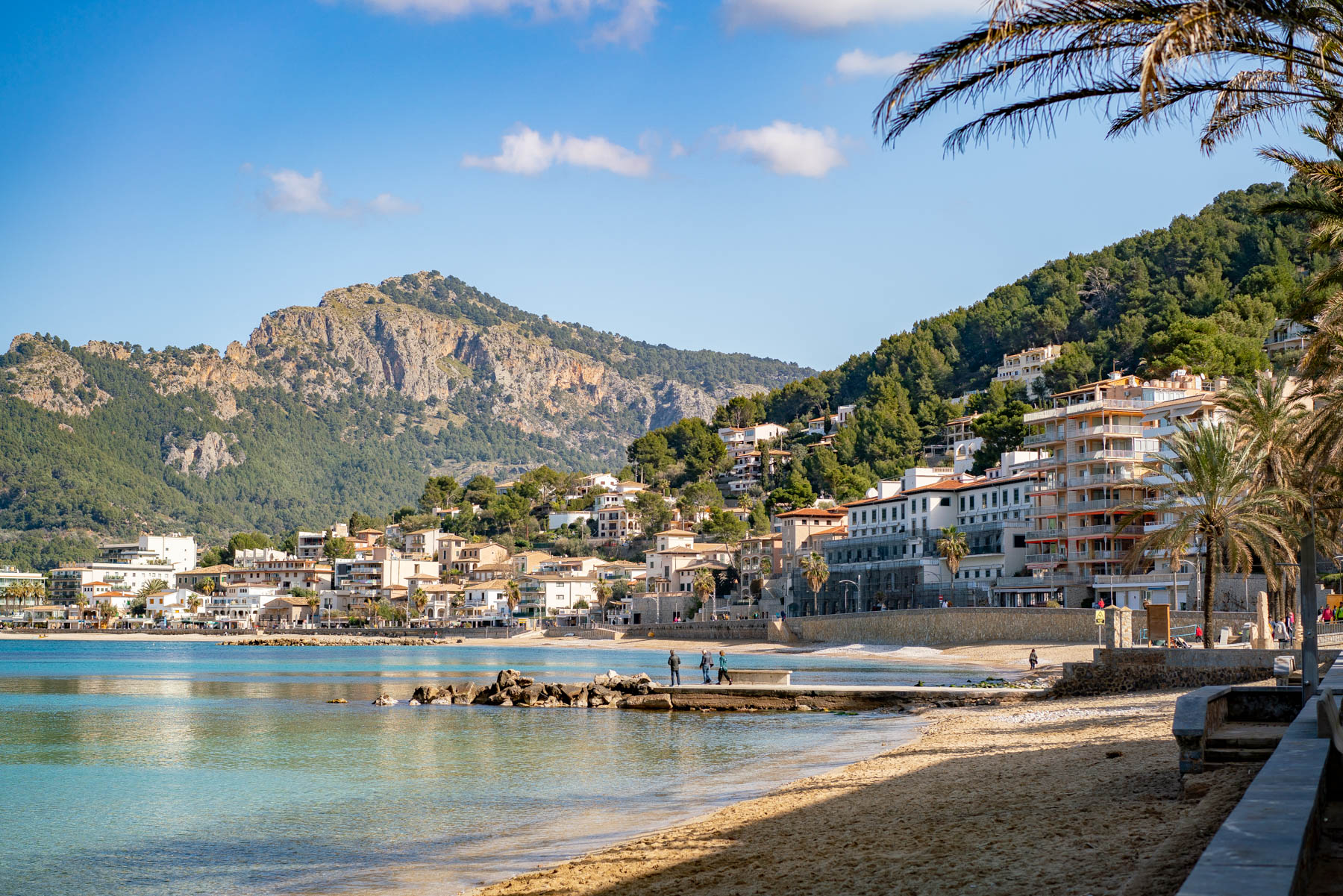
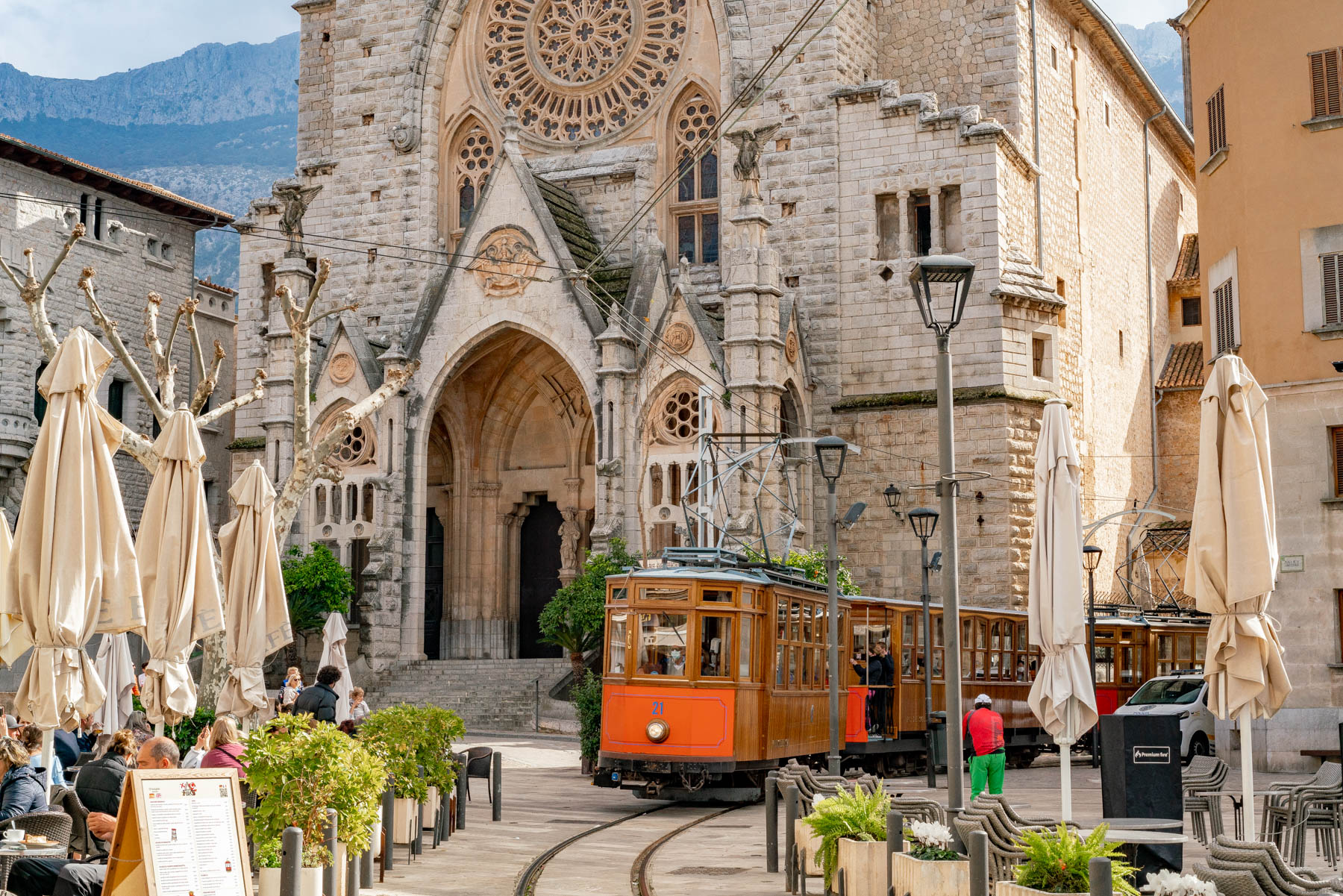
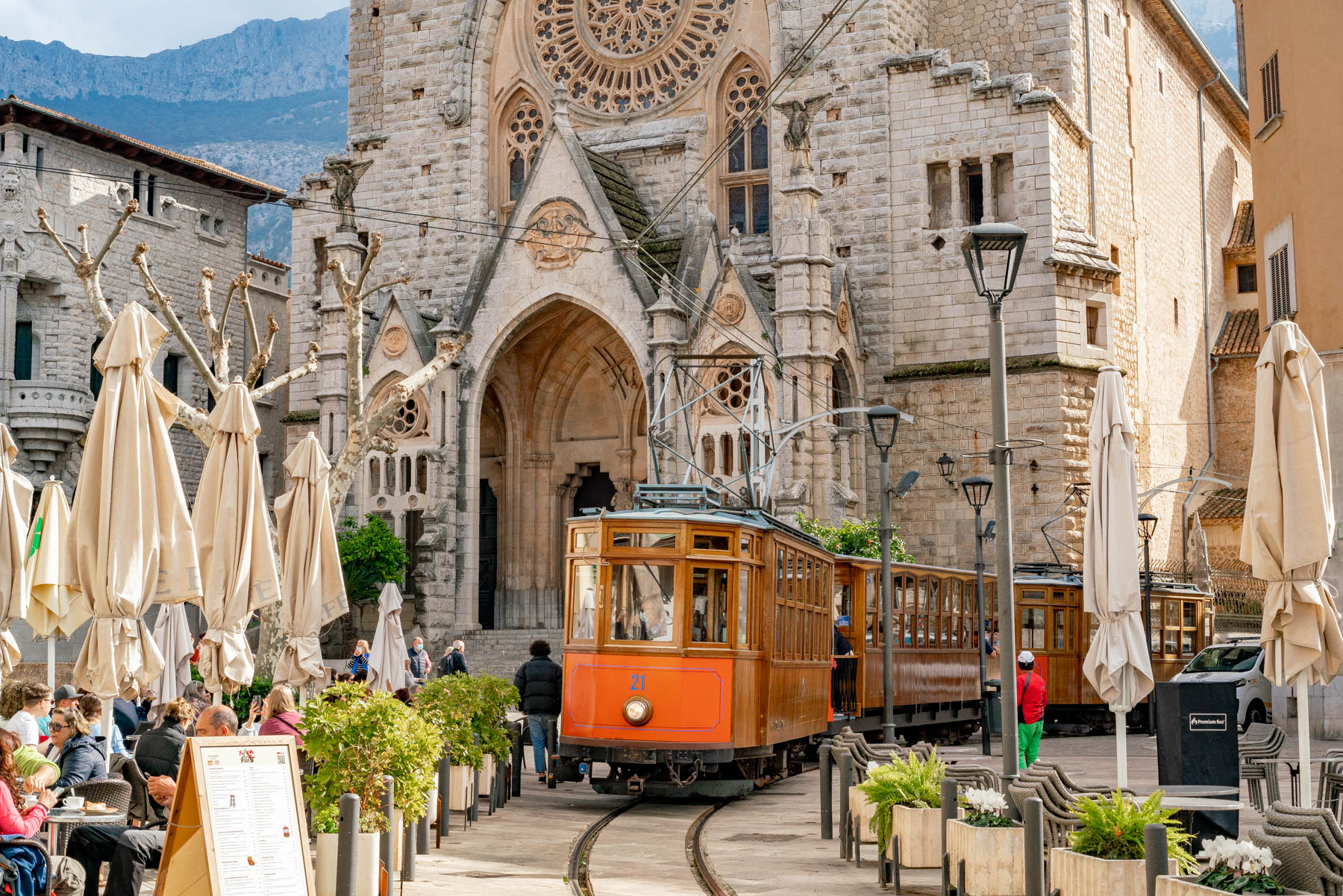
Sóller in the afternoon. The main square is gorgeous, all orange trees and Art Nouveau buildings. The church facade looks like it was designed by a student of Gaudí because it literally was. Take the old wooden tram down to Port de Sóller if you feel like it. The tram has been running since 1913 and it rattles through orange groves the whole way. Back to Palma via the tunnel, 30 minutes, €5 toll.
Total driving today is about 90 minutes.
Day 3. Sa Calobra and the Mountain Road
The big driving day. Leave by 8:30.
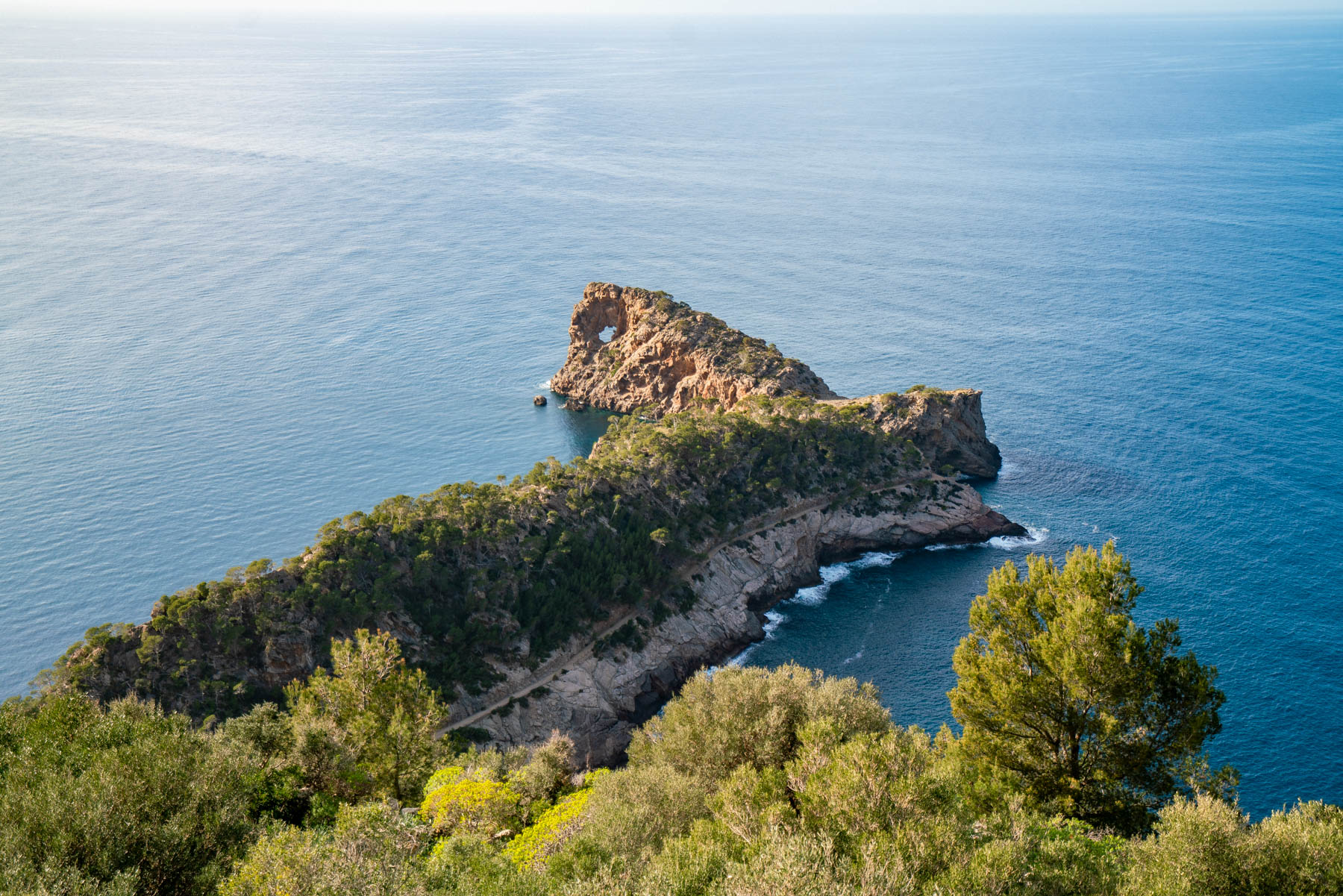
The Ma-2141 to Sa Calobra is 14 kilometers of hairpin turns dropping 800 meters, including the famous loop where the road literally passes under itself. It’s one of the most thrilling drives in Europe and I say that as someone who white-knuckled the whole thing. Cyclists love this road and you’ll see dozens of them grinding their way up. Give them space. They’ve earned it.
Arrive before the tour buses. This matters. By 11am the parking lot is chaos and the path to the gorge is a conga line. Parking is free but limited. If it’s full you’re out of luck.
Walk through the tunnels carved into the rock to reach Torrent de Pareis. This is a massive gorge where the canyon meets the sea. The limestone walls tower 200 meters above you on both sides. The scale of it is hard to describe. You just stand there and feel very small. If the water is calm, you can wade in where the gorge meets the Mediterranean. It’s one of the most dramatic swimming spots anywhere.
Then drive to Cala Tuent for lunch at Es Vergeret. It’s a quiet cove with simple seafood and almost no tourists. The complete opposite of Sa Calobra, which is the whole point. The paella here is the real deal, made slowly and served in the pan. Ask for the fish of the day and don’t overthink it.
Optional stop at Monasteri de Lluc on the way back. It’s the spiritual heart of the island and the grounds are peaceful. There’s a small botanical garden, a museum, and if you time it right, you can hear the boys’ choir that’s been singing here since the 13th century.
Total driving today is about 3 hours. Worth it.
Day 4. Southeast Beach Day
Today is all about the beaches in Mallorca, and you’re hitting three of the best.
Drive to Cala Mondragó first. It’s about 60 minutes from Palma, inside a natural park, and there are two coves. S’Amarador is the prettier one. The water is that ridiculous shade of blue that doesn’t look real in photos and somehow looks even less real in person. There’s a flat wooden boardwalk connecting the two coves and the walk takes about 10 minutes. Bring your snorkel. The fish life along the rocks is surprisingly good.
Then Caló des Moro. This is the tiny Instagram cove and yes, it lives up to the hype, but *only if you arrive before 10am.* After that it’s packed shoulder to shoulder and the magic evaporates. It’s a 15-minute drive from Mondragó and then a 10-minute walk down a rocky path. If you’re running late, skip it. Seriously. There are better ways to spend a crowded afternoon.
Lunch in Santanyí. If it’s Saturday, you lucked out because the market is excellent. The town square fills with stalls selling leather goods, ceramics, dried fruits, and local honey. Order pa amb oli anywhere. It’s bread rubbed with tomato and olive oil, topped with whatever they’ve got. Jamón ibérico, local cheese, sobrassada. Simple and perfect.
Afternoon at Es Trenc. This is the big one. Two kilometers of white sand, Caribbean-blue water, and enough space that you can actually breathe. It’s a 25-minute drive from Santanyí. There are a couple of beach bars at the main entrance, and the farther you walk along the sand, the quieter it gets. The water stays shallow for a long way out, which makes it feel even more tropical.
Total driving today is about 2.5 hours.
Day 5. Alcúdia, Pollença, and Formentor
Alcúdia Old Town is about 50 minutes from Palma. Walk the medieval walls. They’re remarkably intact and you can actually walk along the top of them. The town inside is all narrow lanes and little squares and it feels much less touristy than Palma’s Old Town. Stop into the Església de Sant Jaume if it’s open.
Drive 10 minutes to Pollença. If it’s Sunday, the market is one of the best on the island. Even if it’s not market day, climb the 365 Calvari steps up to the chapel. The steps are cypress-lined and steep and by step 200 you’ll question everything. But the views from the top are the reward. You can see the whole bay and the mountains and the rooftops of Pollença below.
Lunch in Pollença. Take your pick. Sit outside. The main square is lovely and there are a dozen restaurants ringing it. Il Giardino does good Italian if you need a break from Spanish food.
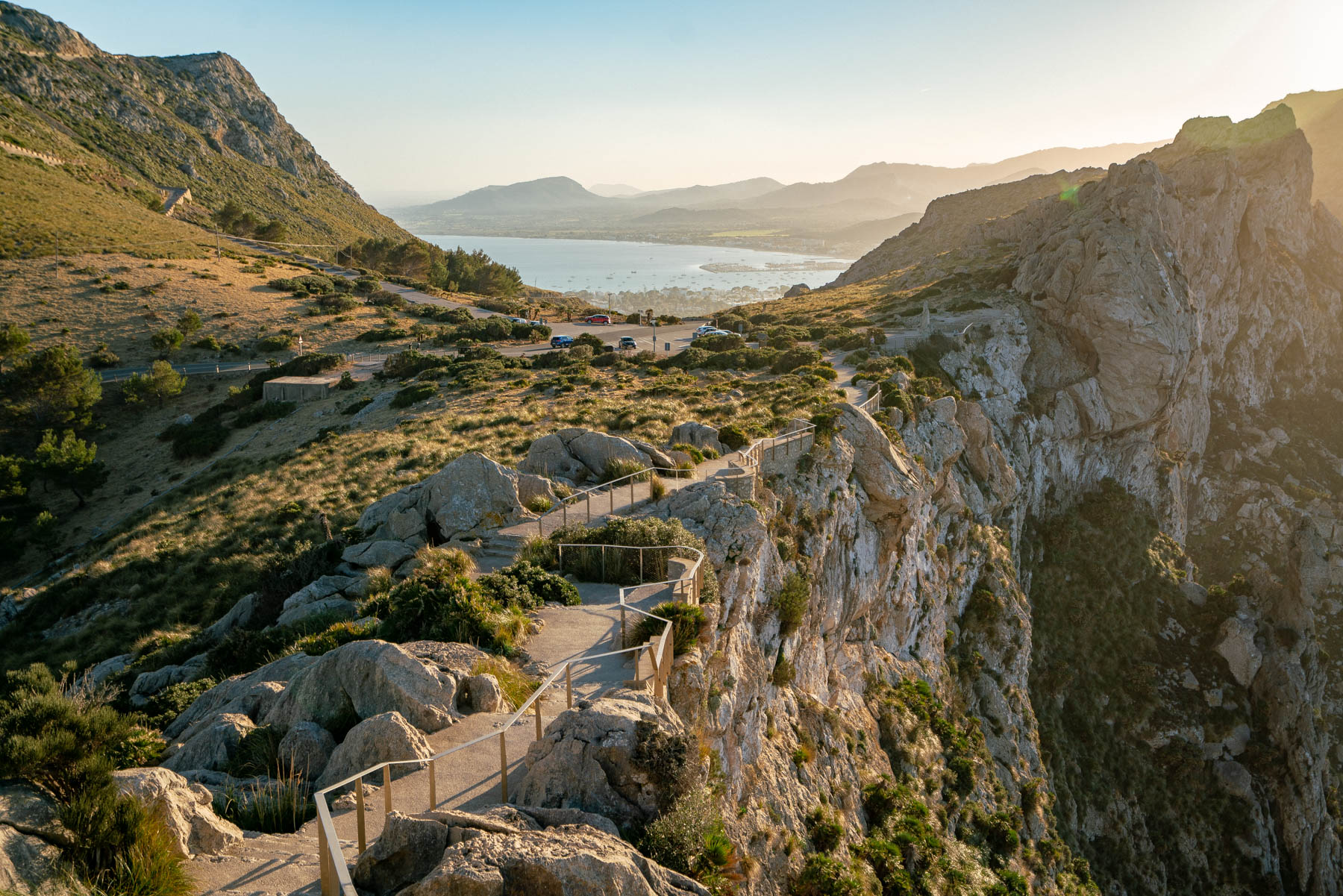
Afternoon is the Formentor peninsula drive. This is dramatic. Cliffs dropping into deep blue water, wind-bent pines, and the kind of views that make you pull over every five minutes. Stop at Mirador Es Colomer for the famous viewpoint. The parking lot is small and fills up fast, but the view down to the tiny islands below is one of the best on Mallorca. Continue to Platja de Formentor if the road is open. The beach is backed by pine forest and the water is impossibly clear.
*Note that in summer there are car restrictions on the Formentor road.* Check before you go. From June through September, you might need to take the shuttle bus from Alcúdia. It runs frequently and costs a few euros.
Quick swim at Playa de Muro on the way back if you have energy left. It’s a long, shallow beach that’s great for wading. The water barely reaches your waist for the first 50 meters.
Total driving today is 2.5 to 3 hours.
Day 6. Hike and Wine
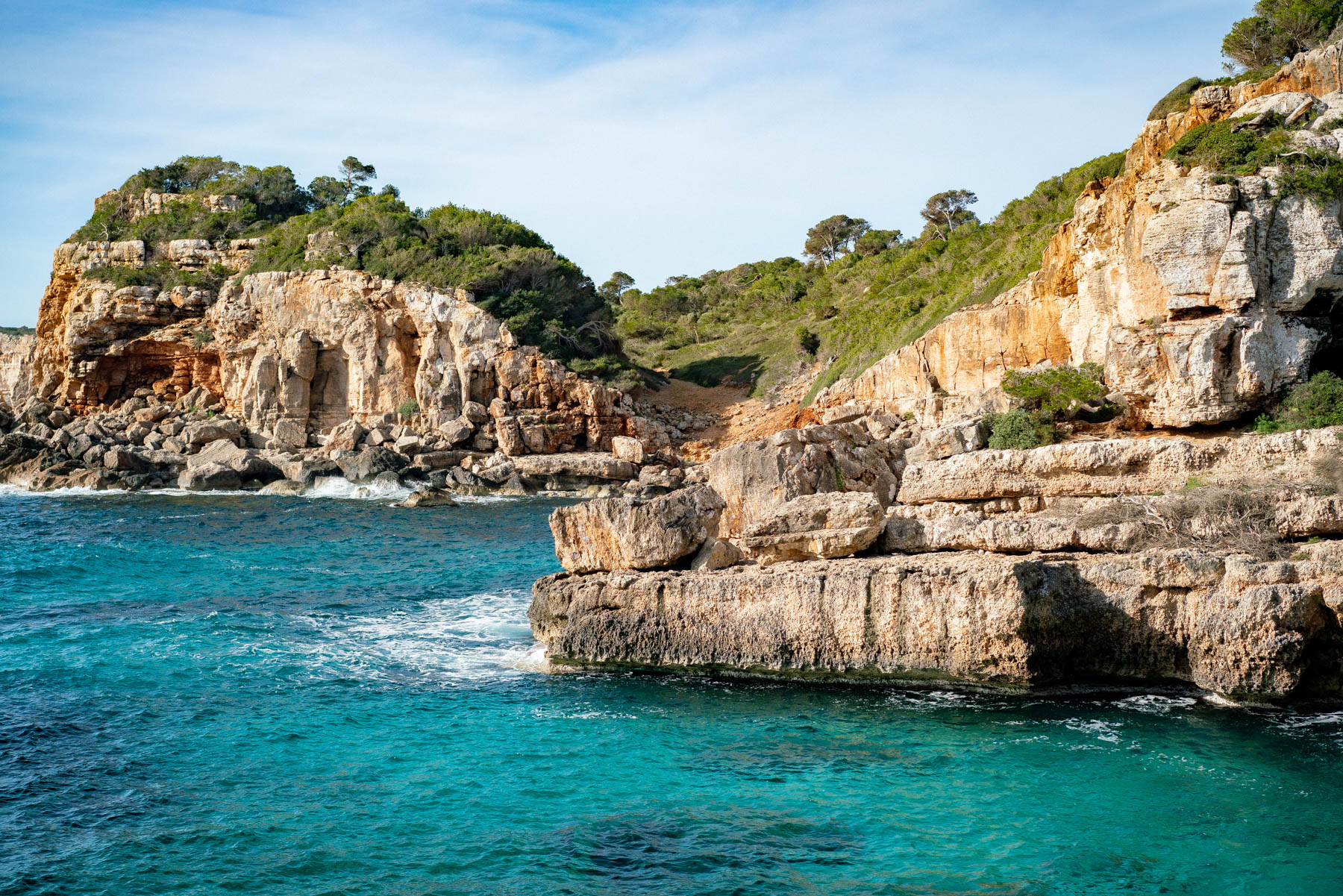
Morning hike in the Tramuntana. I recommend Barranc de Biniaraix starting from Sóller. It’s a cobblestone path winding up through a gorge with stone terraces and olive groves. About 3 hours round trip, moderate difficulty. You don’t need to be a serious hiker for this one. The path is an ancient pilgrims’ route, all hand-laid stone, and it follows a stream through the narrowest part of the gorge. Bring water and a hat. There’s no shade in the upper sections.
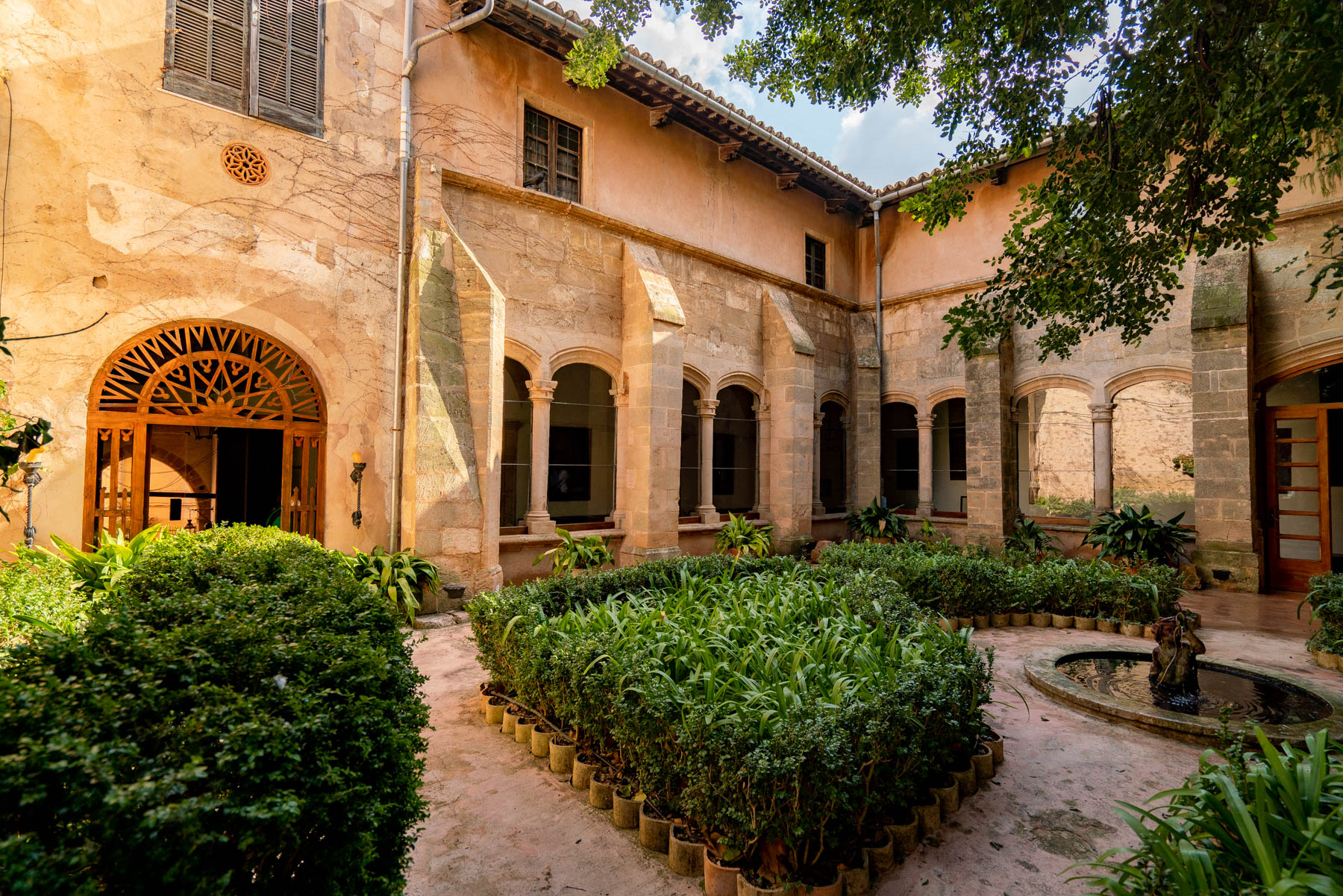
Afternoon wine tasting in Binissalem. This is Mallorca’s wine region and it’s *good.* The local grape is Manto Negro for reds and Prensal Blanc for whites, and you won’t find them anywhere else. Bodega Ribas was founded in 1711 and is one of the oldest wineries in Spain. The courtyard alone is worth the visit. José L. Ferrer is another solid option with a more modern tasting room. Tastings run €10-15 and usually include 3-4 wines.
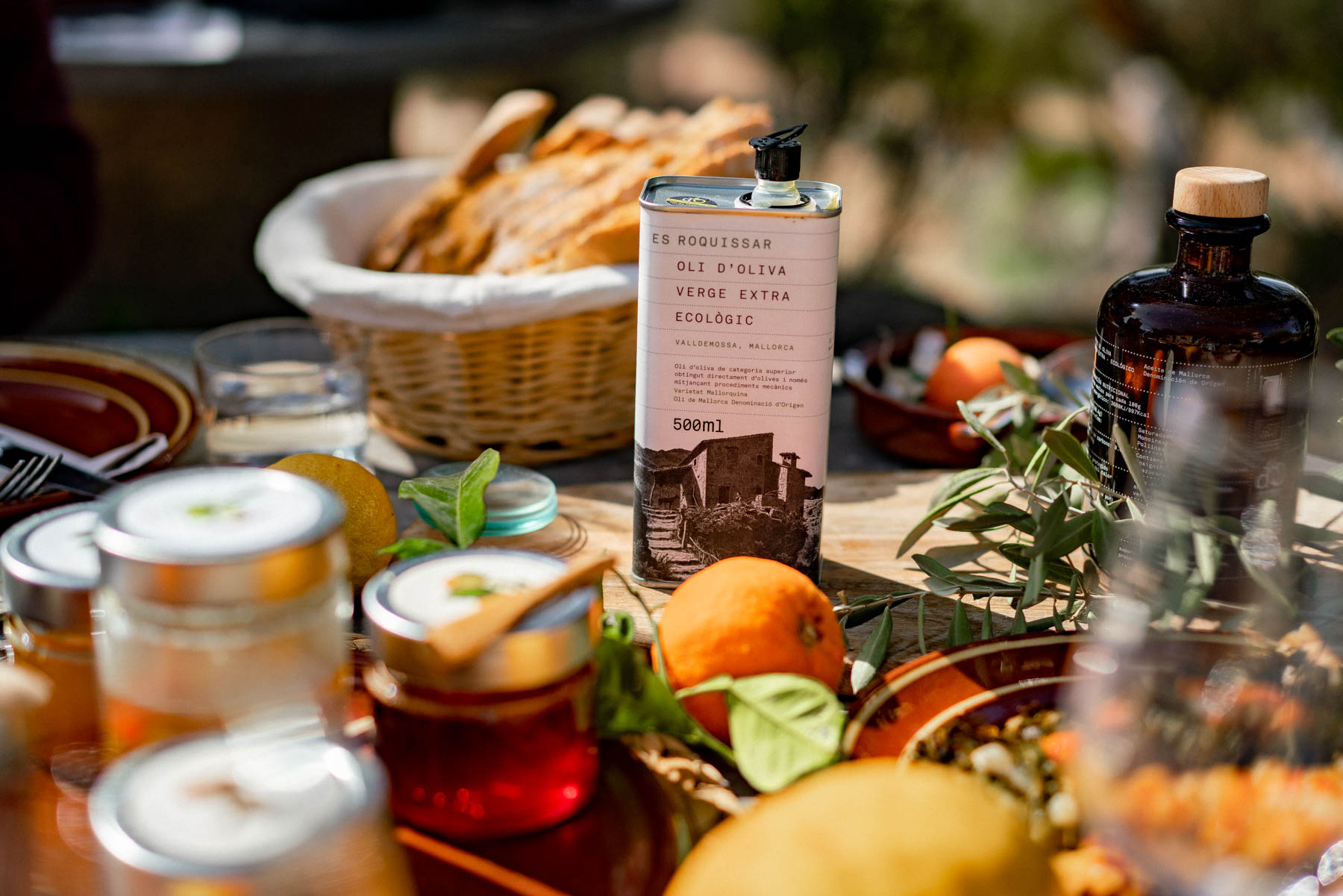
But the real highlight of today is a detour. Es Verger is a rustic restaurant near Alaró that serves exactly one dish. Slow-roasted lamb shoulder. Cash only. About €15. You sit on a terrace under the castle ruins and eat the best lamb of your life. The drive up is a narrow mountain road that will test your nerves, but the lamb has been slow-cooking since morning and it falls apart when you look at it. *This is not optional.* People drive an hour for this meal. You’ll understand why.
Total driving today is about 2 hours.
Day 7. Palma Deep Dive
Back to Palma for a proper goodbye.
Morning at Mercat de Santa Catalina. It’s smaller and more local than l’Olivar. Great for breakfast or snacking through the stalls. The juice stands squeeze everything to order and the empanada ladies will change your life for €3. Grab a cortado and sit at the bar and people-watch.
Then Fundació Pilar i Joan Miró in Cala Major. His studio is preserved exactly as he left it, brushes still out, canvases leaning against walls, paint splattered across the floor. It’s €8 and it’s one of the most moving museum experiences I’ve had anywhere. You don’t need to be an art person for this. The space itself tells you everything about how he worked. There’s also a sculpture garden and rotating exhibitions in the modern wing.
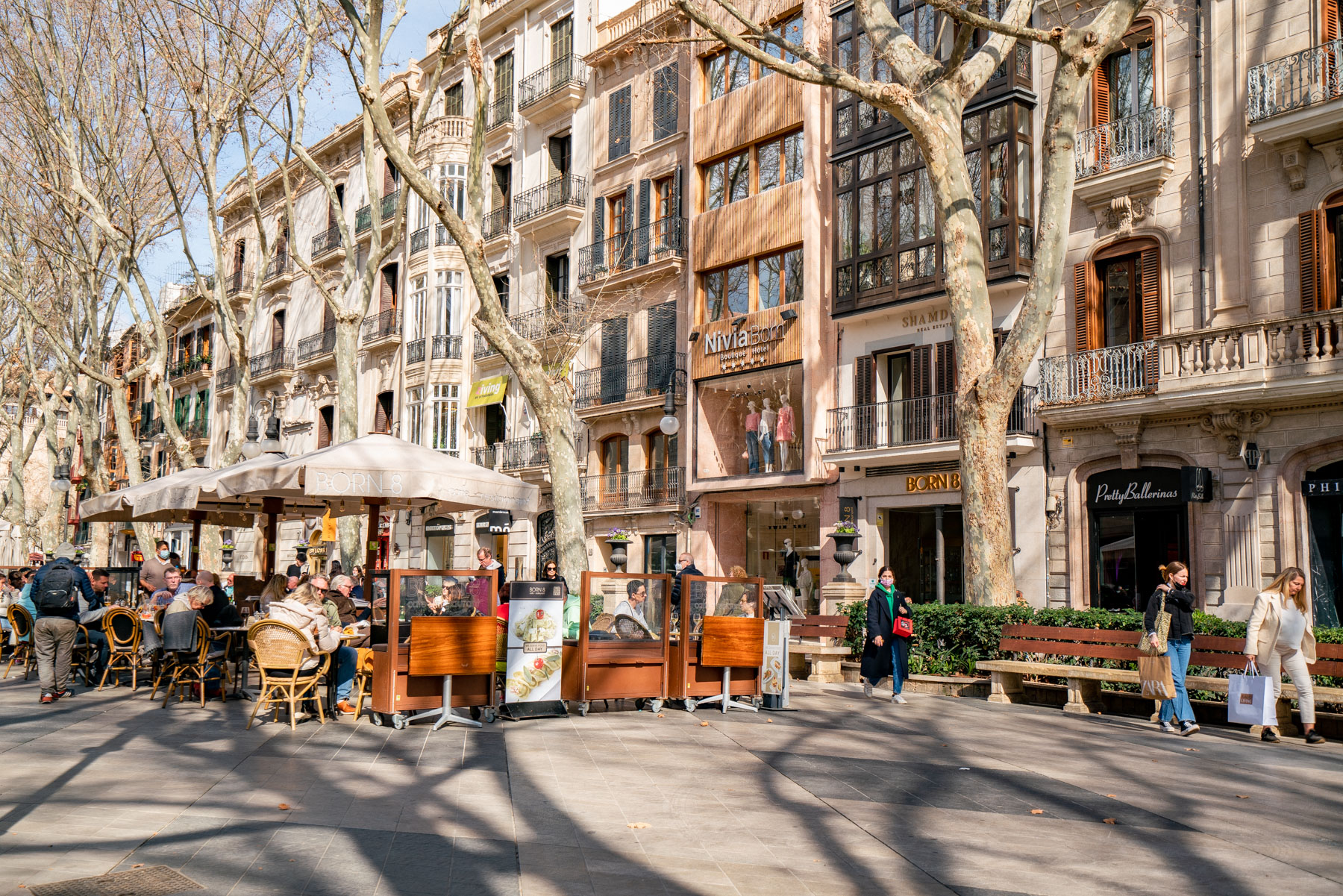
Afternoon shopping on Avinguda Jaume III if that’s your thing. It’s Palma’s main shopping street with a mix of Spanish and international brands. For something more interesting, head to the side streets around Plaça Major where you’ll find local leather goods, handmade jewelry, and Mallorcan pearl shops.
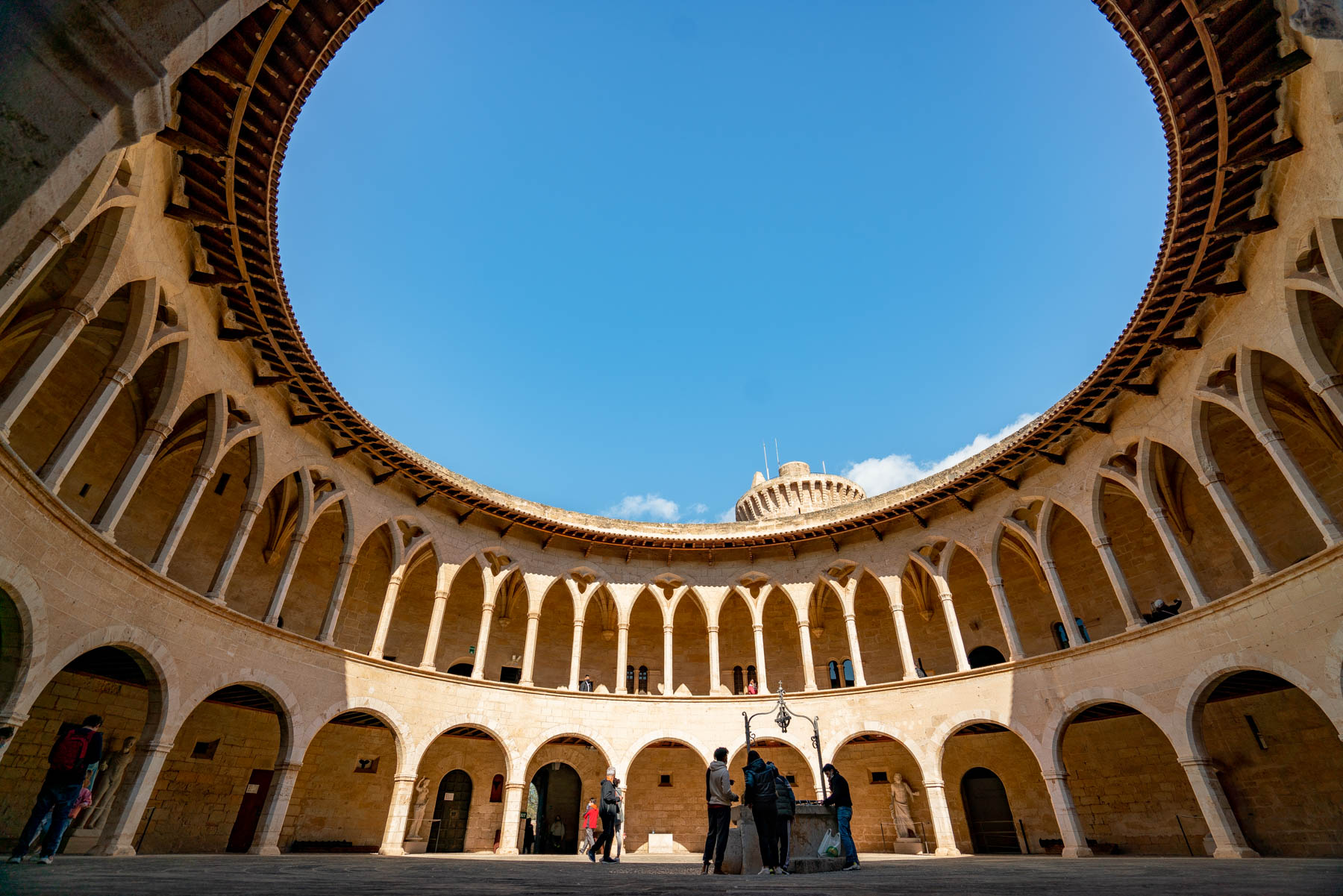
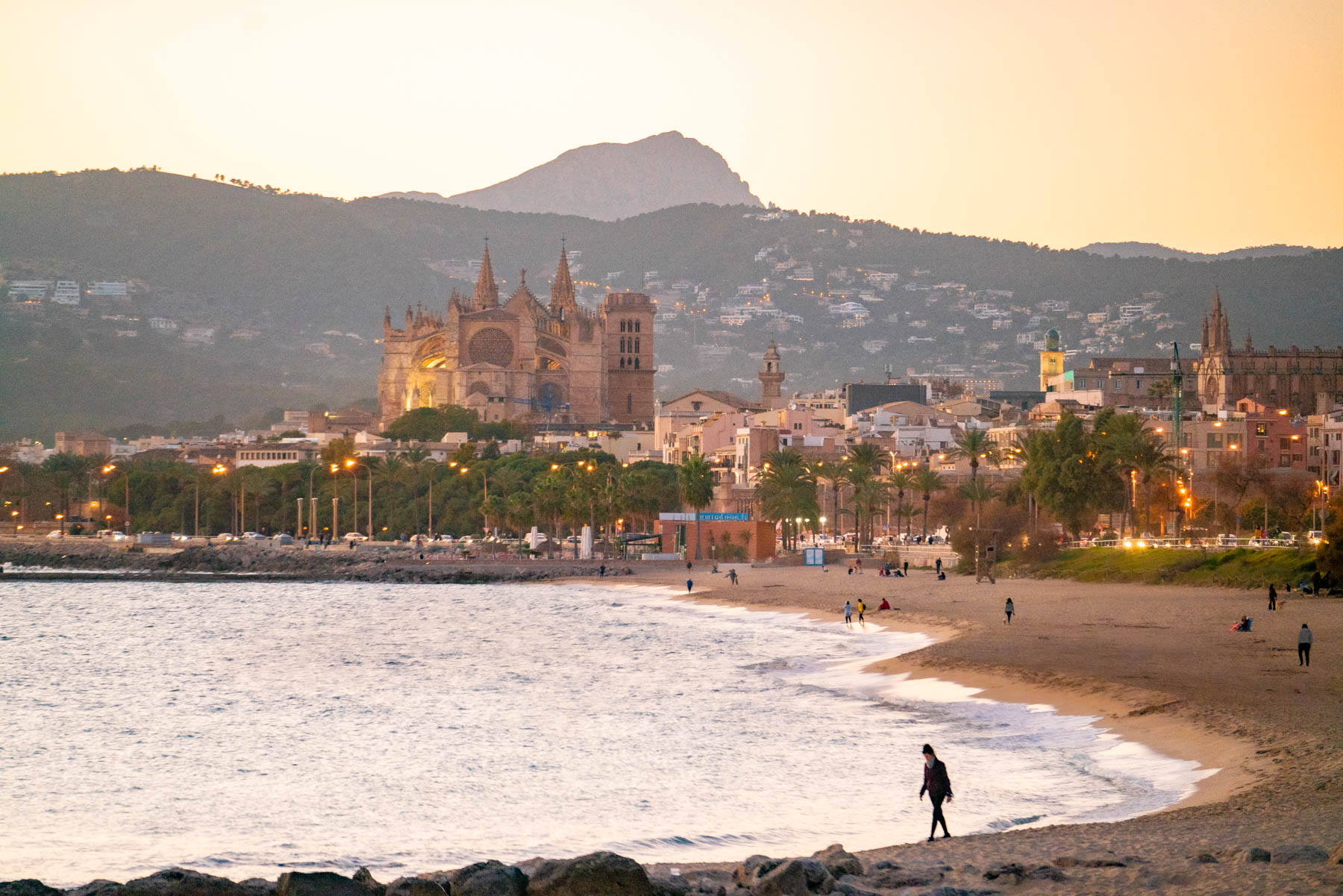
Sunset at Bellver Castle. It’s a circular Gothic castle, which is unusual because there are only a handful in all of Europe, and the views over Palma and the bay are stunning. €4 entry. Walk the rooftop terrace as the sun drops and the city lights start turning on below you.
Final dinner. Splurge at Marc Fosh for refined Mediterranean with a Michelin star, or keep it real at Forn de Sant Joan for tapas in a gorgeous courtyard with stone walls and fairy lights. Both are excellent. Check out our guide to restaurants in Mallorca for more options.
*Buy an ensaïmada at the airport for the plane. You’ll thank me.* The airport bakeries sell them in big flat boxes specifically designed for overhead bins. Mallorcans have been doing this for decades. Trust the system.
No car needed today.
The Practical Stuff
*Car rental.* Pick up on Day 2 morning, return on Day 6 evening or Day 7 morning. That saves you two days of rental fees and parking headaches in Palma. Expect €30-50 per day in shoulder season. Book automatic transmission if you need it, because manual is the default in Europe and those mountain roads are not where you want to learn stick shift. We booked through DiscoverCars and picked up at the airport location. Most rental agencies are at the airport even if you’re not flying that day.
*Parking.* In Palma, your hotel might charge €15-25/day for parking. Street parking exists but it’s a headache. Outside Palma, most attractions have free or cheap parking lots. Sa Calobra and the popular beaches fill up early in summer.
*Market days.* Sineu on Wednesday (the oldest market on the island, livestock included), Inca on Thursday (leather goods capital), Santanyí on Saturday (prettiest setting), Pollença on Sunday (best all-around). Plan around these if you can. They add a lot to the experience.
*Best months.* May through June and September through October. July and August are hot, crowded, and expensive. We went in late September and it was perfect. Warm enough to swim, cool enough to hike, cheap enough to not cry at restaurant bills. Water temperatures stay swimmable through October.
*Budget.* Roughly €160-225 per day per person at a mid-range level, including accommodation, food, car rental, entrance fees, and everything except flights. You could do it cheaper by cooking some meals and staying in apartments. You could also do it for much more by staying in the luxury fincas in the mountains. The mid-range sweet spot is a 3-star boutique hotel in Palma plus eating out twice a day.
*Base yourself in Palma.* Everything on this itinerary is within a 60 to 75 minute drive. You never need to switch hotels. You come back to the same bed every night and that alone makes the trip feel less hectic. Some people split their stay between Palma and Pollença or Sóller. I don’t think it’s worth the packing and unpacking unless you have more than a week.
*Getting around Palma.* The Old Town is entirely walkable. Buses run to Cala Major for the Miró museum. Taxis are cheap. You don’t need the car on Days 1 and 7.
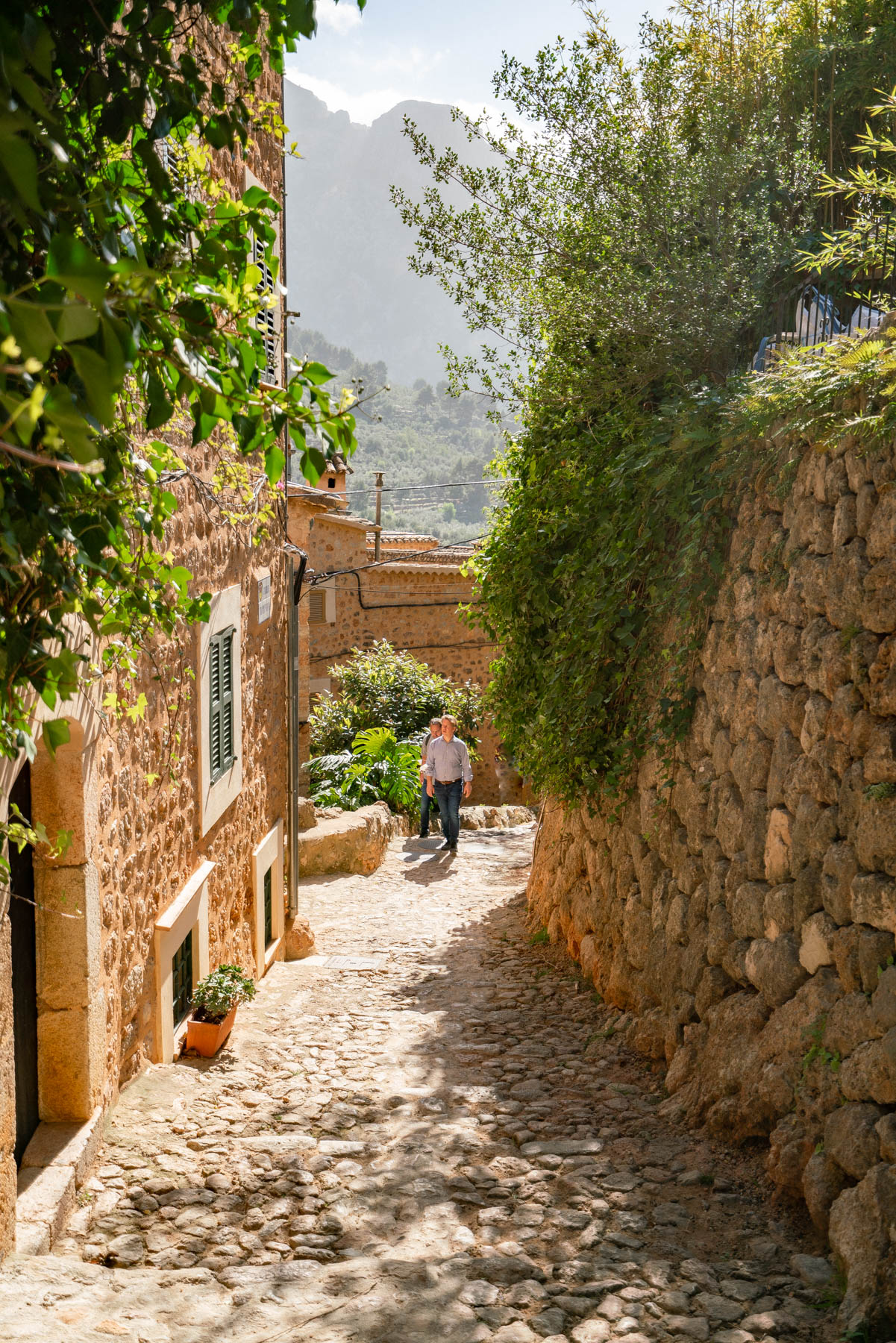
One week is perfect for Mallorca. You will have time for Palma, the Tramuntana mountains, a few beaches, and some downtime without feeling like you are checking boxes.
For one week, I would pick two bases. Stay in Palma for the first couple of nights, then move to Soller or the east coast for the rest. That way you avoid long daily drives.
Do not skip the drive from Soller to Sa Calobra. It is one of the most dramatic roads in Europe. Also make time for Deia, Cap de Formentor, and at least one hidden cove.


