



Operational test pilots recently flew the B-21 Raider stealth bomber alongside development test pilots, marking a key step in the program’s integrated development and operational test approach and highlighting the urgency of the test campaign.
The U.S. Air Force announced it has begun integrating operational test pilots into its new B-21 Raider stealth bomber. The Air Force said the first flight took place recently at Edwards Air Force Base in California, with operational test pilots sharing the cockpit with development test pilots.
Combined DT/OT environment
To date, the B-21 has been flown by pilots from the 420th Flight Test Squadron, which is responsible for developmental flight tests with the two first airframes. The operational test pilot was assigned to the 5th Detachment of the Air Force Operational Test and Evaluation Center.
“We have operational test personnel in one cockpit and Air Force Test Pilot School graduates in the other,” said Col. Matt Guasco, AFOTEC Detachment 5 commander. “Never in the history of modern testing has we done that so early in the program.”
“Integration of operational testing represents a major change in how the Air Force evaluates its most important next-generation aircraft and breaks down historic barriers in the flight test pipeline,” the Air Force said in a news release. A similar approach was first adopted on the F-15EX Eagle II, where development and operational testing took place simultaneously, albeit on different schedules.
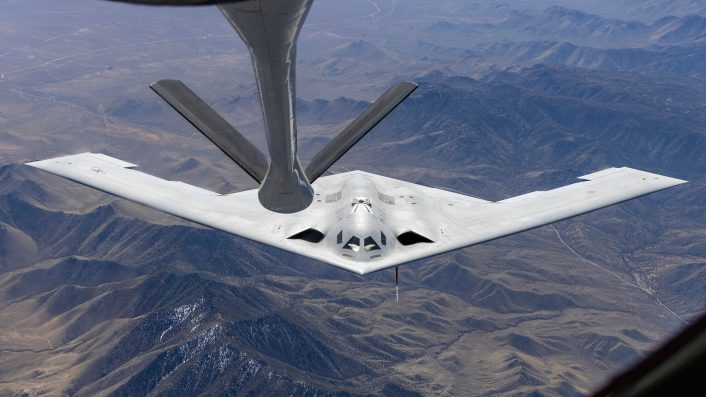
“Traditionally, developmental testing ensures that the aircraft meets technical specifications and flies safely, while operational testing is conducted separately and much later to ensure that the platform is combat-efficient, fit, and survivable in the hands of warfighters,” the Air Force explains. “Moving directly to a combined DT/OT environment closes the gap between ensuring the jet is simply operational and ensuring it is combat-ready.”
Officials say this milestone reflects a sense of urgency about deploying the B-21 Raider. Both the U.S. Air Force and Northrop Grumman officials said the B-21 was “close” to entering service, and said earlier this year that the B-21 is expected to arrive at Ellsworth Air Force Base in South Dakota in 2027.
“The integration of operational and developmental testing into the B-21 program is an example of the acquisition culture we are instilling throughout the military,” said Gen. Dale White, direct reporting portfolio manager for critical major weapons systems at the War Department. “It is a smarter, faster way of thinking that leverages the latest production and test tools with a sense of urgency and appropriateness that challenges existing processes and moves toward a more agile acquisition system.
White, who is in charge of Sentinel, F-47, B-21 and Collaborative Combat Aircraft, reiterated that fielding of the B-21 is imminent. “For radar, this means we are now much closer to putting asymmetric lethality in the hands of the warfighter,” he said.

“Having operational testers on the team at this early stage of the program means we can now evaluate not only the bomber’s flight characteristics, but the true combat utility of the bomber,” said Lt. Col. Matthew Gray, 420th Flight Test Squadron commander and Raider CTF officer.
The first B-21 arrived at Edwards AFB in November 2023 following its first flight. Following the arrival of the second B-21 in September 2025, the Air Force said the Radar Joint Test Unit has moved beyond initial flight performance checks to critical mission systems and weapons integration.
Urgency without recklessness
General White emphasized the “strategic importance of accelerated testing” during an all-hands call with the Raider CTF team at Edwards AFB on June 8, 2026. The general also emphasized the importance of the work being done across multiple programs.
“There are three programs on which the future of our country depends: Sentinel, B-21, and F-47,” he said. “These are the capabilities our country will rely on in its darkest times.”
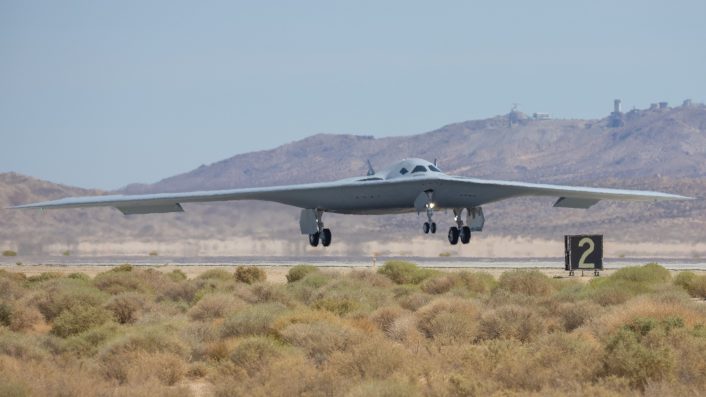
During the conversation, White outlined his priorities for the B-21. This means ensuring that the program is properly resourced and that “bureaucratic processes” do not overload the test team. At the same time, the general said the urgency is not afforded by recklessness that could jeopardize the effort.
“I wouldn’t recklessly tell people to go faster,” he said. Instead, he asked the team directly, “How can you clear the way?”
White said a cultural change is needed to pave the way for the CTF team to do its best work. But he also emphasized the need to demonstrate “urgency with purpose, urgency with meaning” while pushing boundaries and challenging processes and culture.







