




 Radio Galkayo
In Somalia, a woman is awaiting execution after being found guilty of murdering a 14-year-old girl in her care.
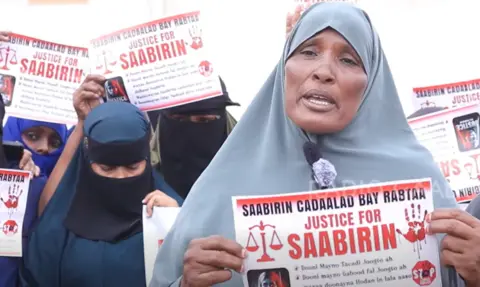
The murder of orphan Saabirin Saylaan last November and the horrific details that emerged about the circumstances surrounding her death sparked protests near her home in Galkayo and renewed calls for greater protection for children.
The case touched a deep nerve in a country where child abuse often goes unreported, especially when it occurs within extended families.
For many, Sabirin’s death symbolized widespread failures in child protection and the slow implementation of legal protections to prevent such tragedies.
The conviction of 34-year-old Hodan Mohamud Diiriye on murder charges was one of the rare instances in Somalia where a court handed down a final sentence for child abuse.
Diiriye denied the charges and her lawyers filed an appeal against the ruling.
Her husband, Abdiaziz Nor, 65, was acquitted of murder but sentenced to one year in prison and fined $500 for manslaughter.
Sabirin was orphaned when she was just one year old when both her parents died within a short period of time.
Since both her grandmothers had also passed away, she was cared for by her aunt, who ensured that she received an education and attended a traditional Qur’anic school.
But Sabirin’s life took a huge turn last September when her aunt agreed that Diriye’s family could take in Sabirin, who needed help at home.
During the investigation, police found that the young girl had endured “routine physical abuse”, including being beaten and tortured, during the two months she lived there.
Evidence recovered from Diiriye’s phone, including video and audio recordings documenting repeated assaults. Some of these were leaked to the public prior to the trial, although it is unclear who released them.
In a particularly shocking recording, Diiriye can be heard saying: “I’m enjoying your pain.”
An autopsy on Sabirin’s body revealed multiple injuries and deep stab wounds resulting from prolonged violence.
As the details of the police investigation were revealed, public anger grew.
 Abdikadir Washington
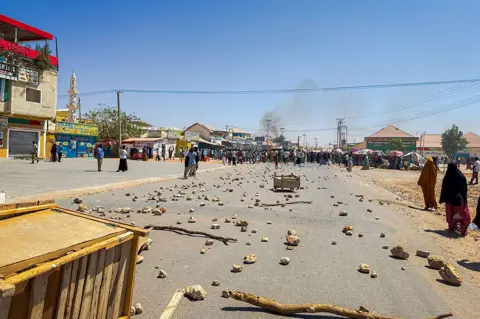
Hundreds of women and young people marched in Galkayo, one of the largest cities in Somalia’s semi-autonomous Puntland region, holding signs reading “Justice for Sabirin” and urging authorities to prosecute all those responsible.
They gathered outside the local hospital where her body lay in the morgue.
Things got so heated that protesters clashed with police during one protest and a young man was shot dead, though it’s unclear who fired the bullet.
Online, young women and girls started a wave of solidarity campaigns, using hashtags calling out Sabirin by name.
“No child should die like this,” protester Aniso Abdullahi, 18, said in a video shared on social media.
“We also reject attempts by traditional elders to resolve this matter through clan custom or privately.”
This is when elders from clans involved in a conflict intervene to avoid retaliation and further violence rather than to prove criminal charges. Usually some kind of compensation is agreed, but there is a feeling that this process prioritizes peace over justice for victims and that some crimes go unsolved because the voices of women and children are often not heard.
In Somalia, child abuse is often hidden within the home, and extended families are traditionally seen as safe, private spaces where the state should not interfere.
Diiriye’s trial and other related hearings were broadcast live on social media to ensure public confidence in the judicial system.
Regional police commander Mohamud Abdihakim said the ruling was an important moment in seeking justice for the murdered teenager.
“The perpetrator is now just waiting to be executed,” he said. “If further evidence emerges that there are additional people involved in this crime, they will not be forgiven and the law will fully apply to them.”
“This case highlights the serious gaps that still exist in protecting children’s most basic human rights in our society,” said Najeb Wehelie, director of children’s rights group Dhoodaan.
He added: “Children continue to face violence within their homes and it is only in the most extreme cases that it is reported to the police.”
In June of this year, police in the capital Mogadishu received a report that a three-year-old boy had been severely abused at his father’s wife’s home.
The alleged assailant was quickly apprehended.
 getty images
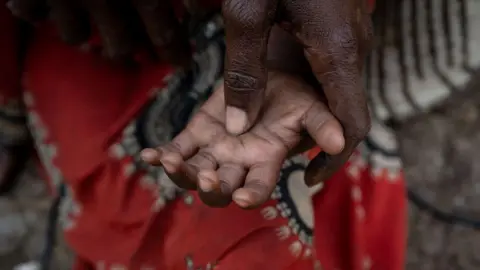
According to Save the Children, three horrific acts of violence against children occurred in Somalia in October and November. Four children were killed by arson in Hargeisa, an 11-year-old girl was violently raped in Puntland, and a mother and her three daughters were murdered in central Somalia.
Shukri Abdi, head of the local women’s association in Galkayo, said the community is full of cases of domestic violence, many of which do not reach the courts.
On October 1 this year, Somalia’s parliament ratified the Charter on the Rights and Welfare of the African Child with 130 members in favour, 10 against and 5 abstentions.
The decades-old charter sets out a legal framework to prevent abuse, exploitation and violence against minors.
The provisions are as follows:
- Criminalize all forms of child abuse
- Strengthening legal punishment for guardians who harm or neglect children
- ensuring state responsibility for vulnerable and orphaned children;
- And we establish monitoring systems in schools, hospitals, and communities.
However, just three days later, the Ministry of Family and Human Rights and Development issued a statement saying that the implementation of the charter would be in accordance with Islamic law and the constitution and that provisions contrary to religious teachings would not be implemented.
Somali parental authority is fundamental and no external entity can override it, he said. The ministry also said the charter’s restrictions on marriage before the age of 18 contradict sharia, which allows marriage once a girl reaches puberty. But in reality the minimum age in Somalia was 15 years old.
Fadumo Ahmed, a women’s and children’s rights activist, argued that implementation of similar measures that already existed in Somalia remains weak.
The police lack the capacity to handle cases together with social welfare. Cases are often obstructed by clan elders, undermining the justice system and ensuring victims’ voices are not heard, she said.
She added that children were often unaware that they could speak out, and many schools did not teach them that they could report abuse.
Mr. Ahmed said, “There are many cases similar to Sabirin’s case, so both sides of the family reach a tacit agreement and inform the government that the problem has been resolved.”
Shukri Ahmed Hussein, the Puntland women’s development and family affairs coordinator for the region that includes Galkayo, denied that authorities were failing to properly fulfill their child protection responsibilities.
In an interview with the BBC, she pointed to programs to help young people once recruited into armed groups and efforts to protect street children.
But she acknowledged that it is sometimes difficult to intervene in cases like the one involving Sabirin. She acknowledged that more needed to be done to raise awareness so people could speak out if they suspect children may not be safe.
“Every child in Puntland has the right to be removed from a home where they feel unsafe,” Mr Hussein said.
Sabirin’s life was tragically cut short, but her death has now slowed the conversation about child safety in Somalia.
But as the community reflects on the verdict, some are unsure whether justice will be served in the long term.
“There is nothing to celebrate yet, we still need clarity,” Abdikadir Ali, one of the young protesters, said in a social media message.
“We don’t want justice in words. We want to see it with our own eyes. We don’t want delays.”
 Getty Images/BBC







