



I first discovered fire cider recipes a few years ago. Adding peppers and random herbs to vinegar didn’t sound very appealing at the time. Still, after learning about its immune support benefits, I decided to be brave and give it a try. Now it’s still a staple in our home, even during cold and flu season!
What is fire cider?
Fire cider is a traditional recipe made by mixing garlic, onion, ginger, red pepper powder, and horseradish in vinegar. Then mix in raw honey before drinking. The original recipe calls for horseradish, but for kids I usually substitute it with echinacea root. If you’re using fresh horseradish, grind it by hand for a great way to clear your sinuses!
This health tonic originated from renowned herbalist Rosemary Gladstar and has gone through many iterations over the years. Herbalists and home cooks add a variety of immune-supporting herbs and foods depending on what they have on hand. You can try fresh rosemary, thyme, or basil for antibacterial benefits. Use a variety of hot peppers and add sliced lemon or fresh turmeric.
This is also a great way to use up all the different odds and ends you have in your fridge before they go bad, like fresh ginger root. For children, reduce or omit the red pepper powder. They don’t mind the taste because the honey helps balance the vinegar.
After the plants are fermented in vinegar, the strained liquid is mixed with raw honey. Not only does honey add more antibacterial properties, but it also softens the taste of spices and sour vinegar. Technically speaking, we are actually making oxymel.
How to Use Fire Cider
Judging by the ingredients in the recipe, it might not taste very good. Neither did I, but I was surprised at how good it tasted. Here’s how to use your new fire cider.
- For immune support, take a tablespoon once daily (or up to 3 times daily) as needed.
- If you develop an illness, take a teaspoon every few hours or add a tablespoon to hot water or herbal tea several times a day until you feel better.
- Sprinkle it on top of your salad and enjoy the mild peppery flavor and sweet vinaigrette taste.
- Add a little oil and use it as a sourdough bread dip.
- Season meat or use as a dipping sauce
You’ll find the original fire cider recipe and many others in this Fire Cider Recipe Book by Rosemary Gladstar. (I can also recommend the Wellness Mama 5-Step Lifestyle Detox book for natural remedies and beauty recipes!)
How to Ferment Fire Cider
Some recipes call for placing the fire cider in a warm, sunny location for the vinegar infusion (which is what I do). The original recipe also calls for a warm spot. However, some herbalists call for fermenting the vinegar in a cool, dark place. Either will work, but you will find that it infuses faster in a warm (not hot) spot.
Here’s how to make it:

Spicy Fire Cider Recipe
This is an old herbal remedy that utilizes the germ-fighting properties of onions, garlic, ginger, and herbs. This drink is made with vinegar and raw honey to strengthen immunity and provide nutrition.
-
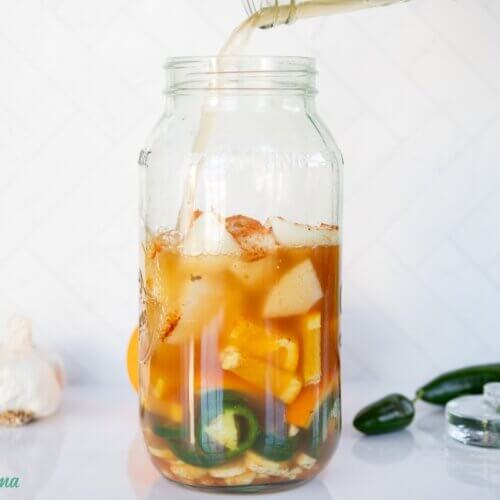
Place onion, garlic, ginger, echinacea root, orange, and jalapeño (if using) in a quart-size Mason jar.
-
Pour enough apple cider vinegar into the bottle to completely cover the ingredients. Use a fermentation weight to submerge everything.
-
Cover tightly and leave in a warm place for 2 to 4 weeks. If possible, shake the bottle daily.
-
After fermentation, strain, discard the solids, and store the infused vinegar.
-
Measure out the remaining vinegar and stir in equal amounts of raw honey and red pepper powder. Mix until completely combined.
-
Store in the refrigerator and shake before use.
Nutrition Facts
Spicy Fire Cider Recipe
Serving Size (1 TBSP)
calorie 0.4
% Daily Value*
province 0.02g0%
Saturated fat 0.004g0%
Polyunsaturated fat 0.01g
Monounsaturated fat 0.003g
sodium 0.04 mg0%
potassium 3 mg0%
carbohydrate 0.1g0%
0.03 g fiber0%
0.01g sugar0%
protein 0.01g0%
Vitamin A 521%
Vitamin C 0.1 mg0%
calcium 0.2mg0%
steel 0.01mg0%
*Percent Daily Values are based on a 2000 calorie diet.
You can store it in the refrigerator or cool pantry for several months.
Leftover Fire Cider Chutney
Once you’ve strained your fire cider, there’s no need to throw away the herbs and spices. They also go well with rice, sourdough toast, or mixed into soups to make a delicious chutney. Simply place the strained plant material in a food processor and pulse. If necessary, add a little fire cider liquid to mix. Make sure to leave lumps and not mix smoothly.
Adding more herbs, such as echinacea, can make the bitter taste stronger. Play around with the ingredients to find your favorite!
Have you ever made fire cider before? What is your favorite ingredient you like to add? Let us know below!
This article was written by Dr. Board Certified in Family Medicine for over 10 years. Medically reviewed by Shani Muhammad, MD. As always, this is not individual medical advice and we recommend that you consult with your physician. Your natural healthcare expert.


