



The Airbus A350 is one of the most technologically advanced commercial aircraft ever built, but its journey to an airline begins long before final assembly in France. Unlike products manufactured at a single factory, the A350 is the result of a highly integrated European production system in which major components are designed, built, equipped, and assembled at specialized facilities spread across multiple countries. Perhaps no component better illustrates this approach than the aircraft’s carbon fiber-reinforced polymer wings, which travel through four countries before the completed aircraft is delivered to its customer.
The process reflects decades of investment in specialized manufacturing expertise rather than unnecessary logistical complexity. Engineers in one country focus on aerodynamic design, another produces the enormous composite wing structures, a third installs sophisticated systems, while the aircraft ultimately comes together on a final assembly line elsewhere. Moving a pair of wings each measuring more than 100 feet (30 m) long across Europe requires dedicated transport aircraft, carefully coordinated logistics, and production schedules synchronized to within days. The result is an aircraft whose manufacturing process is almost as remarkable as the technology it carries into service.
European Manufacturing Model Built Around Specialization

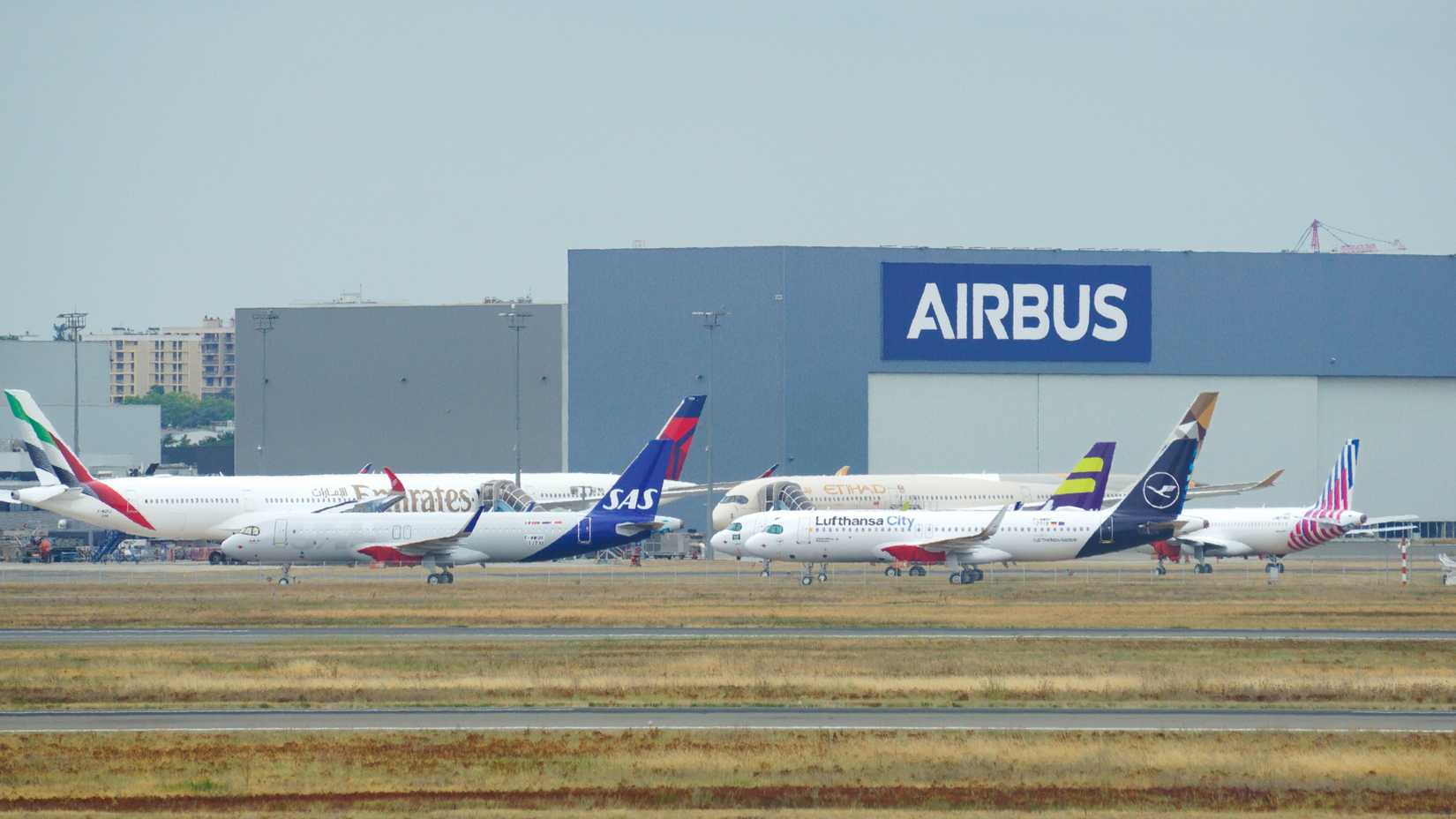
Unlike manufacturers that concentrate production in a single location, Airbus has historically distributed work among facilities across Europe. This model emerged from the company’s origins as a consortium of aerospace manufacturers from several European nations. Rather than replacing existing factories, Airbus developed a production network that allowed each location to build upon decades of engineering expertise while contributing to a common aircraft program.
For the A350, this means major structural sections are manufactured where the necessary industrial capabilities already exist. Forward and rear fuselage sections are produced in Germany, cockpit sections are built in France, horizontal tailplanes come from Spain, and wings are manufactured primarily in the United Kingdom before continuing their journey elsewhere. Final assembly then takes place in Toulouse, France, where all of these components are joined to form a complete aircraft.
Although transporting large aircraft structures across Europe may appear inefficient at first glance, Airbus argues that specialization produces higher quality, greater manufacturing consistency, and improved efficiency. Each facility invests in equipment, workforce training, and engineering expertise tailored to specific components rather than duplicating every manufacturing capability at every site. This approach also allows innovations developed for one aircraft program to benefit future Airbus designs. The A350 particularly benefits from this model because of its extensive use of composite materials. Producing large carbon fiber structures requires highly specialized machinery, clean manufacturing environments, and advanced quality control procedures that represent decades of investment. Concentrating this expertise on dedicated facilities allows Airbus to maintain consistent manufacturing standards while supporting high production rates.
The Wing Starts Its Journey In The United Kingdom


The journey of an A350 wing starts long before physical manufacturing begins. Engineers use advanced computational modeling and extensive aerodynamic testing to optimize the wing’s shape for efficiency across a wide range of flight conditions. The finished design incorporates a high aspect ratio, curved aerodynamic profile, and lightweight composite construction that together contribute significantly to the aircraft’s fuel efficiency.
Once the design is finalized, production centers on the Airbus wing manufacturing facility at Broughton in North Wales. The site has served as Airbus’ center of wing excellence for decades and is responsible for manufacturing wings for nearly every Airbus commercial aircraft currently in production. For the A350, however, the process is considerably more sophisticated than for earlier aluminum wing designs because the structure is made primarily from carbon fiber-reinforced polymer rather than traditional metal alloys. The enormous composite wing covers are produced using precisely laid carbon fiber materials that are cured inside giant autoclaves under carefully controlled heat and pressure. Composite construction offers major advantages over aluminum, including lower weight, greater fatigue resistance, improved corrosion performance, and the ability to manufacture complex aerodynamic shapes with fewer individual parts. According to the University of Bath, advances in automated composite manufacturing have played an important role in making production of large aircraft wings more efficient while maintaining extremely tight quality standards.
|
Key Wing Geometry Figures of the Airbus A350-900 |
||
|---|---|---|
|
Wingspan |
Wing Area |
Aspect Ratio |
|
212 feet 5.2 inches (64.75 m) |
4,760 square feet (442 sq m) |
9.49 |
Manufacturing the wing involves much more than creating an outer shell. Internal spars, ribs, and structural components are assembled to create a complete wing box capable of supporting enormous aerodynamic and structural loads throughout decades of airline service. During flight, each wing experiences constant bending forces while carrying fuel, supporting the engines, and generating lift. So every composite layer, fastener, and structural joint must meet exceptionally demanding certification requirements.
By the time the basic wing structure leaves Broughton, it already represents one of the most advanced composite assemblies ever built for commercial aviation. Although before the wing can be attached to an airframe, it must travel across the English Channel into Germany, where another Airbus facility begins installing many of the systems that transform it from a structural component into a fully functional aircraft wing.
From The UK To Germany To France

Shutterstock | Simple Flying
Once the A350 wing structure is completed at Broughton, its journey continues to Bremen, Germany, where Airbus installs many of the systems that allow the wing to function as more than a structural component. Although the wing box leaving the United Kingdom is one of the aircraft’s largest assemblies, it still lacks much of the equipment needed for flight. At Bremen, technicians install electrical wiring, hydraulic lines, fuel system components, flight control mechanisms, and other equipment before performing detailed functional testing. This stage, often referred to as wing equipping, transforms the composite structure into an operational aircraft system capable of controlling lift, storing fuel, and supporting the aircraft’s engines.
Catch what other flight trackers miss
Emergency squawks, holds, NOTAMs — live signals, no signup.
Open tracker
Catch what other flight trackers miss
Emergency squawks, holds, NOTAMs — live signals, no signup.
Open tracker
Modern airliner wings contain thousands of individual parts, including pumps, valves, sensors, actuators, electronic control units, and extensive wiring. These systems must operate reliably across temperatures ranging from well below freezing at cruising altitude to intense heat on airport ramps around the world. Every installation undergoes inspections and testing before the wing is cleared for its next journey.
Wing equipping in Germany also reduces the amount of work required during final assembly in France. Rather than delivering unfinished structures to Toulouse, Airbus ships wings that are substantially complete, allowing final assembly teams to focus on integrating the aircraft instead of building major subsystems from scratch. This decentralized approach has become a defining feature of Airbus production. Each facility specializes in a particular phase of manufacturing, allowing engineers and technicians to develop deep expertise while maintaining consistent quality across the entire program.
How The BelugaXL Facilitates Production


With the systems installation complete, the wings begin what is perhaps the most recognizable stage of their journey. They are loaded aboard the Airbus BelugaXL, one of the largest cargo aircraft ever built specifically to transport oversized aircraft components between Airbus production facilities. The BelugaXL was developed because conventional cargo aircraft cannot accommodate structures as large as fully assembled A350 wings. Its enormous fuselage allows Airbus to transport complete wings, fuselage sections, and other oversized components without dismantling them. The aircraft can carry two A350 wings simultaneously, dramatically reducing transport times compared with road or sea freight.
Flights between Bremen and Toulouse occur as part of a carefully coordinated logistics network linking Airbus facilities across Europe. The BelugaXL fleet operates on fixed schedules that synchronize with production across multiple factories, ensuring components arrive when needed without creating bottlenecks on the final assembly line. Although air transport may appear expensive, it actually supports Airbus’ manufacturing strategy. Large aircraft components require enormous storage areas, making it impractical to stockpile completed wings for extended periods. Instead, the logistics system is designed to deliver assemblies shortly before they are required for installation. This minimizes inventory costs while keeping production moving efficiently. By the time the wings arrive in Toulouse, they have traveled hundreds of miles and undergone multiple rounds of manufacturing, inspection, testing, and transportation. Yet they still represent only one part of an aircraft whose major sections are simultaneously arriving from factories throughout Europe.
Final Assembly Brings Europe’s Work Together


Once the wings arrive in Toulouse, France, they are joined to the other major airframe sections manufactured across Airbus’ European production network. One of the most significant milestones is attaching the wings to the fuselage. Each wing must be aligned with extraordinary precision before being permanently secured. Engineers then connect thousands of electrical, hydraulic, and fuel system interfaces that link the wings with the rest of the aircraft. Although the wing itself has already undergone extensive testing in Germany, every connection must be verified again after installation to ensure the complete aircraft functions as designed.
As assembly progresses, technicians install the Rolls-Royce Trent XWB engines, landing gear, flight deck systems, cabin interiors, and airline-specific equipment. Depending on the customer, this can include different seating layouts, premium cabins, galleys, lavatories, and in-flight entertainment systems. By delaying these customizations until late in production, Airbus can build aircraft for dozens of airlines while maintaining an efficient manufacturing process.
Before delivery, every A350 undergoes extensive ground testing and multiple flight tests. Engineers verify flight controls, hydraulics, avionics, engines, pressurization systems, and other critical equipment before the aircraft receives certification for customer acceptance. Airlines also conduct their own inspections and acceptance flights to confirm the aircraft meets contractual requirements before taking ownership. The result is a highly coordinated production system in which thousands of employees across several countries contribute to a single aircraft. Although passengers boarding an A350 may see a seamless finished product, every aircraft represents years of engineering and months of carefully synchronized manufacturing spread across Europe.
International Supply Chain Defines Airbus Production


The Airbus A350’s wings travel through four countries before the completed aircraft ever reaches an airline because Airbus has designed its manufacturing system around specialization rather than centralization. Engineering expertise in the United Kingdom produces advanced composite wings; Germany equips them with complex onboard systems; France completes final assembly; and Spain contributes major structural components while supporting the broader production network. Each location performs work that reflects decades of aerospace experience and investment.
This multinational approach allows Airbus to concentrate expertise, maintain high quality standards, and efficiently manufacture one of the world’s most advanced commercial aircraft. Specialized facilities produce components that would be difficult and costly to replicate elsewhere, while dedicated logistics assets, such as the BelugaXL, ensure those components move quickly between factories. The A350 demonstrates that modern aircraft manufacturing is no longer confined to a single assembly plant. Instead, it is an international enterprise that requires precise coordination between engineers, production teams, logistics specialists, and suppliers across Europe. Every completed aircraft is the product of thousands of individual manufacturing steps, with its remarkable carbon fiber wings serving as perhaps the best example of how Airbus has transformed multinational collaboration into a competitive advantage.


