



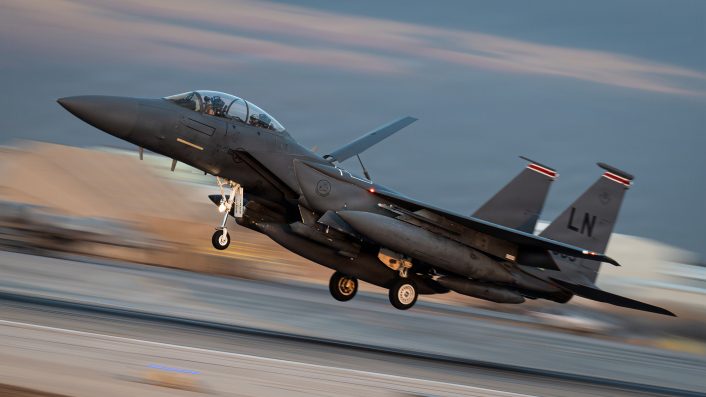
The pilot of DUDE44, the F-15E Strike Eagle shot down over Iran, was reportedly one of the pilots shot down by Kuwaiti friendly fire on the opening day of Operation Epic Fury.
In a very rare case, the pilot of the U.S. Air Force F-15E Strike Eagle shot down over Iran appears to have been one of three F-15Es shot down in a friendly fire incident over Kuwait early in Operation Epic Fury. The two incidents occurred just one month apart.
This story was first reported by: high sideQuoting current and former Air Force officials as of June 2, 2026. CBS News It also reported on the incident, quoting two people familiar with the incident. The Air Force and U.S. Central Command did not comment to the media.
high side It was also mentioned that the F-15E’s weapons systems officer (WSO) suffered an injury due to a parachute malfunction due to it not opening properly after ejection. Unlike the pilot, who was rescued hours later, the WSO was rescued after a massive combat search and rescue effort that lasted two days.
It is rare for a pilot to be shot down and eject safely twice during the same crash. Similar cases have been reported, but they date back decades.
“It’s a very unusual coincidence,” retired Air Force Lt. Gen. David Deptula, director of the Mitchell Institute for Aeronautics and Space Studies, said in an interview. CBS News. Deptula said the last time this happened could potentially go back to the Vietnam War.
Friendly fire on March 2nd
On March 2, 2026, three US Air Force F-15E Strike Eagles were shot down over Kuwait due to friendly fire. All six crew members ejected safely and were rescued, some receiving help from Kuwaiti nationals on the ground while waiting for rescuers to arrive.
Details gleaned from the images show at least one of the crew members was assigned to the 4th Fighter Wing at Seymour Johnson AFB, North Carolina. Images of the scene where one of the three aircraft is believed to have crashed show the markings of a Strike Eagle assigned to the 48th Fighter Wing at RAF Lakenheath, England.
CENTCOM said at the time that the aircraft had actually participated in combat and was accidentally shot down by Kuwait’s air defense forces. A few days later, reports attributed responsibility to a Kuwait Air Force F/A-18.
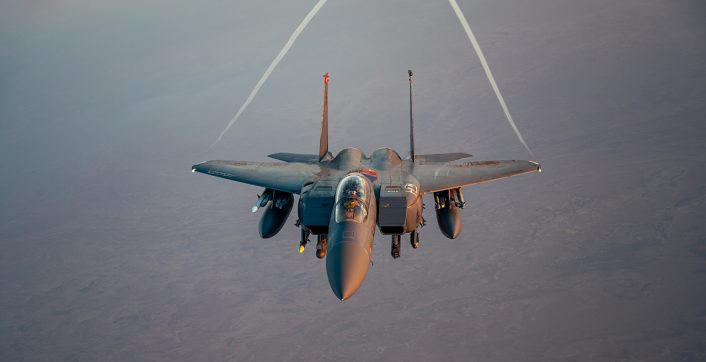
According to a report from wall street journal“An F/A-18 pilot fired three missiles at an American aircraft,” an anonymous U.S. official said. A second official noted that this happened shortly after several Iranian drones entered Kuwaiti airspace.
There’s still a lot missing from this story so we may not see it for a long time. The first and most important is why the F-15E was not identified by Kuwaiti pilots before launch.
Shot down over Iran on April 3
In the early morning of April 3, 2026, an F-15E Strike Eagle with call sign DUDE44 and reportedly stationed at RAF Lakenheath came under enemy fire over Iran. At the time, US President Donald Trump said Iran was “lucky” to have launched a heat-seeking missile.
A new report later emerged suggesting that Chinese-made man-portable air defense systems (MANPADS) may be the culprit. The weapons were reportedly part of a Chinese shipment to Iran early in the war.
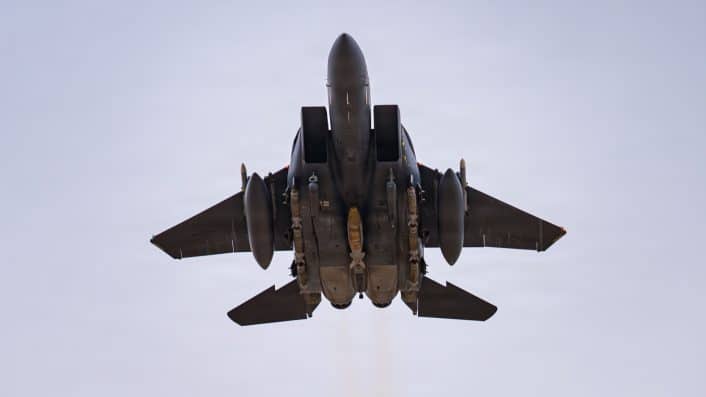
Immediately after the shootdown, a rescue beacon was confirmed to be activated and a rescue mission began. Both the pilot and weapons system officer (WSO) escaped safely, but were stranded in enemy territory.
After several hours and positive identification of the pilot, a CSAR task force was launched consisting of 21 aircraft, including an A-10C Thunderbolt II, HC-130J Combat King II, HH-60W Jolly Green II, combat rescue officers and pararescue personnel. The mission saw them flying into Iranian airspace for several hours in broad daylight.
Meanwhile, a fighter strike package protected the task force. Among them were remotely piloted aircraft and A-10Cs performing the Sandy role, commonly referred to as CSAR support missions.
The helicopter was attacked by the enemy, but the pilot was able to be safely rescued. The A-10C was also damaged and the pilot “decided that the airplane could not land” and ejected once over friendly territory.
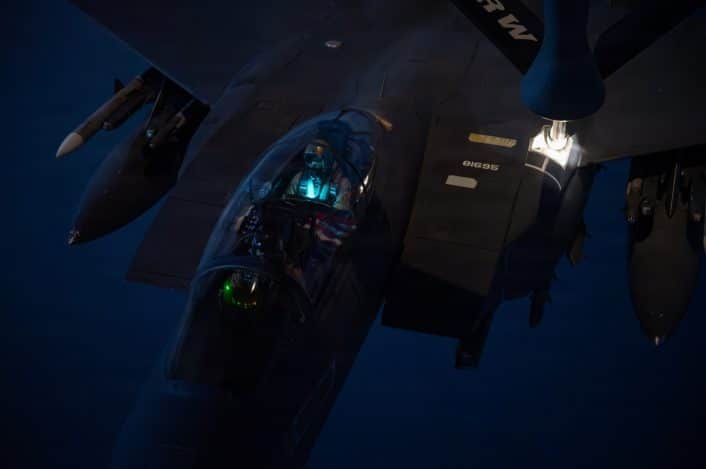
Rescue of the WSO required a greater effort and was achieved after 36 hours behind enemy lines. WSO was wounded after escaping and actively evaded capture before making contact with U.S. forces.
A second rescue mission was then launched involving 155 aircraft. “These include four bombers, 64 fighter jets, 48 tankers, and 13 rescue aircraft,” Trump said.
Two MC-130 Commando II aircraft landed in “wet and sandy” terrain. Three A/MH-6 Little Bird helicopters were unloaded and within minutes flying toward their objective to rescue the WSO.
However, after ejecting, the MC-130 became stuck and was unable to take off again. C-295Ws from AFSOC’s secretive 427th Special Operations Squadron were called in and MC-130s and Little Birds were destroyed in the field to prevent sensitive equipment from falling into enemy hands.







