



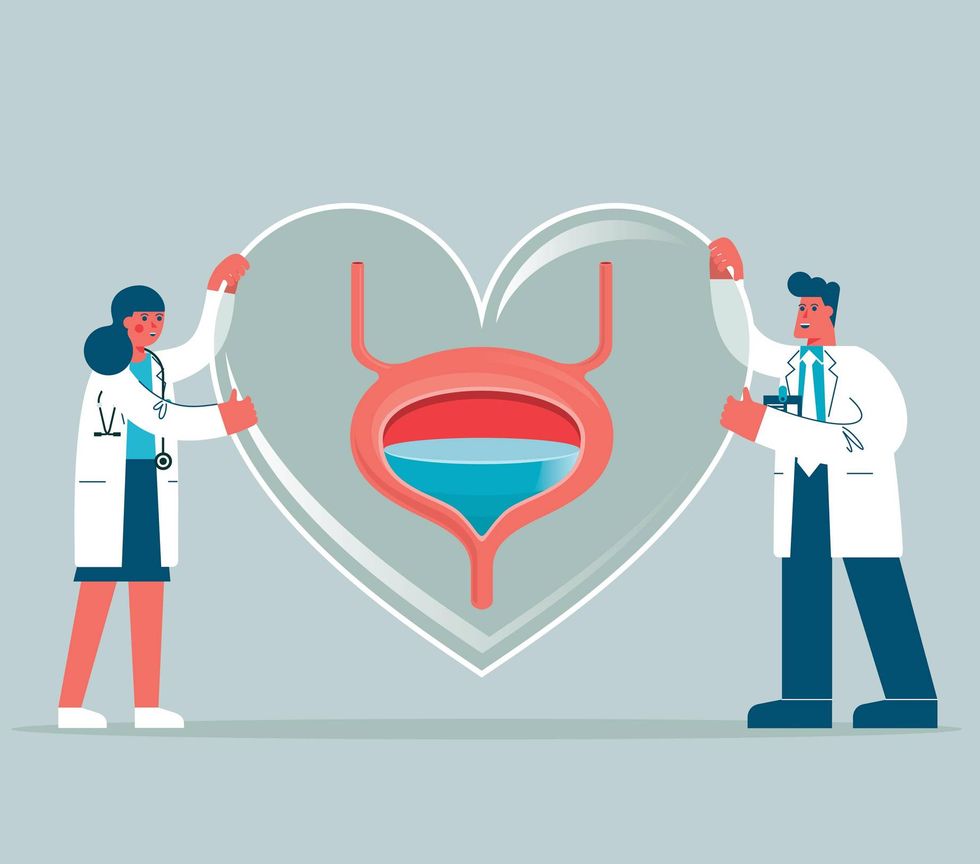
If you’ve ever shed a few tears when you sneeze or laugh, you’ve probably heard that it’s just a part of having a baby or getting older. But while UI is common, it’s not normal, and new research suggests that urinary incontinence (UI) may also be a clue about your heart health.
A University of Iowa study of more than 20,000 women found that current urinary incontinence was associated with cardiovascular risk factors, including type 2 diabetes, dyslipidemia (an unhealthy mix of cholesterol or other fats in the blood), stroke, and a history of coronary artery bypass surgery. The link held even after researchers adjusted for age, weight, race and smoking.
This study does not prove that one causes the other, but rather a link between the two. The findings provide reason for women and health care providers (HCPs) to view bladder symptoms as part of the bigger picture of women’s health.
1. The bladder and heart share the same plumbing
The bladder relies on a healthy blood supply and properly functioning nerves to fill, hold, and empty. Bladder function declines when circulation or nerve signaling is disrupted.
“The bladder is highly vascularized and heavily innervated by nerves, so any time that process is disrupted, it affects the bladder,” says Aleece Fosnight, PA-C, a physician assistant who specializes in urology and sexual medicine.
Fosnight explained that conditions such as type 2 diabetes, high blood pressure and stroke can damage small blood vessels and nerves throughout the body, including the blood vessels that control the bladder. Diabetes also pushes extra glucose through the kidneys, which can increase urine output and make leakage worse, she said.
2. New or worsening symptoms are bigger clues.
The Iowa study found a cardiovascular association only with current UI. Symptoms that appear or worsen over time seem to be the most important.
“If someone had problems with urinary incontinence in their 30s or 40s, and now they’re seeing their incontinence worsen in their 40s and 50s, that’s the change we need to be aware of,” Fosnight said.
She adds that these kinds of changes may indicate underlying vascular, metabolic or neurological problems. Fosnight referred patients with new bladder symptoms to cardiologists, including one woman in her early 40s who was found to have a blocked coronary artery.
3. Middle-aged women should be more careful
Estrogen supports tissue health in the heart, brain, and pelvis. When levels drop during perimenopause and menopause, the risk of both cardiovascular disease and urinary incontinence increases, Fosnight explained.
Women over age 40 should notify their health care provider if they have new urinary symptoms, especially changes in blood pressure, difficulty sleeping, or a family history of heart disease. Fosnight recommended keeping a simple bladder diary for several days to track patterns of frequency, amount and timing of urination.
4. UI can prevent women from taking care of their minds.
There is another aspect to connection. Dr. Nieca Goldberg, a cardiologist and member of HealthyWomen’s Women’s Health Advisory Council, said UI can prevent women from doing the very things that protect their heart health, including exercising regularly, staying hydrated and staying socially active.
“Women with urinary incontinence limit their water intake and are at risk for fainting if they exercise because they are exercising while dehydrated,” Goldberg said. Another risk is that women may avoid exercise to avoid bladder leakage. “A sedentary lifestyle can lead to increased blood pressure, cholesterol and glucose, all risk factors for heart disease,” Dr. Goldberg said.
According to Fosnight, UI can cause women to skip social events and become isolated. Fosnight has seen this cycle play out in her patients. Stress and isolation can also activate the sympathetic nervous system, increasing bladder urgency and frequency, making the cycle harder to break.
5. When talking about the bladder, ask about heart screening.
New research is why women are including heart tests in the conversation when they report bladder problems.
“We should always look at studies like this and say this is another opportunity to screen for heart disease risk in women,” Goldberg said.
Because sometimes women feel uncomfortable discussing UI, it would be ideal for HCPs to bring up the topic during routine visits. But if not, it’s important to overcome the embarrassment and mention your bladder symptoms to get the treatment you need.
Goldberg recommended that women with UI be evaluated for cardiovascular risk factors, including blood pressure, cholesterol, and blood sugar, as well as lifestyle factors, such as activity level and smoking.
Talk to your health care provider about bladder health and heart health.
Bladder leakage isn’t just an embarrassing inconvenience. Using UI as a window into cardiovascular health can give women the opportunity to detect heart problems early and feel better about their daily lives.
If your bladder symptoms are new, worsening, or affecting your quality of life, mention them at your next appointment and also ask about cardiovascular testing. Your bladder and heart work together, and so does your care.
Related articles on the web






